Agoracom Blog

North Bud Farms $NBUD.ca Signs Letter of Intent to Enter into Lease and Master Operations Agreement for the Cultivation Facilities at its California Farm $CGC $ACB $APH $CRON.ca $OGI.ca

Posted by AGORACOM-JC at 8:12 AM on Wednesday, March 4th, 2020
  • Signed a letter of intent for a master lease and operations agreement with an experienced California-licensed operator to operate the cultivation facilities at the Company’s Salinas, California farm
  • Cultivator will lease the Company’s cultivation facilities at its Salinas farm for 5 years, with options to extend the lease for up to an additional 5 years

Bonfire Brands USA will receive the following consideration:

  • Lease payments starting at approximately USD$1 million per year in year 1, with incremental increases that could bring the annual rent to as high as USD$1.8 million per year;
  • A royalty equal to 3% of the gross revenue generated by the Cultivator from its use of the Salinas farm; and
  • The right to acquire up to 15% of all the product harvested by the Cultivator on the farm at a discount to market rate with extended payment terms.

TORONTO, March 04, 2020 — North Bud Farms Inc. (CSE: NBUD) (OTCQB: NOBDF) (“NORTHBUD” or the “Company“) is pleased to announce that its U.S. subsidiary, Bonfire Brands USA Inc., has signed a letter of intent (the “LOI”) for a master lease and operations agreement with an experienced California-licensed operator (the “Cultivator”) to operate the cultivation facilities at the Company’s Salinas, California farm.

Terms of the LOI

As per the terms of the LOI, the companies will work together towards completing a definitive agreement before May 1, 2020, in which the Cultivator will lease the Company’s cultivation facilities at its Salinas farm for 5 years, with options to extend the lease for up to an additional 5 years, and Bonfire Brands USA will receive the following consideration:

  • Lease payments starting at approximately USD$1 million per year in year 1, with incremental increases that could bring the annual rent to as high as USD$1.8 million per year;
  • A royalty equal to 3% of the gross revenue generated by the Cultivator from its use of the Salinas farm; and
  • The right to acquire up to 15% of all the product harvested by the Cultivator on the farm at a discount to market rate with extended payment terms.

During the term of the proposed agreement, the Cultivator will be responsible for 100% of the costs associated with staffing, operations, licensing and compliance with respect to the farm’s cultivation facilities; moreover, the Cultivator is committed to fund and manage the build-out of an additional 230,000 sq. ft. of licensed cultivation space over the first 24 months of the proposed agreement.

“Our objective when we acquired the Salinas farm was to secure access to the high-quality, low-cost cannabis that has always been grown in that area, known as “the salad bowl of America,” said Justin Braune, President of Bonfire Brands USA. “This proposed agreement will allow the Company to immediately achieve EBITDA-positive operations at our largest facility without incurring the significant capital investments that have debilitated many companies in our industry. By retaining preferential purchasing terms, the Company can focus on its branded product distribution business on the back of the estimated 40,000 pounds of production capacity that the Cultivator will bring online over the next 24 months.”

Sean Homuth, NORTHBUD’s CEO added: “Partnering with a proven licensed cultivator who has been operating in Salinas for multiple years achieves the following objectives: it significantly de-risks our California operations while allowing the Company to increase its asset value; it reduces our capital expenditure requirements while still generating significant revenue; and it builds EBITDA-positive operations without limiting our access to a cost-efficient and reliable supply chain on which to build our branded product portfolio within the state of California.”                       

About North Bud Farms Inc.

NORTHBUD, through its U.S. subsidiary Bonfire Brands USA, has acquired cannabis production facilities in California and Nevada. The Salinas, California 11-acre farm is actively cultivating cannabis in its 60,000 sq. ft. of licensed greenhouse production space, and also has active distribution and processing licenses. The Reno, Nevada property contains a world-class cannabis production, research and development facility with 5,000 sq. ft. of indoor cultivation, and holds medical and adult-use licenses for cultivation, extraction and distribution.  Through its wholly-owned Canadian subsidiary, GrowPros MMP Inc., the Company is pursuing a license under The Cannabis Act, to cultivate in its state-of-the-art purpose-built cannabis production facility located on 135 acres of agricultural land in Low, Quebec, Canada.

For more information visit: www.northbud.com

Neither the CSE nor its Regulation Services Provider (as that term is defined in the policies of the CSE) accepts responsibility for the adequacy or accuracy of this release.

Forward-looking statements
Certain statements and information included in this press release that, to the extent they are not historical fact, constitute forward-looking information or statements (collectively, “forward-looking statements”) within the meaning of applicable securities legislation. Forward-looking statements, include but are not limited to those identified by the expressions “anticipate”, “believe”, “plan”, “estimate”, “expect”, “intend”, “may”, “should” and similar expressions to the extent they relate to the Company or its management.

Forward-looking statements, including but not limited to, those regarding the closing of the definitive agreement with the Cultivator, the success of the Company’s licence application with Health Canada, the Company’s ability to execute its strategic plan, conditions in the cannabis market, the Company entering agreements in connection with the B2B supply of cannabis and the Company’s transition into a revenue-generating operational phase of development are based on the reasonable assumptions, estimates, analysis and opinions of management made in light of its experience and its perception of trends, current conditions and expected developments, as well as other factors that management believes to be relevant and reasonable in the circumstances at the date that such statements are made, but which may prove to be incorrect.

Forward-looking statements involve known and unknown risks, uncertainties and other factors that may cause the actual results, performance or achievements of the Company to differ materially from any future results, performance or achievements expressed or implied by the forward-looking statements. Such risks and uncertainties include, among others, the risk factors included in the Company’s final long form prospectus dated August 21, 2018, which is available under the Company’s SEDAR profile at www.sedar.com. Accordingly, readers should not place undue reliance on any such forward-looking statements. Further, any forward-looking statement speaks only as of the date on which such statement is made. New factors emerge from time to time, and it is not possible for the Company’s management to predict all of such factors and to assess in advance the impact of each such factor on the Company’s business or the extent to which any factor, or combination of factors, may cause actual results to differ materially from those contained in any forward-looking statements. The Company does not undertake any obligation to update any forward-looking statements to reflect information, events, results, circumstances or otherwise after the date hereof or to reflect the occurrence of unanticipated events, except as required by law including securities laws. This news release does not constitute an offer to sell or a solicitation of any offer to buy any securities of the Company.

FOR ADDITIONAL INFORMATION, PLEASE CONTACT:
North Bud Farms Inc.
Edward Miller
VP, IR & Communications
Office: (855) 628-3420 ext. 3
[email protected]

Empower Clinics $CBDT.ca Announces Significant Patient Growth in February 2020 with Visits Increasing by 800% $WEED.ca $CGC $ACB $APH $CRON.ca $HEXO.ca $OGI.ca

Posted by AGORACOM-JC at 7:02 AM on Wednesday, March 4th, 2020
  • Patient visits in corporate clinics increased by 800% in February 2020 versus the same period in 2019
  • Total patient visits of 1,817 in February 2020 compared to 227 in February 2019

VANCOUVER, BC / March 4, 2020 / EMPOWER CLINICS INC. (CSE: CBDT) (OTC: EPWCF) (Frankfurt 8EC) (“Empower” or the “Company“), a vertically integrated and growth-oriented life sciences company, is pleased to announce that patient visits in corporate clinics increased by 800% in February 2020 versus the same period in 2019, with total patient visits of 1,817 in February 2020 compared to 227 in February 2019.

“Patient volumes have remained strong to start the year in all clinics, continuing on our push for a record first quarter.” said Dustin Klein, SVP Business Development and Director of Empower. “Operational excellence each day, combined with exemplary care for the patient, sets us apart in the markets we serve.”

The Company also has received numerous inquiries with both positive and supportive sentiment, after the recent announcement of the Company’s intention to create a psilocybin and psychedelics division.

“Getting positive reinforcement from researchers, physicians, advocates and practitioners about our intention to enter this developing field of study, gives me confidence that we have made the correct decision to leverage our corporate assets for psilocybin and psychedelics research and development.” said Steven McAuley, Chairman & CEO of Empower.

ABOUT EMPOWER

Empower is a vertically-integrated health & wellness brand with it’s first hemp-derived CBD extraction facility under development, the Company produces its proprietary line of cannabidiol (CBD) based products and distributes products through company owned and franchised clinics, with wholesale partnerships, online channels and with new retail opportunities nationwide in the U.S. The company is a leading multi-state operator of a network of physician-staffed wellness clinics, focused on helping patients improve and protect their health, through innovative physician recommended treatment options. The company has commenced activity on how to connect its significant data, to the potential of the efficacy of alternative treatment options related to hemp-derived cannabidiol (CBD) therapies.

ON BEHALF OF THE BOARD OF DIRECTORS:

Steven McAuley
Chief Executive Officer

CONTACTS:

Investors: Steven McAuley

CEO

[email protected]

604-789-2146

Investors: Dustin Klein
SVP, Business Development
[email protected]
720-352-1398

For French inquiries: Remy Scalabrini, Maricom Inc., E: [email protected], T: (888) 585-MARI

DISCLAIMER FOR FORWARD-LOOKING STATEMENTS

This news release contains certain “forward-looking statements” or “forward-looking information” (collectively “forward looking statements”) within the meaning of applicable Canadian securities laws. All statements, other than statements of historical fact, are forward-looking statements and are based on expectations, estimates and projections as at the date of this news release.Forward-looking statements can frequently be identified by words such as “plans”, “continues”, “expects”, “projects”, “intends”, “believes”, “anticipates”, “estimates”, “may”, “will”, “potential”, “proposed” and other similar words, or information that certain events or conditions “may” or “will” occur. Forward-looking statements in this news release include statements regarding; the Company’s intention to open a hemp-based CBD extraction facility, the expected benefits to the Company and its shareholders as a result of the proposed acquisitions and partnerships; the effectiveness of the extraction technology; the expected benefits for Empower’s patient base and customers; the benefits of CBD based products; the effect of the approval of the Farm Bill; the growth of the Company’s patient list and that the Company will be positioned to be a market-leading service provider for complex patient requirements in 2019 and beyond. Such statements are only projections, are based on assumptions known to management at this time, and are subject to risks and uncertainties that may cause actual results, performance or developments to differ materially from those contained in the forward-looking statements, including; that the Company may not open a hemp-based CBD extraction facility; that legislative changes may have an adverse effect on the Company’s business and product development; that the Company may not be able to obtain adequate financing to pursue its business plan; general business, economic, competitive, political and social uncertainties; failure to obtain any necessary approvals in connection with the proposed acquisitions and partnerships; and other factors beyond the Company’s control. No assurance can be given that any of the events anticipated by the forward-looking statements will occur or, if they do occur, what benefits the Company will obtain from them. Readers are cautioned not to place undue reliance on the forward-looking statements in this release, which are qualified in their entirety by these cautionary statements. The Company is under no obligation, and expressly disclaims any intention or obligation, to update or revise any forward-looking statements in this release, whether as a result of new information, future events or otherwise, except as expressly required by applicable laws.

SOURCE: Empower Clinics Inc.

Experts Talk Deepfake Technology at NYU Conference – SPONSOR: Datametrex AI Limited $DM.ca

Posted by AGORACOM-JC at 5:00 PM on Tuesday, March 3rd, 2020

SPONSOR: Datametrex AI Limited (TSX-V: DM) A revenue generating small cap A.I. company that NATO and Canadian Defence are using to fight fake news & social media threats. The company announced three $1M contacts in Q3-2019. Click here for more info.

Experts Talk Deepfake Technology at NYU Conference

  • Deepfakes are fabricated videos made to appear real using artificial intelligence
  • In some cases, the technology realistically imposes a face and voice over those of another individual

Andrew Califf, Contributing Writer

The Greenberg Lounge in Vanderbilt Hall was packed full by attendees listening to keynote speaker Kathryn Harrison from the DeepTrust Alliance. The NYU Journal of Legislation and Public Policy as well as the Center for Cybersecurity hosted the conference at NYU Law about the problem of deepfakes and the law. (Staff Photo by Alexandra Chan)

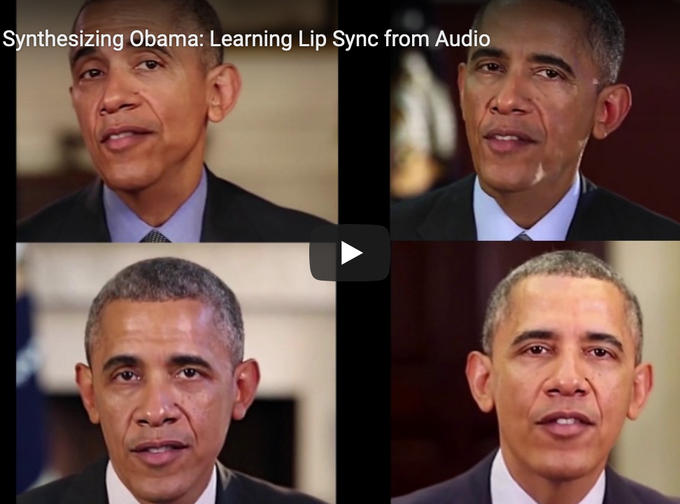
Laughter rippled through NYU Law School’s Greenberg Lounge Monday morning after the founder and CEO of DeepTrust Alliance, a coalition to fight digital disinformation — Kathryn Harrison — played a video of actor Jordan Peele using deepfake technology to imitate President Obama.

Deepfakes are fabricated videos made to appear real using artificial intelligence. In some cases, the technology realistically imposes a face and voice over those of another individual.

The technology poses implications such as harassment, the spread of disinformation, manipulation of the stock market, theft and fear-mongering, Harrison said.

Harrison and other professionals spoke at Vanderbilt Hall this Monday at an NYU Center for Cybersecurity and the NYU Journal of Legislation & Public Policy conference to spread awareness about this deceptive technology, and to look at technological, legal and practical ways to combat the deception.

The professionals consisted of journalism, legal and cybersecurity experts who combat troubles posed by the rapidly developing technology in different ways.

The tone of the room shifted to silence as Harrison continued her keynote speech to discuss how the technology was used to harass Rana Ayyub — an Indian journalist who was critical of Prime Minister Narendra Modi — by putting her face into pornographic material.

“Imagine if this was your teenage daughter, who said the wrong thing to the wrong person at school,” Harrison said.

Distinguished Fellow at the NYU Center for Cybersecurity Judi Germano said the solution for combatting deepfakes is two-fold.

“There is a lot of work to be done to confront the deepfakes problem,” Germano told WSN. “In addition to technological solutions, we need policy solutions.”

Germano moderated the event’s first panel, which specifically focused on technology, fake news and detection of deepfakes. She also discussed the role deepfakes play in the spread of disinformation.

Despite how innovative deepfake technology is, experts such as Corin Faife — a journalist specializing in AI and disinformation — consider them to be a new form of an old problem.

“One of the important things for deepfakes is to put it into context of this broader problem of disinformation that we have, and to understand that that is an ecosystemic problem,” Faife explained to WSN in an interview. “There are multiple different contributing factors, and [the technological solutions] are no good if people won’t accept that a certain video is false or manipulated because of their preexisting beliefs.”

This line of thought is why some are hesitant to push through legislature regarding deep fake technology. The director of the American Civil Liberties Union’s Speech, Privacy and Technology Project, Ben Wizner, took this position during the second panel on how legislature should evolve to deal with deepfakes.

Since deepfakes are a means to commit illegal acts, Rob Volkert, VP of Threat Investigations at Nisos, understands his fellow panelist’s mindset. Volkert said he also struggles with pinpointing who to accuse.

“The responsibility is on the user, not on the platform,” Volkert told WSN in an interview after explaining how the market for deepfake software does not need to hide in the dark web.

Deepfake technology is an ominous cloud approaching the presidential election and that is why it was an appropriate topic for this event, Journal of Legislation and Public Policy board member Lisa Femia said. 

Facebook’s Cybersecurity Policy Lead Saleela Khanum, who spoke during the conference, raised a point about public trust during elections.

“There should not be a level of distrust that we therefore trust nothing,” Khanum said to the audience.

Email Andrew Califf at [email protected].

Source: https://nyunews.com/news/2020/02/03/nyu-deepfakes-conference

As exit scene evolves, Indian #Edtech startups find local buyers – SPONSOR: BetterU Education Corp. $BTRU.ca $ARCL $CPLA $BPI $FC.ca

Posted by AGORACOM-JC at 4:21 PM on Tuesday, March 3rd, 2020
SPONSOR:  BetterU Education Corp. aims to provide access to quality education from around the world. The company plans to bridge the prevailing gap in the education and job industry and enhance the lives of its prospective learners by developing an integrated ecosystem. Click here for more information.

As exit scene evolves, Indian tech startups find local buyers

  • Exits often happen at an early stage for small, undisclosed sums
  • Exits are important for the startup ecosystem because investors get returns and VC money can flow back to support new entrepreneurs

By: Malavika Velayanikal

BENGALURU : Funding, product-market fit, growth hacks, being agile, scaling—entrepreneurs obsess about all these and more when they start up. Exits are far from their thoughts, till they suddenly find themselves in a situation where they’re scrambling to get their books in order for an acquisition. It’s best to have an open mind, even if one can’t predict how a startup will fare.

Big deals like Walmart’s $16 billion acquisition of Flipkart in 2018 are as rare as the Comet Halley. Last year’s biggest acquisition was of Yatra by Ebix for $338 million. Most deals are much smaller. Data tracker Tracxn puts the median value of startup acquisitions last year at $20 million, taking into account only the ones where the acquisition price was disclosed.

Exits often happen at an early stage for small, undisclosed sums. CB Insights research shows nearly half of all exits last year were of startups that hadn’t gone beyond seed or series A funding.

Reasons to exit vary. For some, it’s an opportunity to take the money on the table for founders, employees and investors, while placing the innovation in an environment where it can go mainstream and grow bigger. For others, it may just be a better outcome than the startup shutting down or becoming a zombie. Some are acqui-hires, where a startup is acquired for its tech talent rather than a product or service.

“If you’re not able to build a business as a standalone profitable organization or attract the kind of capital needed for a venture funded business, there’s no shame in exploring opportunities in mergers and acquisitions,” says Rohan Malhotra, partner at Good Capital. “Often a missing piece that a small company provides is just what a large company has been looking for and is often beneficial for all the shareholders across the transaction.”

MAKING MONEY FLOW

Exits are important for the startup ecosystem because investors get returns and VC money can flow back to support new entrepreneurs. The Flipkart deal did a lot in that respect, but mid-sized deals are just as vital as outliers.

Many of these represent strategic business acquisition or consolidation. For example, last month Bengaluru-based digital payments startup Instamojo acquired Gurugram’s SaaS startup GetMeAShop, which helps kirana stores get online. One of the significant inbound deals last year was Cisco’s acquisition of Bengaluru-based customer analytics startup CloudCherry, which had raised $16 million in seed and series A funding.

Reliance Industries has taken the lead in corporate acquisitions of startups. Fashion etailer Fynd, website creator Nowfloats, hyperlocal restaurant delivery service Grab, fluid dynamics software maker Sankhyasutra Labs and drone maker Asteria were among its acquisitions last year. Also, an edtech startup it had acquired earlier, Embibe, merged with personalized digital learning app Funtoot. Reliance Jio also acquired Haptik for its AI virtual assistants.

Apart from mergers and acquisitions, early stage investors also get exits from follow-on funding rounds when larger VCs come in. “Investors need liquidity which often comes from secondary transactions,” says Neha Singh, co-founder of Tracxn.

SoftBank’s mega investments in India, starting in 2014, moved the needle the most, preceded by US’ Tiger Global. But the WeWork implosion has put SoftBank on the back foot as it had to write off $4.6 billion from its investment in the office space company. This has put a spanner in the works of late stage deals in recent times, although Indian startups raised a record $14.5 billion last year, according to Tracxn. That’s more than three times the $4.3 billion invested in the slowdown year of 2016, which followed the exuberance of the previous two years.

THE LOCAL CYCLE

“Like investments, exits have also improved along with the quality of entrepreneurs,” says Manish Singhal, founding partner at Pi Ventures. He cites last week’s example of customer engagement platform Freshworks acquiring AnswerIQ, which offers AI-assisted self-service. “The most interesting piece that has moved in the last couple of years is that Indian startups are buying Indian startups,” he says.

The local cycle of investment and exit would reduce dependence on external factors going forward. “What excites me is that people in India are starting to appreciate technology developed in India. That’s why local acquisitions are happening,” he says.

Singhal doesn’t worry about a large number of acquisitions being small pops rather than high value deals. “As an angel investor, if I get a small exit, I will put the money in some more companies. Anything that circulates money in a rather constipated investment scene in India is good for the ecosystem.” Source: https://www.livemint.com/companies/start-ups/as-exit-scene-evolves-indian-tech-startups-find-local-buyers-11583076229165.html

Labrador Gold $LAB.ca Announces the Acquisition of Gander Properties Along Strike From New Found Gold Discovery $RIO.ca $WHM.ca $SIC.ca $NXS.ca

Posted by AGORACOM-JC at 1:08 PM on Tuesday, March 3rd, 2020
This image has an empty alt attribute; its file name is LAB-square-logo-2.png

Highlights:

  • Option to acquire 100% of two licenses from Shawn Ryan in an area of excellent infrastructure.
  • Licenses cover over 14km of the potential extension of the Appleton fault zone associated with many of the gold showings, including the new discovery, on New Found Gold’s Queensway project to the south.
  • The two licenses represent the most prospective areas for gold of a 45km by 15km regional till and vegetation sampling program conducted over 3 years.

VANCOUVER, British Columbia, March 03, 2020 – Labrador Gold Corp. (TSX-V: LAB) (“LabGold” or the “Company”) is pleased to announce the acquisition of two licenses near Gander, Newfoundland from Shawn Ryan. The licenses are along strike to the northeast of the recently announced gold discovery of New Found Gold of 92.86g/t Au over 19 metres in Hole NFGC-01 on their Queensway Project. The licenses, Gander South and Gander North, consist of 264 claims covering an area of 6,600 hectares (66 square kilometres). Note that gold values in adjacent properties in similar rocks are not indicative of mineralization on the Gander licenses.

The company has the option to acquire a 100% interest in the two licenses subject to TSX Venture Exchange approval as follows:

Payment of $1,250,000 cash and issue 2 million shares as follows:
$250,000 cash and 400,000 shares following TSX venture exchange approval
$150,000 cash and 250,000 shares on the first anniversary of the option agreement;
$150,000 cash and 300,000 shares on the second anniversary of the option agreement;
$200,000 cash and 350,000 shares on the third anniversary of the option agreement;
$250,000 cash and 400,000 shares on the fourth anniversary of the option agreement and
$250,000 cash and 300,000 shares on the fifth anniversary of the option agreement.

Additional payments based on exploration expenditures will be made as follows:
$750,000 on $10 million expenditure on one of the licenses
$750,000 on $20 million expenditure on one of the licenses
$750,000 on $30 million expenditure on one of the licenses

The Company will also grant a 1% net smelter return royalty (NSR) to the Vendor plus $1 per ounce of gold in a measured and indicated resource. An advance royalty of $50,000 per annum for each property will be payable starting in 2026.

The Company also undertakes to spend $750,000 on each license over the first four years.

“I am very happy to see this district is getting the attention it deserves,” said Shawn Ryan, Technical Advisor to LabGold. “I started with 2,200 claims in 2016, and with over 1700 till samples and 3,700 vegetation samples taken over an area of 45km by 15km in 3 years have whittled it down to the most prospective 264 claims. I am looking forward to continuing my relationship with LabGold to aggressively explore these licenses.”

The two licenses cover over 14 kilometres of strike length of the potential Appleton fault zone extension. The Appleton fault zone is associated with many of the gold showings, including the new discovery, on New Found Gold’s Queensway project to the south. Exploration over the past four years including till, vegetation and soil sampling has demonstrated the prospectivity of the licences, particularly along the extension of the crustal scale Appleton fault zone.

Roger Moss, President and CEO, stated: “We are very happy to continue our relationship with Shawn and work together to discover more gold along the same structural trend that hosts the recent New Found Gold Discovery. We believe this area has great potential for the discovery of orogenic gold deposits associated with deep seated structures. Work already completed on the licenses to date indicates significant gold anomalies in till, vegetation and soil samples along the extension of the Appleton fault zone. We intend to systematically explore this very prospective trend during 2020 to delineate drill targets.”

The licenses occur in an area of excellent infrastructure, situated just 16km northwest of the town of Gander with good road access, nearby electricity and abundant water.

Roger Moss, PhD., P.Geo., is the qualified person responsible for all technical information in this release.

About Labrador Gold:

Labrador Gold is a Canadian based mineral exploration company focused on the acquisition and exploration of prospective gold projects in the Americas. In 2017 Labrador Gold signed a Letter of Intent under which the Company has the option to acquire 100% of the Ashuanipi property in northwest Labrador and the Hopedale property in eastern Labrador.

The Hopedale property covers much of the Florence Lake greenstone belt that stretches over 60 km. The belt is typical of greenstone belts around the world but has been underexplored by comparison. Initial work by Labrador Gold during 2017 show gold anomalies in soils and lake sediments over a 3 kilometre section of the northern portion of the Florence Lake greenstone belt in the vicinity of the known Thurber Dog gold showing where grab samples assayed up to 7.8g/t gold. In addition, anomalous gold in soil and lake sediment samples occur over approximately 40 kilometres along the southern section of the greenstone belt (see news release dated January 25th, 2018 for more details).

The Ashuanipi gold project is located just 35 km from the historical iron ore mining community of Schefferville, which is linked by rail to the port of Sept Iles, Quebec in the south. The claim blocks cover large lake sediment gold anomalies that, with the exception of local prospecting, have not seen a systematic modern day exploration program. Results of the 2017 reconnaissance exploration program following up the lake sediment anomalies show gold anomalies in soils and lake sediments over a 15 kilometre long by 2 to 6 kilometre wide north-south trend and over a 14 kilometre long by 2 to 4 kilometre wide east-west trend. The anomalies appear to be broadly associated with magnetic highs and do not show any correlation with specific rock types on a regional scale (see news release dated January 18th, 2018). This suggests a possible structural control on the localization of the gold anomalies. Historical work 30 km north on the Quebec side led to gold intersections of up to 2.23 grams per tonne (g/t) Au over 19.55 metres (not true width) (Source: IOS Services Geoscientifiques, 2012, Exploration and geological reconnaissance work in the Goodwood River Area, Sheffor Project, Summer Field Season 2011). Gold in both areas appears to be associated with similar rock types.

The Company has 57,039,022 common shares issued and outstanding and trades on the TSX Venture Exchange under the symbol LAB.

For more information please contact:             

Roger Moss, President and CEO     

Tel: 416-704-8291

Or visit our website at: www.labradorgold.com

@LabGoldCorp

Neither TSX Venture Exchange nor its Regulation Services Provider (as that term is defined in policies of the TSX Venture Exchange) accepts responsibility for the adequacy or accuracy of this release.

A photo accompanying this announcement is available at https://www.globenewswire.com/NewsRoom/AttachmentNg/0c20a9e0-1ac1-4172-8fbd-38df6b67db7d

Gander Licenses along strike from New Found Gold discovery

Gander Licenses over potential extension of Appleton fault zone

Loncor $LN.ca Announces Appointment of John Barker as Vice President of Business Development $ABX.ca $TECK.ca $RSG $NGT.to $GOLD $NEM #PDAC2020

Posted by AGORACOM at 10:09 AM on Tuesday, March 3rd, 2020
This image has an empty alt attribute; its file name is Loncor-Small-Square.png

Loncor Resources Inc. (“Loncor” or the “Company“) (TSX: “LN”; OTCQB: “LONCF”) is pleased to announce the appointment of Mr. John Barker as Vice President of Business Development for Loncor.

Arnold Kondrat, Chief Executive Officer of Loncor, commented: “We welcome John Barker as Vice President of Business Development for Loncor.  Mr. Barker has over 30 years of global mining experience encompassing many key elements of the mining world, and I look forward to working with him and the team to unlock the potential evident in the Ngayu gold belt.” 

Mr. Barker has 15 years’ experience as a leading mining analyst, including with RBC DS heading up their Global Gold Mining initiative and focussing on African mining equities.  Subsequently, he was Vice President Corporate Development for TSX-listed SouthernEra Resources, which was taken over by Lonmin, and was instrumental in the Guinor Gold sale to Crew Gold.  More recently he has been involved in various copper, diamond and platinum initiatives in Southern Africa.  During his career he has been involved in numerous asset sales and equity issues raising over US$600m in Canada, Australia, Europe and RSA.  Mr. Barker commented: “Loncor offers the chance to get involved in a region of the world that is only now starting to show its true gold producing potential through the success of the Barrick-operated Kibali gold mine.  The Ngayu belt holds the potential of similar discoveries and I am excited on helping the company utilise its vast in-country experience to realise value for all.” 

About Loncor Resources Inc.
Loncor is a Canadian gold exploration company focussed on the Ngayu Greenstone Belt in the Democratic Republic of the Congo (the “DRC”).  The Loncor team has over two decades of experience of operating in the DRC.  Ngayu has numerous positive indicators based on the geology, artisanal activity, encouraging drill results and an existing gold resource base.  The area is 200 kilometres southwest of the Kibali gold mine, which is operated by Barrick Gold (Congo) SARL (“Barrick”).  In 2019, Kibali produced record gold production of 814,000 ounces at “all-in sustaining costs” of US$693/oz.  Barrick has highlighted the Ngayu Greenstone Belt as an area of particular exploration interest and is moving towards earning 65% of any discovery in 1,894 km2 of Loncor ground that they are exploring.  As per the joint venture agreement signed in January 2016, Barrick manages and funds exploration on the said ground at the Ngayu project until the completion of a pre-feasibility study on any gold discovery meeting the investment criteria of Barrick.  In a recent announcement Barrick highlighted six prospective drill targets and are moving towards confirmation drilling in early 2020.  Subject to the DRC’s free carried interest requirements, Barrick would earn 65% of any discovery with Loncor holding the balance of 35%.  Loncor will be required, from that point forward, to fund its pro-rata share in respect of the discovery in order to maintain its 35% interest or be diluted.

In addition to the Barrick JV, certain parcels of land within the Ngayu project surrounding and including the Makapela and Adumbi deposits have been retained by Loncor and do not form part of the joint venture with Barrick.  Barrick has certain pre-emptive rights over the Makapela deposit.  Loncor’s Makapela deposit has an Indicated Mineral Resource of 614,200 ounces of gold (2.20 million tonnes grading 8.66 g/t Au) and an Inferred Mineral Resource of 549,600 ounces of gold (3.22 million tonnes grading 5.30 g/t Au).  Adumbi and two neighbouring deposits hold an Inferred Mineral Resource of 1.675 million ounces of gold (20.78 million tonnes grading 2.5 g/t Au), with 71.25% of this resource being attributable to Loncor via its 71.25% interest. 

Resolute Mining Limited (ASX/LSE: “RSG”) owns 25% of the outstanding shares of Loncor and holds a pre-emptive right to maintain its pro rata equity ownership interest in Loncor following the completion by Loncor of any proposed equity offering.  Newmont Goldcorp Corporation (NYSE: “NEM”; TSX: “NGT”) owns 7% of Loncor’s outstanding shares. 

Additional information with respect to Loncor and its projects can be found on Loncor’s website at www.loncor.com

Affinity Metals $AAF.ca Announces First Tranche Closing of Private Placement Financing $SII.ca $TUD.ca $GTT.ca $AMK.ca $OSK.ca $RKR.ca

Posted by AGORACOM at 10:02 AM on Tuesday, March 3rd, 2020
This image has an empty alt attribute; its file name is Affinity_Metals_Corp_Logo.png

Affinity Metals Corp. (TSXV: AFF) (“Affinity” or the “Company“) announces that it has closed the first tranche (the “First Tranche“) of its non-brokered private placement (the “Offering“) previously announced on February 6, 2020. Under the First Tranche, the Company has issued 1,960,000 units for gross proceeds of $392,000. No finder’s fees were paid in connection with the First Tranche.

All securities issued under the First Tranche are subject to a hold period expiring June 29, 2020, in accordance with applicable securities laws and the policies of the TSX Venture Exchange.

A company owned by Sean Pownall, a director of the Company (the “Insider“), participated in the private placement and purchased 625,000 units for aggregate gross proceeds of $125,000. Participation by the Insider in the private placement is considered a “related party transaction” pursuant to Multilateral Instrument 61-101 – Protection of Minority Security Holders in Special Transactions (“MI 61-101“). The Company is exempt from the requirements to obtain a formal valuation and minority shareholder approval in connection with the Insider’s participation in the private placement in reliance of sections 5.5(a) and 5.7(a) of MI 61-101, respectively, on the basis that participation in the Offering by the Insider did not exceed 25% of the fair market value of the Company’s market capitalization The Company did not file a material change report at least 21 days prior to the First Tranche closing of the Offering as participation of the Insider had not been confirmed at that time.

This news release does not constitute an offer to sell or a solicitation of an offer to buy any of the securities in the United States of America. The securities have not been and will not be registered under the United States Securities Act of 1933 (the “1933 Act”) or any state securities laws and may not be offered or sold within the United States or to U.S. Persons (as defined in the 1933 Act) unless registered under the 1933 Act and applicable state securities laws, or an exemption from such registration is available.

About Affinity

Affinity is a Canadian mineral exploration company focused on advancing the Regal polymetallic project located near Revelstoke, British Columbia, Canada.

Information related to the Company and the Regal project can be found on the Company’s website at:www.affinity-metals.com.

On behalf of the Board of Directors

Robert Edwards
CEO and Director of Affinity Metals Corp.
The Company can be contacted at: [email protected] or by phone at 604-227-3554.

THE MOST EMOTIONAL AGORACOM INTERVIEW EVER: Green Beret Recovers From Life-Threatening #PTSD, Takes #CBD To #Military And Law Enforcement With #Hollister Biosciences $HOLL.ca $WEED.ca $CGC $ACB $APH $CRON.ca $OGI.ca $FAF.ca

Posted by AGORACOM-JC at 8:12 AM on Tuesday, March 3rd, 2020

Adam Smith is a bad ass Green Beret with nearly 17 years of service to his country …. who put a gun in his mouth when his PTSD simply became too much to handle.  Pharma drugs prescribed by doctors were actually making his problems worse and he had nowhere to turn.    

More than just a story, watch his 2-minute video within our video interview with him and Hollister Biosciences CEO, Carl Saling.  Be prepared.  

Thankfully, a fellow soldier told him about CBD and Smith experienced firsthand how CBD can help retired and active-duty (military and law enforcement) ease their physical and mental issues – especially those who suffer from PTSD and TBI (Traumatic Brain Injury).    

The results were so dramatic that Smith’s new mission was to get CBD into the hands of as many soldiers as possible.  He founded Tactical Relief and the rest is history. Tactical Relief creates, promotes and sells the highest quality and “most patriotic” CBD oils in the country.     

Yes, it’s a great business with tremendous potential for exponential growth.  But profit isn’t driving this partnership between Smith and Carl Saling, who himself became very emotional when he shared his family’s deep military roots …. and struggles with PTSD.  

As an investor in Hollister, you’ll love what this partnership can do for the company. As a human, you’ll love what this partnership is going to do for retired and active-duty military personnel. As a host, I’ve never been more proud of two guests on AGORACOM.  

Sit back and be prepared to watch the most powerful interview ever produced by AGORACOM.    

Please share this video on your social networks so that military personnel and their families can discover Tactical Relief.  

George

CLIENT FEATURE: CardioComm Solutions $EKG.ca – Putting Your Heartbeat Into The Cloud For Instant Diagnostics $ATE.ca $TLT.ca $OGI.ca $ACST.ca $IPA.ca

Posted by AGORACOM-JC at 6:03 PM on Monday, March 2nd, 2020

Global Leaders in Mobile  ECG Connectivity

  • 20 years of medical credibility licensing technologies to hospitals, physicians, remote patient monitoring  platforms, research groups and commercial call centers
  • Sold into > 20 countries, with the largest customer base located in the US
  • Class II medical device clearances and device agnostic for collecting, viewing, recording, analyzing and  storing of ECGs for management of patient and consumer health
  • ECG solutions for both consumer (OTC) and medical (Rx) markets
  • Owns all IP and source code
  • Market expert contributor for reports in m‐health, mobile cardiac monitoring and new advances in  consumer health and wellness monitoring

Recent Highlights

Physician Groups Order The Heartcheck(TM) Cardibeat For In-Home Arrhythmia And Atrial Fibrillation Monitoring

  • Confirms market traction with orders being placed by physician groups for the newly launched HeartCheck™ CardiBeat Handheld ECG monitor and GEMS™ Mobile Smartphone app for prescribed in-home arrhythmia monitoring.
  • Partners in Advanced Cardiac Evaluation, the largest arrhythmia practice in Ontario (Canada) placed a first order of the HeartCheck™ CardiBeat Handheld ECG monitors and is recommending its patients to use the devices for one year of in-home, self-monitoring with an emphasis on detecting a recurrence of Atrial Fibrillation following cardiac ablation treatment for AF.

Industry News

Company Accolades

FULL DISCLOSURE: CardioComm Solutions Inc. is an advertising client of AGORA Internet Relations Corp.

Fake News In 2020 Election Puts Social Media Companies Under Siege – SPONSOR: Datametrex AI Limited $DM.ca

Posted by AGORACOM-JC at 4:00 PM on Monday, March 2nd, 2020

SPONSOR: Datametrex AI Limited (TSX-V: DM) A revenue generating small cap A.I. company that NATO and Canadian Defence are using to fight fake news & social media threats. The company announced three $1M contacts in Q3-2019. Click here for more info.

Fake News In 2020 Election Puts Social Media Companies Under Siege

  • The social media giant recently unearthed hundreds of fake accounts that originated not only in Russia but Iran and Vietnam as well
  • Facebook says their purpose was clear: Sow confusion in the U.S. and ultimately disrupt the integrity of this year’s U.S. presidential contest
  • Facebook purged the fake accounts in early February, and says it has heavily beefed up its safety and security team

By: BRIAN DEAGON

The struggle to keep the 2020 election free of fake news on social media already is proving to be an uphill battle. Just ask the watchdogs at Facebook (FB) who are battling more disinformation than ever, courtesy of “deepfakes” and other new weapons of deception.

The social media giant recently unearthed hundreds of fake accounts that originated not only in Russia but Iran and Vietnam as well. Facebook says their purpose was clear: Sow confusion in the U.S. and ultimately disrupt the integrity of this year’s U.S. presidential contest. Facebook purged the fake accounts in early February, and says it has heavily beefed up its safety and security team.

Halting the flood of Facebook fake news and misinformation on other platforms is critical to social media companies. Failure on their part runs the risk of alienating loyal users and angering lawmakers, who could slap them with new regulations. And the scrutiny is sure to grow after reports this week said U.S. intelligence officials have told Congress that Russia already is meddling in this year’s elections to boost President Donald Trump’s reelection chances.

Clearly, U.S. election misinformation is a blossoming enterprise. In 2016 Russia established numerous fake accounts on Facebook, Twitter (TWTR) and the YouTube unit of Alphabet (GOOGL). In 2020 these efforts continue to expand both inside and outside Russia — and across all walks of social media. America’s enemies have put the nation’s electoral process in the crosshairs with fake news stories on social media and deepfakes, or doctored videos.

“What started as a Russian effort to undermine elections and cause chaos and basically reduce faith in our democratic institutions is now becoming a free-for-all,” said Lisa Kaplan, founder of Alethea Group, a consulting group that helps businesses, politicians and candidates protect themselves against disinformation.

Fake News On Social Media In The 2020 Election

Election meddling goes back decades, but the internet has greatly amplified the disruption. Anyone with an internet connection has a megaphone to the world. And that means governments in Russia, China, Iran and others who are less than friendly to the U.S. are actively using social media to influence the nation and its electorate, according to intelligence agencies and studies.

“Lying is not a new concept but … knowing that a majority of Americans get their news online through social media, it’s easy to misinform and manipulate people,” Kaplan said. “It makes it much easier for bad actors to launch these large-scale persuasion campaigns.”

Facebook fake news is a huge problem for the company. The same goes for Twitter and YouTube. Senior executives of these social media companies have spent considerable time over the past few years testifying at congressional inquiries and investigations.

At the same time, they’re struggling to stop a steady flow of fake news and disinformation planted on their platforms. Not only are the disinformation campaigns coming from overseas but from domestic groups as well.

FBI Director Christopher Wray says Russia continues to conduct an “information warfare” operation against the U.S. ahead of the 2020 election. Wray on Feb. 5 told the House Judiciary Committee that Moscow is using a covert social-media campaign.

“It is that kind of effort that is still very much ongoing,” Wray told the panel. “It’s not just an election cycle; it’s an effort to influence our republic in that regard.”

Anger Over Fake News On Social Media

The efforts by Russia and others have ushered in a new era of scrutiny for tech giants. U.S. Sen. Elizabeth Warren, D-Mass., one of the Democratic presidential hopefuls, has taken aim at Facebook fake news and company Chief Executive Mark Zuckerberg. She chides Facebook for spreading disinformation against her and other candidates.

In late January, Warren pledged that her campaign would not share fake news or promote fraudulent accounts on social media. It’s part of her plan to battle disinformation and hold Facebook, Google and Twitter responsible for its spread.

“Anyone who seeks to challenge and defeat Donald Trump in the 2020 election must be fully prepared to take on the full array of disinformation that foreign actors and people in and around the Trump campaign will use to divide Democrats, suppress Democratic votes, and erode the standing of the Democratic nominee,” Warren said in a written statement on her campaign website.

She added: “And anyone who seeks to be the Democratic nominee must condemn the use of disinformation and pledge not to knowingly use it to benefit their own candidacy or damage others.”

More fuel to that fire came Thursday. Reports that Russia already is actively meddling in the 2020 race drew concerns from lawmakers. The news also angered Trump, who expressed fear Democrats would use the information against him in the campaign. Trump dismissed Joseph Maguire, former acting director of national intelligence, for telling the House Intelligence Committee of the interference.

Interference In 2016 Election

But election meddling woes began in 2015 with a well-funded Russian web brigade, called the Internet Research Agency. The group reportedly had 400 employees and was based in St. Petersburg, Russia. It used Facebook and Twitter to disseminate an onslaught of fake, politically charged content in an attempt to influence the 2016 presidential election.

The widespread misuse of social media came to light in early 2018 during the investigation of Cambridge Analytica, a data mining and analysis firm used by President Trump’s 2016 campaign. Through trickery and deception, Cambridge Analytica accessed personal information on 87 million Facebook users without their knowledge and used that data to target specific readers with fake stories, divisive memes and other content.

Media executives later were called before Congress to discuss what they intended to do about disinformation for 2020. Congressional probes revealed the ease of manipulating their platforms.

Facebook, Twitter and Google have responded with a slew of election integrity projects such as new restrictions on postings. They also increasingly try to root out what they call “inauthentic behavior” â€” users assuming a false identity.

In response to written questions from IBD, Facebook says the size of its teams working on safety and security matters is now 35,000, triple its 2017 level. It also created rapid response centers to monitor suspicious activity during the 2020 election.

“Since 2017, we’ve made large investments in teams and technologies to better secure our elections and are deploying them where they will have the greatest impact,” Facebook spokeswoman Katie Derkits said in a written statement.

Twitter Bans Political Ads In 2020 Election

In late October, Twitter Chief Executive Jack Dorsey banned all political advertising from his network. Google quickly followed suit, putting limits on political ads across some of its properties, including YouTube.

“As caucuses and primaries for the 2020 presidential election get underway, we’ll build on our efforts to protect the public conversation and enforce our policies against platform manipulation,” Carlos Monje, Twitter’s director of public policy and philanthropy, told Investor’s Business Daily in written remarks. “We take the learnings from every recent election around the world and use them to improve our election integrity work.”

In September, Twitter suspended more than 10,000 accounts across six countries. The company said the accounts actively spread disinformation and encouraged unrest in politically sensitive regions.

YouTube and Google plan to restrict how precisely political advertisers can target an audience on their services.

Playing Whack-A-Mole With Facebook Fake News

Will these efforts make a difference in the 2020 election?

Research suggests social media firms will play a game of whack-a-mole. They’ve deleted thousands of inauthentic accounts with millions of followers. But that hasn’t stopped people from finding new ways to get back online and send out fake news.

In the most recent takedown of accounts by Facebook, Russia was the largest target. Facebook removed 118 accounts, groups and pages that targeted Ukraine citizens. Other Russia sites focused on its involvement in Syria and ethnic tensions in Crimea.

“Although the people behind this network attempted to conceal their identities and coordination, our investigation found links to Russian military intelligence services,” Facebook said in a blog post announcing the slate of removals.

Facebook’s head of cybersecurity policy, Nathaniel Gleicher, said the social media company also removed 11 accounts distributing fake news from Iran. The accounts focused mostly on U.S.-Iran relations, Christianity and the upcoming election.

“We are making progress rooting out this abuse, but as we’ve said before, it’s an ongoing challenge,” Gleicher wrote.

Emerging Threat Of Deepfakes In 2020 Election

In December, Facebook and Twitter disabled a global network of 900 pages, groups and accounts sending pro-Trump messages. The fake news accounts managed to avoid detection as being inauthentic. And they used photos generated with the aid of artificial intelligence. The campaign was based in the U.S. and Vietnam.

“There’s no question that social media has really changed the way that we talk about politics,” said Deen Freelon, a media professor at the University of North Carolina at Chapel Hill. “The No. 1 example is our president who, whether you like him or not, uses social media in ways that are unprecedented for a president and I would say any politician.”

The other fake news threat that social media companies face is from deepfakes. The level of realism in deepfakes has increased vastly from just a year ago, analysts say.

Using artificial intelligence technology, deepfake purveyors replace a person in an existing image or video with someone else’s likeness. Users also employ artificial intelligence tools in deepfakes to misrepresent an event that occurred. Deepfakes can even manufacture an event that never took place.

“Deepfakes are pretty scary to me,” said Freelon. “But I also think the true impact of deepfakes won’t become apparent until the technology gets developed a bit more.”

Cheapfakes: A Simpler Kind Of Fake News

Simpler versions of deepfakes get the name “cheapfakes,” or videos altered with traditional editing tools or low-end technology.

An example of a cheapfake that went viral was an altered video of House Speaker Nancy Pelosi. The edited video slowed down her speech to make her seem inebriated. That prompted right-wing cable news pundits to question Pelosi’s mental health and fitness to serve office.

YouTube removed the video. Facebook did not. Only videos generated by artificial intelligence to depict people saying fictional things would be removed, Facebook said. It eventually placed a warning label on the Pelosi video.

In January, Facebook took steps to ban many types of misleading videos from its site. It was part of a push against deepfake content and online misinformation campaigns.

Facebook said in a blog post that these fake news videos distort reality and present a “significant challenge” for the technology industry. The rules will not apply to satire or parody.

In February, Twitter changed its video policies, saying it would more aggressively scrutinize fake or altered photos and videos. Starting in March, Twitter will add labels or take down tweets carrying manipulated images and videos, it said in a blog post.

Also this month, YouTube said that it planned to remove misleading election-related content that can cause “serious risk of egregious harm.” It also laid out how it will handle such political videos and viral falsehoods.

Spreading Fake News On Social Media

But are the hurdles too high to surmount? A Massachusetts Institute of Technology study last year concluded fake news is more likely to go viral than other news. And it showed that a false story reached 1,500 people six times quicker than a true story.

As to why falsehoods perform so well, the MIT team settled on the hypothesis that fake news is more “novel” than real news. Subsequently, it evokes more emotion than the average tweet or post.

Ordinary social media users play a role in spreading fake news as well. The determining factor for whether people spread disinformation is the number of times they see it.

People who repeatedly encounter a fake news item may feel less unethical about sharing it on social media. That comes regardless of whether they believe it is accurate, according to a study published in the journal Psychological Science.

“Even when they know it’s false, if they repeatedly encounter it, they feel it’s less unethical to share and they’re less likely to censor,” said Daniel Effron, professor of Organizational Behavior at the London Business School and an author of the study. “It suggests that social media companies need a different approach to combating the spread of disinformation.”

Letting Consumers Decide On Fake News

The findings carry heavy implications for industry executives hoping to stop 2020 election fake news on social media.

“We suggest that efforts to fight disinformation should consider how people judge the morality of spreading it, not just whether they believe it,” Effron said.

After the Cambridge Analytica scandal, Facebook promised to do better, and rolled out a number of reforms. But in October, Zuckerberg delivered a strongly worded address at Georgetown University, defending unfettered speech, including paid advertising.

Zuckerberg says he wants to avoid policing what politicians can and cannot say to constituents. Facebook should allow its social media users to make those decisions for themselves, he contends.

Facebook officials repeatedly warn against significant changes to its rules for political or issue ads. Such changes could make it hard for less well-funded groups to raise money for the 2020 election, they say.

“We face increasingly sophisticated attacks from nation states like Russia, Iran and China,” Zuckerberg said. “But, I’m confident that we’re more prepared now because we’ve played a role in defending against election interference in more than 200 elections around the world since 2016.”

Source: https://www.investors.com/news/technology/fake-news-2020-election-puts-social-media-companies-under-siege/