Posted by AGORACOM-JC
at 4:58 PM on Monday, February 10th, 2020
SPONSOR: New Age Metals Inc.
The company owns one of North America’s largest primary platinum
group metals deposit in Sudbury, Canada. Updated NI 43-101 Mineral
Resource Estimate 2,867,000 PdEq Measured and Indicated Ounces, with an
additional 1,059,000 PdEq Ounces Inferred. Learn More.
Palladium Wave Analysis 10 February, 2019
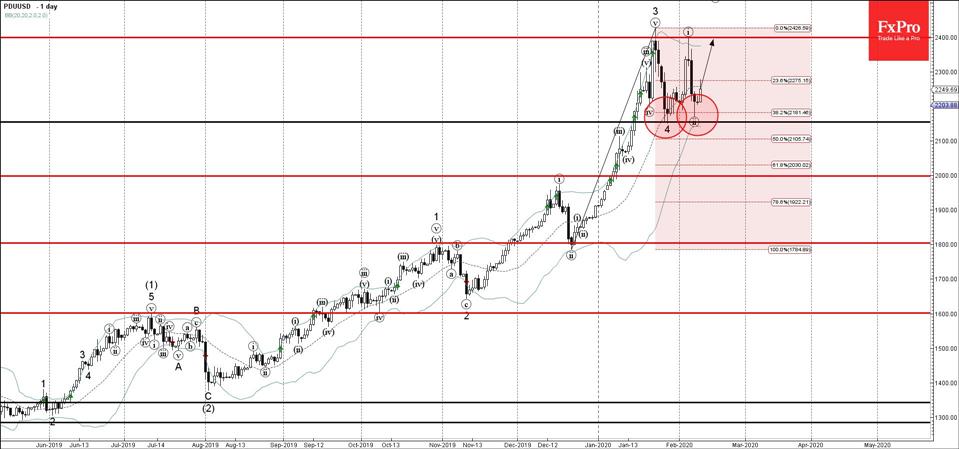
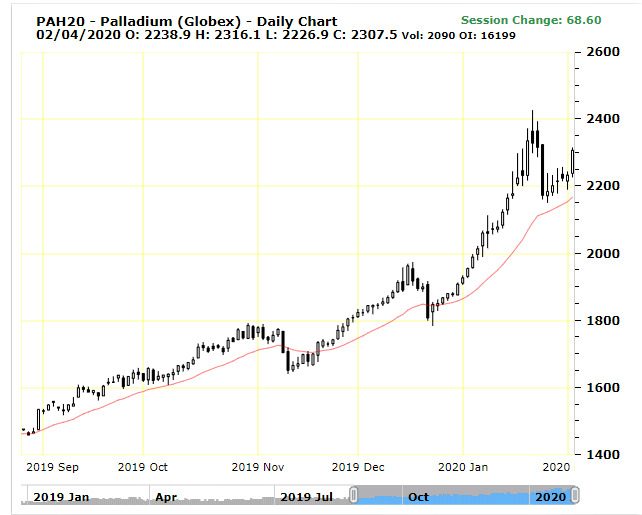
Palladium reversed from support area
Likely to rise to 2400.00
Palladium recently reversed up from the support zone located between
the key level 2155.00 (low of the previous short-term correction 4),
lower daily Bollinger Band and the 38.2% Fibonacci correction of the
pervious upward impulse 3 from December.
The upward reversal from this support area created the daily Japanese candlesticks reversal pattern Hammer.
Palladium is likely to rise further toward the next resistance level 2400.00 (top of the pervious impulse waves 3 and (i)).
Posted by AGORACOM-JC
at 3:51 PM on Monday, February 10th, 2020
SPONSOR: NORTHBUD (NBUD:CSE)
Sustainable low cost, high quality cannabinoid production and
procurement focusing on both bio-pharmaceutical development and
Cannabinoid Infused Products. Learn More.
Everything Canadians need to know about Legalization 2.0
Edibles, extracts, topicals, and vapes are finally legal in Canada. Billed as Legalization 2.0, the regulations came into effect on October 17, 2019 and products have slowly begun to trickle onto the market ever since.
Edibles, extracts, topicals, and vapes are finally legal
in Canada. Billed as Legalization 2.0, the regulations came into effect
on October 17, 2019 and products have slowly begun to trickle onto the
market ever since.
From how to consume, to what to consume, here’s everything Canadians need to know about Legalization 2.0.
Edibles 101
Cannabis-infused edibles are now available for sale through licensed
retailers in Canada, though there are strict rules around marketing and
dosing, including a limit of 10 mg of THC per packaged item.
Edibles in the form of food products, lozenges, and
beverages can produce effective, long-lasting, and safe experiences.
These forms of cannabis can also produce unpredictable effects that may feel like overdose symptoms. The difference is, of course, the dose, although it’s worth noting that while consuming too much can feel very unpleasant, no one has ever died from it.
It can take anywhere from 30 minutes to four hours for an edible to
fully kick in. Health Canada suggests that adults who use cannabis,
regardless of how they consume it, shouldn’t combine it with alcohol,
nicotine or other drugs.
Posted by AGORACOM-JC
at 3:41 PM on Monday, February 10th, 2020
Highlights
Lithium Processing: technology initiatives, patent formalization, battery recycling process and lithium metal manufacturing;
Pilot plant potentially de-risked through discussions with ready-built facilities;
Montreal, Montreal -Â February 10, 2020 – St-Georges Eco-Mining Corp. (CSE:SX)Â (CNSX:SX.CN)Â (OTC:SXOOF) (FSE:85G1)Â would like to update its shareholders on its on-going corporate developments.
In
the past six months, St-Georges has successfully executed its strategy
to strengthen and expand its focus on its green extraction metallurgical
processes development and re-center its exploration efforts on energy
metals in Quebec and Iceland. The team has also added a
Palladium-Rhodium project in Quebec and has advanced its Thor Gold
Project in Iceland to drill-ready status. Significant changes in the
Company operations, namely the sale of King of the North in September
and the spin-off of ZeU Crypto Networks Inc. in December, has allowed
the Company to free up resources that can now be allocated to the core
competencies of the Company.
Highlights
– Lithium Processing: technology initiatives, patent formalization, battery recycling process and lithium metal manufacturing;
– Pilot plant potentially de-risked through discussions with ready-built facilities;
– Hydro-Dam Project in Iceland advancing on its environmental permits;
– Status of Other Holdings.
Mineral Processing Research & Development
Lithium Processing Technology
Stage
I of the development of the Company’s lithium processing technology, in
collaboration with Iconic Minerals (TSX-V: ICM), was completed in the
first half of 2019 (See July 24, 2019 Press Release). Following the
delivery of the Stage I independent report to ICM, St-Georges has
accelerated the work and obtained results on many tasks that are part of
Stage II and Stage III of the planned development.
On-going testing has confirmed, so far, the portability of the process developed for sediments to hard rock sources of lithium.
The
Company is looking at opportunities to apply its technologies to other
advanced mining projects, in particular, ones that currently produce
spodumene concentrate, but have not yet decided to build an expensive
tech plant for refining. Potential adopters of the technology have been
identified, and discussions initiated. In addition, the Company is
looking at the potential to retrofit existing facilities. Management
will update the public on the status of these discussions when
materiality requires it.
St-Georges
filed the final documentation with the US Patent Office allowing its
patent application to move from its provisional status to the formal
patent application stage. The Company also filed a PCT application for
the same patent potentially giving it protection in an additional 152
countries. The final version of the patent application now allows for
the recovery of lithium from recycled batteries. St-Georges intends to
position itself as an ideal partner to provide strategic materials to
the battery industry, which includes recycling and recovery of the new
generation of batteries, including solid-state batteries. Additionally,
this patent application covers recycling as well as lithium metal and
alloys manufacturing.
Pilot Plant(s)
St-Georges’
management and the metallurgical team have worked on the design, the
sourcing of equipment, and the financial aspects of its proposed pilot
plant for the better part of the last six months. In an effort to lower
the risk of the proposal, the team has initiated discussions with
ready-built facilities with extra capacity. This could allow St-Georges
to build its pilot plant’s processing circuit faster with only minor
modifications to the ready-built facilities. Early estimates confirm
that capital expenditure should only be a fraction of the original
budgeted cost as the Company will be leasing the facilities long-term.
The Company expects to have secured an agreement for the pilot plant
facilities in Q2 2020.
Mineral Exploration
Julie Nickel Project
Following
last year’s fieldwork, the Company’s geological team and exploration
sub-contractors are planning additional drilling on the Julie Nickel
property. The exploration plan for the coming years will be presented to
the local stakeholders and First Nations in Q1, and the updated
permitting request should be filed by Q2 for work in early summer.
Additional bulk sampling should be performed to advance a nickel-iron
initiative by the Company’s metallurgical team.
Preliminary discussions are on-going with a ferronickel consortium planning a project in Quebec.
Manicouagan Palladium-Rhodium Project
Much
like the Julie Project, the Manicouagan Project has nickel and copper
that meets the conventional concentrates requirements based on the type
of sulphates it contains. Additionally, the recrystallized nature of
this region lends itself to higher recoveries of each crystal form and
better conversion.
The
presence of well-known high-grade Palladium-Rhodium-Ruthenium surface
showings (See January 27, 2020, Press Release), regardless of size,
allows St-Georges to significantly reduce its costs to acquire PGE
concentrate material for metallurgical bench testing of its processing
and refining metallurgical process for Palladium-Rhodium-Ruthenium.
St-Georges
exploration team is planning a pre-drilling surface campaign to obtain
permitting to intervene on-site in mid-summer. At the same time,
St-Georges’ management is having early-stage discussions with potential
farm-in or earn-in partners to advance the project at a faster pace.
Borealis EHF
The
hybrid decentralized and distributed ledger-driven derivative trading
platform is coming together at a good pace. Regulatory discussions are
now in control of the timeline for the delivery of the platform.
Islensk Vatnsorka Hf – Iceland Hydro-Electric Dam Project
Islensk
informed the Company that the permitting process is moving within the
expected timeline and according to expectations. The Company still
believes that the project will be fully permitted by the end of 2020.
Iceland Resources EHF/St-Georges Iceland ltd
On
August 21, 2019, the Icelandic authorities approved St-Georges’
previously disclosed work program for the coming year (See March 2, 2019
Press Release). The core projects have seen a fair share of exploration
work, while some secondary projects have been repeatedly delayed due to
extreme weather conditions in northern and eastern Iceland.
Work
on the Thor Gold Project has brought it to drill-ready status. Surface
rights and environmental conditions are no longer problematic, and the
Company has requested a legal opinion to confirm that it can drill on
the sole basis of its central government license.
The
Company did, however, take samples at Thor during the winter season
that are currently being analyzed. The Company is now preparing a bulk
sample program at Thor. The material will be sent to be processed in
Canada as soon as the weather allows it sometime in Q2.
The
Company is currently in discussions to acquire the balance of the
surface rights that escape its ownership on the project and is looking
to acquire the last portion equity own by a third party in the Thor Gold
Project.
Status of other holdings
The Company currently holds the following assets as of January 31, 2020.
Vilhjalmur Thor Vilhjalmsson, President and CEO of St-Georges, commented: “(…)
the last six months have been for the Company both challenging but
exciting. With the successful listing of ZeU Crypto Networks Inc., the
sale of KOTN, funding above market prices, and now faster-than-expected
progress in regards to the pilot plant, the team has shown its
capabilities to deliver.”
St-Georges
is developing new technologies to solve some of the most common
environmental problems in the mining industry. The Company controls
directly or indirectly, through rights of first refusal, all the active
mineral tenures in Iceland. It also explores for nickel-copper-cobalt
and Palladium-Palladium-Rhodium-Ruthenium on the Julie Nickel Project
& the Manicouagan Palladium-Rhodium Project on the Quebec’s North
Shore. Headquartered in Montreal, St-Georges’ stock is listed on the CSE
under the symbol SX, on the US OTC under the Symbol SXOOF and on the
Frankfurt Stock Exchange under the symbol 85G1.
The
Canadian Securities Exchange (CSE) has not reviewed and does not accept
responsibility for the adequacy or the accuracy of the contents of this
release.
Posted by AGORACOM-JC
at 2:15 PM on Monday, February 10th, 2020
SPONSOR: Datametrex AI Limited
(TSX-V: DM) A revenue generating small cap A.I. company that NATO and
Canadian Defence are using to fight fake news & social media
threats. The company announced three $1M contacts in Q3-2019. Click here for more info.
Jigsaw’s work requires forecasting the most urgent threats facing the
internet, and wherever we traveled these past years — from Macedonia to
Eastern Ukraine to the Philippines to Kenya and the United States — we
observed an evolution in how disinformation was being used to manipulate
elections, wage war, and disrupt civil society. By disinformation we
mean more than fake news. Disinformation today entails sophisticated,
targeted influence campaigns, often launched by governments, with the
goal of influencing societal, economic, and military events around the
world. But as the tactics of disinformation were evolving, so too were
the technologies used to detect and ultimately stop disinformation.
Using technology to detect manipulated images
Beginning in 2016 we began working with researchers and academics to
develop new methods for using technology to detect certain aspects of
disinformation campaigns. Together with Google Research and academic partners, we developed an experimental platform called Assembler to test how technology can help fact-checkers and journalists identify and analyze manipulated media.
Debunking images is a time consuming and error-prone process for
fact-checkers and journalists. To verify the authenticity of images,
they rely on a number of different tools and methods. For example,
Bellingcat, a group of researchers and investigative journalists
dedicated to in-depth fact-checking, lists more than 25 different
tools and services available to verify the authenticity of photos,
videos, websites, and other media. Fact-checkers and journalists need a
way to stay ahead of the latest manipulation techniques and make it
easier to check the authenticity of images and other assets.
Assembler brings together multiple image manipulation detectors from
various academics into one tool, each one designed to spot specific
types of image manipulations. Individually, these detectors can identify
very specific types of manipulation — such as copy-paste or
manipulations to image brightness. Assembled together, they begin to
create a comprehensive assessment of whether an image has been
manipulated in any way. Experts from the University of Maryland,
University Federico II of Naples, and the University of California,
Berkeley each contributed detection models. Assembler uses these models
to show the probability of manipulation on an image.
Additionally, we built two new detectors to test on the platform.The
first is the StyleGAN detector to specifically address deepfakes. This
detector uses machine learning to differentiate between images of real
people from deepfake images produced by the StyleGAN deepfake
architecture. Our second model, the ensemble model, is trained using
combined signals from each of the individual detectors, allowing it to
analyze an image for multiple types of manipulation simultaneously.
Because the ensemble model can identify multiple image manipulation
types, the results are, on average, more accurate than any individual
detector.
“These days working in multimedia forensics is extremely stimulating.
On one hand, I perceive very clearly the social importance of this
work: in the wrong hands, media manipulation tools can be very
dangerous, they can be used to ruin the life and reputation of ordinary
people, commit frauds, modify the course of elections,†said Dr. Luisa
Verdoliva, Associate Professor at the Department of Industrial
Engineering at the University Federico II of Naples and Visiting
Scholar, Google AI. “On the other hand, the professional challenge is
very exciting, new attacks based on artificial intelligence are
conceived by day, and we must keep a very fast pace of innovation to
face them. Collaborating in Assembler was a great opportunity to put my
knowledge and my skills concretely to the service of people. In addition
I came to know wonderful and very diverse people involved in this
project, all strongly committed in this fight. Overall a great
experience.â€
The Current: Exposing the architecture of disinformation campaigns
Jigsaw is an interdisciplinary team of researchers, engineers,
designers, policy experts, and creative thinkers, and we’ve long wanted
to find a way to share more of our team’s work publicly, especially our
research insights. That’s why I’m excited to introduce the first issue
of The Current, Jigsaw’s new research publication that illuminates complex problems through an interdisciplinary approach — like our team.
Our first issue is, as you might have guessed, all about
disinformation — exploring the architecture of disinformation campaigns,
the tactics and technology used, and how new technology is being used
to detect and stop disinformation campaigns.
One feature of this inaugural issue is the Disinformation Data Visualizer. Jigsaw visualized the research from the Atlantic Council’s DFRLab on
coordinated disinformation campaigns around the world and shows the
specific tactics used and countries affected. The Visualizer is a work
in progress. We’re sharing this with the wider community to enable a
dialogue about the most effective and comprehensive disinformation
countermeasures.
An ongoing experiment
Disinformation is a complex problem, and there isn’t any simple
technological solution. The first step is to better understand the
issue. The world ought to understand how disinformation campaigns are
increasingly being used as a way of manipulating people’s perception of
important issues. We’re committed to sharing our insights and publishing
our research so other organizations can examine and scrutinize
different ways to approach this issue. We’ll be sharing more updates
about Jigsaw’s work in this space over the coming few months.
In the meantime we’d like to express our gratitude to our academic
partners, our partners within Google, and the courageous publishers and
journalists who are committed to using technology to bring people the
truth, wherever it leads: Chris Bregler, Larry Davis, Alexei Efros, Hany
Farid, Andrew Owens, Abhinav Shrivastava, Luisa Verdoliva, and Emerson
Brookings, Graham Brookie and the Atlantic Council’s DFRLab team.
Lomiko Metals Outlines 2020 Project Plan for La Loutre Flake Graphite Property in Quebec
(Vancouver, British-Columbia and Montreal, Quebec) February 5, 2020 –
Lomiko Metals Inc. (TSX-V: LMR, OTC: LMRMF, FSE: DH8C) (Lomiko or the
“Companyâ€) is pleased to announce plans to move forward with assessment
and development of the La Loutre Property for 2020. The goals are as
follows:
1) Complete 100% Acquisition of the Property 2) Complete Metallurgy and Graphite Characterization 3) Complete a Technical Report in accordance with NI 43-101 Guidelines
A “technical report” means a report prepared and filed in accordance
with this Instrument and Form 43-101F1 Technical Report that includes,
in summary form, all material scientific and technical information in
respect of the subject property as of the effective date of the
technical report;
4) Complete Preliminary Economic Assessment (PEA) compliant with NI 43-101 Guidelines
PEA means a study, other than a pre-feasibility or feasibility study,
that includes an economic analysis of the potential viability of mineral
resources;
Further details regarding the plan will be released when consultants are assigned for each task.
Results from Drilling Program
Results from the 2019 program (see Table 1 below, and Figure 1) at the
Refractory Zone of the La Loutre graphite project (the “Projectâ€)
indicate considerable promise. A total of 21 holes were completed in
2019 on the Refractory Zone for a total of 2,985 metres. The Project is
owned by Lomiko (80%) and Quebec Precious Metals Corporation (20%).
The above-noted 2016 mineral resource does
not include the current results or the significant intercepts from the
Refractory Zone in 2016 which were as follows:
LL-16-01 – 7.74% Cg over 135.60 m including 16.81% Cg over 44.10 m LL-16-02 – 17.08% Cg over 22.30 m and 14.80% Cg over 15.10 m LL-16-03 – 14.56% Cg over 110.80 m
The next task is to complete a new resource estimate in compliance with NI 43-101 for the entire Project since the above-mentioned 2016 resource estimate including the 2016 and 2019 drilling at the Refractory Zone.
Posted by AGORACOM-JC
at 1:15 PM on Monday, February 10th, 2020
SPONSOR: CardioComm Solutions (EKG: TSX-V)
– The heartbeat of cardiovascular medicine and telemedicine. Patented
systems enable medical professionals, patients, and other healthcare
professionals, clinics, hospitals and call centres to access and manage
patient information in a secure and reliable environment.
mHealth Market Is Generating Revenue of $10.5 billion by 2020, at CAGR 33.5% Growth Rate
Global mHealth market was valued at $10.5 billion in 2014 and is expected to grow at a CAGR of 33.5% during 2015-2020.
Mobile health provides health service and information through mobile communication devices to address the health priorities and concerns. The advanced mobile and wireless technologies have transformed the face of healthcare services across the globe and are rendering the growth of mHealth market.
Moreover, the continued growth in coverage of mobile cellular networks, rapid advances in mobile technologies & applications, increasing lifestyle diseases and growing awareness among patient population in emerging economies, are some of the key factors fostering the growth of mHealth market. On contrary, the lower accuracy of the devices, technology’s infancy in middle and lower income economies, weak reimbursement coverage, uncertainty in government regulations in certain regions, and low adoption among ageing population is hampering the market growth to a certain extent.
The major chunk of mHealth devices market – i.e. ~71% – is
collectively commanded by BP monitors, blood glucose monitors and
cardiac monitors. The largest share of these monitors can be attributed
to increased affordability of mobile compatible devices, integration of
innovative technologies in monitoring devices and the increasing
lifestyle disease such as diabetes, stroke, COPD, ischemic heart to name
a few. Within mHealth services, diagnostic, monitoring and treatment
services collectively hold about 74% of the market. The rapid growth of
mHealth services market is attributed to rising government initiatives,
increasing mHealth awareness programs in underdeveloped regions etc.
Geographically,
North America and Europe constitute the two largest markets for mHealth
and collectively accounted for 67% of the market revenue in 2014. They
are expected to continue its hold on the global market throughout the
forecast period. Early adoption of innovative technology, large patient
population and high capacity to pay for services are some of the key
factors responsible for the growth of mHealth market in these regions.
However, the market outlook across developing economies is looking
favorable and strong owing to the increasing awareness of chronic
diseases, favorable government regulations and increased healthcare
expenditure. Philips healthcare, Bayer Healthcare and Sanofi are some of
the key companies enjoying a strong foothold in mHealth market,
especially in Asian countries.
Tags: EKG, mhealth, small cap stocks, stocks, tsx, tsx-v Posted in CardioComm Solutions | Comments Off on #Mhealth Market Is Generating Revenue of $10.5 billion by 2020, at CAGR 33.5% Growth Rate – SPONSOR: CardioComm Solutions $EKG.ca – $ATE.ca $TLT.ca $OGI.ca $ACST.ca $IPA.ca
Posted by AGORACOM-JC
at 12:45 PM on Monday, February 10th, 2020
SPONSOR: BetterU Education Corp.
aims to provide access to quality education from around the world. The
company plans to bridge the prevailing gap in the education and job
industry and enhance the lives of its prospective learners by developing
an integrated ecosystem. Click here for more information.
The Landscape Of Edtech: Mapping The Innovation Revamping Education In India
Over $1.8 Bn has been invested into Indian edtech startups from 2014 to 2019
The test prep segment has the highest capital inflow and the greatest demand in India
India’s tech economy growth has pushed the demand for skill development solutions
From classrooms to smart devices, the medium of education and learning in India has gone through a paradigm shift. With over 665 Mn
wireless internet subscribers (Q3 2019), India has seen a massive 14%
increase in the addressable base for internet services in just one year.
This rate of adoption has meant great things for startups and digital
products and services and has given rise to personalisation and
convenience when it comes to the school curriculum and off-classroom
learning.
The growing popularity of online learning has provided a major push
to two of the top subsectors in the edtech market— test preparation
(from K-12 to entrance exams) and online certification. To put this into
perspective, between 2014 to 2019, startups in test prep and online
certification startups earned a whopping 88% ($1.6 Bn) of the total
capital inflow in edtech.
The skewness in funding and investor interest for test prep and
online certification startups is in line with the prevalence of the
grades-first mentality in the Indian market as well as the need for
skilled tech labour. These products are highly in demand in the Indian
market because they mirror the traditional climb up the education ladder
— preparation for exams and getting the right certificate for
employment.
Posted by AGORACOM-JC
at 12:10 PM on Monday, February 10th, 2020
SPONSOR: PRIMO NUTRACEUTICALS INC.
(CSE: PRMO) (OTC: BUGVF) (FSE: 8BV) (DEU: 8BV) (MUN: 8BV) (STU: 8BV)
provides strategic capital to the thriving cannabis cultivation
sector through ownership and development of commercial real estate
properties. The company also offers fully built out turnkey facilities
equipped with state-of-the-art growing infrastructure to cannabis
growers and processors. Click here for more info.
CBD’s Touted Therapeutic Benefits Help Loosen Regulatory Constraints
Global cannabidiol market is expected to reach USD 9.69 Billion by 2025 while registering a CAGR of 32.6% during the forecast period.
NEW YORK, Feb. 10, 2020 – Most regions that have approved medical cannabis typically see doctors prescribe CBD-based medications to their patients. CBD, or cannabidiol, is a derivative of the hemp plant, yet is unlike its counterpart, THC, which is derived from the marijuana plant. Nowadays, the FDA acknowledges that CBD can possibly become a legitimate alternative medical treatment to a number of traditional therapeutics, further highlight the health benefits associated with the compound. However, the agency is requiring researchers to provide more data on the efficacy of CBD in order for CBD to become an approved medicinal treatment, prompting them to conduct large-scale clinical trials. “As legislation expands rapidly worldwide, the volume of efficacy data is growing, as are legitimate clinical trial studies,” says Liam McGreevy, Chief Executive Officer of Ethnopharm, a European cannabis company specializing in genetics and distribution, “This data will enable us to better understand the effects of the various cannabinoids and terpenes, their synergistic effect and how their impact links to the individual’s genetics or biomarkers.
This data is key to understanding the most effective combinations and
strengths for various conditions, moving towards targeted personalized
medicines.” And according to data compiled by Grand View Research, the
global cannabidiol market is expected to reach USD 9.69 Billion
by 2025 while registering a CAGR of 32.6% during the forecast period.
Global Payout, Inc. (OTC: GOHE), Auxly Cannabis Group Inc. (OTC: CBWTF),
Puration Inc. (OTC: PURA), Green Organic Dutchman Holdings Ltd. (OTC:
TGODF), Liberty Health Sciences Inc (OTC: LHSIF)
As the cannabis industry continues to develop, lawmakers and federal
agencies are actively working towards expanding the market. Recently,
the U.S. Department of Agriculture (USDA) provided an update on its
interim final rule process for hemp. According to the USDA, hemp
production in the U.S. has seen a resurgence in the last five years;
however, it remains unclear whether consumer demand will meet the
supply. High prices for hemp, driven primarily by demand for use in
producing CBD, relative to other crops, have also driven increases in
planting. As such, producer interest in hemp production is largely
driven by the potential for high returns from sales of hemp flowers to
be processed into CBD oil.
And after extensive consultation with the Attorney General, the USDA
issued the following interim final rule to establish the domestic hemp
production program and to facilitate the production of hemp, as set
forth in the 2018 Farm Bill: The USDA upholds the 0.3% threshold as out
of its jurisdictional hands as written into the law. Furthermore, the
lack of remedies for testing noncompliance raised suggestions that
farmers be allowed to ship to processors who could remove the THC to
keep the crop viable. Another subject of worry was the requirement (as
described in the Federal Register) that laboratories be certified by the
Drug Enforcement Administration (DEA), and crops tested within 15 days
prior to harvest. Yet, by the end of January, only 44 labs existed to
support more than 16,000 licensed farmers. Accordingly, the industry
expects to remain bureaucratically constrained yet again after other
fundamental supply-chain bottlenecks limited output and producers’
ability to bring their crops to market.
Tags: CBD, Hemp, Marijuana, stocks, tsx, tsx-v Posted in PRIMO Nutraceuticals Inc. | Comments Off on PRIMO Nutraceuticals Inc. $PRMO.ca – #CBD’s Touted Therapeutic Benefits Help Loosen Regulatory Constraints $CROP.ca $VP.ca NF.ca $MCOA
Posted by AGORACOM
at 4:55 PM on Friday, February 7th, 2020
SPONSOR: ZEN Graphene Solutions: An emerging advanced materials and graphene development company with a focus on new solutions using pure graphene and other two-dimensional materials. Our competitive advantage relies on the unique qualities of our multi-decade supply of precursor materials in the Albany Graphite Deposit. Independent labs in Japan, UK, Israel, USA and Canada confirm this. Click here for more information
“This company has the very rare graphite deposit in Ontario –
as it is able to transform or exfoliate into graphene products easier
than other graphites around the world”
“The goal of the facility is to start producing some of these
nanomaterials – graphene, graphene oxide, and graphene quantum dots.”
“These materials at the research level have a lot of excitement around
them. They also come at a very high price.”
ZEN is an emerging graphene technology solutions company with a focus
on the development of graphene-based nanomaterial products and
applications. The unique Albany Graphite Project provides the company
with a potential competitive advantage in the graphene market as
independent labs in Japan, UK, Israel, USA and Canada have independently
demonstrated that ZEN’s Albany PureTM Graphite is an ideal precursor
material which easily converts (exfoliates) to graphene, using a variety
of mechanical, chemical and electrochemical methods.
Posted by AGORACOM
at 3:00 PM on Friday, February 7th, 2020
SPONSOR: New Age Metals Inc. The company owns one of North America’s largest primary platinum group metals deposit in Sudbury, Canada. Updated NI 43-101 Mineral Resource Estimate 2,867,000 PdEq Measured and Indicated Ounces, with an additional 1,059,000 PdEq Ounces Inferred. Learn More.
Summary
The palladium market will remain tight and pressure prices higher.
Sibanye Gold with the Stillwater Mine has plunged back into SA.
The Aberdene palladium ETF and Canadian palladium juniors are the best proxies.
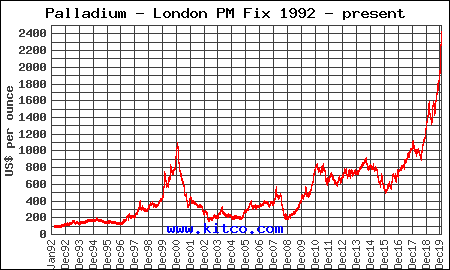
Palladium has been the best performing commodity in the past two
years or so, jumping over 100% and there is more to go. This palladium
bull market is much different than the last one. The bull market from
1997 to 2000 was about 3 years and then palladium dropped giving up most
of the gains in less than a year. There was a nice bump up from the
2008 crisis and then the price traded sideways for several years. The
price bottomed at the end of 2015 with the severe bear market in
precious metals. Since then, the price has been going steadily higher
with a major break out in 2016. This bull market is not going to end
anytime soon for the reasons below.
Palladium is mostly used in the auto industry for pollution control
with catalytic converters. Electric vehicles will be a long time coming
to replace any significant amount of gasoline/diesel driven vehicles.
Meanwhile, pollution standards are being tightened that will keep demand
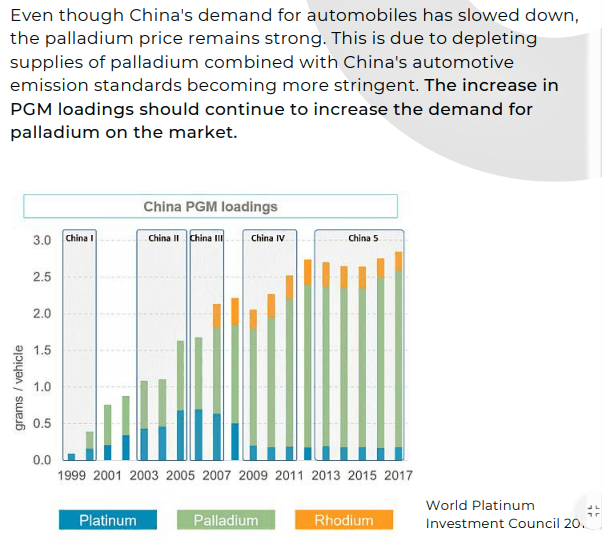
high. China has been gobbling up palladium since their China 5
pollution standards took effect in 2013. China 6 will now be coming into effect that will increase loads per vehicle of palladium. Many analysts have been commenting that China has been secretly stock piling the metal and is driving prices.
Palladium demand by Sector
There is no doubt the demand will remain strong, but the real
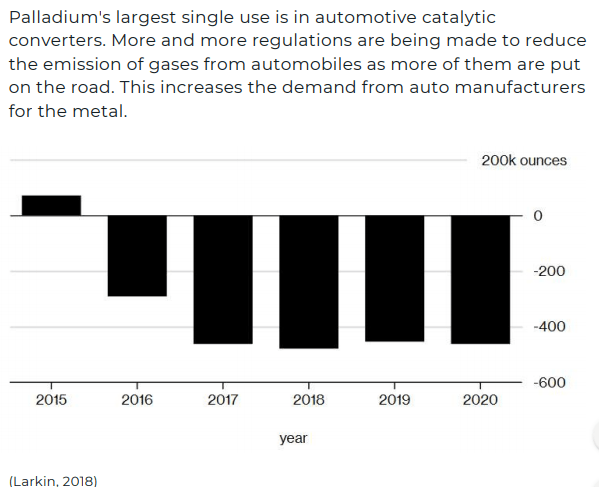
story is on the supply side. This next graphic illustrates the supply
deficit since 2016.
It is obvious to expect an increased demand from China as pollution regulations are tightened with ‘China 6’.
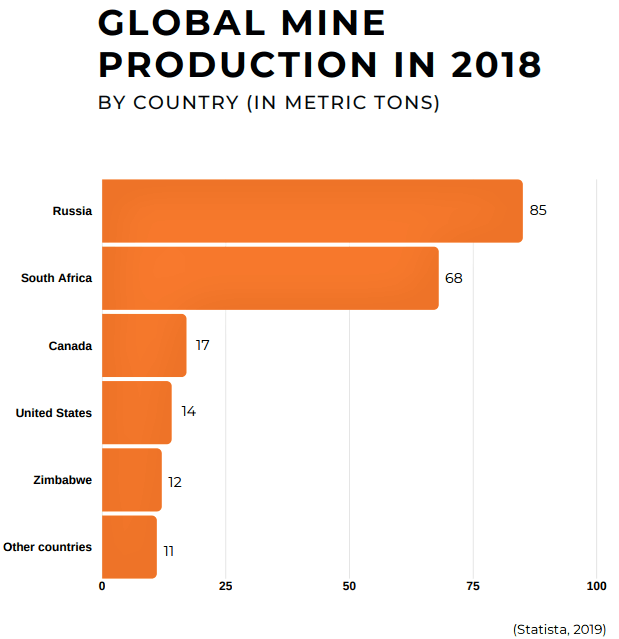
This next graphic of global mine production is very important because of the palladium supply is in a very unstable region.
The Russian supply from Norilsk Nickel has always been quite stable
and is of no concern, but as investors, we cannot participate there.
South Africa is the other big producer and that country is becoming very
unstable and more worrisome, that is where most of the future reserves
are.
The world’s largest PMG reserves are in South Africa, precisely in
the Bushveld Complex (in the central-Northern part of the country) which
alone accounts for about 50% of the world’s palladium resources, but,
overall, South Africa has reserves of 63 million kilograms which
represent over 91% of the worldwide availability.
South African (SA) mines have always been plagued with labour issues,
strikes, and high costs. To make matters worse, the country is now
facing an energy crisis with rolling blackouts shutting down mines. The country will probably become much more unstable, with unemployment hitting 10-year highs.
Half of their youth are unemployed and the company that provides 95% of
the electricity (when it can) is reporting record financial losses.
This is a country teetering on the brink of chaos that will likely be
very disruptive to PGM mine supply. I am avoiding palladium and platinum investments there.
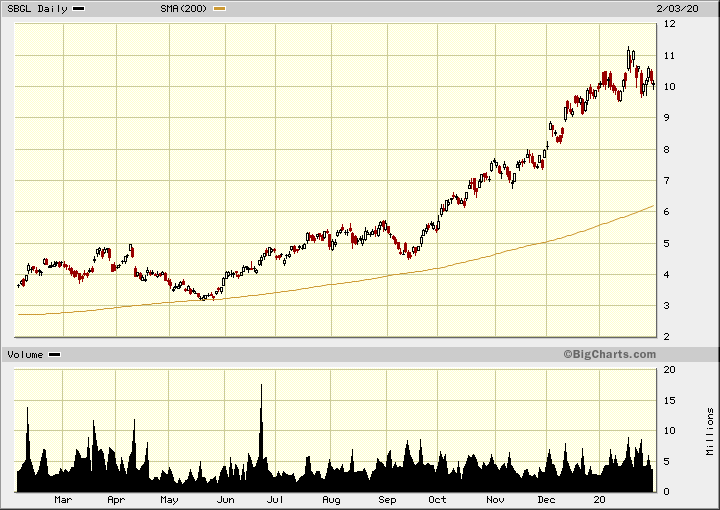
With all the issues in SA, Sibanye Gold (SBGL)
began diversifying out of the country and acquired the Stillwater PGM
mine in the US. That use to be my favourite stock to play palladium bull
markets. However, they jumped right back into the fray, acquiring
Lonmin in 2019, a struggling SA, PGM producer. They promptly cut 5,000
jobs at the mine and it now appears Sibanye is moving more into PGMs
from gold. According to what was released in the acquisition news,
Sibanye PGM production will increase from around 1.7M ounces per year
to 2.8M ounces/year. This compares to about 600,000 ounces/year at the
US Stillwater complex plus about 700,000 ounces produced through the
recycling unit, noted from the 2018 annual report.
SA PGM production was 627,991 ounces (this will increase significantly with Lonmin acquisition)
SA gold production was 344,752 ounces (this amount is well below normal because of mine strike)
US PGM production was 284,773 ounces
US PGM recycling was 421,450 ounces
The stock has done well with the rising palladium price, but at these
stock prices and the move back to SA, it has become too risky. I would
suggest selling at these prices.
To highlight risks further, the Q1 2019 financial report highlights a -63% decline in SA gold production in Q1 2019 compared to Q1 201 because of the labour strike. This news out on February 2nd
states that 19 attacks on SA gold facilities nearly doubled from last
year. On December 15, 2019, attackers took hostages and plundered the
smelting plant at Gold Fields Ltd.‘s South Deep mine. “Mining companies are being attacked by thugs and armed gangs and there is a lack of police response,” said Neal Froneman, CEO of Sibanye Gold Ltd., which repelled an attack on its Cooke mine two weeks ago. “It eventually has a knock-on impact into society, it’s lawlessness, it’s anarchy.”
There is the Aberdeen Standard Physical Palladium ETF Trust (PALL).
The investment objective of the Trust is for the Shares to reflect the
performance of the price of palladium, less the expenses of the Trust’s
operations. The ETF Trust physically holds palladium in JPMorgan vaults
in London and Zurich. PALL tracks the movements in palladium spot prices
fairly well and is the best direct exposure to palladium. Aberdeen
purchased the fund effective October 1, 2018, from ETF Securities. The
Aberdeen website is terrible, it just diverts you to something else they
are trying to sell. You can find some more info at etf.com.
One disadvantage, as a Trust it will often trade at a discount to NAV, so short term may not always reflect palladium movements precisely.
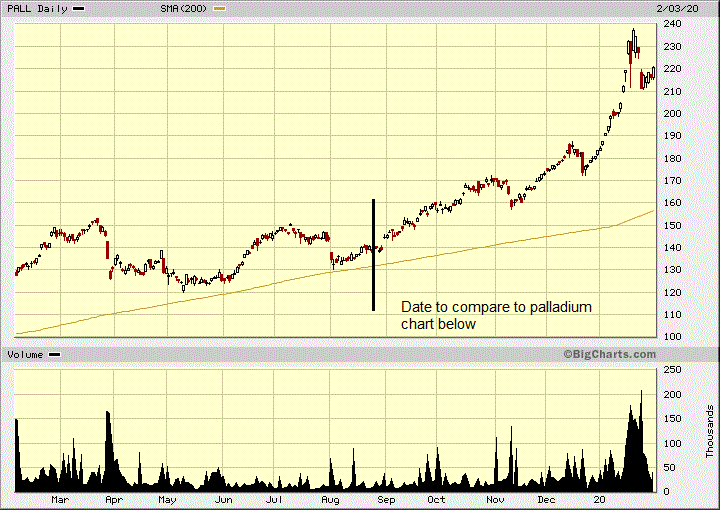
The chart of PALL reveals quite a jump in volume on the last rally. I
do not find this alarming, but shows it is really the first time the
palladium market has caught retail interest.
If we compare to the short-term chart on palladium below, it is easy
to see that PALL has tracked the palladium price very well. After a
needed correction, the price jumped higher on Monday. This is probably a
start to the next rally.
There is also Sprott Physical Platinum and Palladium Trust (SPPP), but it is split 50/50 between the two metals.
Canada is the third-largest producing country, so an obvious place to
look. A lot of the palladium production comes from major miners in the
Sudbury nickel/copper complex as a byproduct. Obviously, this is a good
area to look and there was an excellent proxy for investors called North
American Palladium that was operating the Lac Des Isles palladium mine.
Unfortunately, for us, investors, it was bought out last year by SA producer Implats.
The area had a number of discoveries back in the last bull market
around the year 2000, and I visited a number of those projects back
then. I believe the best one in this area is Canadian Palladium that acquired the East Bull project last year. There is also Palladium One that is not Canada but not in SA either.
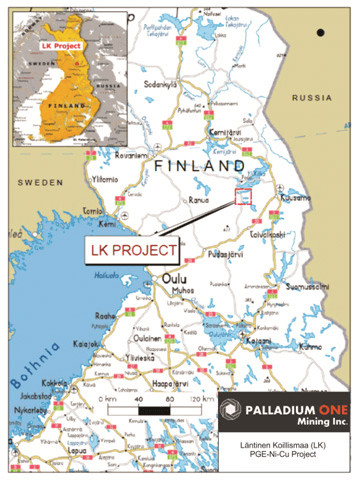
Palladium One Mining (OTC:NKORF) – PGM project is in Finland.
Shares outstanding 111 million, 185 million fully diluted
Their LK project is located in north-central Finland, approximately
40 km north of the company’s exploration office in the town of
Taivalkoski. The property is 160 km (by road) east-southeast of
Rovaniemi and 190 km northeast of the port city of Oulu. Finland is a
very stable jurisdiction and has a viable mining sector.
The company is run by CEO/President, Derrick Weyrauch, CPA, CA who is
an experienced mining executive and corporate director. Mr. Weyrauch’s
background includes finance, risk management, corporate restructuring
and turnarounds, coupled with M&A strategy development, execution
and post transaction integration. He is the co-founder of Magna Mining
Corp. and is a former corporate director of a number of companies
including Eco Oro Minerals Corp., Jaguar Mining Inc., and Banro Corp.
and is a former CFO of Jaguar Mining Inc. and Andina Minerals Inc.
Currently, he is a non-executive director and at Cabral Gold Inc.
The LK Project is 100% owned by Palladium One Mining Inc.
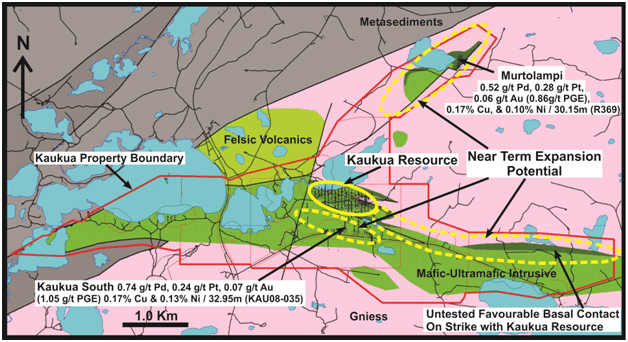
Palladium One released a mineral resource estimate for the Kaukua deposit within the 100-per-cent-owned Lantinen Koillismaa (LK) project.
Highlights:
An optimized pit-constrained mineral resource, at a 0.3-g/t palladium cut-off;
635,600 PdEq (palladium equivalent) ounces of indicated resources grading 1.80 g/t PdEq contained in 11 million tonnes;
525,800 PdEq ounces of inferred resources grading 1.50 g/t PdEq contained in 11 million tonnes.
Significant potential exists to expand the historic Haukiaho
deposit along strike both to the east and west. For example, 1960s-era
historic drilling by Outokumpu about two km east of the historic 2013
Haukiaho inferred resource returned up to 36.36 m grading 0.20 per cent
Cu and 0.19 per cent Ni from 1.64 m to 38.00 m downhole in hole R692 (no
PGE analysis was conducted). Reconnaissance prospecting by Palladium
One in the vicinity of this historic drill hole returned up to 0.51 per
cent Cu, 0.33 per cent Ni, 0.19 g/t Pt, 0.56 g/t Pd and 0.21 g/t Au
(0.96 g/t PGE) (see press release dated Aug. 12, 2019). Palladium one
recently applied for the Haukiaho East reservation (see press release
date Sept. 5, 2019), which, if approved, the company would control about
24 km of the favourable Haukiaho basal contact.”
The company plans to conduct
a 75-line-kilometre induced polarization (IP) geophysical program,
along with a diamond drilling program of up to 5,000 metres, at the LK
project. Both drilling and geophysics contractor are expected to be
mandated soon.
The Tyko Ni-Cu-PGE project, i65km northeast of Marathon Ontario, Canada.
The Tyko project is an early stage, high sulphide tenor, nickel
focused project with recent drill hole intercepts returning up to 1.06 Ni over 6.22 m including 4.71% Ni over 0.87m in hole TK-16-010 (see press release dated June 8, 2016). On January 21, 2019, Palladium One reported prospecting samples with assay results of up to 0.74% Ni, 4.09% Cu, and 2.51g/t PGE
on the Tyko Nickel-Copper-PGE Property. This project has some
palladium, but if it is developed to a resource, it will be more like
the Sudbury copper and nickel mines with PGMs as a byproduct.
The company is well financed, closing a C$3,786,180 private placement
at C$0.06 per unit issuing 63,102,999 units. Eric Sprott took down
20,000,000 units. While funding is required, this is quite a bit of
dilution.
Currently, the stock is priced around $0.18 so all the warrants and
options are well in the money. So is appropriate to use the fully
diluted shares outstanding for valuation.
Market cap – $20 million. Market cap fully diluted Cdn $33.3 million
Subtracting $3.8 million financing from the market cap, it values
their 635,600 PdEq indicated resource at C$25 per ounce and fully
diluted at C$46 per ounce. This is a quite low valuation.
The stock mostly trades on the TSXV symbol (PDM), so I used the C$
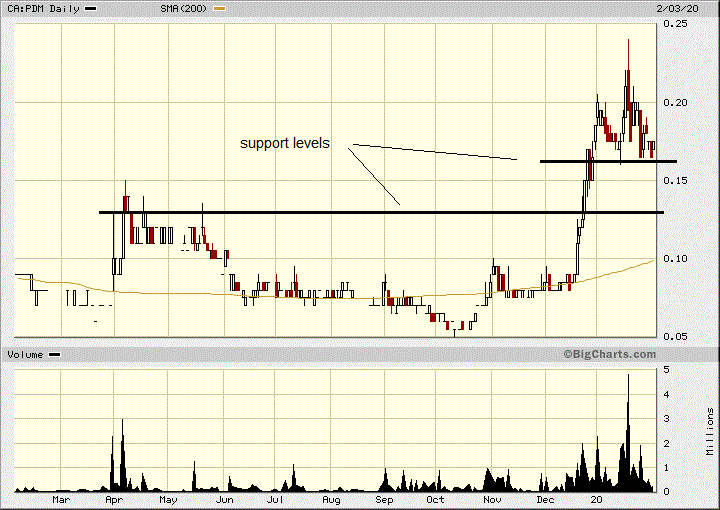
chart. Support is around 16 cents and 12.5 cents. If 16 cents holds, the
stock could begin a leg higher.
Canadian Palladium
Shares outstanding 100.3 million approx.
All warrants and options are at 30 cents and higher.
What I consider one of the most important highlights is the company
is run by Wayne Tisdale. In the last 10 years, he has advanced three
juniors and sold them for large profits for their shareholders. He
helped start and finance the Rainy River project which was sold to NewGold in 2013 for $310 million. He developed US Cobalt and, in 2018, sold it to First Cobalt in a transaction worth $150 million to his shareholders’ delight. Going back further, he helped finance oil & gas company Ryland Oil that was bought out by Crescent Point in 2010 for a $121.8 million
valuation. Mr. Tisdale has a keen eye to find projects that can quickly
be advanced further to make them prime acquisition targets. Canadian
Palladium only has a market value now of about C$20 million, and I have
little doubt that Mr. Tisdale is going to do it again with Canadian Palladium.
Highlights:
Company run by Wayne Tisdale
Low market valuation – C$31 per ounce
East Bull with 43-101, 523,000 inferred palladium equivalent resource
East Bull can open to depth and along strike
Widely spaced drilling only needs infill drilling to upgrade and expand resource
Close to Sudbury complex where ore can be processed
Projects – East Bull, Ontario Canada
East Bull was drilled by Freewest and Mustang Minerals back in the
2000 era and now has a 43-101, 523,000 ounces inferred palladium
equivalent resource. A private company, Pavey Ark Minerals had the
property and in 2017 they twinned old drill holes and completed the work
to bring the project to 43-101 standards. Canadian Palladium (formerly
21C Metals) acquired a 100% option on the project last February.
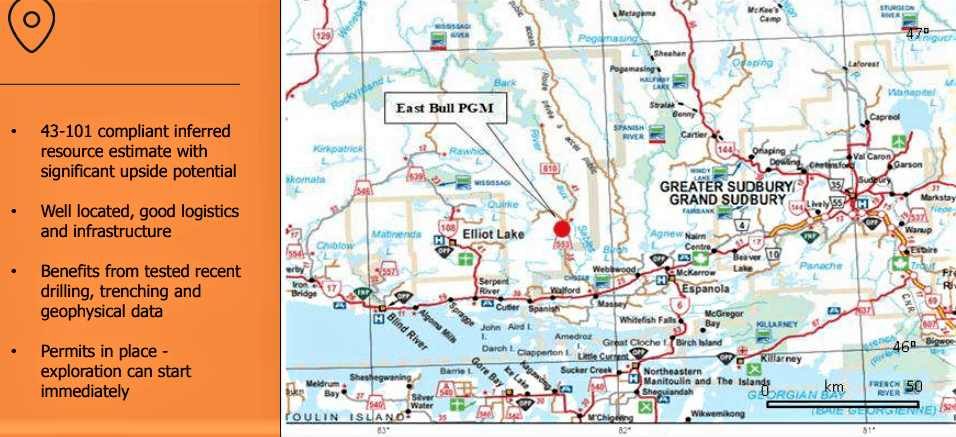
This graphic from their presentation is a good summary and shows the location
In the 1999, 2000 period, Freewest drilled 27 holes for a total of
2,902 meters and carried out extensive surface trenching. Work by
Mustang on the eastern part of the Property (claim 1227910) included 11
drill holes for a total of 1,766 meters. The work by Freewest and
Mustang forms the majority of the data for the current resource
estimate. Additionally, Pavey Ark reviewed and re-sampled drill core
from the 27 BQ and NQ holes from the Freewest drilling program. Pavey
Ark’s exploration results in 2017 included;
hole EB17-01 that intersected 12.0 m at 2.87 g/t PGM+Au, 0.23% Cu and 0.13% Ni and
hole EB17-03 that intersected 7.0 m of 3.21 g/t PGM+Au, 0.16% Cu and 0.07% Ni.
(Note: Au = gold, Cu = copper, and Ni = nickel.)
In 2019, BULL completed their initial exploration program at East Bull and reported results Sept. 17, 2019.
These are highlights from the first sampling program on the East Bull
palladium project and field program on the Agnew Lake project:
Seventy-three grab samples were selected to help identify the
palladium-bearing rock types of the mineralized trend. Grab samples are
used to determine the presence mineralization and may not be indicative
of the overall grade of the zone
Sampling successfully defined locations for channel sampling and the
higher grades could indicate potential zones within the mineralized
zone for higher-grade starter pits
Range of palladium assay sample results were 37 samples below 0.1
g/t palladium, 17 between 0.1 and 0.5 g/t with 14 above 1 g/t. Nine of
these ran between 2 and 6.5 g/t
Geological mapping and review of the Freewest diamond drilling in
2000, indicates the northeast-trending faults are composed of multiple
intrusions of mafic to diabase dikes. Left lateral movement on the dikes
is measured to be up to 100 metres
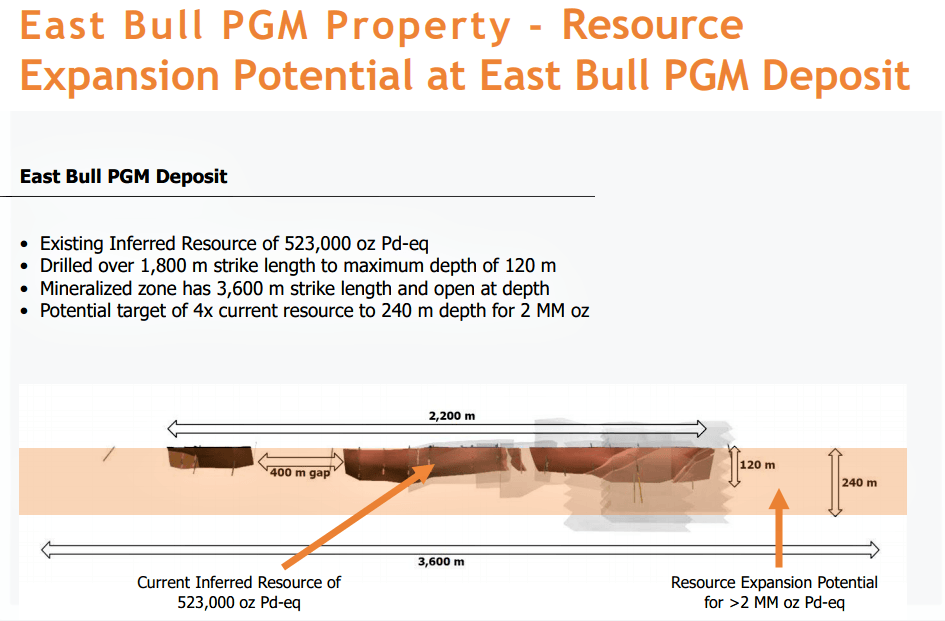
This graphic gives a good snapshot of the current resource and
expansion potential. Mineralization starts at surface and the system
appears to be about 30 meters wide. This would be an open-pit operation.
Agnew Lake property
It is located 80 kms. west of Sudbury, Ont., home of Glencore and
Vale’s Canadian nickel-copper-platinum-group-elements mining and
smelting operations. The Agnew Lake property comprises over 260 claims
(about 6,000 hectares) and is part of the larger East Bull Lake-Agnew
Lake mafic-ultramafic complex.
The Agnew Lake magmas have major element compositions that are very
similar to the model parent liquids proposed for the mafic portions of
the Stillwater and Bushveld complexes. The Agnew intrusion and the East
Bull Lake intrusion are also considered to host significant PGE-Cu-Ni
mineralization in marginal rock units (Peck & James, 1990; Peck et
al., 1993a, 1993b, 1995; Vogel et al., 1997).
Financial/Summary
Last financial statements show just over $400,000 cash. The company
just closed a $4 million financing at 12 cents per share. Eric Sprott
bought 12.5 million shares of that financing.
Wayne Tisdale has been successful in financing and increasing the
value of properties and dealing them off for large profits. I believe he
will do it again and also has a loyal following of shareholders from
his past success. BULL just acquired the property last year and there
has been little exploration and no drilling so it has been under the
radar until the recent financing. The discovery is on the surface, so
will be cheap to mine and is close to the Sudbury complex where refiners
can recover PGMs. There is a couple other palladium exploration plays
in Canada, but they are mostly old stale stories and I believe none have
the short-term potential that the East Bull project has.
The current market cap is $20.1 Million less the $4 million financing
gives an enterprise value of C$31 per ounce on their 523,000-ounce
Pd-eq inferred resource. Part of the reason for the low value is the
resource is only inferred. If drilling success starts to prove larger
potential and the resource moves up to the measured and indicated
category it could easily increase the value potential.
Only exploration news last year was sample results that came out last
September just when the junior market started heading south. The stock
made a decent move higher than just drifted lower until a typical
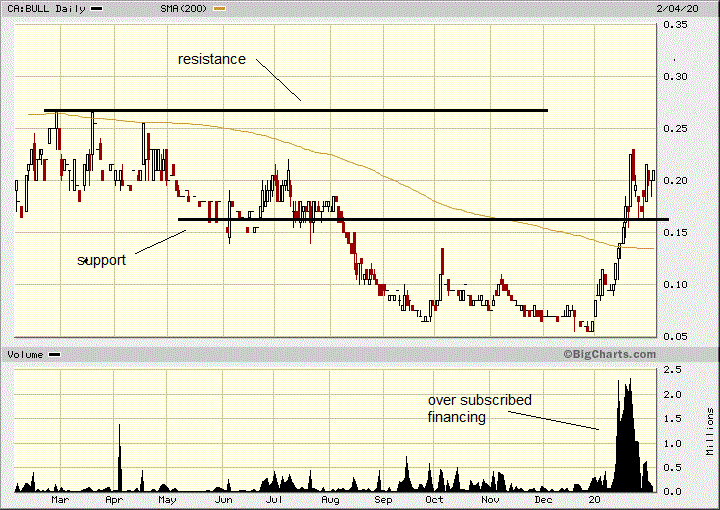
year-end bottom. The stock took off when it hit 12 cents on good volume.
This is when they began marketing a financing that was way
oversubscribed in one day. Probably spill over buying drove the stock up
to the 23-cent level. The stock then came back to support around 16
cents and bounced off higher. Drill news will likely cause the next move
higher with the old highs around 27 cents last year as the first major
resistance.
Conclusion
A recent update on palladium by TD Securities
highlights tightening emission controls and South Africa as I have, but
most interesting is the lack of speculative trading positions. TD
comments positions held by traders are below average. This rally has
room to move and if excessive speculation builds it could go way higher.
Regardless of whether palladium is $1,200 or $2,400 per ounce,
palladium discoveries and deposits will be worth premium valuations,
especially in stable jurisdictions. The potential for discoveries in
South Africa is very good but the political risks are rising. Ivanhoe
Mines (OTCQX:IVPAF), Eastplats, and Platinum Group Metals (PLG)
have projects in SA, and if I had to pick one there, it would be
Platinum Group Metals because they have the most leverage to platinum
and palladium prices.
The best direct related investment to palladium is the PALL ETF, but
it does not offer any leverage. There are not any 2 times or 3 times
palladium ETFs. This leaves the best leverage to junior palladium
companies and there are few. I prefer those outside of SA like Canadian
Palladium and Palladium One. I prefer Canadian Palladium because of the
CEO’s track record, their resource is on surface, near PGM smelters and
likely cheaper exploration costs in Canada vs Finland. For
diversification, owning more than one palladium play is not a bad idea.
Disclosure: I am/we are long DCNNF. I wrote
this article myself, and it expresses my own opinions. I am not
receiving compensation for it (other than from Seeking Alpha). I have no
business relationship with any company whose stock is mentioned in this
article.
Additional disclosure: Canadian Palladium is a paid advertiser at affiliate playstocks.net