Agoracom Blog

BetterU Education Corp. $BTRU.ca – How #edtech players are contributing to the #Indian #economy $ARCL $CPLA $BPI $FC.ca

Posted by AGORACOM-JC at 3:18 PM on Wednesday, November 6th, 2019
SPONSOR:  BetterU Education Corp. aims to provide access to quality education from around the world. The Company plans to bridge the prevailing gap in the education and job industry and enhance the lives of its prospective learners by developing an integrated ecosystem. Click here for more information.
BTRU: TSX-V

How Edtech players are contributing to the Indian economy

  • In this fast-paced transformation era, education and skilling are crucial to the progress of the country
  • It is a key benefactor not just to economic growth but also to greater economic equality. Governments and academic institutes, as well as entrepreneurs, are jointly transforming the definition of learning.

This collaborative approach and deep knowledge have led to the rise of vibrant and dynamic edtech industry. (Representational Image)

In this fast-paced transformation era, education and skilling are crucial to the progress of the country. It is a key benefactor not just to economic growth but also to greater economic equality.

Education indeed transforms lives but the fundamental question today is, what is transforming education? It is the digital disruption, and the inception of edtech players in the market are significant holders of the transforming norms of education around the corner. Governments and academic institutes, as well as entrepreneurs, are jointly transforming the definition of learning. This collaborative approach and deep knowledge have led to the rise of vibrant and dynamic edtech industry.

Startups in edtech sector

The edtech industry has emerged over the past few years, propelled by startups looking to address the issue of both reach and quality of education by leveraging modern-day technology. These startups have also started contributing to the economic prosperity of India by accelerating the process of job creation, an increase in GDP and wealth creation.One such promising paradigm of the startup ecosystem is the EdTech or Education Technology. Startups in edtech sector have rolled out offerings such as personalized assessments, VR content, parent engagement, gamification, soft skills development, digital libraries, student networking, test preparation, procurement marketplaces, learning analytics, language tools, internship location, and real-time scenario engagement.

Didactics of edtech

Mr. Piyush Nangru, COO and Co-founder, Sunstone Eduversity, says, “With the help of technology, edtechs are bridging the skill gaps, therefore generating employment for the youth. Tech-enabled pedagogy helps quantify the learning outcomes, measure student performance and determine appropriate remedial actions.” 

Edtech industry in India

India is no doubt set to be one of the leading players in the global ed-tech space with innovation taking center-stage. The ed-tech industry is expected to touch about USD 2 billion in India by 2021, industry trackers said. The country today has more than 4000 Ed-tech startups who are fuelling the education system; thus in return, accelerating the economy. According to the report released by Google and KPMG, the online education industry will grow at a healthy rate of 8x, to become a 1.96 billion dollar industry by 2021. Also, it says that the paid user base will grow 6X from 1.6 million users in 2016 to 9.6 million users in 2021.

Contribution of Govt 

The Government of India is also driving major initiatives in terms of leveraging technology for education. The spirit of innovation along with an emphasis on skill-based development, has been the primary objective of the government led by Hon’ble Prime Minister Narendra Modi. SWAYAM is an initiative by the Ministry of Human Resource Development to provide courses from Standard IX to post-graduation via its IT platform, free of cost to all residents of India. E-Basta is a platform that allows publishers of schoolbooks to upload digital formats of their books online for easy access by students. Diksha, an initiative by the National Council for Teacher’s Education, provides interactive learning resources to teachers, students as well as parents.

Edtech players driving the force of economy

Arman Ahmed, Co-Founder & CEO, EdYoda, explained how edtech players are helping students to outshine their way out. He said, “Today the Indian economy is suffering because there is a shortage of skilled manpower. The education sector in India is not just inefficient- it is nearly broken. Only a few leading universities and colleges provide quality education- a prerequisite for professional success. Also, having many well-educated professionals is essential to drive innovation, which in turn is essential for a robust economy.” He further said that the vast majority of Indian graduates don’t have skills that allow either. Rather than learning in a traditional university or college, most of which don’t educate well, students will do better when they enroll in courses offered by ed-tech players. After graduation, they will be more likely to achieve professional success and contribute to the economy because they will be productive and, unlike traditional graduates, more successful entrepreneurs.

Source: http://www.asianage.com/business/in-other-news/061119/how-ed-tech-players-are-contributing-to-the-indian-economy.html

Global Energy Storage to Hit 158 Gigawatt-Hours by 2024, Led by US and China SPONSOR: $HPQ.ca Silicon $FSLR $SPWR $CSIQ $PYR.ca $XMG.ca

Posted by AGORACOM-JC at 2:10 PM on Wednesday, November 6th, 2019

SPONSOR: HPQ-Silicon Resources HPQ: TSX-V aiming to become the lowest cost producer of Silicon Metal and a vertically integrated and diversified High Purity, Solar Grade Silicon Metal producer. Click here for more info.

HPQ: TSX-V

Global Energy Storage to Hit 158 Gigawatt-Hours by 2024, Led by US and China

Wood Mackenzie Power & Renewables projects a thirteenfold increase in grid-scale storage over the next six years. Here’s a market-by-market breakdown.

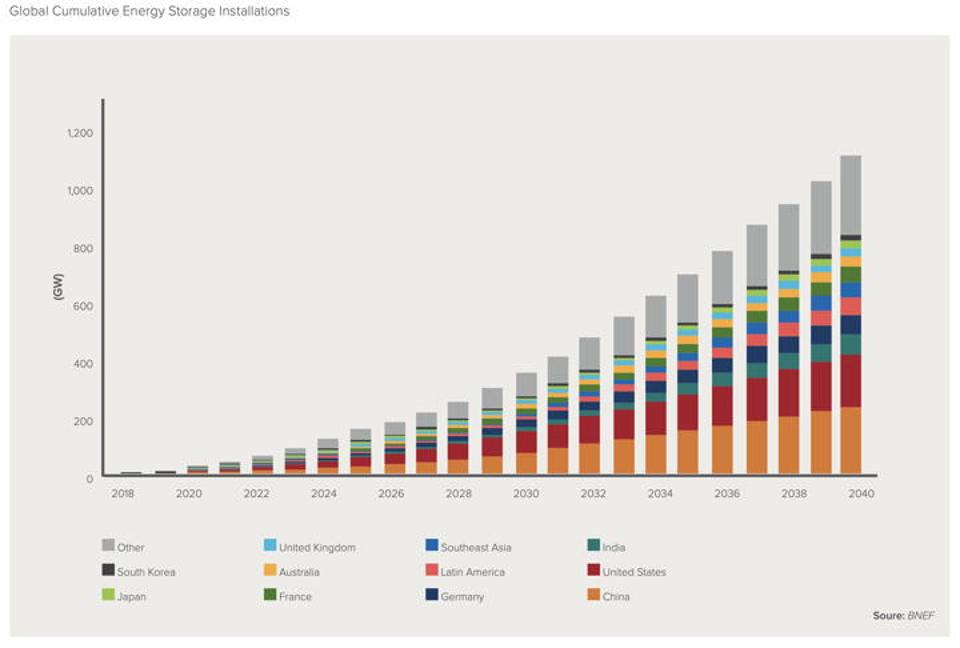
  • Report projects that energy storage deployments will grow thirteenfold over the next six years, from a 12 gigawatt-hour market in 2018 to a 158 gigawatt-hour market in 2024. 
  • Equates to $71 billion in investment into storage systems excluding pumped hydro, with $14 billion of that coming in 2024 alone.

By: Jeff St. John

For the energy storage industry, the past five years have been something of a stage rehearsal for a market explosion to come, led by the U.S. and China, but expanding to cover markets across the globe. 

That’s the picture painted by Wood Mackenzie Power & Renewable’s latest report, Global Energy Storage Outlook 2019: 2018 Year in Review and Outlook to 2024. Tuesday’s report projects that energy storage deployments will grow thirteenfold over the next six years, from a 12 gigawatt-hour market in 2018 to a 158 gigawatt-hour market in 2024. 

That equates to $71 billion in investment into storage systems excluding pumped hydro, with $14 billion of that coming in 2024 alone. This growth will be concentrated in the United States and China, which will account for 54 percent of global deployments by 2024, followed by Japan, Australia and South Korea in a second tier of growth markets, and Germany, Canada, India and the U.K. rounding out the list. 

Each of these markets is taking its own approach to integrating energy storage into its grid operations and market structures, from the state-by-state development in the U.S. to China’s five-year plan. But they share a commitment to relatively aggressive renewables growth targets, along with the attendant challenges of integrating an increasing share of intermittent wind and solar power into the grid.

And much like the renewables that are driving their growth, the batteries that make up the lion’s share of new storage systems being deployed are falling in price. That’s positioning them for a much broader integration into grid operations beyond renewables integration, Ravi Manghani, WoodMac’s head of storage research, noted in a Tuesday interview: “Over the last five years, the world began to experiment with storage; in the next five, storage will become a key grid asset.” 

Last year saw global energy storage deployments grow 147 percent year-over-year to reach 3.3 gigawatts, or 6 gigawatt-hours, the report states. That’s nearly double the average 74 percent compound annual growth rate for the industry from 2013 to 2018. In fact, last year’s deployments made up more than half of the total amount of storage deployed in the past five years, “indicating an inflection in storage demand,” Manghani said. 

This inflection point is measured not only in terms of project volume, but in the variety of regulatory and market structures allowing these projects to be financed and built, he noted. The past half-decade of energy storage growth has been driven by a relatively limited and isolated set of revenue streams, as well as government incentives designed to jump-start development in advance of the market structures to unlock the value of storage, he said. 

From 2019 to 2024, WoodMac projects a more mature but still early-stage compound annual growth rate of 38 percent for key storage markets, but with a far broader set of money-making opportunities for the systems being installed. This will include a shift from short-duration systems providing high-value, but limited-size markets such as frequency regulation, to long-duration systems that can start to displace diesel, oil and natural-gas peaker plants. 

A market-by-market breakdown

We’ve already covered WoodMac’s growth projections for the U.S. energy storage market, the world’s biggest at present, and still expected to retain that position by 2024, if only just ahead of China. The U.S. deployed a record 311 megawatts and 777 megawatt-hours of energy storage in 2018, but that market is expected to double in 2019 and triple in 2020, according to last month’s Energy Storage Monitor from WoodMac and the Energy Storage Association. 

This growth will continue to be driven by key markets like California, the country’s leader in behind-the-meter batteries, and other states with gigawatt-scale energy storage deployment mandates such as New York and Massachusetts. But it will also be driven by utilities adopting storage for capacity or as part of large-scale solar projects, as with recent large-scale contracts in Hawaii, Texas, Minnesota and Colorado.

And of course, Federal Energy Regulatory Commission Order 841, which orders the country’s regional wholesale market operators to open up energy, capacity and ancillary services markets to energy storage, will create new market opportunities. 

Turning to Asia, “we’ve seen China wake up in terms of energy storage, and slightly ahead of schedule,” Manghani said. China saw a 40 percent year-over-year energy storage market growth in 2018, driven by more than 300 megawatts, or nearly 500 megawatt-hours, of utility-scale deployment.

In November 2017, China’s government announced a 10-year plan for developing its own grid-scale energy storage industry. This was partly a means of supporting and building upon its already massive dominance in battery manufacturing for electric vehicles, but it’s also a response to China’s mounting grid challenges — namely, integrating the massive amounts of wind and solar power being built in remote western regions to the country’s urban east. 

And when China decides to build grid batteries, it builds them at scale. “The majority of the deployments are currently pilot-scale projects — but when China does pilot-scale projects, we’re talking about tens of megawatt-hours,” Manghani said. Last year saw one 101-megawatt/202-megawatt-hour energy storage project come online in Jiangsu, and another 240-megawatt/720 megawatt-hour project approved in Gansu to reduce renewables curtailment. 

In the next five years, several more large-scale energy storage projects to support grid reliability and flexibility are expected to come online. About 65 percent of China’s 2018 installed capacity was developed by the State Grid Corporation of China for ancillary services purposes, indicating the importance of central planning for growth. 

South Korea represents a similar story of how government planning can drive massive energy storage market growth, with a new policy to allow storage-backed wind and solar projects to earn renewable energy certificates worth five times their capacity value driving a massive boom in 2018. From less than 10 megawatt-hours deployed in 2017, South Korea’s utility-scale and commercial-industrial behind-the-meter deployments boomed to 1,100 megawatt-hours in 2018, with nearly $400 million in energy storage investments and a pipeline of projects that’s already overshot its goal of 800 megawatt-hours by 2020. 

Australia, by contrast, has been driven by solar-plus-storage projects on the residential side of the market, due to its competitive energy markets and the increasingly attractive economics of self-generated solar power. Australia led the world in residential storage in 2018 with 150 megawatts, or 300 megawatt-hours, of systems deployed. Japan ranked a close second in residential storage, taking a slight lead over Germany in terms of 2018 deployments, although Germany still retains the lead in total number of systems deployed, at about 860 megawatt-hours. 

At the same time, policy shifts can have an impact on global energy storage markets. The U.K. installed its own record-setting 408 megawatts/325 megawatt-hours of utility-scale storage in 2018. But as these figures indicate, this boom was largely in the form of shorter-duration battery systems, which could see their value decrease significantly under changes to the U.K.’s capacity market mechanism to de-rate shorter-duration systems in favor of multi-hour storage. 

At the same time, a November European court ruling against the U.K.’s capacity market mechanism — along with the broader uncertainty over how the country’s departure from the EU under Brexit could affect its energy future — has created challenges for the market. 

Likewise, in Canada, last year’s efforts to incorporate energy storage into wholesale markets in Ontario and Alberta have been counterbalanced somewhat by the new Ontario government’s decision to cancel hundreds of renewable energy projects.

Source: https://www.greentechmedia.com/articles/read/global-energy-storage-to-hit-158-gigawatt-hours-by-2024-with-u-s-and-china#gs.30yqxw

Advance Gold’s $AAX.ca – Follow Up Geophysical Survey Identifies Large 1000 by 500 Metres Continuous Chargeability Anomaly $SIL.ca $FA.ca $ANG.jo $ABX.ca $NGT.ca $MGG.ca $TECK.ca

Posted by AGORACOM at 1:03 PM on Wednesday, November 6th, 2019

Kamloops, British Columbia–(Newsfile Corp. – November 6, 2019) – Advance Gold Corp. (TSXV: AAX) (“Advance Gold” or “the Company”) is pleased to announce that the recently completed second phase of 3D Induced Polarization (IP) geophysical survey on its Tabasquena project in Zacatecas, Mexico, has significantly increased the size of its continuous chargeability anomaly. This anomaly now has an east-west width of approximately 400 to 500 metres and an apparent strike length of over 1000 metres. The anomaly remains open to the north and to the south and at depth.

Images below are east-west cross sections representing key portions of the overall anomaly where upcoming drilling will test this continuous chargeability anomaly.


Line 7350N

To view an enhanced version of Line 7350N, please visit:
https://orders.newsfilecorp.com/files/5492/49483_ee273a13f4482b50_001full.jpg


Line 7150N

To view an enhanced version of Line 7150N, please visit:
https://orders.newsfilecorp.com/files/5492/49483_ee273a13f4482b50_002full.jpg

Allan Barry Laboucan, President and CEO of Advance Gold Corp. commented: “After our first phase of geophysics, we identified a large chargeability anomaly with the highest chargeability at the southern end of the grid and still wide open. In that southerly direction we have elevation relief and it was also where the anomaly appeared to be closest to surface. Prior to drilling this anomaly, we decided to carry out a second phase of geophysics to see if the anomaly continued to the south. The second phase of geophysics has revealed that the anomaly actually has a much longer strike length and appears to be somewhat wider. This chargeability anomaly is now at least 1000 metres from north to south and approximately 400 to 500 metres from east to west. It sits below a network of veins with widespread gold and silver mineralization that ranges from anomalous to high-grade gold. There are three shafts on the property that go down around 100 metres that were used in the historical mining of the oxide zone of the Tabasquena vein. The geophysical anomaly is primarily right below those shafts, starting at approximately 200 metres below the underground workings. It is fair to say that we have identified a major target. Our next step will be to drill this target, we expect to start this shortly and will put out a news release once it has started.”

Gennen McDowall, Geophysical Advisor to Advance Gold Corp. commented: “This southerly extension to the original IP grid has shown that the large chargeability anomaly first detected in August is actually much bigger than originally thought and appears to strike right across the claim group and shows little evidence of ending either to the north or to the south and its depth extent is as of yet unknown. The chargeability anomaly is visible on every east-west IP line. The observed near surface mineralisation may be an expression of a much larger mineralised body underlying the entire Tabasquena project.”

Details of Geophysical Survey

The first 3D Induced Polarization survey was carried out by GEOFISICA TMC SA de CV, between August 3rd and August 14th, 2019. Approximately 9.6 kms of IP data was collected over the central portion of the company’s claims. This was followed up by a second phase of geophysics consisting of 5 east-west lines. The southerly extent of the second survey reached just beyond the Tesorito shaft. An off-set pole dipole array was used.

Data processing and inversion of the data was carried out using RES3DINV software. The inversion model was extended to approximately 550 metres below surface. 3D Voxel images together with a series of depth slices were generated (all available on the company’s website).

The main purpose of the IP survey was to map, laterally and at depth the evolution of the known gold and silver veins and to identify any new mineralised structures. The survey was designed in such a way to allow approximately 500 to 550 metres of vertical depth investigation.

The IP survey area encompassed the historic and new shafts that are located to the east of the Tabasquena and Nina veins that define a mineralised system that outcrops at surface for 2.0 km. From past exploration work, the Tabasquena vein was recognized over approximately 70 m along strike near the shafts but only at shallow depth (< 100 m).

The fourteen (14) vertical sections that were extracted from the 3D IP inversion voxels suggest the presence of (4) four main stratigraphic horizons (lithological units) mainly characterized by their resistivity signatures.

The IP data also clearly shows that the large polarisable body/target is apparently quickly deepening northward and getting closer to surface southward. The IP anomaly starts at around 100 metres below the past drill hole intersections that contained widespread gold and silver mineralization in epithermal veins.

Chargeability and resistivity anomalies are indicated on the IP sections (see report on company’s website) and are graded as per their relative strength. Those chargeability anomalies that are deemed to be caused by the same anomalous target are grouped together in what is called a polarisable axis. Only one main axis was delineated following the review of the IP data, which was labelled IPT-1 (Map C351-3 & Figure 11, report on company website). This axis is a single large amplitude continuous chargeability anomaly running north-south, coincident with the two shafts at Tabasquena, the Tesorito shaft and the surface projection of the mineralised veins. This anomaly has been categorized as having a high chargeability and is conductive. The anomaly has an average depth of approximately 250 to 300 meters. It should also be mentioned that this anomaly is visible on every line, albeit less intense on the most northerly line, as the target is becoming deeper to the north.

In conclusion

This geophysical work has now identified a large consistent chargeability anomaly that can be seen on all lines, implying a strike extent of at least 1000 metres and an apparent width of 400 to 500 metres. This observed IP anomaly could define a much wider mineralised system at depth.

The main recommendation of the original geophysical report was that prior to drilling the anomaly the 3D IP survey should be extended to the southeast for at least 1 km in the direction of the Tesorito shaft. This has now been completed and this new work has established that the main anomaly does in fact continue past the Tesorito shaft and is somewhat wider. A number of boreholes are now planned to intersect this anomaly.

Julio Pinto Linares is a QP, Doctor in Geological Sciences with specialty in Economic Geology and Qualified Professional No. 01365 by MMSA., and QP for Advance Gold and is the qualified person as defined by National Instrument 43-101 and he has read and approved the accuracy of technical information contained in this news release.

About Advance Gold Corp. (TSXV: AAX)

Advance Gold is a TSX-V listed junior exploration company focused on acquiring and exploring mineral properties containing precious metals. The Company acquired a 100% interest in the Tabasquena Silver Mine in Zacatecas, Mexico in 2017, and the Venaditas project, also in Zacatecas state, in April, 2018.

The Tabasquena project is located near the Milagros silver mine near the city of Ojocaliente, Mexico. Benefits at Tabasquena include road access to the claims, power to the claims, a 100-metre underground shaft and underground workings, plus it is a fully permitted mine.

Venaditas is well located adjacent to Teck’s San Nicolas mine, a VMS deposit, and it is approximately 11km to the east of the Tabasquena project, along a paved road.

In addition, Advance Gold holds a 13.23% interest on strategic claims in the Liranda Corridor in Kenya, East Africa. The remaining 86.77% of the Kakamega project is held by Barrick Gold Corporation.

For further information, please contact:

Allan Barry Laboucan,
President and CEO
Phone: (604) 505-4753
Email: [email protected]

New Age Metals $NAM.ca – #Palladium soaring: the quiet precious metal $WG.ca $XTM.ca $WM.ca $PDL.ca

Posted by AGORACOM-JC at 11:49 AM on Wednesday, November 6th, 2019

SPONSOR: New Age Metals Inc. The company’s Lithium Division has already made significant acquisitions in Canada and the USA. The company also owns one of North America’s largest primary platinum group metals deposit in Sudbury, Canada. Updated NI 43-101 Mineral Resource Estimate 2,867,000 PdEq Measured and Indicated Ounces, with an additional 1,059,000 PdEq Ounces in the Inferred. Learn More.

Palladium soaring: the quiet precious metal

  • Traditionally, gold, silver and platinum have received all the attention.
  • But like a spurned sibling that everyone ignored, the palladium spot price has broken free and there’s been no looking back just yet.

By: Josh Terlich

In notes to our clients we’ve talked a couple of times about gold, and touched on silver and platinum which are all members of the precious metals family. The potential for gains in all three of the metals has been sizeable in the last few months. There has been some notable pullbacks and profit-taking of late, particularly in gold stocks, however there is a member of the family we have yet to discuss in any depth. Palladium.

Traditionally, gold, silver and platinum have received all the attention. But like a spurned sibling that everyone ignored, the palladium spot price has broken free and there’s been no looking back just yet.

Palladium Price $US/ounce

Source: Macrotrends

Much lesser known than the other three major precious metals, palladium has in a very short period of time become the most expensive, overtaking gold. Similar to platinum, not much is known about the metal – what it is used for, how it is mined, and more importantly, how or why has it become so darn expensive?

The majority of palladium ends up in car exhaust systems where it aids in converting toxic pollutants into less-harmful CO2 and water vapour. To a lesser extent, it is also used in electronics, dentistry and jewellery. The metal is mined primarily in Russia and South Africa, and mostly extracted as a secondary product from mines focused on other metals such as platinum or nickel. Who would have thought a by-product could have surged to a value of over US$1,800/oz!

Simply put, supply hasn’t responded to growing demand. Usage is increasing as governments, especially China, tighten regulations to crack down on pollution from vehicles, forcing automakers to increase the amount of precious metal they use. Globally, it also looks like we’ve been buying fewer diesel cars (which mostly use platinum) and instead sticking with petrol powered vehicles (which use palladium) following news that some diesel car makers were cutting corners on carbon emissions tests.

Furthermore, population growth has not eased, and the electric car take-up has been slower than many predicted, perhaps due to pricing and convenience. We are still relying on petrol power (particularly in the emerging markets).

Source: Metals Focus

Palladium’s status as a by-product to platinum or nickel mining means output tends to lag price gains. In fact, the amount of palladium produced is projected to fall short of demand for an eighth straight year in 2019. That’s helped drive price to all-time high. While some obscure metals are still more valuable, such as rhodium, palladium has ballooned and has outpaced gold for most of this year.

Gaining any direct exposure to an investment in palladium is a difficult proposition and would be most easily achieved via ETFs e.g. the Aberdeen Standard Physical Palladium Shares ETF (PALL).

Source: https://www.livewiremarkets.com/wires/palladium-soaring-the-quiet-precious-metal

NORTHBUD $NBUD.ca – #Cannabis may be helping some #Canadians cope with #PTSD symptoms: study $CGC $ACB $APH $CRON.ca $HEXO.ca $TRST.ca $OGI.ca

Posted by AGORACOM-JC at 10:30 AM on Wednesday, November 6th, 2019

SPONSOR: NORTHBUD (NBUD:CSE) Sustainable low cost, high quality cannabinoid production and procurement focusing on both bio-pharmaceutical development and Cannabinoid Infused Products. Learn More.

NBUD: CSE
—————————–

Cannabis may be helping some Canadians cope with PTSD symptoms: study

  • Cannabis use could be helping Canadians cope with some of the effects of post-traumatic stress disorder, according to new research from the BC Centre on Substance Use and University of British Columbia. 

By: Jeremiah Rodriguez

Cannabis use could be helping Canadians cope with some of the effects of post-traumatic stress disorder, according to new research from the BC Centre on Substance Use and University of British Columbia. 

Cannabis use could be helping Canadians alleviate some of the effects of post-traumatic stress disorder, according to new research from the BC Centre on Substance Use and University of British Columbia.

The study, published in the Journal of Psychopharmacology, found people with PTSD who were not using cannabis were “far more likely” to have suicidal thoughts and suffer from severe depression than self-proclaimed pot users, according to data taken from Statistics Canada’s 2012 Canadian Community Health Survey – Mental Health.

People who suffered trauma — including survivors of acute injury, violence, conflict and disasters — suffer at disproportionately higher rates of depression, suicide and substance abuse than the general population.

The research team found that among non-cannabis users, PTSD was “significantly associated” with a major recent depressive episode and suicidal thoughts.

More specifically, PTSD sufferers who didn’t use pot were seven times more likely to have a depressive episode and nearly five times more likely to have suicidal thoughts compared to non-cannabis users without PTSD.

“Among the cannabis-non-using population, there was a strong association between having PTSD and experiencing these indicators of severe mental distress,” lead author Stephanie Lake said during a phone interview with CTVNews.ca, adding that pot users didn’t see this same association.

Her research was the first to track the relationship between PTSD, cannabis use and “severe mental health outcomes” among the average Canadian population, according to a university press release.

Lake, a research assistant at the British Columbia Centre on Substance Use, said this was the first study examining how PTSD’s connection to suicidal thoughts or severe depression “could be interrupted by the use of cannabis.”

Her study also found one in four Canadians with PTSD said they used cannabis — which is “remarkably high” compared to the prevalence of pot use among the general Canadian population (which is an estimated 11.4 per cent).

STUDY DIDN’T SHOW CAUSAL LINK BETWEEN POT, PTSD RATES

Lake stressed her study didn’t outright show a definitive, causal link between cannabis use and decreased PTSD symptoms.

The PhD candidate at UBC’s School of Population and Public Health said the study “didn’t tell us whether people are successfully using cannabis to treat PTSD … but it is a promising signal that there might be a therapeutic (benefit) to cannabis use.”

Of the 24,089 respondents to the 2012 Canadian Community Health Survey – Mental Health, 420 people had a clinical diagnosis of PTSD.

From those with PTSD, 106 of them — 28 per cent — said they used cannabis. This rate is nearly three times the rate of pot users without PTSD (11.2 per cent).

Lake’s overall findings could be extremely helpful to many Canadians, as the study mentions that 9.2 per cent of Canadians have PTSD — one of the highest prevalence rates for the disorder in the world.

HOW CANNABIS POTENTIALLY HELPED WITH PTSD

Lake explained that cannabinoid receptors in people’s bodies help regulate mood and sleep, and some research suggests that trauma from PTSD could compromise this endocannabinoid system.

“So when you introduce external cannabinoids (from pot products) to the body, it might help to get the system working as normal again,” she suggested.

Lake also noted that, according to the study, PTSD patients did have cannabis-use disorders at a higher rate than the general population.

In a press release, senior author Dr. M-J Milloy, BCCSU research scientist and Canopy Growth Professor of Cannabis Science at UBC, said that “we’re only just beginning to understand what the therapeutic potential of cannabis may be for a variety of health conditions.”

“These findings are promising, and merit further study in order to fully understand the benefits of cannabis for people living with PTSD,” he added.

Lake added that UCB researchers are currently conducting a clinical trial looking at the effectiveness of cannabis products in specifically treating PTSD.

Source: https://www.theloop.ca/ctvnews/cannabis-may-be-helping-some-canadians-cope-with-ptsd-symptoms-study/

ThreeD Capital Inc. $IDK.ca – #China reverses decision to ban #crypto mining in 2020 $HIVE.ca $BLOC.ca $CODE.ca

Posted by AGORACOM-JC at 9:47 AM on Wednesday, November 6th, 2019

SPONSOR: ThreeD Capital Inc. (IDK:CSE) Led by legendary financier, Sheldon Inwentash, ThreeD is a Canadian-based venture capital firm that only invests in best of breed small-cap companies which are both defensible and mass scalable. More than just lip service, Inwentash has financed many of Canada’s biggest small-cap exits. Click Here For More Information.

IDK: CSE

China reverses decision to ban crypto mining in 2020

  • The plan to include cryptocurrency mining in China into a list of industries that would be banned in the country has reportedly been scrapped.
  • Earlier this year, the National Development and Reform Commission (NDRC) in China revealed it was considering putting crypto mining on a list of banned industrial activities, which would have effectively phased out the industry from the country.

By: Priyeshu Garg

The plan to include cryptocurrency mining in China into a list of industries that would be banned in the country has reportedly been scrapped. Earlier this year, the National Development and Reform Commission (NDRC) in China revealed it was considering putting crypto mining on a list of banned industrial activities, which would have effectively phased out the industry from the country.

Crypto mining industry now safe in China

The future of the crypto mining industry in China has been uncertain for the past six months, as the country’s State Council has been considering implementing guidelines that would have forced the entire industry out.

Back in April, the Chinese National Development and Reform Commission (NDRC) published a draft proposal of its Industry Restructuring Catalog, in which it recommended that crypto mining be put on a list of industries to be restricted in the country.

While just a draft, the proposal garnered a lot of negative reactions in China, with many industry leaders arguing that it could be detrimental to China’s dominance in the field. The country is not only home to some of the largest mining hardware manufacturers, including Bitmain, Canaan, and Ebang, but also has some of the largest mining operations in the world.

However, the country seems to have scrapped its plans to blacklist crypto mining, as NDRC has published an updated version of its guidelines that come into effect on Jan. 1, 2020.

According to local media reports, NDRC, which works under China’s State Council, has removed cryptocurrency mining from the list of industries that should be removed from the country. The catalog contains detailed descriptions of what constitutes “virtual currency mining.”

Half of Bitcoin’s hashpower will remain in China

Officials from NDRC held a press conference on Wednesday, Nov. 6, where they explained their decision behind updating the draft they published back in April. The commission said they received over 2,500 suggestions on how to deal with various issues raised by the draft catalog, adding that most of them were “taken into consideration.”

While there were no comments on NDRC’s decision to scrap plans for phasing out crypto mining, the commission was most likely responding to overwhelming pressure from the industry.

It’s important to note that even if the commission hadn’t changed its draft proposal, crypto mining wouldn’t have been immediately banned from the country. The proposal only included guidelines for local governments advising them on how to gradually phase out the burgeoning industry from the country, not legislation outlawing it.

When the news about the potential “ban” broke earlier this year, many argued that it could ultimately be beneficial to the industry, especially Bitcoin mining. The problem with Bitcoin mining centralization has been a looming one and dethroning China as the place responsible for more than half of Bitcoin’s hashpower could have brought much-needed decentralization to the space.

But, the latest NDRC guidelines show that Bitcoin mining will continue to be centralized in China—at least for now.

Source: https://cryptoslate.com/china-reverses-decision-to-ban-crypto-mining-in-2020/

Advance Gold $AAX.ca – Largest Gold ETF Inflows in Three Years Boosted Demand for Yellow Metal in the Third Quarter

Posted by AGORACOM at 7:56 PM on Tuesday, November 5th, 2019

SPONSOR: Advance Gold AAX.v – Advance Gold controls 100% interest in the Tabasquena Silver Mine in Zacatecas, Mexico. A cluster of 30 Epithermal veins have been discovered, with recent emphasis on exploring a large anomaly to drill. Advance also owns 15% of the Kakamega JV attached to Barrick Takeover Offer for Acacia Mining. Click Here For More Info

Pure 1,000-gram gold bars.

A surge in speculation led to an increase in gold demand in the third quarter, according to a World Gold Council report released Tuesday.

Exchange-traded fund inflows shot higher by the largest amount since the first quarter of 2016, in what the council attributed to accommodative monetary policies, safe-haven and momentum buying. During the third quarter, the Federal Reserve cut interest rates twice, and the European Central Bank cut interest rates in a package of easing measures.

Leading gold ETFs include the SPDR Gold Trust GLD, +0.01%, iShares Gold Trust IAU, +0.07%   and the Aberdeen Standard Physical Swiss Gold Shares ETF SGOL, -1.51%.

Overall gold demand rose just 3% during the quarter, as jewelry demand shrank by 16% as the yellow metal’s prices rose. 

Gold futures GC00, -1.67%  were holding above the $1,500 an ounce level on Tuesday and have climbed by 19% over the last 12 months.

Central-bank buying fell by 38%, as the third quarter of 2018 featured the highest amount of buying on record. Bar and coin demand dropped by half.

The gold supply rose by 4%, helped by a 10% increase in recycling.

SOURCE: https://www.marketwatch.com/story/largest-etf-inflows-in-three-years-drove-gold-demand-higher-in-the-third-quarter-2019-11-05

Tartisan #Nickel $TN.ca – Nickel Is Hot Right Now – The Nickel Boom May Have Just Begun $ROX.ca $FF.ca $EDG.ca $AGL.ca $ANZ.ca

Posted by AGORACOM-JC at 5:57 PM on Tuesday, November 5th, 2019

SPONSOR: Tartisan Nickel (TN:CSE)  Kenbridge Property has a measured and indicated resource of 7.14 million tonnes at 0.62% nickel, 0.33% copper. Tartisan also has interests in Peru, including a 20 percent equity stake in Eloro Resources and 2 percent NSR in their La Victoria property. Click her for more information

Tc logo in black
TN: CSE
—————————-

Nickel Is Hot Right Now – The Nickel Boom May Have Just Begun

  • Indonesia announced they will ban nickel ore exports beginning 2020.
  • Indonesia currently accounts for about 27-28% of global nickel ore supply.
  • Other sources of nickel supply appear somewhat constrained, while demand for nickel looks strong, especially boosted by EVs.

Nov. 5, 2019

By: Matt Bohlsen

Indonesia has declared that they will ban nickel ore exports as of January 1st, 2020 (previously scheduled for 2022). However, on Monday, September 2, 2019, Indonesia’s Energy and Mineral Resources Ministry confirmed plans to move the ban up and place it ahead of schedule. Indonesia currently accounts for about 27-28% of global nickel ore supply. Nickel prices surged higher on the news.

Source: InfoMine

The 2007/08 nickel spike coincided with record low LME nickel inventory levels (see chart below) and a China construction boom. Today, LME nickel inventory is at 153,000 tonnes and has been falling steadily for some time now. The Indonesia export ban could easily send nickel inventories back below 50,000 tonnes in 2020 and cause another huge nickel price spike.

Nickel 30-year price chart

Source: InfoMine

LME nickel inventory levels are heading to lows not seen in a decade

Source: InfoMine

Indonesia’s Coal and Minerals Director General Bambang Gatot Ariyono stated: “The government decided, after weighing all the pros and cons, that we want to expedite smelter building. So we took the initiative to stop exports of nickel ores of all quality.”

Indonesia will soon have 36 smelters, and if exports were to continue, there would have been only enough reserves for seven to eight years. These smelters can process low-grade nickel ores and they can be used for batteries to help Indonesia meet its electric-vehicle goals. Bambang continued: “We already exported 38 million tons up until July this year. At this rate, we would need to think about our reserves especially if we keep issuing exports permits.”

Put simply, Indonesia has long wanted to encourage investments within Indonesia that can value-add to their nickel ore. The end game would be for Indonesia to be able to produce their own finished nickel, stainless steel, and lithium-ion batteries (NMC batteries require plenty of nickel).

Last month Reuters reported:

“Indonesia currently has 13 operating nickel smelters with input capacity of 24.52 million tonnes. Government data showed that 22 more nickel miners are currently under development with additional capacity of 46.33 million tonnes. Lengkey said the installed capacity will not be enough to process the country’s ore output.”

Nickel supply by country

Source: Own chart with data sourced from Investing News

Other sources of nickel supply

The Philippines is the number two global nickel supplier. No doubt Philippine nickel miners will try to boost ore production next year when the Indonesia export ban kicks in. The Philippines has 29 nickel mines and two nickel processing plants. However, strict environmental law changes in the Philippines in recent years have reduced their nickel supply. Also, it is said that many Chinese buyers prefer higher-grade ores from Indonesia. Current Philippine nickel ore production has dropped to about 340,000 tonnes in 2018 due to the closure of 23 mines as the government seeks to curb environmental damage from mines in the Philippines.

Perhaps the boost will come from New Caledonia, Russia, Australia, Canada, China and some contributions from the new Indonesian smelters. But will this be enough?

Overall, it appears for now that very large new sources of nickel supply appear somewhat constrained, especially given the Philippines recent focus on environmental protection and nickel mine closures.

Nickel demand looks set to increase boosted by electric vehicles

All experts agree that demand for nickel sulphate is set to go through the roof as electric vehicles [EVs] take off. Fastmarkets stated last year:

“Demand for nickel in the EV space is expected to total 36,000 tonnes in 2018… That figure is expected to surge to 350,000-500,000 tonnes by 2025.”

That’s more than a tenfold increase, in just 7 years. Wow!

The best source of nickel sulphate will come from the nickel sulphide miners.

No doubt new sources of nickel will start to fill the supply gap that Indonesia will leave, but this takes time. Indonesia will also step up their processing of ores, but this will take several years to raise capital and then build out the processing plants. Many companies that halted nickel sales due to the recent bear market years for base metals will start to come back online, as will new nickel projects assuming the nickel price stays strong. Will we see nickel over USD 10/lb in 2020? Yes, I would say this is very possible, as with most severe supply disruptions, the industry usually takes a couple of years to catch up.

The chart below shows nickel is forecast to be in deficit after ~2020-2022 (and this was before factoring in the Indonesia ban).

Source: Wood Mackenzie

Nickel Companies to consider

The top global nickel producers by nickel production volume are Vale [BZ: VALE3](NYSE:VALE), Norilsk Nickel [LSX: MNOD] (OTCPK:NILSY), Jinchuan International Group Resources [HK:2362], Glencore (OTCPK:GLCNF)[LSX:GLEN], and BHP Group [ASX:BHP] (NYSE:BHP). Good smaller producers include Independence Group [ASX:IGO] (OTC:IIDDY) and Western Areas [ASX:WSA](OTCPK:WNARF). Some top nickel developers with very large resources include RNC Minerals [TSX:RNX] (OTCQX:RNKLF), Ardea Resources [ASX:ARL] (OTCPK:ARRRF), and Australian Mines [ASX:AUZ].

Rather than repeat information from my other recent nickel articles here, I refer to the further reading section below that gives plenty of company information.

Forecast leading companies based on finished nickel production worldwide in 2020 (in 1,000 metric tons)

Source: Statista

Note: Glencore took over Xstrata’s nickel assets.

Risks

  • A China or global slowdown could reduce demand for nickel. China and the stainless steel industry are by far the largest consumers of nickel.
  • Nickel prices falling. Indonesia may reverse their decision, or other countries may bring on excess new supply. Also, the new Indonesian smelters once running will be a new source of nickel supply from Indonesian nickel ore. Noting Indonesia already has 13 operating smelters.

Further Reading

Conclusion

This article is for the purpose of alerting Trend Investing members that the nickel boom may have just begun. Certainly all the signs are there.

The further reading section above gives plenty of good information on the better nickel plays. My standout nickel miner continues to be Norilsk Nickel due to their massive (sulphide) resources, very low cost of production when taking into account by-products (palladium, copper), low valuation (2020 PE of 8.3), and high dividend yield (2020 estimate 10.9%). Vale offers some attraction right now after recent price falls, but is mostly an iron ore miner. My top nickel developers are RNC Minerals, Ardea Resources, and Australian Mines.

Source: https://seekingalpha.com/article/4302579-nickel-hot-right-now-nickel-boom-may-just-begun

NORTHBUD $NBUD.ca – #Cannabis Canada: #Pot industry added nearly $8B to #GDP in August, #StatsCan says $CGC $ACB $APH $CRON.ca $HEXO.ca $TRST.ca $OGI.ca

Posted by AGORACOM-JC at 4:31 PM on Tuesday, November 5th, 2019

SPONSOR: NORTHBUD (NBUD:CSE) Sustainable low cost, high quality cannabinoid production and procurement focusing on both bio-pharmaceutical development and Cannabinoid Infused Products. Learn More.

NBUD: CSE
—————————–

Cannabis Canada: Pot industry added nearly $8B to GDP in August, StatsCan says

Cannabis sales in Canada expected to double next year to $3.16B: analyst 

Canaccord Genuity cannabis analyst Matt Bottomley expects revenue in Canada’s legal pot sector to more than double next year despite slower-than-expected growth. Bottomley said in a research note to clients that Canada’s cannabis industry should expect $3.16 billion in revenue in 2020, up from the $1.46 billion forecast for 2019. He added Canada’s cannabis retail figures should see a five per cent reduction in overall sales in September from the prior month to $121 million, but said subsequent growth should advance at a five-per-cent monthly clip. Bottomley expects growth in the recreational market to increase by just 7.5 per cent in 2020. Alongside its latest estimates for the Canadian cannabis industry, Canaccord’s analysts have revised sales projections for some of the country’s largest licensed producers such as Canopy Growth, Aphria and Aurora Cannabis.

BRNT secures multiyear white label deal with Valens GroWorks for 2.2M vape pens

BRNT Group, a company which has made its name making high-end cannabis accessories, is getting into the vape game. The company announced on Thursday a partnership with Valens GroWorks to produce a minimum of 2.2 million vape pens over the next two years. The deal, which is believed to be one of the largest publicly announced multi-year white label agreements, is expected to generate over $50-million in gross revenue for Valens, according to a statement released by both companies. The vape devices are expected to be available in select markets starting in the first quarter of next year and roll out across Canada later in the year.

Canadian pot producer hires helicopter to avoid possible frost on outdoor grow

Looking for a novel way to ensure your outdoor crop won’t be impacted by frost? Give your local helicopter pilot a call. That’s what 48North did, according to an Instagram post published by Devin Piche, the company’s master grower. A helicopter is able to float above an agricultural crop and essentially suck up cold air upward away from plants which could be damaged by a potential frost. “The helicopter was used to move warm air in a temperature inversion down into the crop area to keep the temperature above freezing,” according to Connor Whitworth, a 48North spokesperson. The cannabis producer is harvesting the remaining cannabis plants it is growing in its Good:Farm facility. Whitworth declined to further comment on 48North’s outdoor harvest, which it has previously stated expects to yield 40,000 kilograms of cannabis.

Alberta eyes 500 pot shops by 2021, no consumption lounges planned: regulatory official

Alberta is already the country’s market leader in the pot retail space – and it looks like it could get even larger.  Alberta Gaming, Liquor and Cannabis expects its store count to grow to over 500 within two years, according to the Calgary Herald, citing an official with the provincial regulator. The regulator has already green lit 306 retail outlets across the province, a number that will likely grow by 200 by 2021. However, cannabis consumption lounges don’t appear yet to be coming out anytime soon and would require legislative approval to establish those types of facilities, the official said.

Canada’s cannabis industry contributed nearly $8B to GDP in August: StatsCan

Canada’s cannabis sector – both the legal and illegal market – contributed $7.92 billion to the country’s gross domestic product in August, a figure that continues to grow from the $7.02 billion last October when recreational cannabis was legalized and above the revised $7.79 billion mark made in July, according to new data published by Statistics Canada on Thursday. The StatsCan figures also show Canada’s legal cannabis industry has grown by 116 per cent in the first 11 months since recreational marijuana was legalized. The black market’s cannabis output has fallen by 22 per cent in that same time, according to StatsCan estimates.

Source: https://www.bnnbloomberg.ca/cannabis-canada-pot-industry-added-nearly-8b-to-gdp-in-august-statscan-says-1.1341044

Applied BioSciences $APPB – CBD is ‘the caffeine of the 21st century’: Recess CEO $CGRW $APH.ca $GBLX $PFE $ACG.ca $ACB.ca $WEED.ca $HIP.ca $WMD.ca

Posted by AGORACOM at 2:57 PM on Tuesday, November 5th, 2019

SPONSOR: Applied Biosciences Corp. is a vertically integrated company focused on the development of science-driven cannabinoid therapeutics and biopharmaceuticals, as well as state-of-the-art testing and analytics. As a leading company in the CBD, Pet and Health and Wellness space, the company is currently shipping to the majority of US states as well as to 5 International countries. Click Here for More Info

The key to selling a CBD product is to not sell the CBD, according to Benjamin Witte.

Witte is founder and CEO of Recess, a CBD and adaptogens-infused sparkling water brand based in New York. The one-year-old company has raised about $6 million in seed funding from as-yet undisclosed investors. Its pastel-hued 12-ounce cans are available in thousands of retail locations on the East Coast and in California.

As Witte sees it, the future of the CBD industry – and of Recess – will be about selling and marketing the feeling the component invokes, rather than the uber-trendy ingredient itself.

“The way to think about CBD is as a compound, no more interesting than caffeine or whey protein,” Witte said in an interview during Yahoo Finance’s monthly Breakouts series. “Just a commoditized functional ingredient that’s going to be added to many things.”

“I think the closest analogy to CBD is caffeine. I really believe it’s kind of the caffeine of the 21st century,” Witte added. “And, you know, what are the biggest caffeine companies? It’s Starbucks (SBUX), it’s Red Bull, et cetera. And they don’t market caffeine. They market the feeling that the compound enables, which kind of inspired our approach.”

Recess cans

‘Marketing a feeling’

CBD, officially known as cannabidiol, is expected to be a $16 billion market in the U.S. by 2025, according to a Cowen analysis earlier this year. CBD-infused beverages already comprise about one-fifth of the burgeoning market, although tinctures represent the most popular form for users. The substance has been touted for its potential to reduce pain and anxiety, although research to date remains inconclusive about its efficacy and proper dosing.

Looking at Recess’s sunset-colored packaging and slogans like “cool, calm, collected,” it’s clear CBD isn’t the focus. The company hardly promotes CBD at all, noting on its ingredient list it contains “10 mg of broad-spectrum hemp extract.” Witte refers to Recess as a “productivity company,” and said cans can be consumed as a less buzzy alternative to a morning cup of joe, afternoon pick-me-up or bedtime night cap.

The marketing strategy diverges from that of many of Recess’s competitors in a crowded CBD beverage space, many of which prominently promote the ingredient to capitalize on booming consumer interest in the substance. Upstarts from Mike Tyson’s The Ranch Company to public companies including New Age Beverage (NBEV) have launched CBD-infused beverages, many with similar dosages of the hemp-derived substance as Recess’ drinks.

It also underscores one potential route for steering public perception of the burgeoning industry, where a lack of clarity over the legality of the substance has capped growth and kept some retail partners on the sidelines.

While CBD is derived from cannabis, it by itself doesn’t get users high. The CBD in Recess is derived from hemp, which contains 0.3% or less of tetrahydrocannabinol (THC) and was removed from the Drug Enforcement Agency’s Schedule I classification as part of the Hemp Farm Bill in December 2018 (CBD can also be derived from marijuana, the plant that is typically more potent in psychoactive THC).

The Farm Bill moved oversight of the product to the Food and Drug Administration (FDA), which still considers CBD added to food products or marketed as a dietary supplement to be illegal at the federal level. But as Witte noted, the FDA has acknowledged the murky, asymmetrical rules governing CBD products at the state and federal levels.

“The FDA has actually kind of made statements saying … we recognize that this is uncertain, we recognize that the entire industry needs clarity, and that we’re effectively not going to enforce anyone besides the worst actors, people making claims around curing cancer and things like that,” Witte said.

To that end, “marketing a feeling” has been both a campaign strategy and, to an extent, means of keeping Recess out of the searchlight of regulators, which have clamped down on companies marketing CBD as a panacea for a host of medical ailments.

Startup beverage brand Dirty Lemon discontinued its CBD-infused beverage late last year just months after launching it, calling the endeavor “too much of a liability.” Public ventures including Curaleaf (CURLF), the most valuable U.S.-based cannabis company, have been recipients of warning letters from the FDA over making “unsubstantiated claims” that their products can treat cancer, Alzheimer’s disease, opioid withdrawal and other conditions.

Recess makes no such promises.

“We’re saying Recess is an antidote to modern times,” Witte said. “The idea is like, the world’s gone crazy, and we all need a Recess.”

Source: ttps://ca.finance.yahoo.com/news/cbd-is-the-caffeine-of-the-21st-century-recess-ceo-172920924.html