Agoracom Blog Home

Posts Tagged ‘CSE’

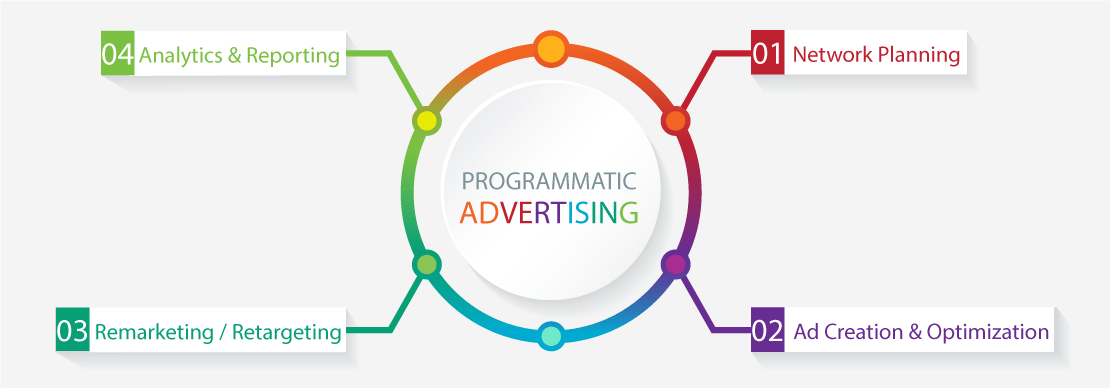
How #programmatic advertising helps to target the right audience #adtech $GOOD.ca $TTD $RUBI $AT.ca $TRMR $FUEL

Posted by AGORACOM-JC at 11:06 AM on Tuesday, June 26th, 2018

  • An essential component of location-based advertising is programmatic advertising which has become the buzzword
  • There is a growing trend of brands adopting this technology to serve online ads to a business’ most likely customers

Even though you have the best of advertisements made, they cannot have the desired effect unless they appear at the right time and at the right place.

There is a growing need, regardless of company size and location, to make advertising more personal… more localized. Advertisers of all sizes are evaluating how they can most effectively identify and reach customers where they live and play and as a result, they are adjusting their marketing spend to do just that. BIA/Kelsey forecasts that US location-based ad spend will double in the next five years.

Since nomenclature, local preferences, competitors, and buying habits vary widely from state-to-state and city-to-city, location-based advertising delivers better performance and deeper insights for marketers of all shapes and sizes.

An essential component of location-based advertising is programmatic advertising which has become the buzzword. There is a growing trend of brands adopting this technology to serve online ads to a business’ most likely customers. The addition of programmatic advertising was one of the biggest advancements in digital since the introduction of search.

What is programmatic advertising?

Programmatic advertising enables to target a specific category of audience. Here the segments can range across demographics such as gender, age, social status, to geographic in certain areas of the country. Along with this, with ‘paid search’ one can also control the ads to a specific time of the day or monitor the frequency. You can decide which publishers you want your ads to show on.

By doing this, you are only paying for highly effective ads, delivered to the right people at the right time. Programmatic advertising breaks the stereotypical norms of traditional ad buying. Buyers nowadays do not like to run a certain number of ads with a publisher and remain locked in a contract.

Source: LeadsIn other words as State of Digital states programmatic advertising is the algorithmic purchase and sale of advertising space in real time. During this process, software is used to automate the buying, placement, and optimisation of media inventory via a bidding system. Automating the process means that it can be done in real time and doesn’t rely on the human touch, manual insertions and manual trading.

How can localizing programmatic advertising help?

Programmatic advertising is a very efficient and effective way for brands to reach their desired audiences.  By localizing their programmatic advertising efforts, brands are able to both customize their targeting and customize their messaging to the needs of the local markets that they serve.

For example, a Toyota dealer in Palo Alto, CA, may have a lot full or Prius hybrid vehicles, and will need very different targeting and messaging than a Toyota dealer in Fort Worth, TX, who will likely have a lot full of Tundra pickup trucks and SUVs.  Localized programmatic enables customization of advertising to each dealer’s local needs.

A company which is emerging as a leader in this field is Simpli.fi. The company has made localized programmatic advertising both affordable and effective for not only multi-location brands and ad agencies, but they also work closely with Local Media Groups (TV, Radio, Cable & Newspapers) to bring the power of localized programmatic to SMBs.

Stating the importance of localized programmatic advertising Frost Prioleau, CEO of Simpli.fi says, “Initially, most of the available programmatic tech was focused on national campaigns. Most programmatic platforms base their targeting on pre-packaged audience segments, making it difficult to customize, optimize and personalize audiences to local buying habits, brand preferences, and competitive players.”

Localization is necessary in order to effectively reach users whose buying habits, nomenclature, and preference vary widely from state-to-state and city-to-city. “However, scaling large numbers of highly personal and targeted local campaigns requires purpose-build technology. This is where Simpli.fi fits into the marketplace. Simpli.fi’s use of unstructured data, which allows for rich, highly granular targeting, serves ads based on element-level information, making campaigns more relevant and effective for prospects, thus driving a higher ROI,” adds Prioleau.

Programmatic advertising hence not only helps to deliver this level of insight and transparency but also creates the opportunity for brands to engage in near real-time with connected and unique audiences.

Source: https://www.geospatialworld.net/blogs/programmatic-advertising/

#IOC and #GAISF to host #Esports Forum $GMBL $ATVI $TTWO $GAME $EPY.ca $TCEHF $Game.ca $EPY.ca

Posted by AGORACOM-JC at 10:16 AM on Tuesday, June 26th, 2018
  • International Olympic Committee (IOC) and the Global Association of International Sports Federations (GAISF) have announced the organisations will host an “Esports Forum” on 21 July at The Olympic Museum in Lausanne
  • Aim of the Forum is to explore synergies, build joint understanding and set a platform for future engagement between the esports and gaming industries and the Olympic Movement

Invited participants will include representatives from across the esports and gaming ecosystem: players, publishers, teams, media, sponsors and event organisers; and from across the Olympic Movement: National Olympic Committees, International Sports Federations, athletes and the IOC.

GAISF President Patrick Baumann said: “Along with the IOC, the GAISF looks forward to welcoming the esports and gaming community to Lausanne. We understand that sport never stands still and the phenomenal growth of esports and gaming is part of its continuing evolution. The Esports Forum provides an important and extremely valuable opportunity for us to gain a deeper understanding of esports, their impact and likely future development, so that we can jointly consider the ways in which we may collaborate to the mutual benefit of all of sport in the years ahead.”

Intel/ESL

IOC Sports Director Kit McConnell said: “We are pleased to be hosting our first “Esports Forum”, which is a great opportunity for both the Olympic Movement and representatives from the world of esports and gaming to begin a discussion, listen and learn from each other, and understand the potential opportunities for collaboration. The IOC and GAISF are closely following the rapid development of esports globally, and we look forward to a really engaging discussion.”

The Forum follows the Olympic Summit held in October 2017, which asked the IOC, together with the GAISF, to explore this area in a dialogue with the gaming industry and players and to come back to the Olympic Movement stakeholders in due course.

Forum programme highlights:

PANEL: THE WORLD OF ESPORTS

Leading esports and gaming industry executives will share their thoughts on where the industry is now, what the current priorities are, and what they would like to see in terms of collaboration opportunities with the Olympic Movement.

INTERVIEW: WHAT DEFINES THE OLYMPIC MOVEMENT?

An interview by an esports player with an IOC representative to shed light on the various factors and events that have shaped the Olympic Movement as we know it today, and to provide insight on where it is headed.

INTERVIEW: THE KEY TO TWITCH’S SUCCESS

KEYNOTE SPEAKER: SPOTLIGHT ON INTEL EXTREME MASTERS PYEONGCHANG

FUTURE OPPORTUNITIES FOR COLLABORATION

INTERVIEW: A DAY IN THE LIFE OF AN ELITE PLAYER

PANEL: GENDER EQUALITY IN ALL SPORTS

ROUNDTABLE DISCUSSIONS:

SPORTS ORGANISATIONS – GOVERNANCE, STRUCTURES AND BEST PRACTICES

Covering “good governance”, the structural similarities and differences between esports organisations and traditional sports federations, and challenges in both industries.

MEDIA/BROADCASTING

Exploring new technologies and consumer preferences that are shaping the way sports/esports/gaming content is consumed, different models to create revenue, targeting the youth demographic, and methods to broaden fan bases. 

THE ATHLETE PERSPECTIVE

Featuring traditional sports athletes, Olympians and esports players. Covering what defines an athlete, challenges faced by each “type” of athlete, health and wellness, opportunities post-retirement, and how Olympians and esports players engage with fans.

THE INVESTOR PERSPECTIVE

Exploring investment in esports and gaming, the attraction for traditional sport to become involved in esports, learnings from each industry, and how esports and traditional sports can work together for mutual benefits.

For general enquiries, please contact: [email protected]

For media enquiries, please contact the IOC Media Relations Team:

Tel: +41 21 621 6000, email: [email protected], or visit our website at www.olympic.org

Source: https://www.olympic.org/news/ioc-and-gaisf-to-host-esports-forum

#Blockchain Data Storage Could Soon Be The New Standard $SX $SX.ca $SXOOF $IDK.ca $AAO.ca $HPQ.ca $HIVE.ca $BLOC.ca $CODE.ca

Posted by AGORACOM-JC at 11:23 AM on Monday, June 25th, 2018
  • With growing concerns over data privacy and security, users are calling for companies to find better ways of handling sensitive information
  • Blockchain data storage has the potential to offer much-improved security solutions compared to traditional databases used today

Why Move to Blockchain Data Storage?

Data breaches have been a pressing issue for many tech companies over the past few decades. With an increasing amount of sensitive data stored on company databases, we have continued to see new hacks affecting a wide range of industries, leaving user data exposed. As a result, hackers have acquired information that has led to widespread identity theft, illegal data sells on the dark web, and other major concerns.

For example, the 2017 Equifax hack exposed tax ID and driver’s license details of 145.5 million people. In 2018, the issue only appears to be getting worse. Dixons Carphone reported that 7 million individuals had been affected by a hack that started in July 2017 but wasn’t discovered until June 2018.

In many cases, consumers not only have to be worried about the possibilities of such hacks but also the fact that companies are often unaware of the issues for months or even years.

While the implementation of GDPR does help make sure that more companies comply with data privacy standards, better security is also a big factor that companies need to research and implement.

GDPR

Potential Concerns for Blockchain

Since data has traditionally been stored on centralized databases, it has become more likely that any given hack will lead to a large amount of data exposure for a large number of users.

Despite the promises of blockchain to provide better security, it’s still important to consider some of the risks of blockchain implementation. Contrary to popular belief, the blockchain is indeed hackable. Sybil attacks, routing attacks, and DDoS attacks all present major security challenges for emerging blockchain projects.

For PoW consensus algorithm projects, 51% attacks executed by miners on blockchain networks have proven to cause big security issues for a number of projects. The Verge, and other projects, for example, have faced regular 51% attacks.

The fact that blockchain technology is still relatively new also means that the teams in charge of securing data have to consider a variety of possible (oftentimes theoretical) security scenarios. They then must design sophisticated solutions to prevent data breaches from occurring. In several cases, projects have had to make reactive changes to their security measures instead of being more proactive in preventing threats.

Scalability Needs Improvement

While security is a major concern, it’s not the only factor for companies and users to think about. Even with the advent of decentralized blockchains, there are still a lot of developments that need to happen.

It may take some time before companies and users can consider large-scale data storage on the blockchain an overall better solution. While security is essential for blockchain data storage adoption, so is usability.

In mid-2018, most of the major blockchains haven’t demonstrated enough scalability yet to meet potential increases in user demand. When thinking about cryptocurrency payments on the blockchain, the amount of data storage needed is actually quite low, considering the large amounts of data needed to save photo and video files.

Projects like Storj and Filecoin are working on making cloud storage of large files not only possible but also practical.

For many companies and users, however, blockchains have an even more immediate potential to store sensitive data that requires less storage. For example, financial and identity-related information stored on the blockchain could soon become practical to implement even with a few small improvements in scalability.

There are a number of scaling technologies like sharding and off-chain protocols being researched and implemented. These can make blockchain data storage more scalable, potentially allowing millions (or even billions) of users to store data securely.

Advantages of Blockchain Data Storage

Even with these concerns, blockchain still has a few advantages over traditional data storage security. As mentioned above, traditional data storage solutions rely heavily upon centralized databases to maintain security. For hackers, the target to attack is much clearer. Once a hack is successfully executed on a centralized database, vast amounts of data can be accessed by hackers.

With blockchains and distributed ledger technologies, however, hacks are much more difficult to execute. In Storj, for example, only a small amount of data can be accessed in a hack since data is encrypted and distributed across a large network of databases.

Blockchain ultimately aims to eliminate the all-too-common news reports of large-scale hacks which affect millions of users as seen in companies of today that rely upon centralized databases.

The Potential of Blockchain Data Storage

A number of blockchain projects are aiming to make data storage more secure. The potential benefits promise to be groundbreaking for end users. Blockchain projects not only have the potential to create the architecture for inherently more secure data storage systems but also to allow individual users to have full authority over which parties are allowed to view data.

In many cases, blockchain projects are using native cryptocurrencies as part of tokenomic models. These allow users to monetize from any third-party data use while also preventing any possibility of identity theft and other issues seen in recent years due to large-scale data breaches.

Final Thoughts

With continued large-scale hacks of traditional databases, consumers are increasingly wary of vulnerable, outdated data storage technologies as well whether or not companies are keeping sensitive data safe.

Yes, blockchain technology still needs some improvements in security and scalability before it can be considered the hands-down, go-to solution for data storage.

It’s still to be determined when exactly blockchain can become the ultimate solution and when user adoption will follow. Still, there are many signs of a momentum shift away from traditional database technologies and towards better data security via decentralized blockchains.

Source: https://coincentral.com/blockchain-data-storage/

PyroGenesis $PYR.ca Unveils New Mini – DROSRITE™ System; Provides Update on DROSRITE™ Business Line $LMT $RTN $NOC $UTX $HPQ.ca $DDD.ca $SSYS $PRLB

Posted by AGORACOM-JC at 10:24 AM on Monday, June 25th, 2018

Pyr header 1

  • Announced today the unveiling of its new Mini- DROSRITE™ System, and provides herein a general update on its DROSRITE™ business line

MONTREAL, June 25, 2018 — PyroGenesis Canada Inc. (http://pyrogenesis.com) (TSX-V:PYR) (OTCQB:PYRNF), a TSX Venture 50® high-tech company, (the “Company”, the “Corporation” or “PyroGenesis”) a Company that designs, develops, manufactures and commercializes plasma waste-to-energy systems and plasma torch products, is pleased to announce today the unveiling of its new Mini- DROSRITE™ System, and provides herein a general update on its DROSRITE™ business line.

PyroGenesis’ Drosrite™ System

Worldwide Dross Production

Mr. P. Peter Pascali, President and CEO of PyroGenesis, provides this update in the following Q&A format.  The questions are for the most part derived from inquiries received from investors, analysts, and potential customers:

Q. For those that are new to the story, could you please describe to us what DROSRITE™ is and some of its many advantages?

A.  Most certainly.

PyroGenesis’ DROSRITE™ system is a salt-free, cost-effective, sustainable process for maximizing metal recovery from dross, a waste generated in the metallurgical industry. PyroGenesis’ patented process avoids costly loss of metal while reducing a smelter’s carbon footprint and energy consumption, thereby providing an impressive return on investment.

With metal manufacturers, such as aluminum, being subjected to increased pressure from regulatory authorities to eliminate landfilling of hazardous salt cakes from traditional recovery operations, combined with tight operating margins, PyroGenesis’ DROSRITE™ system is able to (i) increase metal recovery from waste, without producing any hazardous by-products, while at the same time (ii) reducing operating costs.

A figure accompanying this announcement is available at http://www.globenewswire.com/NewsRoom/AttachmentNg/0477bddb-0899-4efa-82b7-103f8d8a50a0

In short, our DROSRITE™ system is (i) salt-free, so no hazardous by-products, (ii) can process the dross cheaper than conventional methods, and (iii) has demonstrated higher metal recovery rates. Who could ask for more?

Click on the link below to watch the DROSRITE™ video:

http://www.pyrogenesis.com/products-services/advanced-materials-processing/drosrite/

Q. What is a Mini–DROSRITE™ System?

A.  It is a system that can process dross in much smaller capacities.  The Mini – DROSRITE™ System can economically process 500 tons of dross/year as compared to the 3,000-7,500 tons/yr that our current systems are designed for.  This smaller system enables us to target thousands of smaller facilities which were not originally in our target market.  The price tag of $600k has a similar pay-back for clients as our original designs.

Our previously announced second demonstration system will be completed shortly and it is already booked for a paid-for-demonstration in September 2018 for a North America client who has a need for a Mini – DROSRITE™ System.  If successful, this client has a need for an additional 11 Mini – DROSRITE™ Systems.

Q. How big is this market for Dross?

A.  We have targeted three (3) main dross streams; aluminum, copper, and zinc, each divided between primary, secondary and casting producers. Presently we are focusing on the three segments within aluminum dross, and we recently announced our expansion into primary zinc production with a paid-for-demonstration in India for such.

A table accompanying this announcement is available at http://www.globenewswire.com/NewsRoom/AttachmentNg/a1ad3ce0-184b-4b8b-b0bb-9c59127a591a

Our original estimate of the total dross produced was vastly underestimated.  It was a conservative calculation derived from world-wide aluminum production figures.  We estimated that total aluminum dross produced was between 1.5 – 2 million tonnes per year1, and that represented a potential market for DROSRITE™ systems numbering in the hundreds of units.  Based on a recent report in AlCircle “Aluminum Dross Processing: A global review”, which references exact dross production, total aluminum dross produced is over 3 million tonnes per year2, more than double what we estimated. Combined with the increased market penetration we now have with the Mini-DROSRITE™ design, we estimate the market for DROSRITE™ to be in the thousands of units and not the hundreds of units we originally estimated.

Q. You mentioned your expansion into Zinc Dross handling.  Can you give us an update?

A.  Everything is on schedule.  Our demonstration system should be on site within two (2) weeks.  Demonstrations will begin immediately and last approximately one (1) month. Given the price of zinc relative to aluminium (zinc prices are $1.37/lb compared to aluminum which is $0.99/lb) we expect the economics to be significantly better than our aluminium DROSRITE™ systems.

Q. With this news and the previously announced paid-for-demonstrations, we would have expected some signed contracts by now.  Is the DROSRITE™ business line still poised to be a significant contributor in 2018?   Is there still a high probability that PyroGenesis will be profitable in 2018 from DROSRITE™ system sales alone when combined with backlog?

A.  DROSRITE™ is certainly poised to be a major contributor in 2018 and we absolutely see it being a significant reason behind profitability.

We fully expected to have additional contracts signed by now, but we are definitely not disappointed with where we are, particularly when taken in context of the full year. Cultural differences, time zones, political unrest and religious holidays have all played their part in negotiations and schedules. An additional unanticipated element is that since we now have a fully operational system in place there have been requests for site visits which, again, take time. Notwithstanding these developments and given the continued demand we have for paid-for-demonstrations, we are confident with respect to the estimates we projected for this business line for 2018 and beyond.

Let us also put these developments in their proper perspective.  After our first system was accepted by our client in Q3 2017, we did not expect a second sale until the second half of 2018.  Notwithstanding that, we did close our second system sale before the end of 2017, and as such we were significantly ahead of schedule with that estimate.

With respect to future sales, it is hard to estimate with pin point accuracy as we are introducing a new product to the market and have little data to go by, so it is not unreasonable to be off by 3-4 months.  However, having said that, we believe that orders should be concluded very shortly.  I liken it to trying to estimate when a tidal wave will reach shore.  You have a good idea it’s coming, you cannot estimate the time exactly, but you do know when it hits there is going to be a lot of water behind it.  That is exactly what is happening with DROSRITE™.

Q. Any closing comments?

A.  We mentioned in an earlier press release that the important take a way is that the demand for PyroGenesis’ DROSRITE™ system is gaining traction faster than expected.  This is truer today than it was when we first noted it.

Two major breakthrough developments over the last six months, which will have a major impact on DROSRITE™ revenue streams are (i) PyroGenesis’ expansion into zinc recovery, and (ii) today’s unveiling of the Mini-DROSRITE™ system which opens up the market to thousands of smaller smelters.

Giving the activity in this business line and the economics of a DROSRITE™ system, management is currently looking at new business strategies by which they can increase shareholder value outside of being a simple system supplier.

About PyroGenesis Canada Inc.

PyroGenesis Canada Inc. is the world leader in the design, development, manufacture and commercialization of advanced plasma processes. PyroGenesis provides technical and manufacturing expertise, cutting-edge contract research, as well as turnkey process equipment packages to the defense, metallurgical, mining, additive manufacturing (3D printing), oil & gas, and environmental industries. With a team of experienced engineers, scientists and technicians working out of our Montreal office and 3,800 m2 manufacturing facility, PyroGenesis maintains its competitive advantage by remaining at the forefront of technology development and commercialization. Its core competencies allow PyroGenesis to lead the way in providing innovative plasma torches, plasma waste processes, high-temperature metallurgical processes, and technical services to the global marketplace. Its operations are ISO 9001:2008 certified, and have been ISO certified since 1997. PyroGenesis is a publicly-traded Canadian corporation on the TSX Venture Exchange (Ticker Symbol: PYR) and on the OTCQB Marketplace (Ticker Symbol: PYRNF). For more information, please visit www.pyrogenesis.com

This press release contains certain forward-looking statements, including, without limitation, statements containing the words “may”, “plan”, “will”, “estimate”, “continue”, “anticipate”, “intend”, “expect”, “in the process” and other similar expressions which constitute “forward-looking information” within the meaning of applicable securities laws. Forward-looking statements reflect the Corporation’s current expectation and assumptions, and are subject to a number of risks and uncertainties that could cause actual results to differ materially from those anticipated. These forward-looking statements involve risks and uncertainties including, but not limited to, our expectations regarding the acceptance of our products by the market, our strategy to develop new products and enhance the capabilities of existing products, our strategy with respect to research and development, the impact of competitive products and pricing, new product development, and uncertainties related to the regulatory approval process. Such statements reflect the current views of the Corporation with respect to future events and are subject to certain risks and uncertainties and other risks detailed from time-to-time in the Corporation’s ongoing filings with the securities regulatory authorities, which filings can be found at www.sedar.com, or at www.otcmarkets.com. Actual results, events, and performance may differ materially. Readers are cautioned not to place undue reliance on these forward-looking statements. The Corporation undertakes no obligation to publicly update or revise any forward-looking statements either as a result of new information, future events or otherwise, except as required by applicable securities laws.

Neither the TSX Venture Exchange, its Regulation Services Provider (as that term is defined in the policies of the TSX Venture Exchange) nor the OTC Markets Group Inc. accepts responsibility for the adequacy or accuracy of this press release.

SOURCE PyroGenesis Canada Inc.

For further information: Rodayna Kafal, VP, Investor Relations and Strategic Business Development, Phone: (514) 937-0002, E-mail: [email protected] or [email protected]

Namaste $N.ca $NXTTF announces achieving over 6,000 registered NamasteMD users ahead of July 1 target and launches new marketing initiatives $VAPE $VPCO $MCIG $ABCN.ca $ACG.ca $ACB $WEED.ca $HIP.ca

Posted by AGORACOM-JC at 8:43 AM on Monday, June 25th, 2018

Namaste large new

  • Company has exceeded its July 1st goal and has acquired over 6,000 registered users on NamasteMD with a 4.9-star rating based on 209 reviews on Apple iOS devices and a 4.7-star rating on Google Android based on 106 consumer reviews
  • Results have exceeded the Company’s July 1 target of 5,000 registered users and Namaste anticipates further acceleration of its database during the second half of the year with new marketing initiatives and strategic partnerships including applications of NamasteMD

VANCOUVER, June 25, 2018 – Namaste Technologies Inc. (“Namaste” or the “Company”) (TSXV: N)(FRA: M5BQ)(OTCMKTS: NXTTF) is pleased to announce that the Company has exceeded its July 1st goal and has acquired over 6,000 registered users on NamasteMD with a 4.9-star rating based on 209 reviews on Apple iOS devices and a 4.7-star rating on Google Android based on 106 consumer reviews. These results have exceeded the Company’s July 1 target of 5,000 registered users and Namaste anticipates further acceleration of its database during the second half of the year with new marketing initiatives and strategic partnerships including applications of NamasteMD for Indigenous communities, targeted healthcare organizations, digital marketing and high-traffic content networks.

NamasteMD is Canada’s first fully-integrated medical cannabis telemedicine application available on iPhone and Android devices, which provides free consultations in an enhanced online environment. Namaste’s ability to acquire medical cannabis patients online, with an acquisition cost of only $59.00 per patient, will propel NamasteMD to become Canada’s largest database of Canadian medical cannabis patients.

Namaste is now focused on launching a comprehensive marketing strategy that will include content networks, digital marketing and PPC advertising. NamasteMD will provide remote access to rural communities which suffer from little access to healthcare services. The Company will leverage its technology in partnerships with rural Indigenous communities as well as specialized healthcare groups to further accelerate patient growth over the next six months.

Namaste is confident that it will achieve its goal of acquiring 50,000 patients in 2018, with a target of 200,000 in 2019. Namaste has firmly established itself as a global innovator of technology platforms, e-commerce, telemedicine and artificial intelligence, all of which provide significant value to Namaste’s growing revenue and in creating innovation within the cannabis industry.

Management Commentary

Sean Dollinger, President and CEO of Namaste comments: “We’re very pleased to see significant growth and acceleration of our NamasteMD platform. Recent updates to the app have allowed us to launch these new initiatives that will have a major impact on future growth. We’re developing strategic partnerships with various groups including Indigenous communities who will partner with Namaste as we provide a fully-integrated platform for patient acquisition through NamasteMD with a diverse offering of cannabis products through Cannmart. We’re presently acquiring patients faster than any of our industry peers, and at a fraction of the cost. At Namaste, we are dedicated to providing the best user experience possible through innovative technology platforms like NamasteMD. We’re looking forward to announcing further milestones as hard work and innovation pave the way to Namaste’s future.”

About Namaste Technologies Inc.

Namaste Technologies is a global leader in the sale of medical cannabis consumption devices. Namaste has nine offices with multiple distribution centers around the globe and operates over 30 websites under various brands. Namaste has developed innovative technology platforms including NamasteMD.com, Canada’s first ACMPR compliant telemedicine application. The company is focused on patient acquisition through NamasteMD and intends on building Canada’s largest database of medical cannabis patients. The company’s subsidiary, CannMart Inc. is an ACMPR Licensed Producer pending receipt of a “sales-only” license, whereby the company will offer a large variety of medical cannabis sourced from domestic and international producers. Namaste will continue to develop and acquire innovative technologies which will provide value to the Company and to its shareholders as well as to the broader cannabis market.

On behalf of the Board of Directors

“Sean Dollinger”

Chief Executive Officer

Direct: +1 (786) 389 9771

Email: [email protected]

Further information on the Company and its products can be accessed through the links below:

NamasteTechnologies.com

NamasteMD.com

NamasteVapes.ca

Everyonedoesit.ca

FORWARD-LOOKING INFORMATION This press release contains forward-looking information based on current expectations. These statements should not be read as guarantees of future performance or results. Such statements involve known and unknown risks, uncertainties and other factors that may cause actual results, performance or achievements to be materially different from those implied by such statements. Although such statements are based on management’s reasonable assumptions, Namaste assumes no responsibility to update or revise forward-looking information to reflect new events or circumstances unless required by law. Although the Company believes that the expectations and assumptions on which the forward-looking statements are based are reasonable, undue reliance should not be placed on the forward-looking statements because the Company can give no assurance that they will prove to be correct. Since forward-looking statements address future events and conditions, by their very nature they involve inherent risks and uncertainties. These statements speak only as of the date of this press release. Actual results could differ materially from those currently anticipated due to a number of factors and risks including various risk factors discussed in the Company’s disclosure documents which can be found under the Company’s profile on www.sedar.com. This press release contains “forward-looking statements” within the meaning of Section 27A of the Securities Act of 1933, as amended, and Section 21E the Securities Exchange Act of 1934, as amended and such forward-looking statements are made pursuant to the safe harbor provisions of the Private Securities Litigation Reform Act of 1995. Neither the TSX Venture Exchange nor its market regulator has reviewed or approved the contents of this press release.

View original content with multimedia:http://www.prnewswire.com/news-releases/namaste-announces-achieving-over-6-000-registered-namastemd-users-ahead-of-july-1-target-and-launches-new-marketing-initiatives-300671442.html

SOURCE Namaste Technologies Inc.

How Small and Mid-Sized Publishers Are Turning to #Programmatic Advertising $GOOD.ca #adtech #digitaladvertising $TTD $RUBI $AT.ca $TRMR $FUEL

Posted by AGORACOM-JC at 11:09 AM on Friday, June 22nd, 2018
  • Programmatic advertising has become an ideal solution for small and mid-sized publishers, as it optimizes revenue and allows for more efficient sales processes
  • A few years ago, it was unthinkable for small sites and blogs to host ads on their pages from big advertisers
  • Arrival of specialized programmatic advertising platforms has revolutionized the landscape and brought new strategic opportunities for small and mid-sized publishers

Augustin Ory CEO, The Moneytizer

Augustin Ory, CEO, The Moneytizer, in this article talks about how small and mid-sized publishers are implementing/ adopting programmatic 

Programmatic advertising has become an ideal solution for small and mid-sized publishers, as it optimizes revenue and allows for more efficient sales processes. A few years ago, it was unthinkable for small sites and blogs to host ads on their pages from big advertisers. However, the arrival of specialized programmatic advertising platforms has revolutionized the landscape and brought new strategic opportunities for small and mid-sized publishers.

In fact, programmatic advertising has grown from being just a small component of a publisher’s advertising activity to becoming a priority area of their business strategies. According to a study by IAB Europe, 25% of the editors surveyed rated programmatic as a priority, while another 50% recognized it as being part of their top-five priority tasks. These results confirm that publishers already recognize the benefits of programmatic advertising, which is particularly advantageous when compared with selling inventory directly-providing a series of advantages that range from operational efficiency to a better return on investment for advertisers.

General trends suggest a sustained increased in programmatic advertising too. According to the latest eMarketer study about programmatic spending, ‘US Programmatic Ad Spending Forecast 2018: Private Setups Pull Even More Ad Dollars to Automation,’ more than 80% of digital display ads will be purchased through programmatic platforms in the United States in 2018. According to the same report, spending on programmatic advertising in the U.S. will increase by $10 billion to a total of $46 billion.

In short, programmatic advertising has created a new scenario that small and mid-sized publishers would be wise to exploit.

What advantages does programmatic offer to small and medium-sized publishers?

The main advantage of programmatic advertising is that it allows these publishers to save time. Until the arrival of this type of platform, the main way to generate advertising revenue for smaller publishers was through direct campaigns. Selling advertising in that fashion requires a significant investment in time to determine rates, find advertisers, process payments, etc. Direct campaigns also demand a skilled sales force that understands the marketplace and can capitalize on the media offering; the time and resources required to build this team can often place a strain on smaller publishers as well.

With the advent of programmatic advertising platforms, small and mid-sized publishers can focus on the task of developing compelling content while leaving aside more commercial tasks such as advertising operations and advertising revenue management to automated means.

Another advantage for smaller publishers has improved monetization of their inventory. When using other channels such as direct sales or affiliate systems, the income generated through advertising space is usually defined and agreed to in advance, limiting publishers’ ability to take advantage of more immediate short terms opportunities.

The arrival of Real-Time Bidding and Header Bidding to programmatic advertising has revolutionized the potential for revenue generation. Programmatic auctions increase the competition around each piece of inventory, maximizing revenue and leaving less inventory unsold. The bidding system increases the profitability of advertising spaces and provides more flexibility for advertisers and publishers alike.

In addition, programmatic advertising enables publishers to display more localized and personalized ads which improve interaction with and response to the advertising content.

Finally, programmatic advertising allows publishers to better integrate audience data into the purchasing process. As a result, they can package up their inventory much more efficiently and combine multiple platforms into one cohesive buy. They are also able to extract more value from their inventory, as they can leverage a more complete profile of their audience and allow advertisers to better target unique user groups within their broader audience.

Large publishers have already been reaping the benefits of programmatic advertising. As the technology becomes simpler and easier to deploy, small and mid-sized publishers are also seeing how programmatic advertising allows them to make operational processes more efficient; optimize revenues, and add value to their media. It behooves these smaller publishers to adopt and/or continue to make this transition to automated buying and selling as quickly as they can.

Source: https://www.martechadvisor.com/articles/ads/how-small-and-midsized-publishers-are-turning-to-programmatic-advertising/

What It’s Like Wagering 400k On #Esports $GMBL $ATVI $TTWO $GAME $EPY.ca $TCEHF $Game.ca $EPY.ca

Posted by AGORACOM-JC at 9:51 AM on Friday, June 22nd, 2018

With seemingly everyone trying to stake their claim in the burgeoning esports market, one Ottawa native offers his insight on how he’s invested nearly $400,000 CAD betting on games you may never have even heard of.

It’s a classic gambler’s trope that a true degenerate (a term we’ve grown to use lovingly) will bet on anything. With sports betting working its way into nearly every conversation even tangentially related to sports these days, the time is now to give it a full send on that “KSI to knock out Logan Paul” bet before their celebrity boxing match this August.

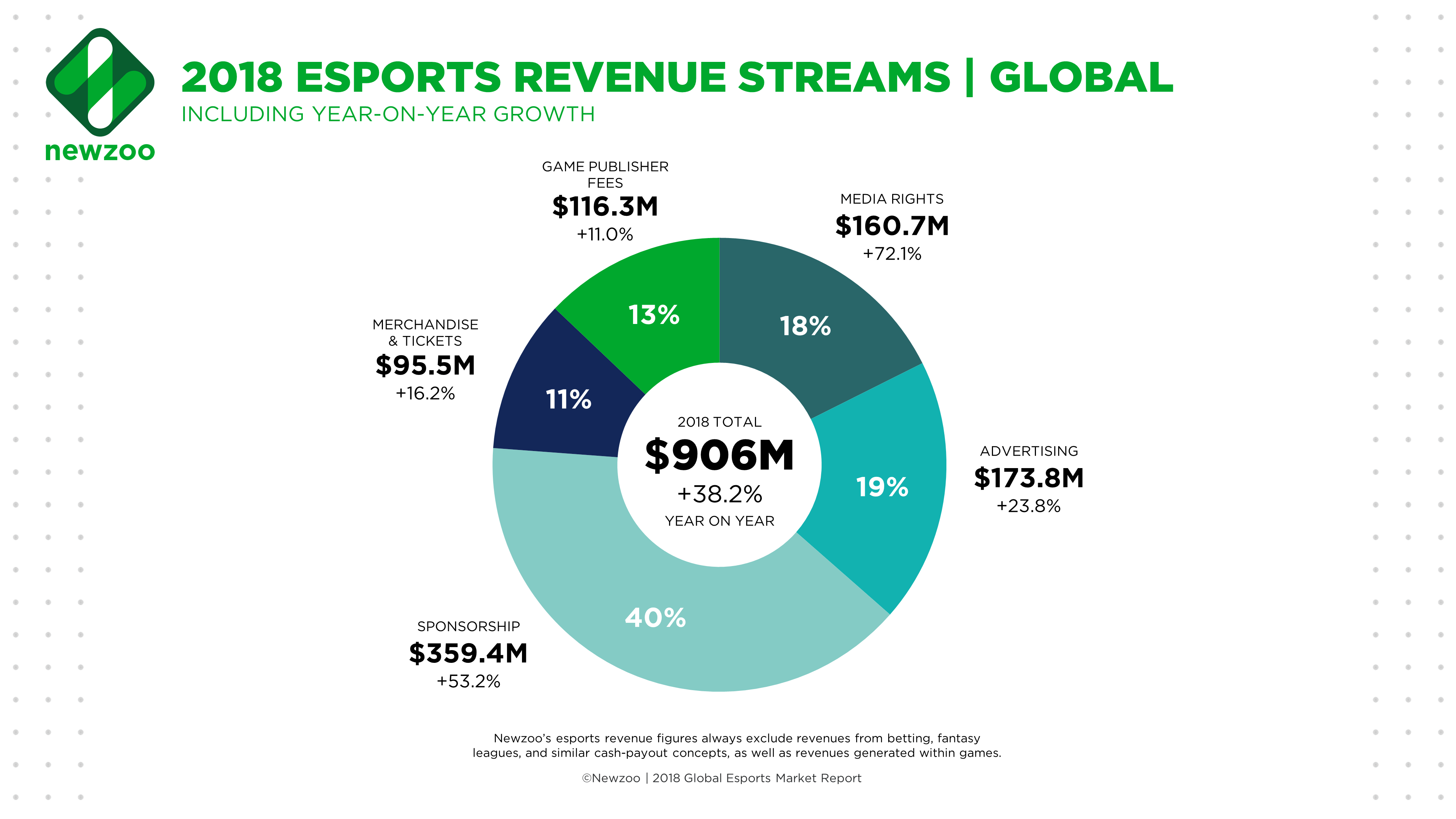
If you didn’t already know that bets like this were out there, the short answer is, it’s 2018. You can wager on everything from the results of individual at bats of a Mets game in real time, to the birth weight of the next relevant celebrity baby. And as competitive professional gaming leagues — also known as esports — have developed, more and more gamblers have come out of the woodwork to bet on them. With Business Insider conservatively estimating that the esports gambling market is worth $900 million as it stands in 2018, and Eilers & Krejcik Gaming estimating that value to double by 2020, unfortunately for the crotchety old folks in the comments of all of ESPN’s gaming-related Facebook posts, these contests are going to continue to be a topic of conversation.

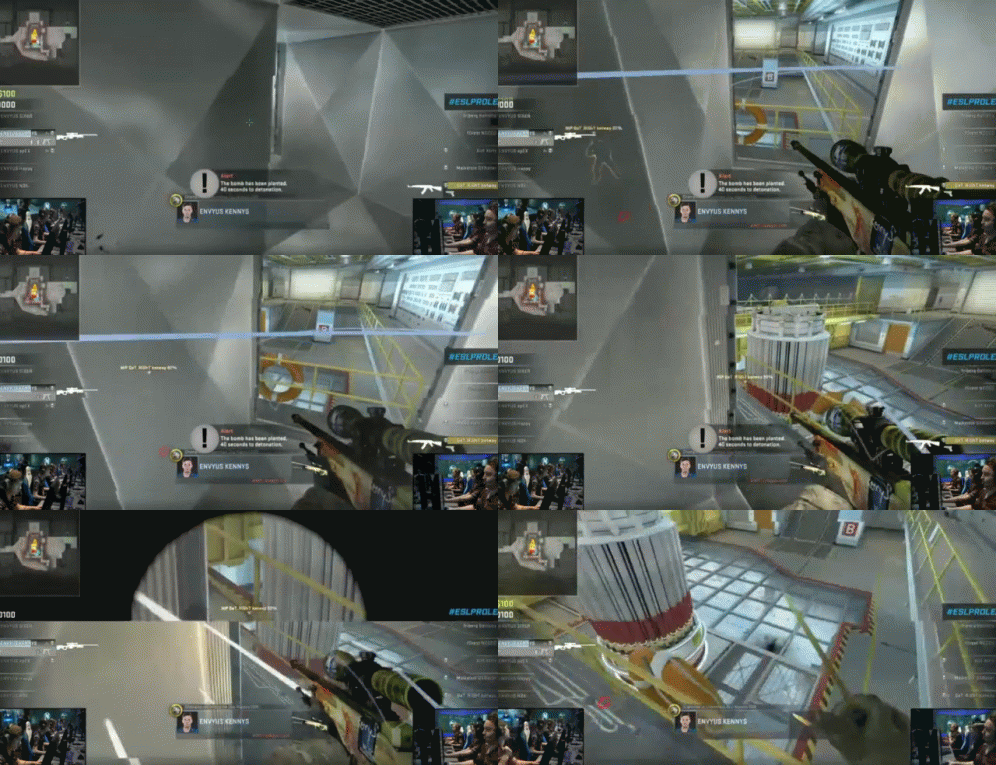
One of the most recognizable Counterstrike players of all-time, KennyS, shows off his world famous AWP skills to secure a round win.It makes sense that with esports viewership rising, so has the commotion around betting on them. Many games have had a long history of gambling internally that should have told us that this was going to be a thing sooner rather than later. Most notably, Counterstrike players have been gambling skins (purely cosmetic art for in game weapons) since random skin rewards were introduced in 2013. What began as the developers simply trying to bolster the game’s community became a thriving digital black market with the rarest skins often being worth in excess of $25,000 while trading hands over roulette and dice game results. So yeah, it’s that serious.

If you’re into wagering on your videogames the old-fashioned way (if there is one), online books offer the traditional odds where bettors can put their money down on the results of matches (the moneyline or spread), like you’d expect to see offered for any of the major sports. Bettors can also throw their hat in the ring on prop bets like character picks, who’ll get the first kill, and other game-specific events. These prop bet options (bets not concerned with or affected by the outcome of the game) are often limited to more high-profile matches, but if you’re willing to risk it on one of the shadier internet books, generally someone will take your money on just about anything, not unlike any other sport.

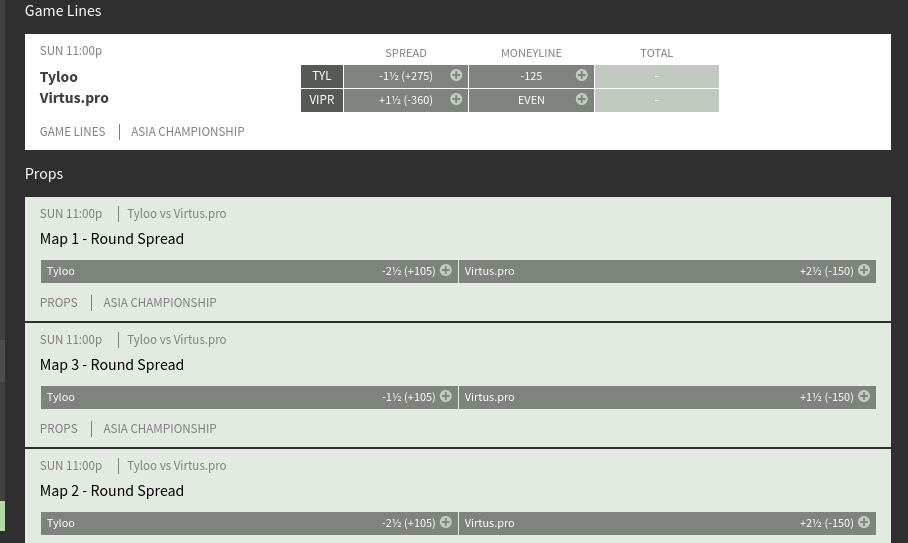
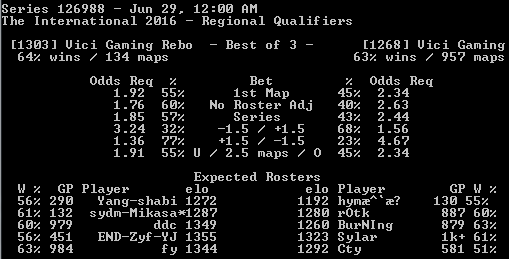
An example of what bookmakers like Bovada have to offer for betting on esports matches, in this case, Counterstrike.For Marcus “sixf0ur” Shea, founder of esportsforecasts.com, this market is worth playing, evidenced by the fact that he’s wagered nearly $400,000 CAD on it over the past two years. Shea got his start in finance, and then managed to, for lack of a better word, parlay, our adoration for shows like American Idol, and more importantly, our love for gambling, into a newfound career. Luckily for all of us, I was able to pick his brain and get the full story.

It starts in 2011. After earning his Master’s in Mathematics from the University of Waterloo, he landed what to many would be the job of a lifetime working for The Bank of Montreal as a quantitative analyst on Bay St, AKA he was the guy double-fisting espresso on the trading floor while somehow also yelling into his flip-phone and angrily snapping it closed every ten minutes. Once he started to apply that same expertise to betting, he found himself engulfed in a hobby that would steadily inch it’s way toward a career.

After 5 years of working for The Bank of Montreal, pricing billions worth of assets everyday, it proved to be just as stressful as you could expect. Considering I hyperventilate at the thought of losing the modest amounts I’m used to betting, I’ll take his word on how stressful life was as a quant if he was willing to become a professional gambler to escape that stress.

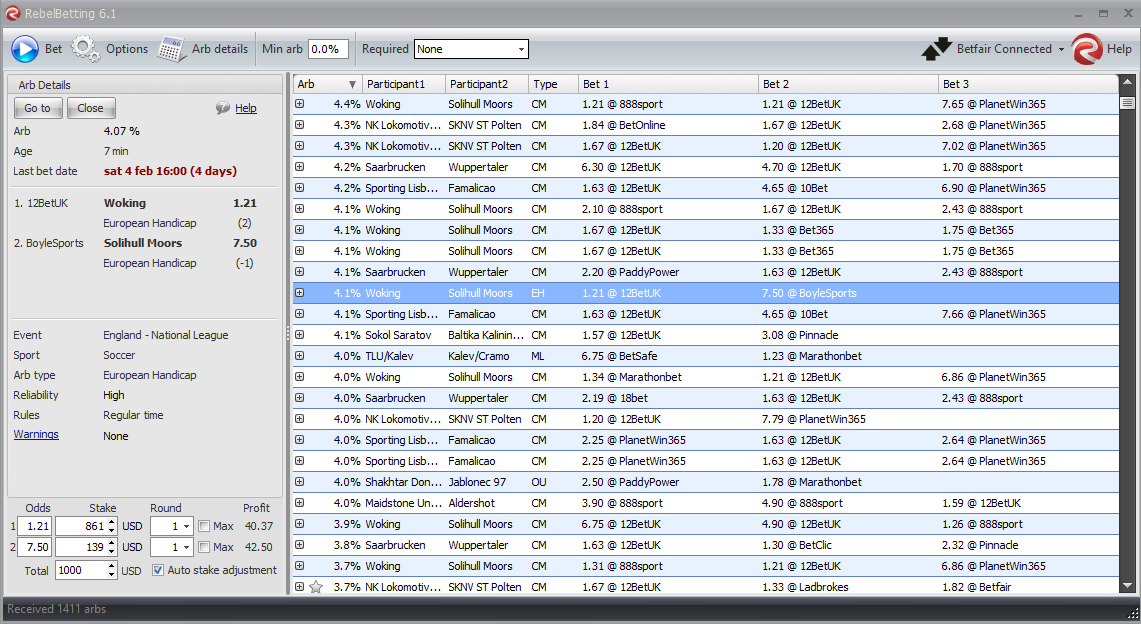
He built a bankroll using a program he had developed to shop odds on American Idol results offered on various online sportsbooks, namely Betfair and Pinnacle, and find arbitrage bets, or bets where he could still make a profit after betting all possible outcomes due to odds discrepancies between the books. These discrepancies generally arise most commonly within less popular betting events where books are more likely to offer significantly varying odds, or simply make a mistake in setting the market price. A word to the wise, and this should go without saying, this is easier said than done. Even if we’re talking American Idol odds, there’s a reason the house does so well in the big picture. Looking into the action around American Idol really strengthens the case that Sanjaya being a finalist was an inside job, but I’m going to leave that be for now.

A screenshot from the popular arbitrage betting software RebelBettingWhen Betfair, a popular online sportsbook, closed the digital door on Canadian citizens after merging with Irish betting service Paddy Power in 2015, Shea needed to look for other options. Part of what makes esports betting so appealing is that many bettors, like Shea, still see it as a market with high edge potential (potential to beat the books betting on lines they may not put the proper time or expertise into setting accurately). It was the logical next step, oddly enough.

So, starting from a humble(ish) Excel spreadsheet model to help predict the outcome of DOTA 2 games, he began to shift his focus from finding surefire arbitrage bets, to bringing in as much esports results data as possible and betting according to conclusions he was able to draw from the trends defined in his model. Essentially, his model assigns each team a rating based on their performance history, compares that with the rating of their opponent, and offers bettors a percentage chance that Team A or Team B will win. While model betting still carries risk, modeling is designed to let you as a bettor know where the value bets are, and allow you to slowly build profit over time. Long story short, it’s definitely better than throwing darts at a dartboard and throwing some money around on those results.

After finding some much-needed success betting on DOTA with the help of the Reddit esports community, he expanded to a program of his own development that was capable of handling the raw results data from four more esports: League of Legends, Overwatch, Heroes of the Storm, and Counterstrike.

At this point in the story, Shea’s model looks something like this.In true Moneyball fashion, this is right about the time in the story where the house comes calling. But really, they did. You can’t make this shit up. In late 2016 Marco Blume, the President of Pinnacle, where he had been using for the bulk of his betting, reached out to Shea looking to talk shop about all things esports. According to Blume, esports were the fastest growing market in the world of sports betting, even overtaking hockey in terms of total volume wagered in their book, so it makes since they could stand to learn a thing or two from someone like Shea. But when they offered him what would essentially amount to an entry level position working in their sportsbook, he doubled down and rejected it, choosing to continue to be his own boss with Esportsforecasts. He might as well just return to Bay St. if now was the time to cash in all he’d worked for.

As for the model itself, look, I copied every math assignment I ever had to do in school, and I didn’t even bother to find the smart kids to copy them from. This is to say, none of it stuck. The intricacies of this model, or any other really for that matter, are lightyears beyond my comprehension. But, when there is a will (and money to be made) there is a way, so in talking with Marcus, combined with my research comparing the esportsforecasts.com model to other sports betting models, I was able to find that the key differences in betting esports as opposed to say, college football, can be attributed to their general increased volatility, and this creates a need for the model to be more malleable. Take a game like Counterstrike for example. The maps that the match will be played on aren’t decided until the pick/ban process that takes place right before each match. Teams perform better on some maps than others, prioritizing them in the pick phase, while banning maps the other team is known to perform well on. How this all shakes out can drastically change the outlook of the match, and this is what gives people like him time to react before the books can adjust their lines for live betting.

The esportsforecasts model projection from the Grand Finals of the 2017 International DOTA 2 tournamentWhile he can’t yet port in map picks in real time yet, he has left you the availability to do so at home and adjust your bets accordingly, hopefully allowing you to make value bets before the books can adjust their lines based on their projected performance of each team map to map. The model also makes similar adjustments for red vs blue side performance in League of Legends, first vs second pick performance in DOTA, etc, which are all facets an esports match bet that don’t really have a traditional sports analog. Esports sharps generally look to target these areas of volatility. The process of factoring these potential effects on the outcome of games is one he soon hopes to streamline, but for now bettors can foot the responsibility, or take to the Esportsforecasts Discord channel and see what other bettors following the model have to say.

But perhaps most importantly, Shea’s esports model is designed to rate the players on their own scale individually, in addition to generating team ratings. Esports contracts are fragile at best, to non-existent at worst, which leads to teams consistently dissolving and forming at a rate that drastically outpaces the four major sports, as well as a lot of expected turnover within a given roster. This, in combination with teams now carrying extra players on their roster more frequently, represents a need for the ability to quickly evaluate teams based on various lineups in order to find the value. So aside from the added wrinkle of giving a quantified take on who the best players around really are, rating the players individually also serves to stabilize the inherent volatility in Esports competition and isolate the bettor’s edge before the books adjust the lines. See a theme here?

One thing no model can account for however, is match fixing, a common problem bettors face when it comes to esports. Players are more easily convinced to throw matches given that the prize money on the table for winning tournaments, particularly smaller ones, often pales in comparison to what they could make throwing a game. In light of the recent Supreme Court decision allowing individual states the right to legalize sports gambling, expect to see the 18+ age restriction employed by most professional leagues become universal, as many have already raised concern that minors playing professionally could be seen as easy targets for match-fixers. Hopefully with rising prize pools, players won’t feel as though their hand is being forced and this eyesore on the community will be minimized, but fortunately for bettors, the books know that a match being fixed is a real possibility. Shea recalled multiple instances of Pinnacle in particular refunding/voiding bets he had placed on matches that had drawn suspicion. It’s like we’ve always said. Sportsbooks are nothing if not understanding!

By the time I got around to asking why he was posting all of this delicious content for us internet vultures to pick at for free instead of being in the business of selling picks, he replied swiftly, undoubtedly because he knew it was coming.

“Not yet.”

Betting north of $1,000 a night on esports based on his model’s projections has worked generally worked out for him, but even he doesn’t bet every series. Discipline and knowing value bets when he sees them is how he has turned his gambling from a hobby into a career he can rely on. Even still, Shea says hes looking to make some subtle improvements before rolling out a subscription service for some added risk-free income and return on his time investment. He does plans to leave a free version open to the public for the foreseeable future.

You can find Marcus on Twitter: @esportsforecast

Parker Goss is a senior correspondent for Grandstand Central, where he writes about gambling, gaming, and fan culture. You can follow him here.

Source: https://grandstandcentral.com/what-its-like-wagering-400k-on-esports-f93dc2afd427

The 3 Biggest Trends That Will Drive #Gold In The Next 30 Years $AMK.ca $EXS.ca $MQR.ca $GR.ca $GGX.ca $HPQ.ca $GZD.ca

Posted by AGORACOM-JC at 11:45 AM on Thursday, June 21st, 2018

Olivier Garret , Contributor Opinions expressed by Forbes Contributors are their own.

  • The World Gold Council recently released an insightful report titled, Gold 2048: The Next 30 Years for Gold.
  • Report looks at overarching demographic, technological, economic, political, and social trends around the world and their implications for the gold market.

The World Gold Council recently released an insightful report titled, Gold 2048: The Next 30 Years for Gold. This report looks at overarching demographic, technological, economic, political, and social trends around the world and their implications for the gold market.

The report has brought together top gold industry experts as well as world-renowned authors and economists who discuss the underlying macro forces that will drive gold in the next 30 years.

This is an eye-opening yet lengthy read that I highly recommend to all investors (find it here). To give you a glimpse of what’s inside the report, this short overview presents the highlights and takeaways from an investment perspective.

Trend #1: The Rise of the Middle Class in Emerging Markets

According to the report, in the next 30 years, demographics will play an increasingly important role in shaping the global economy.

The big story of the next quarter-century will be the rising middle class in emerging markets, particularly in China and India. Recent reports estimated that, over the next 17 years, 170 million Asians will enter the middle class every year.

India, the largest consumer of gold, is set to become the fastest-growing economy in the coming decades. If it manages to pull off its ambitious political and economic reforms, its middle class might soar from 19% to 73% of total population.

“Not only will the Indian middle class become a driving force within the Indian economy, but its aggregate purchasing power will result in the creation of one of the largest markets in the world,” says the report.

China’s middle class, too, is rapidly expanding. But unlike India, the Chinese are facing major demographic headwinds. Key among them is an aging population, which might curb economic growth despite the gains from the expanding middle class.

Takeaway for gold investors:

India and China are the biggest consumers of gold worldwide. As their middle class and aggregate purchasing power grow, gold demand is expected to soar.

Trend #2: A Shift in Gold Demand and Supply Dynamics

Jewelry and investment-grade bullion are not the only drivers of gold demand. Gold has wide industrial applications as well. Practically every piece of electronics has a little gold used as highly conductive and corrosion-resistant material. Unknown to many, gold is even effectively used in medicine.

Here’s a quick rundown of technological trends from the report that will spur industrial gold demand:

  • The adoption of the Internet of Things (IOT) will lead to an explosion of electronics (and gold) used in all consumer durable goods.
  • A shift to hybrid and electric vehicles demand far more high-end electronic components that use gold.
  • Gold compounds show promise in clinical testing and even drugs as a new class of antibiotic.
  • A booming solar panel industry will demand more gold as a core catalyst component.

There are many more gold applications, but industrial applications make up only a small part of aggregate gold demand. Investment demand has a much more profound impact on the gold price.

The experts who contributed to the report predict that the growing popularity of gold-backed ETFs as well as advancements in fintech will be some of the biggest drivers of gold demand in the coming years. The convenience and cost-effectiveness that technology brings will make gold attractive to more investors, including Millennials.

Meanwhile, gold supply is under major constraints due to rising operating costs, scant gold discoveries, and low gold prices.

The report sums up the current situation in gold supply:

We expect new mine supply to decline over the next 30 years, hit by rising costs. Metals Focus estimates that, even today, new gold mines need a price of about US$1,500/oz, and with costs having increased at a compound annual rate of 10% over the past 15 years, additional ESG costs are likely to mean that even higher gold prices will be required in the future.

Takeaway for gold investors:

Due to operating constraints, gold miners will struggle to keep up with the growing gold demand. This, in turn, will put upward pressure on gold prices in the long run.

Trend #3: A Volatile Future

The investment landscape itself will radically change in the next 30 years. A combination of demographic, technological, and macroeconomic trends is creating structural changes in the global economy that will have profound implications for investors.

  • Working-age populations are shrinking in the developed world. Labor scarcity will put a strain on economic growth and equity returns. A rise in wages due to constrained labor supply is likely to mark the end of the low inflation era.
  • The rise of automation and AI—displacing increasingly more workers—will elevate political and social tensions and bring more volatility to the markets. We might also expect Western politics to become more redistributive, which will put a greater financial burden on investors via rising taxes.
  • The impact of demographics will have a profound effect on the dynamics of global powers. The Western world will be increasingly burdened by aging populations, scarce labor, and stagnant economic growth. Conversely, India and China are set to reach their golden demographic spot in the coming decades. Since demographics have a direct effect on economic growth, we are likely to witness an unprecedented shift of economic power from West to East. As a result, geopolitical tensions will rise.
  • The widespread adoption of big data and artificial intelligence in investing will increase automated trading in liquid markets. Automation and fast data dissemination will make investment preferences more correlated, so true diversification will be hard to achieve.

Takeaway for gold investors:

The next 30 years are going to be highly unstable, both politically and financially. As history shows, gold performs best in volatile times—and is the best, time-tested hedge against any crisis.

Source: https://www.forbes.com/sites/oliviergarret/2018/06/20/the-3-biggest-trends-that-will-drive-gold-in-the-next-30-years/#26437bbc29bb

Nvidia $NVDA: #Esports To Catapult Growth $GMBL $KUU.ca $ATVI $TTWO $GAME $EPY.ca $TCEHF $Game.ca $EPY.ca

Posted by AGORACOM-JC at 10:49 AM on Thursday, June 21st, 2018
  • eSports is growing at an exceptional pace.
  • The advent of this gaming segment would boost sales for Nvidia
  • Besides, Nvidia’s GeForce Now would target users who don’t want to spend huge chunks of cash on industry-leading gaming hardware.
  • This is a win-win situation for Nvidia.

Nvidia (NVDA) has grown at an exceptional pace across all of its segments for many quarters now and its shares are up by about 75% over the past year alone. Interestingly, naysayers and some perma-bears have begun proclaiming of late that the chipmaker would enter a phase of consolidation over the course of 2018 but that’s not necessarily a done deal. There is reason to believe that the emergence of a new category within gaming, eSports, will act as a key growth driver for Nvidia in addition to AMD (AMD). Let’s take a closer look.

(Source: Bigstockphoto, Image license purchased by author)

The age of eSports

It seems like eSports is gaining traction at an impressive pace. Gamers would be familiar with the term but for those who are hearing it for the first time, eSports is basically gaming at a professional level and simultaneously streaming the gameplay (via Twitch, YouTube, TV channels etc.) for their audience.

The advent of eSports has no doubt morphed into a full-blown profession for gamers as they are now able to monetize their time, skills and gaming hardware. Additionally, it has also opened up various kinds of revenue streams for those organizing, hosting and powering these events.

Source: https://seekingalpha.com/article/4182933-nvidia-esports-catapult-growth

Online Education #edtech market in #India: From humble beginnings to a $2 billion industry $BTRU.ca $ARCL $CPLA $BPI $FC.ca

Posted by AGORACOM-JC at 9:57 AM on Thursday, June 21st, 2018

  • On a growth spree, the Indian online education market is presenting a lot of opportunities to ed-tech players in the arena
  • The industry is expected to achieve the growth benchmark of $2 billion by the year 2021, a joint report released last year by Google and KPMG stated
  • Also found that the paid user base for online education services will also grow at least by six times, if not more.

Ed-tech in India has had humble beginnings right from its inception. From the elementary smart classes by Educomp to the current shape and state of the education industry where several ed-tech startups and foreign players are vying for a slice of the education market in India.

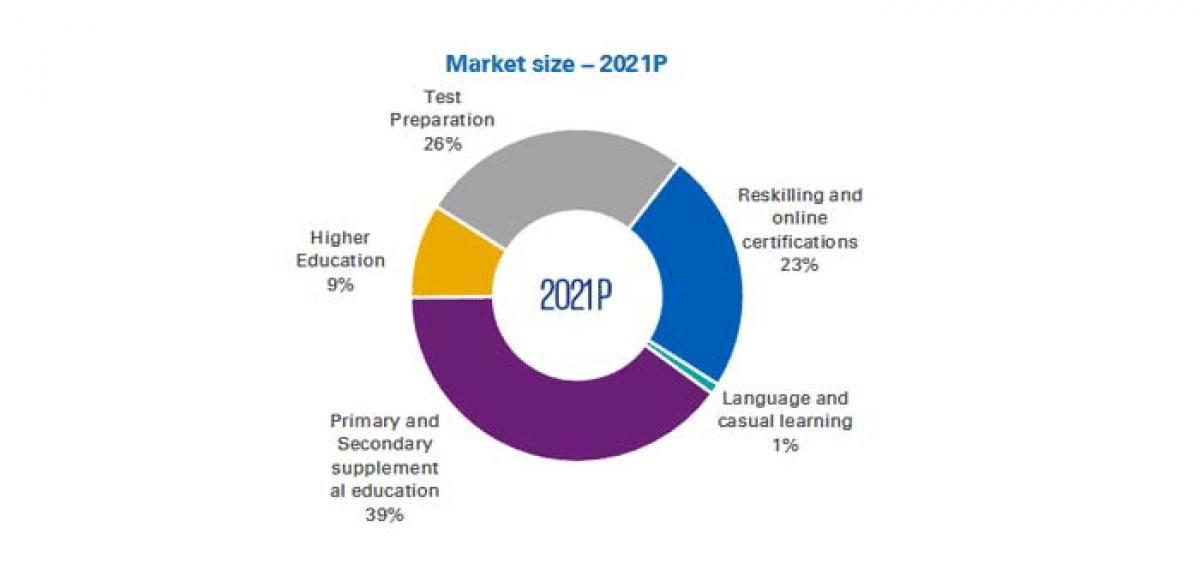
On a growth spree, the Indian online education market is presenting a lot of opportunities to ed-tech players in the arena. The industry is expected to achieve the growth benchmark of $2 billion by the year 2021, a joint report released last year by Google and KPMG stated. The report also found that the paid user base for online education services will also grow at least by six times, if not more.

While the report’s findings are quite impressive, the online education sector in India didn’t always possess the same grandeur or even garner the same interest that it does now. Initiated in the 1990s, Smart Class by Educomp launched by Shantanu Prakash was the first venture that brought a large scale change in the education sector.

Educomp Solutions started off with the business of setting up and maintaining computer labs in private schools till 1999. The company’s business grew in 1999, when founder Shantanu Prakash decided to expand the trading operations by including CD-ROMs and educational toys. However, the biggest milestone in the company’s decades-long journey remains the introduction of Educomp SmartClass – a ‘one of its kind’ model that revolutionized the way kids learn things at school.

Since then, the Indian education sector has seen quite some growth in terms of development and innovations. Ed-tech service providers and a few players in the industry are giving a makeover to ed-tech wherein the capital demands and investments have brought India to the forefront in the space.

While still nascent, India is home to thousands of companies providing education technology services to schools as well as individuals, with over 900 managing to come up in the past 2 years alone.

The innate efficacy of the tech-driven setup is still a hot topic for nationwide debates, the ground report says otherwise. Surveys conducted with several participating students have shown that the students aided with online education and smart class were able to achieve a more profound understanding of the subject matter, as compared to the students who stuck to conventional methods of learning.

The investors are surely past the over-stretched debate, with big names like the Chan Zuckerberg Initiative, Tencent Holdings, etc., having opened their coffers to Indian ed-tech honchos BYJU’s and AEON Learning. And that’s not it. The FinTech sector in India has also embraced its educational counterpart, with indigenous digital lending platforms like Zest Money and FinMomenta partnering with players like Upgrad and Edureka.

The use of technology in an already tech-driven world is not the only reason why investors are attracted to the online education sector in India. Another driving factor remains the large and rapidly growing consumer base. There are about 409 million Internet users in India, a country with 46 per cent of its population in the age group of 15-20 years.

Apart from the increasing Internet penetration, the low cost involved in pursuing an online course, as well as the convenience, flexibility and personalization also attribute to the popularity of ed-tech among students. This, in turn, amounts to growing interest from investors.

While some educators perceive online education as a looming threat to the very existence of offline education system, CEO of Embibe.com Aditi Awasthi believes that the ed-tech sector will remain a fringe play in the face of traditional methods of education until it hits at the heart of what matters to the students – outcomes. “There has to be a clear RoI from consuming education through high-tech channels beyond mere convenience. Data science-driven personalization can make that happen,” she says.

Source: http://www.thehansindia.com/posts/index/Education-&-Careers/2018-06-20/Online-Education-market-in-India-From-humble-beginnings-to-a-2-billion-industry/390846