Agoracom Blog Home

Posts Tagged ‘CSE’

G2’s new COO Peter Mucha: “I do believe that mobile #Esports is a massive opportunity space for the Esports industry.” $KUU.ca $GMBL

Posted by AGORACOM-JC at 3:33 PM on Friday, June 8th, 2018
  • G2’s new COO Peter Mucha: “I do believe that mobile #Esports is a massive opportunity space for the Esports industry.”
Jacob WolfESPN Staff Writer

G2 Esports has hired former Adidas and Activision executive Peter Mucha as its new chief operating officer, the team announced on Thursday.

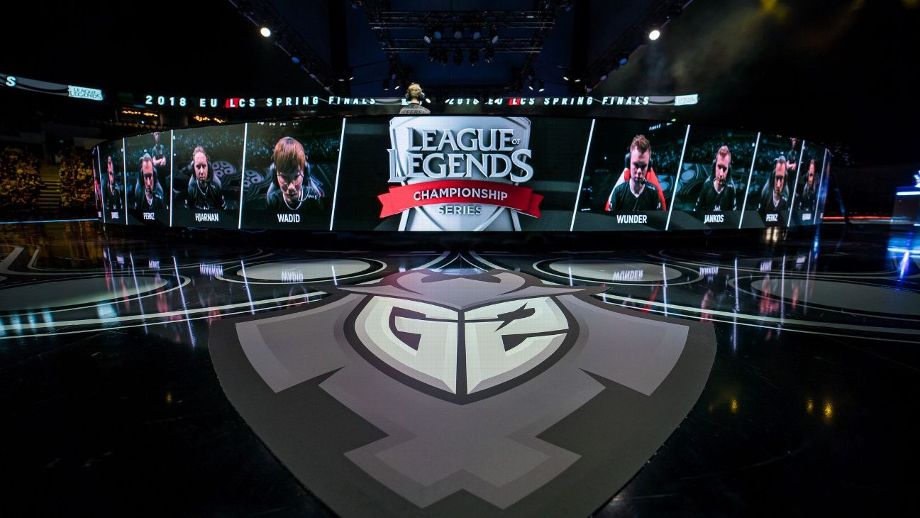
Mucha joins an executive team led by G2 CEO Carlos “ocelote” Rodríguez Santiago, a former professional League of Legends player who founded Gamers2 (lately rebranded to G2) in 2014. Mucha takes the job that was previously held by Jamie Bach, who has transitioned into a general manager role with G2.

Prior to taking the G2 role, Mucha worked in various different European-focused jobs for Adidas, Activision and most recently, Microsoft. At Activision, he served as the vice president of publishing for its European arm, with a specific focus on Red Octane and LucasArts (which is owned by ESPN’s parent company, Disney.) Mucha worked at adidas for a total of 11 years, starting as an account manager and working his way up to be a managing director of Adidas Austria and then Adidas’s arm in the Netherlands after that.

By July 1, G2 will have to submit its application for a franchise spot in the League of Legends Championship Series. It first entered that league in Sep. 2015 after qualifying via a promotion tournament and since, it has been a top performer in the league; G2 holds a total of four League Championship Series trophies. But to retain the slot in the league, it will need to go through a vigorous application process that is likely to include applications from fellow esports teams, traditional sports team owners and large and successful business entities.

ESPN spoke with Mucha about how he got involved with G2, some of the challenges in European esports and the opportunities ahead for the company.

ESPN: How did you get connected with G2? What led to you ending up working there and taking on an executive leadership role?

Mucha: I’ve spent over 15 years in various leadership roles in the entertainment industry, so I know the gaming space and esports well. G2 was looking for the overall executive leadership experience I bring to the table, especially across the gaming, sports and entertainment industries. When I met Carlos about six months ago, we both immediately knew that we’d make a good team – and I was fascinated by G2’s massive growth over the past few years and their ambitious future plans. My experience working with blue chip companies was definitely helpful in landing this role, but what I think pulled the trigger on the decision was my startup experience. I’ve worked with multiple fast-growing, agile companies as they navigate their first massive breakthroughs. That’s where I feel G2 is right now – and I’m beyond excited to be a part of this journey alongside them.

ESPN: Given your background in sports apparel, how do you think companies like Adidas, Nike, Under Armour could push into esports?

Mucha: I think for big companies like these, a move into a completely new industry like esports takes time. We have seen a ton of big non-endemic brands and names entering the space, but those decisions aren’t made lightly. For brands that aren’t native to the space, understanding and really connecting with the esports fan will be critical – diving deep into the minds of how they think, make decisions, attach to and stay loyal to brands, will be the most important factors. For their entry into the market to be successful, consumer brands need to completely tailor their approach to this very specific, and tough to reach, demographic.

ESPN: We’ve heard concerns about some of these companies using their main athletic brands in esports in terms of hurting their brand image of “performance apparel.” Do you think branching off and creating subsidiaries (i.e. Hurley, Converse, etc.) would be a better idea to focus on gamers and esports?

Mucha: That’s an interesting strategy that can definitely work, the same way it has worked for OMEN by HP, or the ASUS ROG brand. I don’t see Nike or Under Armour stepping away from their hugely popular brands to introduce something new for the sake of keeping the “physical performance brand” image to their non-esports fans anytime soon — but they would need to create campaigns that are specifically targeted at the esports audience in order to be successful. It will be very interesting to see brands develop new strategies to reach esports fans in the coming 12 or so months – including other non-apparel brands. Tailoring your approach specifically to esports is the way to go with our fans, and it’s something I hope every non-endemic and endemic brand in the space will do.

ESPN: How involved have you been in the European League of Legends Championship Series application for G2? What will separate G2 from the other teams applying?

Mucha: This is a massively important project for G2, and we’re excited to explore the opportunities of securing a permanent slot in the EU LCS ecosystem. I am particularly excited to be working with G2 Esports during this process, but as this is only my fourth day on the job with the team, I haven’t been involved much yet.

ESPN: How do you think European esports teams can become profitable? What steps will you take with G2 to increase revenues?

Mucha: I see incredible opportunities for the industry — and G2 in particular — to grow their revenues. The lowest hanging fruit and the biggest opportunity we have is fully utilizing the data we have about our fans. There is no other industry in the world right now that has so much access to data about its fans and their demographics, and is able to use it to create assets, products and services that can become a great value add for everyone in the industry, and an independent revenue stream for the makers.

ESPN: What other opportunities do you believe are worth pursuing outside of LCS? Overwatch League?

Mucha: I’m don’t like to make predictions — I’m way too pragmatic and down-to-earth for that, but I do believe that mobile esports is a massive opportunity space for the esports industry. Just seeing the growth of this particular vertical within esports in the past 24 months has been mindblowing, and I hope that it will continue to grow. Meanwhile though, there’s still plenty of things in motion that need our immediate attention: professional circuits for the most popular esports titles are thriving, and the EU LCS in particular is on about to take a major step towards long-term stability with the implementation of the partnership model.

Source: http://www.espn.com/esports/story/_/id/23723176/do-believe-mobile-esports-massive-opportunity-space-esports-industry

betterU Education Corporation $BTRU.ca Announces Increases in Monthly Traffic Metrics to India Marketplace, Including 3,200% in Site Visits $ARCL $BPI $FC.ca

Posted by AGORACOM-JC at 11:49 AM on Friday, June 8th, 2018

Betteru large

  • Announced increases across all traffic metrics following the successful launch of its’ national mass marketing print campaign in India in February;
    • Website visits increase 3,202%
    • Registrations increase 2,920%
    • Courses taken increase 4,966%

OTTAWA, June 08, 2018 — betterU Education Corp. (the “Company” or “betterU”), is pleased to announce increases across all traffic metrics following the successful launch of its’ national mass marketing print campaign in India in February.  Highlights include the following:

METRIC JANUARY
(ACTUAL)

Pre-Marketing
FEB/MAR/APRIL
(AVERAGE / MONTH)
Post-Marketing
%
INCREASE
Website Visits 2,637 87,091 3,202%
Registrations 29 876 2,920%
Courses Taken 15 760 4,966%
Chats 37 693 1,772%
Social Impressions 27,222 1,151,648 5,471%


METRICS DEMONSTRATE POWER AND EFFECTIVENESS OF MARKETING PROGRAMS

The Company successfully launched its full-scale mass marketing print campaign across India through Hindustan Times, Hindustan and The Mint on February 19th to coincide with the Prime Minister of Canada’s visit to India for the Global Business Summit on February 23rd and 24th, which included over 2,000 delegates and 400 CEO’s from around the world.

On March 1st, 2018 the Company announced a significant increase in visitors to its’ platform, as well as, incoming calls and partnership requests.  As a result, betterU continued the national marketing campaign to grow awareness, partnerships and, most importantly, revenue streams.

Brad Loiselle, CEO of betterU stated “These increases in key metrics from just our first three months of marketing speak for themselves and bode well for our anticipated growth throughout 2018 and beyond.  Like all marketing, we expect our metrics to grow stronger every quarter as our brand awareness compounds amongst our target markets, leading to strong and robust business growth for years to come.  To this end, we are already preparing for major hiring to support our business growth and will have more to say about this in the very near future. ”

About betterU

betterU, a global education marketplace, aims to provide access to quality education from around the world to foster growth and opportunity to those who want to better their lives. The company plans to bridge the prevailing gap in the education and job industry and enhance the lives of its prospective learners by developing an integrated education-to-employment ecosystem. betterU’s offerings can be categorized into several broad functions: to compliment school programs with flexible KG-12 programs preparing children for next stage of education, to provide access to global educational opportunities from leading educators, to foster an exceptional educational environment by providing befitting skills that lead to a better career, to bridge the gap between one’s existing education and prospective job requirement by training them and lastly, to connect the end user to various job opportunities.

www.betterU.ca and www.betterU.in

Neither TSX Venture Exchange nor its Regulation Services Provider (as that term is defined in policies of the TSX Venture Exchange) accepts responsibility for the adequacy or accuracy of this release.

This press release may contain forward-looking statements and information, which may involve risks and uncertainties. The results or events predicted in these statements may differ materially from actual results or events. Factors that might cause a difference include, but are not limited to, competitive developments, risks associated with betterU’s growth, the state of the financial markets, regulatory risks and other factors. There can be no assurance or guarantees that any statements of forward-looking information contained in this release will prove to be accurate. Actual results and future events could differ materially from those anticipated in such statements. These and all subsequent written and oral statements containing forward-looking information are based on the estimates and opinions of management on the dates they are made and expressly qualified in their entirety by this notice. Unless otherwise required by applicable securities laws, betterU disclaims any intention or obligation to update or revise any forward-looking statements, whether because of new information, future events or otherwise. Readers should not place undue reliance on any statements of forward-looking information that speak only as of the date of this release. Further information on betterU’s public filings, including their most recent audited consolidated financial statements, are available at www.sedar.com.

For further information, please visit  https://ir.betteru.ca/investor-overview/press-releases/

On behalf of the Board of Directors,
betterU Education Corp.
Brad Loiselle, CEO

For further information:
Investor Relations
1-613-695-4100 Ext. 233
Email: [email protected]

FEATURE: Star Navigation $SNA.ca Announces STAR-ISAMM™ In-Flight System Aided Medical Monitoring system

Posted by AGORACOM-JC at 2:12 PM on Thursday, June 7th, 2018

In response to discussions with the Emergency Medical Service industry, Star’s R&D Department has been working on this project for several years.

The STAR-ISAMM™ prototype has already been demonstrated and Star expects that this will significantly enhance:

  • Interfacing with EMS, in the air and on the ground, improving on scene care and care in transit.
  • Providing better patient care with a seamless hospital virtual environment. The patient will be already ‘admitted’ to the hospital care service while being transported.

Star intends to start fielding the STAR-ISAMM™ system this year, starting with the helicopter EMS segment.

Hub On AGORACOM

FULL DISCLOSURE: Star Navigation Systems Group Ltd. is an advertising client of AGORA Internet Relations Corp.

FEATURE: Tartisan Nickel $TN.ca Kenbridge Property Hosts M&I Resource of 7.14 Million Tonnes at 0.62% #Nickel, 0.33% #Copper $NI.ca $GP.ca

Posted by AGORACOM-JC at 11:01 AM on Thursday, June 7th, 2018

TN:CSE

Investment Highlights

  • Acquisition of Canadian Arrow Mines Limited includes two Ontario-based nickel-copper-(cobalt) properties
  • Canadian Arrow’s Kenbridge property has a measured and indicated resource of 7.14 million tonnes at 0.62% nickel, 0.33% copper
  • 20 percent equity stake in Eloro Resources and 2 percent NSR in their La Victoria property with drill program in progress
  • Strong management team with proven experience in advancing projects to production readiness and increasing shareholder value
  • Tightly held share structure with 50 percent owned by approximately 10 investors

Kenbridge Ni Project (ON, Canada)

  • Advanced  stage  deposit  remains open  in  three  directions,  is  equipped with a 623m  deep  shaft  and  has  never  been  mined.
  • Preliminary  Economic Assessment completed in   2008   and later updated returned robust project
    economics and operating costs including  a  NPV  of  C$253M  and  cash costs of US$3.47/lb of nickel net of
    copper credits.
  • Plans for Kenbridge include updating the 2008 PEA, advancing the project through to feasibility and exploring
    the open mineralization at depth

FULL DISCLOSURE: Tartisan Nickel Corp. is an advertising client of AGORA Internet Relations Corp.

#F1 looks to the future with #Esports series $GMBL $ATVI $TTWO $GAME $EPY.ca $TCEHF

Posted by AGORACOM-JC at 4:45 PM on Wednesday, June 6th, 2018
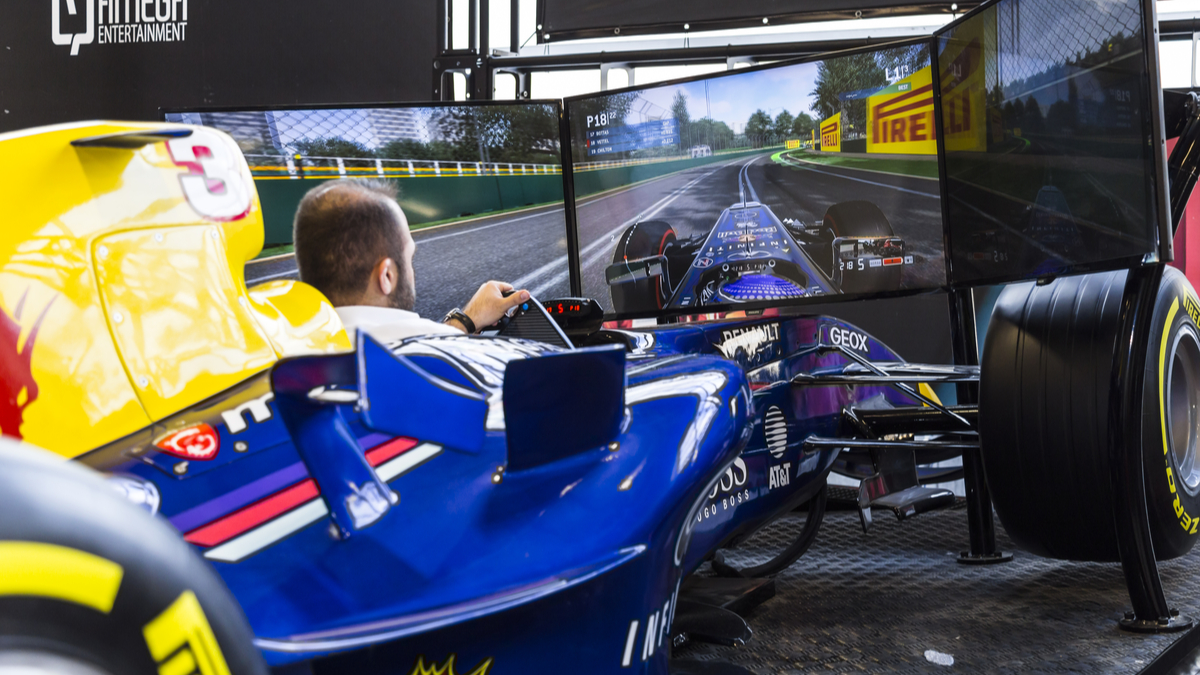
  • Electronic sports is one of the fastest-growing entertainment industries, swelling to a value of almost $1 billion as it attracts a young demographic of fans.
  • It an important area of focus for Formula 1, which is looking to capitalise on interest in virtual gaming and competition.

F1 had not stepped into the esports arena before Liberty Media’s takeover in January 2017. Fans looking to race together had to make do with unofficial leagues organised online, but that all changed last autumn when F1 launched its esports series.

The attraction to a broad and committed younger generation of F1 and esport fans is something that we are proud to support and nurture

Drivers were invited to take part in online qualifiers using the official F1 video game before the top 40 met in London for the live semi-finals. This was whittled down to 20 drivers for the live finals at the season-ending Abu Dhabi Grand Prix, where the races were broadcast online and given a full TV presentation similar to that of the real-life F1 events. The winning driver – 18-year-old Brendon Leigh, a kitchen manager from Reading – was awarded the trophy on the podium in Abu Dhabi just hours before the final grand prix of the season.

“The attraction to a broad and committed younger generation of F1 and esport fans is something that we are proud to support and nurture,” F1 commercial chief Sean Bratches said following the live final. “We look forward to establishing a season-long series in 2018.”

Liberty has been pushing to make F1 more attractive to a younger audience since its takeover, and esports offers a straightforward way to do that. A report from analytics provider Nielsen Sports found that the average age of esports fans is 26. And among those in its sample from the UK and Germany – two of F1’s most important markets – motorsports is the third most popular sport.

Nielsen reports that esports fans consume around 3.5 hours of digital/streaming content each week, and spend 4.5 hours watching videos online through websites such as YouTube. F1 recently launched its F1 TV platform, which looks to take the sport to a new, younger audience that would not watch the sport on mainstream TV. The crossover with the esports demographic makes it an obvious point of interest for F1.

I think there’s no doubt that F1 gaming, and specifically videos of it on YouTube, helps the real-life sport gain new followers

Enthusiasm for esports is also bringing fans to F1 who might not otherwise have tuned in. “I think there’s no doubt that F1 gaming, and specifically videos of it on YouTube, helps the real-life sport gain new followers,” said Aarav Amin, a leading F1 gaming content creator on YouTube whose videos have amassed more than 65 million views.

“From personal experience, I’ve seen comments from viewers countless times expressing how they’ve become new fans of the sport and are now obsessed with it thanks to watching my videos. These viewers are typically either teenagers or young adults, which is exactly the type of audience Liberty Media has been wanting to engage.”

Esports is also creating opportunities for drivers. Motorsport is traditionally a very expensive pastime, and young drivers require huge financial support to even get close to F1. As video games and simulations have improved, the gulf between the virtual and the real world has shrunk, giving gamers a chance to get a foot on the motorsport ladder.

The McLaren F1 team staged a ‘World’s Fastest Gamer’ competition last year to find a new simulator driver, testing gamers through a series of virtual and physical challenges. The event was won by Holland’s Rudy van Buren, who is now officially part of the McLaren team, working with race drivers Fernando Alonso and Stoffel Vandoorne to help develop the real-world F1 car.

Van Buren said: “Every boy that starts karting dreams about F1, and at a certain point that dream just vanishes. Now by winning World’s Fastest Gamer, I can relive that dream. It really was the toughest job interview I ever faced, but with such an incredible reward at the end of it.”

Van Buren and F1 esports winner Leigh were both given a berth in the ‘Race of Champions’ event in January that pits drivers from a variety of racing series in a head-to-head challenge. Leigh had never driven a real-life car until the week leading up to the showcase, but was able to get up to speed and underwent an intensive fitness regime similar to that of professional drivers, completing the transition from gamer to racer.

The esports effect on F1 is greater than simply offering a younger, previously untapped audience to the series. It is also makes motorsport more accessible and opens doors to aspiring racers.

Four-time world champion Lewis Hamilton is not convinced we will see future F1 drivers starting out in esports, but having come from a poorer background himself, he recognises the value of it and the opportunities it might create.

 I’ve got fans who are good at gaming but when they got into the car it isn’t the same

“It is quite incredible, the recent developments,” Hamilton said. “But do I think that will translate into a racing driver? Honestly, I don’t think you can ever be sure, but I doubt it. I’ve got fans who are good at gaming but when they got into the car it isn’t the same.

“It would be a far more feasible career for many because right now racing is so expensive and if [esports creates] an opportunity in the future, then that’s good for people that come from places that I came from. They can’t get that now. It is much harder for anyone from a council estate in Stevenage to get to F1 now – pretty much impossible because you need a lot of money.”

As F1 begins to map out its digital future, esports is going to be a key part of its plan – and it could have a significant impact both on and off-track.

How Tomorrow’s Electric Cars #EV Are Fueling #Nickel Demand Today $NI.ca $GP.ca

Posted by AGORACOM-JC at 3:43 PM on Wednesday, June 6th, 2018
  • Currently, 68 percent of all nickel produced is used in stainless steel productio
  • In the coming years, a greater percentage of nickel supplies is expected to be allocated to the battery sector as the electric vehicle revolution takes shape around the world
  • Nickel, and more specifically nickel sulfate, is already a crucial player in the electric vehicle (EV) battery sector

Nickel, and more specifically nickel sulfate, is already a crucial player in the electric vehicle (EV) battery sector, as the silvery metal is used in a variety of battery applications and is relatively affordable, but will increased demand from the automotive sector price nickel out of the equation?

During his presentation at the sixth international nickel conference, Ken Hoffman, client development executive at McKinsey & Company, said he expects nickel supply and demand to grow at an accelerated pace through 2021, driven by the race to produce the world’s premier EV battery.

According to Hoffman, the EU and China have emerged as forerunners in the push to transition to EVs. In 2017, the EU, as well as five other countries, announced tough regulations on internal combustion engines in an effort to push citizens towards environmentally friendly EVs.

These included a phase out of internal combustion engines by 2030-35 in Germany and the Netherlands, a ban on gasoline and diesel vehicle sales starting in 2040 in the UK, a similar vehicle ban in India to be implemented in 2030 and an aggressive target of seven million EVs on the road in China by 2025.

The stakes are high when it comes to creating the ultimate EV batteries, as Hoffman noted, “at the end of the day you want to have an EV battery that is the equivalent to an internal combustion engine.”

Meaning a vehicle that has good fuel economy and can travel long distances, something today’s EVs lack, but that could be about to change. In fact, the market has already seen some of the changes beginning to occur, especially when it comes to battery chemistry composition.

When it comes to powering the next generation of transportation there is little doubt that lithium-based batteries will lead the way, but what is up for debate is what material and in what percentage will the cathodes inside the lithium-ion battery be.

The current industry standard calls for an EV battery comprised of lithium nickel-cobalt-manganese oxide (NCM), however in only a handful of years this formula has changed as well, spurred on by the need to create better efficiency, as well as drive down price.

“What we have is a tale of two metals,” said Hoffman during his Thursday (May 31) presentation in Toronto. “Cobalt pricing itself out and lithium pricing itself in.”

As he pointed out, the old EV batteries used a chemical formula of 111, 33 percent nickel 33 percent cobalt and 33 percent manganese. But the price of cobalt has grown exponentially in the last five years, from roughly US$11.00/lb in January 2013 to above US$40 today, making it an expensive metal to add to EV batteries.

Moving forward the industry might see a reduction on the amount of cobalt in EV batteries.

“The car industry has told its chemists to take everything that’s cobalt out of the battery and that is what they are doing,” Hoffman said.

The EV battery of today, is comprised of a 532 nickel cobalt manganese break down, with BMW (EBR:BMW) touting a 622 battery, which further reduces the amount of pricey cobalt to only 20 percent. In the near future, Hoffman expects an 811 battery will be the standard, in fact LG has already announced it will introduce its NCM 811 battery sometime this year.

As long as the price of nickel remains flat – US$8.00 in January 2013 to US$6.87 today (June 4) – there is little worry it will be priced out of the battery equation, like many predict will happen to cobalt. However, there is already discussion about a next generation of battery, called solid state, in which no nickel or cobalt are used at all.

Hoffman even alluded to a relatively new metal, that would potentially revolutionize the battery sector. Graphene, which was discovered in the 21st century and is a two-dimensional material made from honeycomb sheets of carbon. What makes graphene exciting is it potential to conduct and store.

“[It] can conduct electricity 100 times better than copper,” noted Hoffman.

He went on to explain that if a battery is filled with graphene it does two things, it allows more electrons to flow through, giving it an average of 45 percent greater energy density, and because the electrons can flow much more easily it charges very fast as well.

“On a cell phone we are talking about a 12 minute full charge from 0-100, and with a car if you have the proper charging equipment under an hour for a 100 percent charge,” said Hoffman.

Despite China and EU emerging as the current leaders of this push towards green vehicles, currently all industrialized countries are on an equal playing field when it comes to development at this point. Especially when the battery that will power the green car shift is still to be decided upon.

While the world is excited about the environmental impact the EV revolution will have, others are more pragmatic in their belief that EVs represent a symbolic shift of global consciousness. However, unless the electricity used to fuel the EVs is produced in a green way as well, the EV industry will serve as a façade of good intentions hiding a dirty secret.

Don’t forget to follow us @INN_Resource for real-time updates!

Securities Disclosure: I, Georgia Williams, hold no direct investment interest in any company mentioned in this article.

Source: https://investingnews.com/daily/resource-investing/base-metals-investing/nickel-investing/nickel-evs-how-tomorrows-cars-is-fuelling-nickel-demand/

FEATURE: Video Advertising Is The Future: Good Life Networks $GOOD.ca With $1.3M in Q1 Revenue

Posted by AGORACOM-JC at 11:57 AM on Wednesday, June 6th, 2018

GOOD: TSX-V

GLN harnesses the power of artificial intelligence to improve marketing return on investments for advertisers using its patent pending video advertising technology. By 2020, MAGNA, the research arm of media buying firm IPG Mediabrands, expects digital ads to make up 50 percent of all ad spending, expected to reach $237 billion this year.

Q1 Financial Highlights

  • Revenue increased 2072% to $1,322,139 in the First Quarter of 2018
  • Gross profit increased to $448,270 from $1,971 during the First Quarter ended March 31st, 2017;
  • Gross margin as a percentage of revenue were 34% compared to 3% during the First Quarter of 2017, representing a 1,133 % increase.

Hub On AGORACOM / Corporate Profile

FULL DISCLOSURE: Good Life Networks is an advertising client of AGORA Internet Relations Corp.

New Age Metals $NAM.ca /Azincourt Energy Acquire 100% of the CATLAKE #Lithium Project, the 8th Lithium Project in Southeast Manitoba/2018 Field Program Initiate $LIC.ca $LIX.ca

Posted by AGORACOM-JC at 9:52 AM on Wednesday, June 6th, 2018

New age large

  1. Lithium Canada Development is the 100% owned subsidiary of New Age Metals (NAM) who presently has an agreement with Azincourt Energy Corporation (AAZ) whereby AAZ will now commit an additional $250,000 in exploration expenditures and issue NAM an additional 250,000 shares of AAZ. This increases AAZ’s initial 50% exploration expenditure earn in for AAZ from $2.6 million to $2.850 million. This acquisition will also increase the shares to be issued to NAM from 1.5 million to 1.75 million, and adds an additional 2% royalty for NAM, for a total of eight royalties on the Lithium Projects in this pegmatite field. For additional information on the NAM/AAZ option/joint-venture and recent acquisitions, see the news releases dated Jan 15, 2018, May 2, 2018, May 10, 2018.
  2. The recent project acquisition has strengthened New Age Metal/Azincourt Joint Venture position as the largest claim holder in the Winnipeg River Pegmatite Field as they are now in possession of an approximate total of 14,100 hectares (34,800 acres). These Manitoba projects that have excellent infrastructure are located in a mining friendly jurisdiction. The Joint Venture now has eight projects in this large lithium-bearing pegmatite field.
  3. Preliminary field work and additional ground proofing is currently in progress on the Lithium Two Project. The objective of this work is to finalize a drill plan and initiate a drill program, which is slated for Q3/Q4 2018. Management of both companies plan to update their shareholders and interested parties with a complete exploration plans for all eight projects before the end of June and as the summer/fall progresses. The minimum exploration budget for 2018 is $600,000.
  4. Lithium has an ever increasing demand for batteries in electric cars cellphones, laptops, solar storage, wireless charging and renewable energy products.
  5. NAM’s Platinum Group Metals (PGM) Division, more specifically our River Valley PGM project in Sudbury, Ontario, is the largest undeveloped primary platinum group metal project in North America, and management is advancing the project towards its first economic study, more specifically, a Preliminary Economic Assessment (PEA). See news releases dated May 8, 2018 and May 23, 2018.

June 6th, 2018 / Rockport, Canada – New Age Metals Inc. (TSX.V: NAM; OTCQB: NMTLF; FSE: P7J.F) is pleased to announce that its wholly owned subsidiary, Lithium Canada Developments (LCD), has acquired a 100% interest in the CATLAKE Lithium Project, by way of staking, in southeast Manitoba. The project has good infrastructure and is located in a region known for mining in the province.

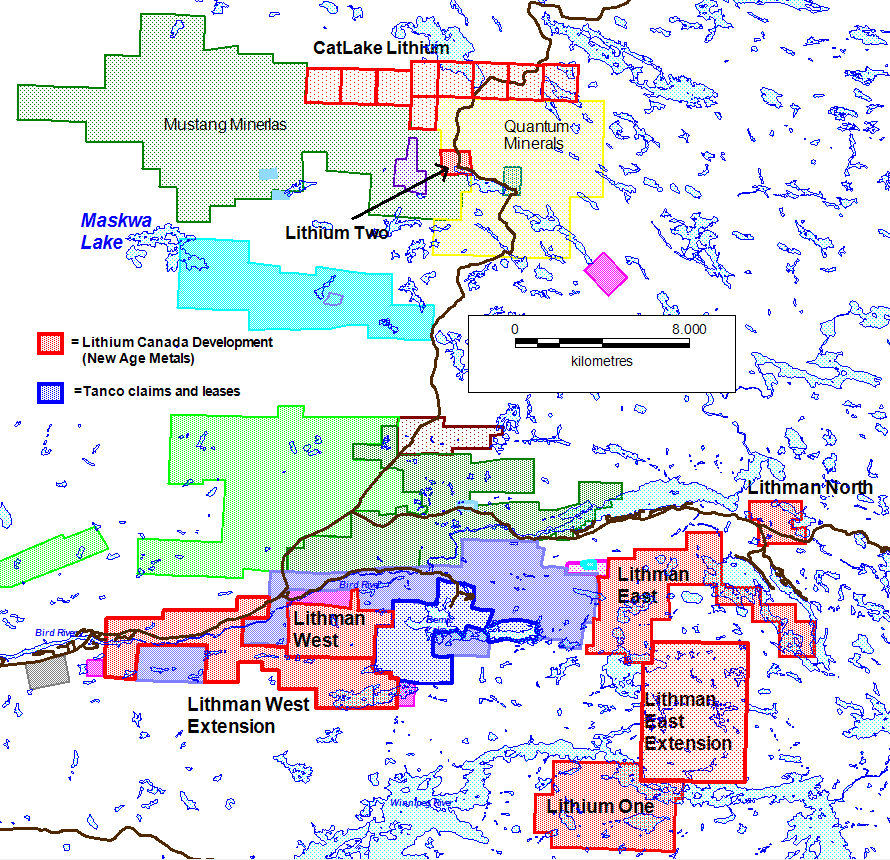
The new CATLAKE Project consists of 9 claims for a total of an approximately 2000 hectares (4950acres) (Figure 1). It is located approximately 24 kilometers directly north of the Tanco Pegmatite. The world-class Tanco Pegmatite has been mined for Tantalum, Cesium and Spodumene (one of the primary Lithium ore minerals) in varying capacities, since 1969 at the Tanco Mine.


Click Image To View Full Size

Figure 1: CATLAKE Lithium Project Claim Outline

CATLAKE Lithium Project

The CATLAKE Lithium Project is located directly north of the Lithium Two Project. The Lithium Two Project contains several lithium bearing pegmatites with a historic non 43-101 compliant 1947 drilled resource on the Eagle Pegmatite of 545,000 tonnes of 1.4% Li2O to a depth of only 60 meters. Historical reports have suggested that the Eagle Pegmatite is open to depth and along strike. Preliminary field work and additional ground proofing is currently in progress on the Lithium Two Project. The objective of this work is to finalize a drill plan and initiate a drill program, which is slated for Q3/Q4 2018. Management of both companies plan to update their shareholders and interested parties with a complete exploration plans for all eight projects before the end of June and as the summer/fall progresses. The minimum exploration budget for 2018 is $600,000.

The new claims were staked to add to the company’s expanding lithium exploration portfolio and to have a larger presence in the CATLAKE area which has seen an increase in recent exploration activity. Companies such as Quantum Minerals, Mustang Minerals and Equitorial Exploration are also active in this promising new lithium and rare metals region. The new claims are situated north of Quantum Minerals recent claim acquisition. They are staked over portions of the greenstone belt at CATLAKE and along the trend that hosts the Irgon Pegmatite (Quantum Minerals), both which hosts lithium-bearing pegmatites. .

The pegmatites in this region of southeast Manitoba are described as being a part of the Winnipeg River Pegmatite Field. Several large lithium-bearing pegmatites exist in this historic area and exploration activity in the region is increasing. This pegmatite field is host to the world-class Tanco Pegmatite, which is a highly fractionated Lithium-Cesium-Tantalum (LCT Type) pegmatite and has been mined in varying capacities since 1969. The LCT-type pegmatites can contain large amounts of Spodumene (one of the primary ores used in hard rock lithium extraction) and are a primary geological target in hard rock lithium exploration. They also can contain economic qualities of tantalum and cesium as well as other lithium bearing minerals such as mica.

OPT-IN LIST

If you have not done so already, we encourage you to sign up on our website (www.newagemetals.com) to receive our updated news or click here.

ABOUT NAM’S PGM DIVISION

NAM’s flagship project is its 100% owned River Valley PGM Project (NAM Website – River Valley Project) in the Sudbury Mining District of Northern Ontario (100 km east of Sudbury, Ontario). Presently the River Valley Project is North America’s largest undeveloped primary PGM deposit with Measured + Indicated resources of 160 million tones @ 0.44 g/t Palladium, 0.17 g/t Platinum, 0.03 g/t Gold, with a total metal grade of 0.64 g/t at a cut-off grade of 0.4 g/t equating to 3,297,173 ounces PGM plus Gold and 4,626,250 PdEq Ounces (Table 1). This equates to 4,626,250 PdEq ounces M+I and 2,713,933 PdEq ounces in inferred (see May 8th, 2018 press release). Having completed a 2018 NI-43-101 resource update the company is finalizing its 2018 exploration programs which will include geophysics, and extensive drill programs, which are all working towards the completion of a Preliminary Economic Assessment (PEA). Our objective is to develop a series of open pits (bulk mining) over the 16 kilometers of mineralization, concentrate on site, and ship the concentrates to the long-established Sudbury Metallurgical Complex. On May 23rd, 2018, NAM’s board approved a Preliminary Economic Assessment (PEA) on River Valley Platinum Group Metals Project’s. This will be the first economic study on the project. Alaska: April 4th, 2018, NAM signed an agreement with one of Alaska’s top geological consulting companies. The companies stated objective is to acquire additional PGM and Rare Metal projects in Alaska. On April 18th, 2018, NAM announced the right to purchase 100% of the Genesis PGM Project, NAM’s first Alaskan PGM acquisition related to the April 4th agreement. The Genesis PGM Project is a road accessible, under explored, highly prospective, multi-prospect drill ready Pd-Pt-Ni-Cu property.

The results of the new resource estimation are tabulated in Table 1 below (0.4 PdEq cut-off).

Class Tonnes

‘,000

Pd (g/t) Pt (g/t) Rh (g/t) Au (g/t) Cu (%) Ni (%) Co (%) PdEq (g/t)
Total Measured 62,877.5 0.49 0.19 0.02 0.03 0.05 0.01 0.002 0.99
Total Indicated 97,855.2 0.40 0.16 0.02 0.03 0.05 0.01 0.002 0.83
Total Meas +Ind 160,732.7 0.44 0.17 0.02 0.03 0.05 0.01 0.002 0.90
Inferred 127,662.0 0.27 0.12 0.01 0.02 0.05 0.02 0.002 0.66
Class PGM + Au (oz) PdEq (oz) PtEq (oz) AuEq (oz)
Total Measured 1,440,248 1,999,575 1,999,575 1,136,930
Total Indicated 1,856,925 2,626,675 2,626,675 1,463,793
Total Meas +Ind 3,297,173 4,626,250 4,626,250 2,600,724
Inferred 1,578,367 2,713,933 2,713,933 1,323,809

Notes:

1. CIM definition standards were followed for the resource estimation.

2. The 2018 resource models used Ordinary Krig grade estimation within a three-dimensional block model with mineralized zones defined by wireframed solids.

3. A base cut-off grade of 0.4 % g/t PdEq was used for reporting resources.

4. Palladium Equivalent (PdEq) calculated using (US$): $1,000/oz Pd, $1,000/oz Pt, $1,350/oz Au, $1750/oz Rh, $3.20/lb Cu, $5.50/lb Ni, $36/lb Co.

5. Numbers may not add exactly due to rounding.

6. Mineral Resources that are not mineral reserves do not have economic viability

7. The quantity and grade of reported inferred resources in this estimation are uncertain in nature and there has been insufficient exploration to define these inferred resources as an indicated or measured mineral resource and it is uncertain if further exploration will result in upgrading them to an indicated or measured mineral resource category.

ABOUT NAM’S LITHIUM DIVISION

The Company has seven pegmatite hosted Lithium Projects in the Winnipeg River Pegmatite Field, located in SE Manitoba, with focus on Lithium bearing pegmatites. Three of the projects are drill ready. This Pegmatite Field hosts the world class Tanco Pegmatite that has been mined for Tantalum, Cesium and Spodumene (one of the primary Lithium ore minerals) in varying capacities, since 1969. NAM’s Lithium Projects are strategically situated in this prolific Pegmatite Field. Presently, NAM is the largest mineral claim holders for Lithium in the Winnipeg River Pegmatite Field. Lithium Canada Development is the 100% owned subsidiary of New Age Metals (NAM) who presently has an agreement with Azincourt Energy Corporation (AAZ) whereby AAZ will now commit an additional $250,000 in exploration expenditures and issue NAM an additional 250,000 shares of AAZ. This increases AAZ’s initial 50% exploration expenditure earn in for AAZ from $2.6 million to $2.850 million. This acquisition will also increase the shares to be issued to NAM from 1.5 million to 1.75 million, and adds an additional 2% royalty for NAM, for a total of eight royalties on the Lithium Projects in this pegmatite field. For additional information on the NAM/AAZ option/joint-venture and recent acquisitions, see the news releases dated Jan 15, 2018, May 2, 2018, May 10, 2018.

QUALIFIED PERSON

The contents contained herein that relate to Exploration Results or Mineral Resources is based on information compiled, reviewed or prepared by Carey Galeschuk, a consulting geoscientist for New Age Metals. Mr. Galeschuk is the Qualified Person as defined by National Instrument 43-101 and has reviewed and approved the technical content of this news release.

On behalf of the Board of Directors

“Harry Barr”

Harry G. Barr

Chairman and CEO

ADDITIONAL INFORMATION

Should you have additional inquiries, please contact Paul Poggione, Corporate Development, Tel: 1-613-659-2773, email: [email protected].

Neither the TSX Venture Exchange nor its Regulation Services Provider (as that term is defined in the policies of the TSX Venture Exchange) accepts responsibility for the adequacy or accuracy of this release.

Cautionary Note Regarding Forward Looking Statements: This release contains forward-looking statements that involve risks and uncertainties. These statements may differ materially from actual future events or results and are based on current expectations or beliefs. For this purpose, statements of historical fact may be deemed to be forward-looking statements. In addition, forward-looking statements include statements in which the Company uses words such as “continue”, “efforts”, “expect”, “believe”, “anticipate”, “confident”, “intend”, “strategy”, “plan”, “will”, “estimate”, “project”, “goal”, “target”, “prospects”, “optimistic” or similar expressions. These statements by their nature involve risks and uncertainties, and actual results may differ materially depending on a variety of important factors, including, among others, the Company’s ability and continuation of efforts to timely and completely make available adequate current public information, additional or different regulatory and legal requirements and restrictions that may be imposed, and other factors as may be discussed in the documents filed by the Company on SEDAR (www.sedar.com), including the most recent reports that identify important risk factors that could cause actual results to differ from those contained in the forward-looking statements. The Company does not undertake any obligation to review or confirm analysts’ expectations or estimates or to release publicly any revisions to any forward-looking statements to reflect events or circumstances after the date hereof or to reflect the occurrence of unanticipated events. Investors should not place undue reliance on forward-looking statements.

Namaste $N.ca $NXTTF enters into distribution agreement with Lowell Herb Co California’s fastest growing #cannabis brand to penetrate the Canadian recreational market $ACB.ca $HIP.ca $WEED.ca $CMED.ca

Posted by AGORACOM-JC at 9:44 AM on Wednesday, June 6th, 2018

Namaste Technologies (CNW Group/Namaste Technologies Inc.)

  • Company has signed a supply and distribution agreement with Lowell Herb Co.
  • To launch Lowell Smokes brand of ultra-premium cannabis products for the Canadian recreational and medical cannabis markets
  • Agreement represents a strategic partnership between Namaste and Lowell Smokes to leverage Namaste’s resources and Lowell’s international brand appeal

VANCOUVER, June 6, 2018Namaste Technologies Inc. (“Namaste” or the “Company”) (TSXV: N)(FRA: M5BQ)(OTCMKTS: NXTTF) is pleased to announce that the Company has signed a supply and distribution agreement (the “Agreement”) with Lowell Herb Co. (“Lowell Smokes” or “lowellsmokes.com”) to launch Lowell Smokes brand of ultra-premium cannabis products for the Canadian recreational and medical cannabis markets. In anticipation of Canada’s roll-out of legal recreational cannabis, the Agreement represents a strategic partnership between Namaste and Lowell Smokes to leverage Namaste’s resources and Lowell’s international brand appeal. Namaste will work with Lowell Smoke’s procurement team to source the highest quality cannabis grown with organic methods and facilitate packaging and distribution through the Company’s wholly-owned subsidiary, Cannmart Inc. (“Cannmart”). Namaste anticipates a strong demand for organic cannabis products as the general consumer market becomes more conscious of the products they consume.

California is considered by many to be the most competitive cannabis brand market in the world. Lowell Smokes has established itself as one of the strongest brand names in California and within the entertainment industry and its ties to Hollywood have played a key role in supporting the brand and making it ideally suited for international expansion. In a recent BDS Analytics report, Lowell Smokes ranked as the #1 pre-roll brand in California amongst over 50 other brands listed, with an impressive 12% market share. Lowell Smokes is in over 250 top dispensaries across the entire state of California. With celebrities like N.O.R.E, Snoop Dogg, Jimmy Kimmel, Sarah Silverman, Bella Thorne, Bria Vinaite, Sasha Lane and dozens of others talking about the brand and posting content on social media, this Agreement will bring great value to Namaste and its shareholders.

With the impending roll-out of recreational cannabis in Canada, the Company believes that over time, the commoditization of Cannabis will require companies to become more innovative in branding and marketing to differentiate themselves. Namaste will continue to pursue strategic partnerships where the Company can leverage their e-commerce and technology platform to provide value to brands like Lowell Smokes.

Terms of the Agreement

  • Namaste will secure supply of high-quality cannabis and produce Lowell Smoke’s branded products on-site at Cannmart.
  • Lowell Smokes will provide packaging and branding guidelines, in compliance with Health Canada regulations.
  • Lowell Smokes will pay a monthly rental fee that will include storage and overhead costs to Cannmart.
  • Lowell Smokes will pay Namaste a 5% royalty fee for all wholesale orders sold through Cannmart.
  • Lowell Smokes will provide Namaste with wholesale prices for non-cannabis products that will be sold through Namaste’s e-commerce platform.

MANAGEMENT COMMENTARY

David Elias, President and CEO of Lowell Herb Co comments; “We are thrilled to announce our partnership with Namaste. Lowell Herb co is the fastest growing cannabis brand in California, and we believe that there is a massive opportunity for our brand internationally.  Working with Namaste, we are confident that they are the perfect partner to help us enter the Canadian market.  They have a unique offering, and they are solid operators with deep domain expertise in eCommerce.”

Sean Dollinger, President and CEO of Namaste Technologies comments; “We believe the strength of the Lowell Smokes brand makes it a perfect brand to be distributed globally. We have seen the sales data in California, the largest and most competitive market in the US, and it’s clear that customers love and adore the Lowell brand. We feel confident that the market for organic cannabis products will play an important role for Canadian consumers and that the timing is perfect for Namaste to not only help the team at Lowell take advantage of the opportunity in Canada but also to help them explore the international marketplace.

When we created the platform, our primary focus was on enhancing the customer experience and we built it with brands like Lowell Smokes in mind. We have been long-time fans of the Lowell Smokes brand and we are excited for them to be our first American brand on the platform, as we look to bring our customers the very best products the cannabis market has to offer. We believe expanding our offering will broaden our customer base and help set us apart from our competitors.”

About Lowell Herb Co.

The Lowell Herb Co is the fastest growing, most talked about cannabis brand in California and its signature product, Lowell Smokes, a pack of pre-rolls, is currently the number one selling cannabis product in California, available in over 250 dispensaries and for delivery statewide through their partnership with Eaze.  Lowell cultivates, and sources flowers grown with only organic fertilizer, never using synthetic pesticides. Vanity Fair recently described Lowell as “The California family of farms that grows organic cannabis for green-minded consumers who value premium goods and sophisticated design.”  Lowell has been featured in major media outlets including Cosmopolitan, High Times, NPR, Time Out LA, CBS News, Huffington Post, and many others.

For more information on Lowell Herb Co please visit

http://www.lowellsmokes.com/

About Namaste Technologies Inc.

Namaste Technologies is a global leader in the sale of medical cannabis consumption devices. Namaste has nine offices with multiple distribution centers around the globe and operates over 30 websites under various brands. Namaste has developed innovative technology platforms including NamasteMD.com, Canada’s first ACMPR compliant telemedicine application. The company is focused on patient acquisition through NamasteMD and intends on building Canada’s largest database of medical cannabis patients. The company’s subsidiary, CannMart Inc. is an ACMPR Licensed Producer pending receipt of a “sales-only” license, whereby the company will offer a large variety of medical cannabis sourced from domestic and international producers. Namaste will continue to develop and acquire innovative technologies which will provide value to the Company and to its shareholders as well as to the broader cannabis market.

For more information on Namaste Technologies please visit

NamasteTechnologies.com

On behalf of the Board of Directors

“Sean Dollinger”

Chief Executive Officer

Direct: +1 (786) 389 9771

Email: [email protected]

Investor Relations: [email protected]

Further information on the Company and its products can be accessed through the links below:

NamasteTechnologies.com

NamasteMD.com

NamasteVapes.ca

Everyonedoesit.ca

FORWARD-LOOKING INFORMATION This press release contains forward-looking information based on current expectations. These statements should not be read as guarantees of future performance or results. Such statements involve known and unknown risks, uncertainties and other factors that may cause actual results, performance or achievements to be materially different from those implied by such statements. Although such statements are based on management’s reasonable assumptions, Namaste assumes no responsibility to update or revise forward-looking information to reflect new events or circumstances unless required by law. Although the Company believes that the expectations and assumptions on which the forward-looking statements are based are reasonable, undue reliance should not be placed on the forward-looking statements because the Company can give no assurance that they will prove to be correct. Since forward-looking statements address future events and conditions, by their very nature they involve inherent risks and uncertainties. These statements speak only as of the date of this press release. Actual results could differ materially from those currently anticipated due to a number of factors and risks including various risk factors discussed in the Company’s disclosure documents which can be found under the Company’s profile on www.sedar.com. This press release contains “forward-looking statements” within the meaning of Section 27A of the Securities Act of 1933, as amended, and Section 21E the Securities Exchange Act of 1934, as amended and such forward-looking statements are made pursuant to the safe harbor provisions of the Private Securities Litigation Reform Act of 1995. Neither the TSX Venture Exchange nor its market regulator has reviewed or approved the contents of this press release.

Lowell Herb Co (CNW Group/Namaste Technologies Inc.)

Cision View original content with multimedia:http://www.prnewswire.com/news-releases/namaste-enters-into-distribution-agreement-with-lowell-herb-co-californias-fastest-growing-cannabis-brand-to-penetrate-the-canadian-recreational-market-300660669.html

SOURCE Namaste Technologies Inc.

How #Blockchain Technology Can Save The IRS $SX.ca $SXOOF $IDK.ca $AAO.ca $HPQ.ca

Posted by AGORACOM-JC at 11:14 AM on Tuesday, June 5th, 2018
  • IRS plans to spend $291 million updating 140 computer systems to help it implement the new tax law
  • InformIation-technology costs and other back-office operations will consume more than 90% of the money Congress is giving the IRS for implementation.
  • Overall, the IRS budget is estimated to be $11.4 billion in the next fiscal year

Adam Bergman , Contributor

According to a previously undisclosed Internal Revenue Service (“IRS”) document, the IRS plans to spend $291 million updating 140 computer systems to help it implement the new tax law. Those information-technology costs and other back-office operations will consume more than 90% of the money Congress is giving the IRS for implementation. Overall, the IRS budget is estimated to be $11.4 billion in the next fiscal year.

For the IRS, keeping up with changes in the tax law and new technology can be quite expensive. The internet has created many positive changes for the IRS, including reducing costs for many services, such as tax return filing, data analysis and the exchange of information.  However, it seems that once again a new technology revolution is upon us; blockchain.

Shutterstock

Blockchain technology is based on the ideals of trust, security, speed, and cost efficiency. A blockchain is a digital ledger and can be designed to record any type of public or private transaction in real time.  The most widely used public blockchains involve cryptocurrencies, such as Bitcoin, however, blockchain technology can be employed without the involvement of cryptocurrency.

Cryptocurrency transactions, such as Bitcoin, are recorded in a blockchain, which can be thought of as a worldwide digital spreadsheet or ledger.  Blockchain leverages the capital of a large peer-to peer network to verify and approve each transaction.  Blockchain is encrypted and can be public or private. Blockchain encryption involves public and private keys (much like a two-key system to a vault) to ensure security. Each time a transaction is verified by a network, the transaction is stored in a block which is linked to the preceding block, thus, creating a chain.  Each block must refer to the preceding block to be valid.  In other words, if you wanted to steal a Bitcoin, you would have to rewrite the coin’s entire history on the blockchain.

Blockchain and its digital ledger platform can revolutionize the way data is analyzed, exchanged and stored by the IRS. Blockchain can help the IRS lower costs and increase security, as well as enhance the speed in which it accesses and reviews taxpayer data.  Here are just a few small examples of some of the issues the IRS is currently experiencing.

  • In 2017, approximately $600 billion dollars were rolled over from 401(k) plans to IRAs. Currently, the IRS could wait up to a year in order to receive the rollover data on the IRS Form 1099-R.
  • If a business pays an independent contractor an amount in excess of $600 during a taxable year, the IRS could wait up to a year in order to receive the data on the IRS Form 1099.
  • When a taxpayer mails a check to the IRS for a tax payment, the IRS may have to wait three to seven days for the transaction to settle.
  • The IRS reported that in 2017, there were 242,000 cases of taxpayer identity-theft reports, a big drop from 2015, but still a significant ongoing issue.
  • Spending within the IRS has declined by $533 million and its staff has dropped 14 percent since 2012.

The implementation of a private blockchain platform by the IRS can be transformational from a speed, security, and cost perspective.  Private blockchain or distributed ledger technology, as referred to by the financial services industry, can make the IRS a more cost effective and efficient regulator. Because tax return data is highly private, a public blockchain model, such as Bitcoin, would likely not be a suitable option for the IRS since anyone would be able to access and interact with it.  Whereas, a private blockchain model would allow the IRS and only other permitted parties to view the blockchain data. With a private blockchain model, transactions can be verified privately or by approved third-party verifiers, removing the need for anonymous miners who require a financial reward as well as the need for large amounts of electricity.

For example, when a bank or financial institutions transfers 401(k) plan funds to an IRA, the transaction can be verified and reported by the parties on a blockchain so that the IRS will have immediate access to the data.  The same technology can be employed for almost all Form 1099 related transactions, which amount to over one billion dollars a year, according to the IRS.  Likewise, a digital ledger platform could let the IRS or other government regulators audit individuals or corporations in real time, giving them instant access to financial or tax return related data.  Moreover, using a private blockchain platform will offer the IRS far more security against taxpayer identity theft because of cryptography. Smart contracts technology can help the IRS manage and enforce settlement agreements with taxpayers, as well as manage various other agreements with individual and corporate taxpayers.

We have just started scratching the surface of the potential impact of the blockchain revolution for all industries, including government agencies, such as the IRS.   As a 2016 PricewaterhouseCoopers (PWC) report stated, “Distributed ledger technologies offer institutions a once-in-a-generation opportunity to transform the industry to their benefit, or not.” Blockchain technology can potentially provide the IRS with a greater impact than E-filing. It will help the IRS save costs, allow for real time tax related data analysis, reduce fraud, as well as help agents better manage audits. The next time Congress is formulating a budget for the IRS, they would be wise to consider the many benefits that blockchain technology related investments can better the agency. Failing to do so could prove to be an IRS nightmare.

Adam Bergman is a tax partner with IRA Financial Group and president of IRA Financial Trust Company. Contact him via email at [email protected] or call him at 800-472-0646 Ext 12.

Source: https://www.forbes.com/sites/greatspeculations/2018/06/04/how-blockchain-technology-can-save-the-irs/#584ab320e7ab