Agoracom Blog Home

Posts Tagged ‘#smallcapstocks’

Sergey Brin says Google $GOOG ‘failed to be on the bleeding edge’ of #blockchain $SX $SX.ca $SXOOF $HIVE.ca $BLOC.ca $CODE.ca$IDK.ca $AAO.ca $HPQ.ca

Posted by AGORACOM-JC at 2:23 PM on Monday, July 9th, 2018
  • Google co-founder Sergey Brin said his company missed its chance to be at the forefront of blockchain technology.
  • Brin suggested that the technology is within the wheelhouse of X, the company’s semi-secret research division Google X.

David Paul Morris | Bloomberg | Getty Images
Sergey Brin, president of Alphabet and co-founder of Google

Speaking from a blockchain conference in Morocco over the weekend, Google co-founder Sergey Brin said the internet giant missed its chance to be at the forefront of blockchain technology.

Brin, who currently serves as president of Google parent company Alphabet, joined blockchain technology leaders and researchers on a panel at Richard Branson’s exclusive Blockchain Summit.

“We probably already failed to be on the bleeding edge, I’ll be honest,” Brin said.

Although Google may have missed out on early adoption of the distributed ledger technology, Brin suggested that blockchain is within the wheelhouse of X, the company’s semi-secret research division.

“I see the future as taking these kind of research-y kind of out-there ideas and making them real — and Google X is kind of like that,” Brin said.

As for his personal interest in blockchain and the digital currencies that it’s spawned, Brin admitted he doesn’t know “a whole lot about cryptocurrency,” but an amateur mining rig set-up with his son piqued his interest.

“A year or two ago my son insisted that we needed to get a gaming PC,” Brin said. “I told him If we get a gaming PC we have to mine cryptocurrency. So we got an ethereum miner on there and we’ve been making a few pennies and dollars since.”

Brin said, “that definitely got me interested and I started to study the technology behind it and found it to be fascinating.”

Source: https://www.cnbc.com/2018/07/09/brin-says-google-failed-the-bleeding-edge-blockchain.html

How #e-learning is changing the #Indian #education system for the better $BTRU.ca $ARCL $CPLA $BPI $FC.ca

Posted by AGORACOM-JC at 11:04 AM on Monday, July 9th, 2018
  • As the culture of e-learning and internships spreads in the country, students will find a more efficient way to gain meaningful education where they would learn a skill online, compliment it with an internship, and repeat this cycle till they hit that sweet spot
  • E-learning is bringing universities and professors to your homes and hostels through mobiles and computers

Sarvesh Agrawal

I have been a part of the education industry for over seven years now and feel that there might come a time when the conventional and near-obsolete Indian college education system will be replaced with e-learning. Currently, the nation battles a spate of issues like skill-gap and unemployability, and the broken education system is riddled with issues ranging from an outdated syllabus, lack of hands-on practical experience, lack of quality educators, and so forth. This points out the sad and scary state of India’s engineering system and presents the difficulty graduates face while looking for a job.However, e-learning is gaining popularity in India. To illustrate how it is bringing change into the lives of Indian youth, let me share two stories.

The first story is of Akhil Yada, who pursued B.Tech in ECE. Akhil got a campus placement in business analytics profile instead of VLSI, a domain in which he wanted to make his career. Following a friend’s advice, he applied to an internship at DRDO but couldn’t land one due to lack of relevant skills. Soon, he enrolled in a six-week online training in VLSI and mastered the basics. As a part of this training, he designed an adaptive filter using VHDL, and the knowledge he had gained during this stint helped him land a two-month internship with the Research Centre Imarat, DRDO.

The second story is of Kapil Arora. Kapil had an idea for a startup but couldn’t implement it because he was unfamiliar with web design. He thought of hiring a Web Developer, but it wasn’t economical for him. So, he started learning web development online. Once he completed the training, he designed the web pages using HTML and CSS, deployed a database, and integrated the Paytm payment gateway. After a month of learning and writing codes, he went live with his own startup, Indian Mistry – a platform connecting customers with local mechanics and repairmen at pocket-friendly prices.

Image: PixabayAs the culture of e-learning and internships spreads in the country, students will find a more efficient way to gain meaningful education where they would learn a skill online, compliment it with an internship, and repeat this cycle till they hit that sweet spot.

The 2000s saw the internet bring a revolution across different sectors, from ordering food to hailing a cab. It has also brought in a revolution in the education sector; on one hand, teachers use technology in their classrooms to make learning interesting for students, and on the other hand, students use the internet to do more in-depth research on the subjects of their interest. Today, the e-learning industry is set to disrupt the higher education industry by solving three major issues:

Access

E-learning is bringing universities and professors to your homes and hostels through mobiles and computers. Certain skills like artificial intelligence and machine learning are upcoming in India but these fields are not accessible to a lot of students owing to different constraints. E-learning is an easy approach to tackle this problem and to cater to students as the educators can’t be present everywhere, especially in rural areas and Tier-II/III cities. In fact, having realised the significance of e-learning, the Ministry of Human Resources and Development and state skill development bodies like APSSDC have started uploading lectures online so that they can be easily accessed by students anytime and anywhere.

Quality

In a country like India, with a few premier colleges which have limited seats, most students are not able to get a quality education. A report issued by MHRD in 2017 pointed out that some schools have a fewer number of teachers than the required number. Due to this, teachers aren’t able to focus on the students in the classrooms nor are the students able to utilise their time spent in the classrooms. With evolving technology, there are new developments in different fields of study every day, and these changes can’t be included in the syllabus.

Through online learning, students have access to quality education, imparted by seasoned professors and professionals, on their fingertips. It can also provide personalised content to the students. While online learning is bringing quality education to students, it is also making the entire learning experience ‘fun’. Gamified learning with quizzes and challenges holds the interest of students and is, in a way, more engaging than classroom learning.

Affordability

To provide quality education to their children, parents have to shell out money right from school to the college education. The associated cost of a degree in a traditional brick-and-mortar college is comparatively higher than the one-time cost attached to online learning. Not just the education, the student has to take care of lodging and commuting as well. Quality education comes at a high cost, but with the advent of e-learning resources, students can access it at a much lower cost through e-learning.

Through e-learning, students can focus on becoming ‘employable’, discover their true interests in an efficient way (in terms of money and time spent), and build their dream career. This is just the beginning of the revolutionary concept of e-learning which has the potential to disrupt the education system in India and provide a better learning environment for the students.

Sarvesh Agrawal is the Founder and CEO of Internshala, an internship and training platform.

Source: https://yourstory.com/2018/07/e-learning-indian-education/

Esports Entertainment Group $GMBL Announces the Appointment of Magnus Leppäniemi To Advisory Board #Esports #Egaming #Egambling $ATVI $TTWO $GAME $EPY.ca $TCEHF $Game.ca $EPY.ca

Posted by AGORACOM-JC at 10:29 AM on Monday, July 9th, 2018

Esports large

  • Announced the appointment of Mr. Magnus Leppäniemi of Stockholm to the Company’s Advisory Board
    • Extensive background in esports as a Senior Games Industry Executive
    • Currently serves as the Head of Key Account Management & Partnerships at DreamHack AB
  • DreamHack helped pioneer esports and continues to be one of the largest global producers of esports content, with broadcasts
    • generated over 375 million views and events that welcomed over 250,000 visitors in 2017

ST. MARY’S, ANTIGUA, July 09, 2018 – Esports Entertainment Group, Inc. (OTCQB:GMBL) (or the “Company”), a licensed online gambling company with a specific focus on esports wagering and 18+ gaming, is pleased to announce the appointment of Mr. Magnus Leppäniemi of Stockholm to the Company’s Advisory Board. Mr. Leppäniemi has an extensive background in esports as a Senior Games Industry Executive.

Mr. Leppäniemi currently serves as the Head of Key Account Management & Partnerships at DreamHack AB. DreamHack helped pioneer esports and continues to be one of the largest global producers of esports content, with broadcasts that generated over 375 million views and events that welcomed over 250,000 visitors in 2017. DreamHack is the world’s largest digital festival, with 11 events occurring in 6 countries across the globe in 2018.

At DreamHack, Magnus manages, acquires and grows strategic global accounts.  One main task has been to spearhead US sales by targeting, acquiring and developing new sales and customers.  He is also responsible for managing and supervising  third party sales channels, which includes synchronizing both external sales through the likes of ESL, the world’s largest esports company, and global esports companies such as VY Esports and Big Block LA, as well as, internal sales at MTG/Kinnevik, the publicly traded parent company of DreamHack with a current market capitalization of $US 2.75 Billion.

Magnus Leppäniemi stated, “It is an exciting time for a company like Esports Entertainment Group to be emerging in the Esports and competitive gaming, as new games such as Fortnite and PUGB usher in new massive audiences, while traditional games such as CSGO and Dota still retain huge global fan bases.  For Esports Entertainment Group, this the right time to enter the space and deliver the additional experience, value and energy that trusted and responsible betting can provide between both fans and friends of Esports and Competitive gaming.  I look forward to helping Grant and his team grow their business within the Esports and Competitive gaming space.”

Grant Johnson, CEO of Esports Entertainment Group, stated, “We are beyond thrilled to have Magnus join our team. His impeccable reputation within the esports world and tier one network of contacts at the highest levels of esports around the world will open strategic doors to Esports Entertainment Group that we could only dream of a few months ago. The timing of his arrival could not be better given our momentum in 2018 and our preparation to make a big splash at Gamescom 2018 in August.”

This press release is available on our Online Investor Relations Community for shareholders and potential shareholders to ask questions, receive answers and collaborate with management in a fully moderated forum at https://agoracom.com/ir/EsportsEntertainmentGroup

Redchip investor relations Esports Entertainment Group Investor Page: http://www.gmblinfo.com

About Esports Entertainment Group

Esports Entertainment Group Inc. is a licensed online gambling company with a specific focus on esports wagering and 18+ gaming. Esports Entertainment offers bet exchange style wagering on esports events in a licensed, regulated and secure platform to the global esports audience.  In addition, Esports Entertainment intends to offer users from around the world the ability to participate in multi-player mobile and PC video game tournaments for cash prizes. Esports Entertainment is led by a team of industry professionals and technical experts from the online gambling and the video game industries, and esports. The Company holds licenses to conduct online gambling and 18+ gaming on a global basis in Curacao, Kingdom of the Netherlands and the Kahnawake Gaming Commission in Canada. The Company maintains offices in Antigua, Curacao and Warsaw, Poland. Esports Entertainment common stock is listed on the OTCQB under the symbol GMBL.  For more information visit www.esportsentertainmentgroup.com

FORWARD-LOOKING STATEMENTS
The information contained herein includes forward-looking statements. These statements relate to future events or to our future financial performance, and involve known and unknown risks, uncertainties and other factors that may cause our actual results, levels of activity, performance, or achievements to be materially different from any future results, levels of activity, performance or achievements expressed or implied by these forward-looking statements. You should not place undue reliance on forward-looking statements since they involve known and unknown risks, uncertainties and other factors which are, in some cases, beyond our control and which could, and likely will, materially affect actual results, levels of activity, performance or achievements. Any forward-looking statement reflects our current views with respect to future events and is subject to these and other risks, uncertainties and assumptions relating to our operations, results of operations, growth strategy and liquidity. We assume no obligation to publicly update or revise these forward-looking statements for any reason, or to update the reasons actual results could differ materially from those anticipated in these forward-looking statements, even if new information becomes available in the future. The safe harbor for forward-looking statements contained in the Securities Litigation Reform Act of 1995 protects companies from liability for their forward-looking statements if they comply with the requirements of the Act.

Contact:

Corporate Finance
1-268-562-9111
[email protected]

Media & Investor Relations Inquiries
AGORACOM
[email protected]
http://agoracom.com/ir/eSportsEntertainmentGroup

U.S. Investor Relations 

RedChip
Dave Gentry
407-491-4498
[email protected]

Feature: Gratomic $GRAT.ca The Cleaner Carbon of Tomorrow $DNI.ca $LMR.ca

Posted by AGORACOM at 10:20 AM on Monday, July 9th, 2018


  • Gratomic is focused on the manufacture of high quality, high demand graphenes and graphene derivative products primarily targeted towards elastomers and polymers for automotive tires
  • Intends to cultivate and exploit Aukam graphite to facilitate the manufacture of graphenes for large volume, mass-market applications
  • Gratomic owns 63% of the Aukam graphite mine in southern Namibia which it has developed as its key asset since 2015
  • The Aukam graphite mine is a rare massive vein graphite occurrence which has formerly only been mined commercially in small veins in Sri-Lanka
  • Aukam graphite has been tested and proven in several high value applications including graphitic foils and is currently being tested by an anode manufacturer for performance quality
  • Gratomic recently announced LOI to create Blockchain ecosystem for Gratomic Graphene


FULL DISCLOSURE: Gratomic is an advertising client of AGORA Internet Relations Corp.

Peeks Social $PEEK.ca Launches Web Platform, User Deposits Reach All-Time High in June 2018 $BCOV $AVID

Posted by AGORACOM-JC at 9:22 AM on Monday, July 9th, 2018

Peeks dark logo

  • Announced that the Peeks Social product is now available on the web at www.peeks.social
  • Both viewers and broadcasters can access www.peeks.social to watch streams and broadcast unique content on a mobile friendly website.

TORONTO, July 09, 2018 – Peeks Social Ltd. (TSX-V:PEEK) (OTCQB:PKSLF) (“Peeks Social” or “the Company”) is pleased to announce that the Peeks Social product is now available on the web at www.peeks.social.  Both viewers and broadcasters can access www.peeks.social to watch streams and broadcast unique content on a mobile friendly website.

The launch of www.peeks.social is a key element of ongoing initiatives to increase user activity levels and revenues for the Company. Management anticipates that the mobile-friendly web version will amplify the capabilities of the platform in many ways, including by improving the conversion rate of new users into active and paying users, and by accessing new audiences of users who prefer consuming livestreaming video on their desktops. For example, desktop viewers who are following Peeks Social influencers through to Peeks Social from other social platforms will encounter fewer steps in the registration process resulting in higher conversion rates and ultimately a lower cost per installation for the Company. Users who are forwarded to the Peeks Social App from their desktops were previously required to download and install the App in order to interact and consume content. The Peeks Social platform can now be enjoyed in its full functionality from a desktop or on a mobile web browser.

The fully functional website is expected to increase the percentage of overall deposits made through the www.peeks.social website, resulting in higher margins for the Company. The majority of deposits currently received by the Peeks Social App are processed through in-app payments, which are subject to a 30% payment processing fee from their respective app stores. Deposits made through the website incur a fraction of these costs.

June Monthly Deposit Key Performance Indicator (“KPI”) increases 9.5%

The Company is pleased to announce that the Peeks Social App reached an all-time high of $513,830 CAD in monthly user deposits for June 2018 representing a 6% monthly increase over May 2018 (9.5% when results are normalized for a 30-day month).  User sessions were 2,035,000 for June 2018 (representing a 3% increase over May 2018 when results are normalized for a 30-day month).

The Peeks Social App can be downloaded in either the Apple or Google app stores, or by visiting www.peeks.social

For further information, please contact:

Peeks Social Ltd.

Mark Itwaru
Chairman & Chief Executive Officer
416-639-5335
[email protected]

David Vinokurov
Director Investor Relations
416-716-9281
[email protected]

Neither the TSX Venture Exchange nor its Regulation Services Provider (as that term is defined in the policies of the TSX Venture Exchange) has reviewed or accepts responsibility for the adequacy or accuracy of this Release.

What do the latest trends in video mean for marketers? #DigitalAdvertising #Adtech $GOOD.ca

Posted by AGORACOM-JC at 11:17 AM on Friday, July 6th, 2018

By Rebecca Sentance @ Econsultancy

  • If one trend in content publishing and social media has been constant over the past few years, it’s the huge and growing popularity of online video.

Long-form video, short-form video, live video, square video, video advertising… Whatever the format, video has built up a tremendous amount of buzz in the marketing industry for its ability to engage and entertain, with brands increasingly making it a core part of their marketing strategies.

With this in mind, it’s no surprise that venture capitalist and internet expert Mary Meeker devoted several portions of her landmark Internet Trends Report this year to the trends and developments in online video.

What does Meeker’s report have to say about the state of online video in 2018, and what new opportunities does video in 2018 present for marketers? (N.B. Econsultancy runs a Video Marketing Strategy training course and subscribers can download our Online Video Best Practice Guide)

Video is mobile

There was a time not too long ago when the idea of watching online videos on a mobile device was laughable. Mobile internet speeds were too slow, videos ate up too much data, and screen sizes weren’t optimised for video viewing.

Now, however, with faster connection speeds, better support for video from mobile apps and websites, and smartphone screens that are built for multimedia, mobile video consumption has taken off.

Meeker’s report shows that video consumption on mobile has been on the rise since 2012, but really started to shoot upwards in 2015, with the global number of minutes viewed per day rising from around 14 minutes in 2015 to an estimated 35 minutes in 2018.

And nowhere is mobile video consumption growing faster than in the world’s largest internet market, China – more on that later on.

Livestreaming is emerging

Over the past few years, livestreaming has emerged as one of the most popular types of online video.

Previously the sole preserve of hobbyists and event organisers, the last three years in particular have seen live video come into its own as a widespread entertainment medium and social tool, with the launch of services like Periscope and Facebook Live, and the rise of broadcasting platforms like Twitch.

Meeker’s report illustrates the latter with a graph showing that average daily streaming hours on Twitch have increased more than fivefold between 2012 and 2017, from around three million daily views in 2012 to approximately 16 million in 2017.

China: Short-form mobile video in the driver’s seat

Since 2016, mobile internet in China has experienced a phenomenal surge in usage.

Meeker’s report cites data from the China Ministry of Industry and Information Technology, which reports that mobile data consumption in China has leapt from nine exabytes in 2016 to 25 exabytes in 2017 (an increase of 177%).

An increasing amount of that data usage is being devoted to mobile video. Data from QuestMobile shows that between 2016 and 2018, the portion of time that Chinese consumers spent interacting with mobile video on a daily basis (as a percentage of all mobile media) increased from 13% to 22%.

A breakdown of that video consumption into different formats – long-form, short-form and livestreaming – reveals that short-form video is largely responsible for the increase, with short-form video consumption rising steeply between 2017 and 2018.

Long-form video has also seen a general increase in popularity, rising from a little over 200 million daily mobile media hours in 2016 to around 375 million in 2018.

Meeker observes that China’s leading short-form video apps, Douyin (known as Tik-Tok outside of China) and Kuaishou, are both seeing phenomenal success, with huge and growing userbases and a high level of engagement.

Both enjoy somewhere in the region of 100 million daily active users, with an average of 52 minutes spent using the app every day.

Meanwhile, in a sign of things to come, spending on Chinese TV networks has been gradually declining since 2014 in favour of spending on online video platforms.

The content budgets for video platforms such as iQiyi, Youku and Tencent Video – which often produce their own, original, long-form video content – officially eclipsed those of Chinese television networks in 2017.

What do these trends mean for marketers?

Meeker’s report clearly indicates that the domination of online video content isn’t going away any time soon, with new content forms coming to the fore, and new markets emerging where video is wildly popular.

Here’s how marketers can take advantage.

Invest in mobile video content and advertising

The best way to be present in front of an audience consuming increasing amounts of video on mobile is to – you guessed it – produce mobile video.

If you’ve been considering devoting some of your content marketing budget to video content, or making a bigger push towards producing mobile-optimised video, here are some reasons why it could benefit your brand.

  • According to statistics released by Invodo, mobile shoppers are three times as likely to view a video as desktop shoppers
  • These videos get results, too – shoppers who view video are 1.81 times more likely to purchase than non-viewers, and retailers report a 40% uplift in purchases as a result of video
  • People are much more likely to view instructional videos on their smartphone. So if you’re a brand that sells DIY supplies, homeware or hardware, you can cater to this audience by producing how-to videos – as Home Depot has done to great success, racking up more 1 million monthly views on their YouTube channel (source: Tubular Labs).

Even if you don’t have the resources to devote to producing your own video content, mobile video advertising can be an equally effective way to get in front of a mobile audience.

Econsultancy’s Trend Briefing report, Putting Video in Context for 2018, found that mobile video ad revenues are set to rise from $3.5 billion in 2015 to $13.5 billion in 2020, and mobile video ad spend is set to overtake fixed (desktop) ad spend in 2018.

A 2016 whitepaper by Videology, The Mobile Impact: Driving Brand Metrics through Mobile Video Advertising, found that one CPG advertiser achieved a 125% lift in message awareness by using a mobile-focused approach for its video campaign.

Another brand, a major provider of streaming video content, reportedly achieved a 121% lift in brand awareness by targeting mobile users based on their TV viewing habits – and the mobile video campaign was twice as effective as the same campaign run on desktop.

There are more opportunities to target users with mobile video advertising than ever before, with social networks like Facebook, Instagram, Twitter and Snapchat all offering video ad placements. Programmatic advertising exchanges have also expanded their offerings to include mobile video ads, to cater to the demand for this format.

Produce or sponsor live video

Similarly, companies such as Facebook, Instagram and YouTube have responded to the newfound demand for live video by implementing ways for users to monetise their livestreams.

As with mobile video, brands and marketers can decide whether they want to directly produce live video content for their brand, or simply monetise other creators’ live videos with advertising or sponsorships.

If you’re thinking of producing your own live video, have a read of some of our case studies below to learn how other brands have found success – or check out our seven helpful tips for livestreaming.

If you’d rather put advertising budget towards monetising someone else’s video, there are a couple of options for doing so. Brands can sponsor event livestreams – such as live concerts, or gaming competitions – on platforms like Twitch, YouTube, and even Tumblr.

Influencer livestreaming is also on the rise, as influencer marketing – which is in high demand amongst brands as a means of engaging social audiences – moves towards the newly popular medium of live video. Brands like Mashable, Make-A-Wish and Kohl’s have partnered with social influencers and vloggers to create compelling livestream campaigns.

As for live video advertising, Facebook has recently introduced an “in-stream” live video ad format that will only play once at least five minutes of a livestream have elapsed – not unlike an advert break on television. YouTube also offers pre-roll, mid-roll and display and overlay ads for monetising livestreams.

Consider China

Thanks to the dramatic rise of online video in China, video marketing is becoming an extremely effective way for brands to target a Chinese audience.

As we saw from Meeker’s report, China’s online video landscape is made up of a completely different set of platforms. Instead of YouTube and Facebook (both of which are blocked in China), brands need to look to platforms such as Youku, iQiyi and Tencent Video (for long-form video) and Kuaishou, Douyin, Miaopai and Meipai (for short-form video) to reach Chinese users.

Marketing to China isn’t something that will make sense for every brand, but those who do want to tap into China’s massive and growing market, video has proved an excellent medium.

In 2016, for example, L’Oreal ran a giveaway on short video platform Meipai in which it encouraged users to upload and share their Halloween makeup videos for the chance to receive a free gift. More than 11,000 users uploaded videos, which netted more than 60 million views in total for the brand.

Source: https://www.econsultancy.com/blog/70080-what-do-the-latest-trends-in-video-mean-for-marketers-stats

The explosive growth of #Esports $GMBL $ATVI $TTWO $GAME $EPY.ca $TCEHF $Game.ca $EPY.ca

Posted by AGORACOM-JC at 10:41 AM on Friday, July 6th, 2018
  • In a nutshell, competitors play video games, while being watched by a live audience.
  • Millions more watch the games online
World Economic Forum | 2 days ago

This sport will soon be a 1 billion dollar business with a global audience of over 300 million fans. But it doesn’t involve a ball, stadiums or grass pitches.

Welcome to the world of eSports.

E-WHAT?

eSports (short for Electronic Sports) is the name given to professional competitive gaming. In a nutshell, competitors play video games, while being watched by a live audience. Millions more watch the games online.

One major tournament, the 2016 League of Legends World Championship finals, attracted 43 million viewers.

League of Legends is a hugely popular fast-paced action strategy game. Gamers battle to be crowned the best in the world, competing to earn $1 million in prize money.

In fact, winning eSports tournaments can net participants up to $25 million when winnings, sponsorship and appearance fees are taken into account.

The highest earning player, German Kuro Takhasomi, has earned almost $3.5 million to date.

GROWING FANBASE

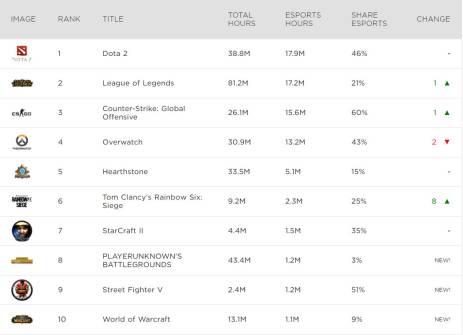
Fans watch on YouTube’s gaming channel or on Twitch, a dedicated gaming channel on the web. eSports viewers spent 17.9 million hours watching their gaming heroes on those channels in the first quarter of 2018. The most popular game to watch is Dota 2, followed by League of Legends and Counter Strike: Global Offensive.

The global eSports audience will reach 380 million this year, made up of 165 million dedicated eSports fans and 215 million occasional viewers.


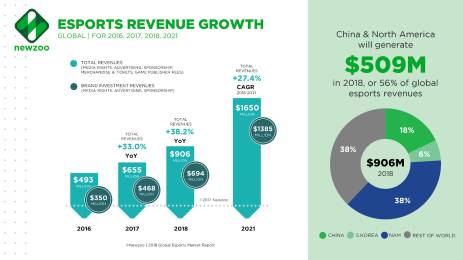
In 2018, the eSports industry is projected to generate $905 million in revenue, reaching over $1 billion over the next two years.

China and North America will generate over half of that sum.

Fans buying tickets and merchandise will contribute $96 million.

IS IT SPORT?


Just like traditional sport, eSports has its fair share of professionals, commentators and celebrities.

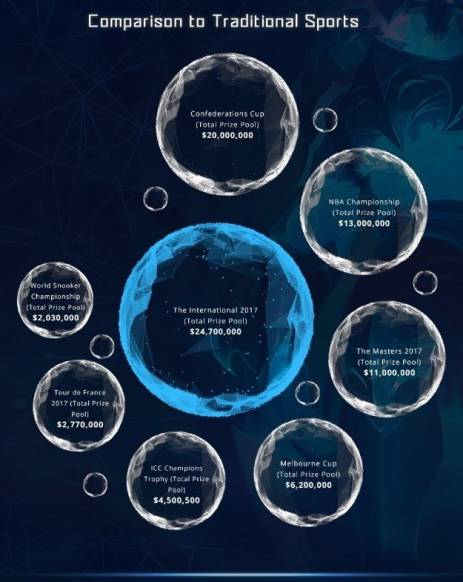
Prize money is certainly comparable to more traditional sports. The National Basketball Association prize pool is $13 million, the Golf Masters is $11 million and the Confederations Cup is $20 million. eSports exceeds each of them with a total prize pool of $24.7 million.

In fact, Fifa has its own eWorld Cup, where the 32 best Fifa18 Xbox and PlayStation players will compete for the title of Fifa eWorld Cup Champion.

eSports has become so popular, that even the International Olympic committee is trying to understand it better. The IOC and the Global Association of International Sports Federations are jointly hosting an eSports Forum at the Olympic Museum in France.

“The aim of the Forum is to explore synergies, build joint understanding and set a platform for future engagement between the eSports and gaming industries and the Olympic Movement,” they say.

The IOC isn’t the only organisation taking eSports seriously.

The US government has recognised full-time League of Legends players as professional athletes.

But detractors scoff at the idea of calling gaming a real sport. After all, gamers sit still in a chair for hours on end showing only agility and dexterity in their hands, they argue.

But those who play eSports would counter argue that it takes a great deal of skill and strategy to win games. They also point out that they practice for hours a day just like any other sports player, and that physical exertion isn’t the marker of sport. Darts players and snooker players don’t have to move much either.

It may be a moot point. An industry that is projected to make $1.4 billion by 2020 is unlikely to require the approval of naysayers.

Written by Alex Gray, Formative Content.

This article was republished courtesy of the World Economic Forum.

Source: http://ewn.co.za/2018/07/04/the-explosive-growth-of-esports

How Digital #India is changing the #edtech sector $BTRU.ca $ARCL $CPLA $BPI $FC.ca

Posted by AGORACOM-JC at 10:21 AM on Friday, July 6th, 2018

  • India is increasingly becoming digitally connected due to the efforts of the Centre under their scheme “Digital India”
  • Many online education aggregators have also come up and are participating in this revolution to change the way one thinks about learning

By Sandip Kar 

Over the years, with the advent of digital media and technology, pedagogical methods and teacher-student interactions across the globe have evolved. The education sector today is not just bound to the classroom or coaching sessions, but in fact, has successfully merged with the internet to become a better serving industry. Due to digitalization and the availability of video solutions, the process of teaching and learning has greatly changed.

Benefits of video solutions

Video solutions in education include video conferencing, video lessons, video explanations amongst several others. Their importance in education is unparalleled due to their ability to create a stimulating and interactive environment which engages students, making it more conducive to learn. Audiovisual aids such as webinars and special lectures are within easy reach of students and teachers, making learning fun and more comprehensive. Additionally, incorporation of such tools has enabled differently-abled students and students with learning disorders to take inclusive classes. In fact, many students are visual learners and benefit from the incorporation of such solutions in their study regime.

Another benefit of using video solutions in education is the age-old adage of “show don’t tell,” as video solutions allow students to grasp concepts no matter how complex for a longer time. Several independent video solution providers have popped up in the industry to help make school classes ‘smart’ by equipping school teachers with audiovisual lesson by lesson teaching aids.

Digital India

Moreover, as India is increasingly becoming digitally connected due to the efforts of the Centre under their scheme “Digital India”, many online education aggregators have also come up and are participating in this revolution to change the way one thinks about learning.

These online players focus on creating video content for students across the educational spectra. They use animation and other tools with the help of teachers, lecturers, and experts to create videos which are education yet entertaining. Not to mention, the presence of these aggregators is democratising the educational scenario of the nation as the content they provide is available to everyone and not limited to people who can afford to pay for them. Students can browse through multiple providers to learn, understand and even revise concepts.

Furthermore, online education aggregators provide room for more interaction between students as opposed to traditional classroom environments where learning is restricted to a strict time of 30 or 40 minutes. These websites also give the students the liberty to study at their own pace, and they can redo concepts they have doubts in. The aggregators also provide a wide variety of subject content from languages to science and from literature to maths: you name it and they will have it. This diversity of content is especially attractive to people in colleges as well as those who are learning a new language as opposed to the traditional content available to them via their institutions and universities.

Even for people who wish to re-skill themselves or revisit a topic that they had learned ages ago, learning through video content has made things easier from them as they are less time consuming and more effective.

In this day and age, digital tools are the key to making learning more effective and fun. Video solutions have made education easier and online education aggregators have made the availability of diverse content easy for all, proving to be a game changer in the education sector.

Source: https://qrius.com/how-digital-india-is-changing-the-education-sector/

INTERVIEW: Star Navigation $SNA.ca Discusses STAR-LSAMM™ Land Ambulance System

Posted by AGORACOM-JC at 4:37 PM on Thursday, July 5th, 2018

Namaste $N.ca $NXTTF announces domestic consulting agreement with Cannbit Ltd to expand Israeli operations and add new sales channels $VAPE $VPCO $MCIG $ABCN.ca $ACG.ca $ACB $WEED.ca $HIP.ca

Posted by AGORACOM-JC at 4:18 PM on Thursday, July 5th, 2018

  • Signed a consulting agreement with Cannbit Ltd., whereby Cannbit will provide domestic consulting services to Namaste
  • Will streamline the Company’s Israeli operations, expand its platform and increase domestic revenues
  • Namaste has identified strong growth potential in its Israeli market and will focus on the expansion of its current platform as well as introducing new technology like its telemedicine application, NamasteMD and Findify’s AI technology in Israel

VANCOUVER, July 5, 2018 – Namaste Technologies Inc. (“Namaste” or the “Company”) (TSXV: N)(FRA: M5BQ)(OTCMKTS: NXTTF) is pleased to announce the Company has signed a consulting agreement (the “Agreement”) with Cannbit Ltd. (“Cannbit” or “Cannbitltd.com”), whereby Cannbit will provide domestic consulting services to Namaste that will streamline the Company’s Israeli operations, expand its platform and increase domestic revenues. Namaste’s recent announcement of its 10% investment in Cannbit, with Cannbit’s intention to publicly list on the Tel Aviv Stock Exchange (“TASE”), is further supported by this strategic partnership.

Namaste has identified strong growth potential in its Israeli market and will focus on the expansion of its current platform as well as introducing new technology like its telemedicine application, NamasteMD and Findify’s AI technology in Israel. Cannbit will provide Namaste with local resources to facilitate this growth. Cannbit will provide Namaste with domestic management and operations of the Company’s Israeli e-commerce platform, business development, website translations, domestic customer support services and wholesale sales. Cannbit’s team will work closely with Namaste’s marketing team to further develop its online platform and expand its B2B channels business in Israel.

Israel has quickly emerged as a global leader in cannabis research and development and Namaste is well positioned to leverage its technology and database of Israeli consumers to launch new initiatives in the Israeli market including the Company’s revolutionary telemedicine application and patient portal, NamasteMD. Through its investment with Cannbit, a medical cannabis supply agreement and now this strategic partnership, Namaste will benefit from expansion of its revenue streams, import of high-quality Israeli grown cannabis to the Canadian market (subject to approval by Israeli regulators and Health Canada), and also in leveraging its technology to provide simple and effective access to its online healthcare platform.

Management Commentary

Yaron Razon, co-founder and CEO of Cannbit comments: – “We are delighted to strengthen our strategic partnership with Namaste by adding yet another business cooperation them. Namaste is a global leader with a sensational management team. This Agreement, as well as our other partnerships with Namaste will benefit both companies as well as their respective shareholders. I’m also certain that both companies will find more ways to cooperate in the near future.”

Sean Dollinger, President and CEO of Namaste comments: – “We’re very proud of our various partnerships with Cannbit and love working with their team. This Agreement will bring great value to Namaste by leveraging Cannbit’s resources and expertise in the Israeli market. We see this is the beginning of a long-term relationship with our partner. We believe working with Cannbit under this Agreement is the best way for us to operate and grow in the Israeli market. As our database of Israeli customers grows every day, we look forward to launching new initiatives in Israel to capture more market share and in providing Israeli citizens with access to simple and convenient healthcare through NamasteMD. The idea for us is to keep building our database of customers, in order to overlap it with a domestic sales license and provide a fully-integrated platform for the sale of medical cannabis in the Israeli market. We’re looking forward to launching operations under the terms of this new agreement, exporting cannabis to the Canadian market when possible, and growing our Israeli division of the Company.”

About Cannbit Ltd.

Cannbit is focused on growing high-quality medical-grade cannabis with advanced technology and agriculture platform while utilizing the best human resources to produce the highest level of quality available that will effectively treat a wide range of illnesses. The Israeli government is expected to approve the export of medical cannabis and Cannbit intends to become Israel’s leading exporter for medical cannabis to legal jurisdictions around the globe. Cannbit’s facility is 10,000 square meters with an additional 13,000 square meters available for expansion and is located in Neot Hakikar, an area well known in the Israeli agricultural community with clear advantages in the cold seasons. Our cultivation is carried out in a sophisticated greenhouse that provides ideal conditions for a variety of cannabis strains. Cannbit’s management is comprised of a group of industry professionals in relevant disciplines.

About Namaste Technologies Inc.

Namaste Technologies is a global leader in the sale of medical cannabis consumption devices. Namaste has nine offices with multiple distribution centers around the globe and operates over 30 websites under various brands. Namaste has developed innovative technology platforms including NamasteMD.com, Canada’s first ACMPR compliant telemedicine application. The company is focused on patient acquisition through NamasteMD and intends on building Canada’s largest database of medical cannabis patients. The company’s subsidiary, CannMart Inc. is an ACMPR Licensed Producer pending receipt of a “sales-only” license, whereby the company will offer a large variety of medical cannabis sourced from domestic and international producers. Namaste will continue to develop and acquire innovative technologies which will provide value to the Company and to its shareholders as well as to the broader cannabis market.

On behalf of the Board of Directors

“Sean Dollinger”

Chief Executive Officer

Direct: +1 (786) 389 9771

Email: [email protected]

Further information on the Company and its products can be accessed through the links below:

NamasteTechnologies.com

NamasteMD.com

NamasteVapes.ca

Everyonedoesit.ca

FORWARD-LOOKING INFORMATION This press release contains forward-looking information based on current expectations. These statements should not be read as guarantees of future performance or results. Such statements involve known and unknown risks, uncertainties and other factors that may cause actual results, performance or achievements to be materially different from those implied by such statements. Although such statements are based on management’s reasonable assumptions, Namaste assumes no responsibility to update or revise forward-looking information to reflect new events or circumstances unless required by law. Although the Company believes that the expectations and assumptions on which the forward-looking statements are based are reasonable, undue reliance should not be placed on the forward-looking statements because the Company can give no assurance that they will prove to be correct. Since forward-looking statements address future events and conditions, by their very nature they involve inherent risks and uncertainties. These statements speak only as of the date of this press release. Actual results could differ materially from those currently anticipated due to a number of factors and risks including various risk factors discussed in the Company’s disclosure documents which can be found under the Company’s profile on www.sedar.com. This press release contains “forward-looking statements” within the meaning of Section 27A of the Securities Act of 1933, as amended, and Section 21E the Securities Exchange Act of 1934, as amended and such forward-looking statements are made pursuant to the safe harbor provisions of the Private Securities Litigation Reform Act of 1995. Neither the TSX Venture Exchange nor its market regulator has reviewed or approved the contents of this press release.

SOURCE Namaste Technologies Inc.