Posted by AGORACOM-JC
at 12:18 PM on Friday, March 1st, 2019
SPONSOR: Esports Entertainment
$GMBL Esports audience is 350M, growing to 590M, Esports wagering is
projected at $23 BILLION by 2020. The company has launched VIE.gg
esports betting platform and has accelerated affiliate marketing
agreements with 190 Esports teams. Click here for more information
GMBL: OTCQB
———————–
Nike Signs Its First Esports Sponsorship Deal
Nike is entering the esports game, following competitors Adidas and Puma into the field.
The global sports brand has signed a four-year deal with China’s League of Legends Pro League, agreeing to supply all squads with clothing and footwear starting this year.
“Since its inception, Nike has always believed that in all sports, a
strong body and will will make athletes better,†the company said in a statement.
“As China becomes a new e-sports cultural center, Nike is pleased to
support the next generation of athletes and establish a long-term
cooperative relationship with e-sports to contribute to the future
development of sports ecology.â€
The league consists of 16 teams and has one of the largest followings
in the world. Fans will also be able to buy Nike-produced products at
live tournaments.
The announcement is Nike’s first formal sponsorship of an esports
team or competition, although the company did feature an esports athlete
in a marketing campaign last year. Financial terms of its esports
contract with the league were not disclosed.
The company is actually a bit late to the competitive video game
world, as Adidas and Puma both already have presences in the field.
Beyond simply supplying clothes and shoes, Nike says it also plans to
work with esports athletes to custom-design training programs to help
them improve.
While they might have been scoffed at initially, esports have become
recognized as a bona fide athletic event in recent years. They were
under consideration at one point for inclusion in the 2024 Olympics
and they will be a medal event in the 2022 Asian Games—a multi-sport
event held every four years among athletes from all over Asia.
Tournaments are regularly aired on ESPN, Turner Broadcasting, Disney and other networks.
Posted by AGORACOM-JC
at 11:20 AM on Friday, March 1st, 2019
Investment Highlights
Kenbridge property has a measured and indicated resource of 7.14 million tonnes at 0.62% nickel, 0.33% copper
17.5 (21.8 fully diluted) percent equity stake in Eloro Resources and 2 percent NSR in their La Victoria property
Kenbridge Ni Project (ON, Canada)
Advanced stage deposit remains open in three directions, is
equipped with a 623m deep shaft and has never been mined.
Preliminary Economic Assessment completed and updated returned robust project economics and operating costs including a NPV of C$253M and cash costs of US$3.47/lb of nickel net of copper credits.
Plans for Kenbridge include updating PEA,
advancing the project through to feasibility and exploring the open
mineralization at depth
FULL DISCLOSURE: Tartisan Nickel Corp. is an advertising client of AGORA Internet Relations Corp.
Posted by AGORACOM-JC
at 10:58 AM on Friday, March 1st, 2019
SPONSOR: ThreeD Capital Inc. (IDK:CSE) Led by
legendary financier, Sheldon Inwentash, ThreeD is a Canadian-based
venture capital firm that only invests in best of breed small-cap
companies which are both defensible and mass scalable. More than just
lip service, Inwentash has financed many of Canada’s biggest small-cap
exits. Click Here For More Information.
——————-
10 Major Blockchain Trends in 2019
While cryptocurrencies took a hammering, 2018 was huge for Blockchain, the technology that underpins Bitcoin and a myriad of other coins.
Blockchain has plenty of use cases outside of the cryptocurrency space with IBM, Oracle, and Amazon and other multi-billion dollar companies trying to capitalize on the disruptive technology.
Now, it’s time to find out what major Blockchain trends will define the current year.  Â
By: Alex Morris Â
From the Internet-of-Things (IoT) convergence to startups for the unbanked — find out what to expect from Blockchain in 2019
While cryptocurrencies took a hammering, 2018 was huge for Blockchain, the technology that underpins Bitcoin and a myriad of other coins. Blockchain has plenty of use cases outside of the cryptocurrency space with IBM, Oracle, and Amazon and other multi-billion dollar companies trying to capitalize on the disruptive technology. Now, it’s time to find out what major Blockchain trends will define the current year.  Â
STOs replacing ICOs
Security tokens (STOs)
have been a hot topic in the crypto space, and it looks like they will
continue to be hot now that Overstock’s tZERO announced the launch of
the new STO platform on Jan. 21. The Blockchain-powered platform will
provide any company with the opportunity to raise funds by launching its
own STOs. Prior to that, the startup made an announcement about the
completion of its utility token distribution.
STOs, which combine the best features of the stock market and
cryptocurrencies, arose as a fully regulated alternative to ICOs, which
turned out to be the passing fad of 2017.
Tokenization creating more investment opportunities
The launch of the Estonia-based DEX,
which buys the shares of the biggest companies in the world in the form
of ERC20 tokens, proved that 2019 is all about tokenization. The
Ethereum-powered startup will allow non-US investors to engage in the US
stock market without any limitations pertaining to their location or
investment amount.
Crypto startup Zilliqa also recently introduced Hg Exchange, a fully regulated exchange that allows accredited investors to buy US stocks.
Tokenization already became a pervasive trend in 2018, going far
beyond the stock market, but this is the year when pretty much
everything will be tokenized – art, wine, real estate, etc.
Blockchain and IoT forming an alliance
Back in January, leading digital security company Gemalto released a report
that states that 23 percent of responders think that Blockchain
technology could be a boon for securing IoT-powered devices. Meanwhile,
almost 91 percent of businesses who do not utilize Blockchain consider
making use of the technology in the future.
The number of IoT-powered devices is expected
to reach 26.66 bln in 2019, but less than half of all businesses can
detect whether their device experienced a security breach.
IBM also illustrated the benefits for this convergence with the help of
their game-changing platform Watson IoT. Apart from bringing more
security to the table, Blockchain significantly simplifies the task of
managing different devices and increases the efficiency of the
transaction.
Wall Street transitioning from dabbling to actions
The fact that cryptocurrency prices took a nosedive in 2018 doesn’t
mean that the global financial industry is going to suddenly give up on
Blockchain. As U.Today reported earlier, Bakkt,
the ICE-backed exchange, was supposed to go live in January, but its
launch was eventually delayed due to the longest government shutdown in
history. Speaking of other ‘big-fish’ players, NASDAQ and the NYSE
plan to launch Bitcoin futures while also being keen on Blockchain.
Since the crypto hub died down, there is a good reason to believe that
2019 will be the year of exciting developments in the Blockchain space.
More decentralized exchanges appearing on the horizon
Decentralized exchanges, while actually living up to Satoshi’s
vision, have numerous usability issues that take a toll on their
popularity. There is no centralized authority that manages the users’
funds, but it’s also a double-edged sword problem – there is no way to
revert a certain transaction if private keys are stolen or lost. Keep in
mind that there are certain degrees of centralization. Case in point:
the Bancor DEX, which suffered from a $13.5 mln hack, though Charlie Lee later claimed that no decentralized exchange can lose its funds.
With that being said, major crypto startups – from Binance to Tron – have launched their own DEXs in order to spearhead the shift towards decentralization in the crypto world.
Governments will continue looking into Blockchain
The wide variety of Blockchain applications are being explored by
governments across the globe (even those ones who are openly hawkish
towards cryptocurrencies). China cracked down on Bitcoin, but this
country is hell-bent on becoming the leader in the Blockchain race.
Shanghai, Guangzhou and other major cities are all supporting Blockchain
developments. As reported by U.Today, the Ministry of Industry and
Information Technology (MIIT) launched
an initiative to incentivize business who are working with the DLT
technology. Moreover, there are specific Blockchain guides in China for
educating government officials.
Estonia is yet another country
that is focused on the e-Estonia program that will digitize the
government. Meanwhile, Dubai could become the very first government that
is powered by Blockchain. The implementation of Blockchain could help Dubai save up to $1.5 bln per year by cutting the red herring and creating a fully paperless government.
Blockchain-powered startups banking the unbanked
Africa, where a substantial part of the population remains unbaked,
represents a breeding ground for different startups that utilize
Blockchain technology in order to increase economic inclusiveness. The Rohingya Project
went even further by using Blockchain to restore the identity of
stateless Rohingyas and give them access to banking services.
Real-word use cases beyond fintech
It is worth noting that Blockchain is the most disruptive technology
of the last decade, but it remains unknown to the general public. Yes,
along with Bitcoin, Blockchain was one of the buzzwords in the tech
space, but it’s all about real-world adoption. According to PwC research,
84 percent of companies have dipped their toes into Blockchain, but
they are not ready to embrace it due to numerous ‘trust issues.’ Those
who will be able to integrate Blockchain into their businesses will turn
out to be the true winners of 2019.
Scalability becoming one of the main issues
Without a doubt, scalability is one of the major bottlenecks of
Blockchain, which poses a major hindrance to mainstream adoption. That
became very evident when CryptoKitties, one of the best-known dApps,
created congestion on the Ethereum network. Bitcoin and Ethereum are
only able to handle seven and 25 TPS (this level of scalability doesn’t
hold a candle to mainstream payment processors in the likes of VISA).
Hence, many promising solutions, such as sharding and sidechains, are expected to be implemented in 2019. Bitcoin’s Lightning Network (LN),
for example, is witnessing growing popularity with major industry
players, with an eye-popping 830 percent surge in half a year. LN will
significantly boost Bitcoin adoption while solving scalability pain
points.
Blockchain jobs will become more common
Despite Bitcoin, the major use case of Blockchain, taking a hammering
in 2018, the number of Blockchain-related jobs continued to grow
throughout the year. Moreover, as reported by CNBC,
the salaries of Blockchain engineers skyrocketed to $175,000 per year,
which means that they receive the highest salaries in the software
development niche on par with AI specialists. According to Hired CEO
Mehul Patel, ‘there’s a ton of demand for Blockchain.’ On top of that,
Upwork, the leading freelance platform, had a 35,000 percent uptick in
the number of Blockchain freelancers (it’s the fastest-growing freelance
sector).
However, earning a six-figure salary is not an easy feat. Blockchain developers
have to code in numerous languages, including Go and Solidity. As
mentioned above, major companies do not want to miss the boat on
Blockchain, so they are striving to hire talented programmers.
Posted by AGORACOM-JC
at 4:54 PM on Thursday, February 28th, 2019
NOTICE: Iconic Minerals – Fox Business Network – Thursday, February 28, 2019
The Company would like to give notice to its shareholders that the Company’s CEO (Richard Kern) will be featured on national Fox Business Network on Thursday, February 28, 2019 at 9:46 PM Eastern, 8:46 PM Central, 7:46 PM Mountain and 6:46 PM Pacific Time.
In this five minute segment, Richard Kern will be providing comments on
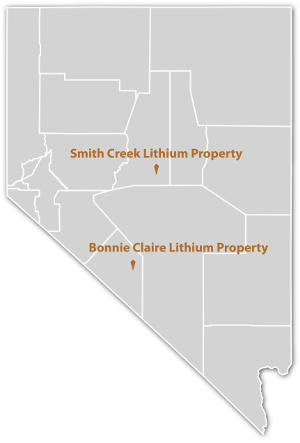
the lithium industry while onsite in Nevada, at the Bonnie Claire
property.
Please keep in mind that the allotted time slot may not be exact, and
the segment could air within an hour of the above scheduled times.
Posted by AGORACOM-JC
at 4:27 PM on Thursday, February 28th, 2019
(TSXV: ICM) (OTC Pink: BVTEF) (FSE: YQGB)
Why Iconic Minerals?
Bonnie Claire Lithium property hosts 11.8 Billion pounds of lithium carbonate equivalent (28.5 Million tonnes of LCE) Inferred Resource (43-101).
Potential to be the largest lithium resource globally (based on size)
Initial leaching tests applying dilute acid to the drill cuttings resulted in recoveries as high as 98%.
Two other highly prospective Lithium exploration properties also located in Nevada.
Lithium Projects
Iconic Minerals has three highly prospective Lithium exploration
properties located in Nevada, the Bonnie Claire Sarcobatus Valley
Lithium property, the Smith Valley Creek Property, and the Third Nevada
Lithium Property.
Bonnie Claire Property
Property Overview
11.8 Billion pounds of lithium carbonate equivalent (28.5 Million tonnes of LCE) Inferred Resource (43-101).
Potential to be the largest lithium resource globally (based on size)
Bonnie
Claire is a 100% owned lithium brine property comprising of 23,100
acres of contiguous placer claims, currently in control of 28.75 square
miles (75 km2) located in Nye County, Nevada.
Property
area is contained within a valley that is 60kms from the only producing
lithium mine in North America (Albermarle Silver Peak Mine).
Over +20 miles (+30 km) long and 12 miles (20 km) wide into which streams from an +800 mi2 (2,070 km2) drainage basin empty.
Sampling of salt flats within the basin, have found lithium values in salt samples yielding up to 340 ppm.
Current
claim block covers the gravity low and associated mud flats that could
be used for evaporation ponds if significant lithium brines are
discovered in drilling.
Preliminary NI 43-101 Technical Report completed Read More
A total 5,550 feet has been drilled at the Bonnie Claire with an average 963+ppm from four drill holes
Great infrastructure
Local end-users
Property Details Snapshot
Drainage Basin (20 x 30 kms)
830 square miles
Gravity Lows (length)
20 x 30 kms
Valley Sediment (Range)
460 – 610m (1,500 to 2,000ft)
BLM Drilling Permits
Drilling Program
Drilling completion of first of three test wells
Smith Creek Valley Property
Controls 808 placer claims totaling 25.25 square miles (65.4 km2) over a major gravity low.
The enclosed Smith Creek Valley Basin covers 582 square miles (1,507
km2), which is slightly larger than Clayton Valley Basin where lithium
brines are produced.
Smith Creek Valley is over +40 miles (+64 km) long in a north-northeast direction and averages 9 miles (14.5 km) in width.
The vast majority of rock weathering into the basin is felsic ash flow tuff, which is an excellent source of lithium.
Lithium Brine Benefits
Lower Cost Exploration
Easy access because flat and arid
Decreased environmental impact
Shorter Timeline to Production
Requires Less Capital
Lower Cost Production than bedrock
Found beneath salt flats in brine bearing aquifers
Easily pumped to Surface from vertical production well
After evaporation lithium recovered in small on site mill
Potassium may also be recovered
Nevada is a Geopolitically Stable Jurisdiction
Gold Projects
The company’s Gold exploration portfolio includes the Hercules
property in the Como mining district, 17 kms from the famous Comstock
Lode mine, the New Pass property in the New Pass mining district, and
the Squaw Creek property located in the northern area of the Carlin
Trend.
Situated within and on the margins of the Como mining district, located in Lyon County, Nevada.
Como district was worked as early as the late 1850s, before the
famous Comstock Lode deposit was discovered about 10 miles (16 km.) to
the north by prospectors following float upstream from placer gold
deposits at Dayton.
By the early 1860’s the Como district was abandoned due to the rich
lodes having been discovered at Virginia City (Russell, 1981).
In the late 1880’s the Hercules Mining Company explored the occurred
with the excavation of another 1,500 feet (450 m) of underground
workings.
Gold and silver property which, is comprised of 107 unpatented lode mining claims (2,231 acres).
The property is located in eastern Churchill County, Nevada; in the
New Pass Mining District, 27 miles west of Austin, Nevada and 105 miles
east of Reno.
Iconic Minerals has a controlling interest in the property, in a
joint venture with White Knight Gold U.S. Inc., (now U.S. Gold), with
Iconic earning a 50% interest.
Property
is located 42 miles due north of Battle Mountain, Nevada and lies
between the Midas and Ivanhoe mining districts on the northern portion
of the Carlin Trend, six miles north of the Dee Mine in the Lower Plate
Bootstrap Window.
Iconic’s Research and Development partner
St-Georges’
metallurgists report that they have successfully improved the
concentration of lithium in the Sediments, originally reported in
December using mechanical separation and selective leaching of other
elements within the Sediments.
The
additional tests St-Georges completed in Stage 2, through selective
leaching methods, have improved the elimination of barren material from
55% to 85%-88%, while retaining 100% of the lithium.
Upon
completion approximately 12% to 15% of the original material remains
for further processing and purification. This process may significantly
reduce the cost of production.
Posted by AGORACOM-JC
at 4:16 PM on Thursday, February 28th, 2019
SPONSOR: North Bud Farms Inc. (NBUD:CSE) Sustainable low cost, high
quality cannabinoid production and procurement focusing on both
bio-pharmaceutical development and Cannabinoid Infused Products. Click Here For More Information
NBUD: CSE
—————
Starbucks could be the first big chain to start selling CBD beverages
Coffee behemoth Starbucks could be the first major chain to introduce a range of cannabis-infused beverages, according to analysts.
A report released Monday by Cowan revealed its analysis of the CBD market.
The group believes that by 2025, CBD retail sales could reach up to $16 billion and that CBD is likely to start showing up in a variety of products on the market.
“The dynamics are fluid, likely delaying adoption from major
coffee players like Starbucks in the near term,†wrote analyst Andrew
Charles in the report.
“Should the regulation of CBD oil as an additive to food/beverage
change or craft/independent coffee shops find a way to comply with the
existing regulation, we could envision Starbucks ultimately piloting the
ingredient.â€
Despite the analysts’ projections, however, Starbucks-branded CBD
drinks may not be in the cards–at least for some time. Starbucks CEO
Kevin Johnson told CNBC
in January that while the coffee giant is keeping an eye on the trend,
cannabis drinks aren’t something the company is planning on rolling out
in the near future.
If the caffeine purveyors opt to incorporate cannabis beverages into
product lines, they face heavy regulations that may not be worth it–at
least in Canada.
All cannabinoids, including CBD, must be sourced from a
licenced producer, and regulators still aren’t sure how to deal with
potential age restrictions.
Nonetheless, there’s money to be made, so in a few years, there might
just be a CBD Frappuccino available to enthusiasts. See you in 2025!
Tags: CBD, Hemp, stocks, tsx, tsx-v Posted in North Bud Farms Inc | Comments Off on North Bud Farms Inc. $NBUD.ca – Starbucks could be the first big chain to start selling CBD beverages $SBUX $WEED.ca $CGC $ACB $APH $CRON.ca $HEXO.ca $TRST.ca $OGI.ca
Posted by AGORACOM-JC
at 10:38 AM on Thursday, February 28th, 2019
SPONSOR: ThreeD Capital Inc. (IDK:CSE) Led by
legendary financier, Sheldon Inwentash, ThreeD is a Canadian-based
venture capital firm that only invests in best of breed small-cap
companies which are both defensible and mass scalable. More than just
lip service, Inwentash has financed many of Canada’s biggest small-cap
exits. Click Here For More Information.
——————-
A blockchain-based home equity loan platform, Figure, has raised $65 million from various major financial and venture capital firms, tech news site TechCrunch reports on Feb. 27.
The firm, which was founded by SoFi founder and former CEO Mike Cagney, reportedly raised the funds from such majors as Morgan Creek, DST Global, DCM, Ribbit Capital and Nimble Ventures. The recent investment bumps the total funds raised by the firm up to $120 million, according to TechCrunch.
Cagney’s new firm, which reportedly has issued over 1,500 equity
lines, is purportedly targeting older clients who are “cash light and
rich in equity†or “CLAREs.†The company is currently lending $1.5
million per day, a figure which Cagney expects to double every few
months, reports American Banker.
The founder told American Banker, “At the end of 2019, Figure should
look like a robust financial platform that can meet the needs of our
customers.” Cagney also added that Figure is moving into other areas
like wealth management, checking accounts, and unsecured consumer loans.
Cagney’s former company SoFi is partnering with major United States-based crypto exchange Coinbase
to roll out crypto trading support. The partnership with Coinbase will
purportedly allow SoFi to launch crypto services by the second quarter
of this year. CEO Anthony Noto said in an interview:
“Our target audience wants to see what the price of cryptocurrency
is, and to buy it. They have a desire to do that and in many cases they
already are.â€
Noto assumed the role of SoFi CEO after Cagney stepped down amid sexual harassment allegations in 2017. Cagney told American Banker:
“One of the biggest takeaways is that at SoFi, we grew so fast and we
never really understood what we were going to grow into, and culture
never took a front seat. [At Figure] we have a very clear adherence to a
‘no-asshole’ policy.”
Posted by AGORACOM-JC
at 1:07 PM on Wednesday, February 27th, 2019
SPONSOR: Enthusiast Gaming Holdings Inc.
(TSX-V: EGLX) Uniting gaming communities with 80 owned and affiliated
websites, currently reaching over 75 million monthly visitors. The
company partial 2018 reported revenue of $7.4 million representing a
625% increase over the same period in 2017.
EGLX: TSX-V ———————————-
G2 Esports raises $17.3 million for global growth and further investment
Competitive gaming firm G2 Esports has raised $17.3 million.
In a blog post, the esports organisation confirmed it had closed out the latest round of funding, bringing its total investment to $24.5 million to date.Â
G2 Esports owns 11 teams across various competitive games, including
Counter-Strike, League of Legends, Hearthstone and Playerunknown’s
Battlegrounds.
The investment was headed up by New York private equity firm Seal
Rock Partners, with participation from Everblue Management. G2 Esports
stated that it plans to use the funds to push ahead with global
expansion, pay franchise fees and further its own business and content
investments.
“After an incredibly successful 2018 where we positioned ourselves as
one of the leading entertainment assets in esports, G2 is doubling down
on international growth and continuing our investment in world-class
content creation,†said co-founder and CEO Carlos Rodriguez said.
“We have partnered with the right investors, who have a deep
understanding of a variety of entertainment industries, and significant
experience in scaling successful companies and brands.â€
Posted by AGORACOM-JC
at 11:39 AM on Wednesday, February 27th, 2019
Announcement today is as a result of a step by step study which was performed to investigate the effect production yield has on the purity of silicon end-product.
Theoretical calculations which were obtained in the previous phase were also validated
In conclusion, it was found that higher production yields actually enhance end-product purity, which confirms our previous calculations.
MONTREAL, Feb. 27, 2019 – PyroGenesis Canada Inc. (http://pyrogenesis.com) (TSX-V: PYR), (the “Company”, the “Corporation†or “PyroGenesis”) a Company that that designs, develops, manufactures and commercializes plasma atomized metal powder, plasma waste-to-energy systems and plasma torch products, announces today its latest testing results for PUREVAP™ Gen2, and provides a general update on its PUREVAP™ Project with HPQ Silicon Resources Inc (“HPQâ€).
This announcement today is as a result of a step by step study which
was performed to investigate the effect production yield has on the
purity of silicon end-product. Theoretical calculations which were
obtained in the previous phase were also validated. In conclusion, it
was found that higher production yields actually enhance end-product
purity, which confirms our previous calculations. Specifically, the
results of this extrapolation calculation indicate that a higher
production yield will enhance the final silicon purity, reaching 99.993%
(+4N) at 90% production yield.
Mr. P. Peter Pascali, President and CEO of PyroGenesis, provides this
update on PUREVAP™ in the following Q&A format. The questions, for
the most part, are derived from inquiries received from investors, and
analysts:
Q. For those that are new to the story, could you please provide an overview of the project and technology?
A. Most certainly.
HPQ is the owner of quartz properties. Quartz can be processed,
through multiple steps, into a high purity silicon metal which is an
important element in solar panels. It helps convert solar energy into
useful electricity. Many in the solar panel industry consider the cost
of converting quartz into solar grade silicon metal to be a limiting
factor in the growth of the solar panel industry.
PyroGenesis was first engaged by HPQ to demonstrate, on a laboratory
scale, that its proprietary PUREVAPTM process could produce high purity
silicon metal from quartz in just one step.
This could be significant to the solar panel industry since the
industry is highly dependent on high purity silicon metal in its solar
panels. Any reduction in the cost of high purity silicon metal would
benefit the industry as a whole, and if significant, could be game
changing.
The primary goal of the PUREVAP™ process is to reduce (i) capital
costs, and (ii) operating costs in the production of high purity silicon
metal. A side benefit of the PUREVAP™ process is that, at the same
time, it can replace polluting conventional processes, with a cheaper
and environmentally friendly alternative by reducing the carbon
footprint of current silicon metal production methods.
Specifically, PUREVAP™â€™s current targets are as follows:
Reduce CAPEX to transform quartz to solar grade silicon by between 60% (China) and 86% (“Rest of the World†or “ROWâ€);
Reduce OPEX to transform quartz to solar grade silicon by between 30% (China) and 60% (ROW);
Reduce carbon footprint to transform quartz to solar grade silicon by up to 96%;
Investigate new opportunities for high value niche applications that could also benefit from cheap high purity silicon.
Q. Where do we stand with the technology?
A. Let us first review the question in the context of what we have achieved to date:
We started this project in early 2016, a little over 2 years ago. By
June 2016, we had already demonstrated PUREVAP™â€™s ability to transform
quartz into high purity silicon metal exceeding 99.9+%, or 3N (3N
reflects 99.9% or 3 Nines). Before moving on let me put 3N in the
context of what we are trying to achieve:
Purity
Grade
Applications
Market Size
98.5-99.5% (1N-2N)
Metallurgical Grade
Feedstream to electronic and solar grade Silicon production
Additive for aluminum alloys
Feedstream to making fumed silica, silanes and silicone
> 2.2M T/yr
99.9 – 99.99% (3N-4N)
High Purity & Special Grade
Powders for batteries
SiAl targets for the glass industry
Industrial quality Si3N4
> 220 kT/yr
> 99.999% (5N+)
Solar Grade
Solar cells
> 400 kT/yr
Table 1
The potential uses of high purity silicon metal is depicted on Table 1
above. This market is typically divided into three broad grades:
Metallurgical Grade (1N-2N), High Purity & Special Grade (3N-4N),
and Solar grade (5N+).
One can see that 3N silicon metal addresses a significant market. As
we are developing a process to produce solar grade silicon metal, we
have discovered a way to produce 3N. To do so on a commercial basis
opens up another revenue stream, and effectively reduces project risk.
Once we demonstrated the ability to transform quartz into high purity
silicon metal, we next needed to demonstrate scalability. This we did
by the beginning of 2017. By this time, we had demonstrated scalability
of the process by increasing production from 1.1g to 8.8g of material.
Later in 2017, by Q3, we estimated that silicon production yield played
an important role on the final purity of the metal produced; PyroGenesis
theoretical calculations, assuming a 100% production yield, concluded
that the purity of the silicon produced, under various operational
conditions could, at commercial scale, range from 3N (99.984 % Si) to 4N
(99.996 % Si) for low purity feedstock, and to 4N+ (99.998 % Si) when
using high purity feedstock. Recent Gen2 tests reported not only confirm
these results, but exceed them and, as such, our baseline has now moved
from 3N+ to 4N+ which, it and itself, is quite noteworthy.
Q. What is the next step?
A. The next step will be the pilot plant where we
expect to produce silicon metal based on the results developed during
the GEN1 and GEN2 lab phase tests.
We are currently designing and building a 50 tonnes per year (TPY)
pilot plant to produce larger quantities of 4N+ silicon, which will then
be upgraded to solar grade silicon, with the ultimate goal of producing
test solar cells. We expect the pilot plant to be completed within the
next two quarters.
Q. Ok, but 4N is still not solar grade. How do you think you can achieve solar grade?
A. This is the interesting part, and one I don’t
think the market fully understands. We are still targeting 6N as our
ultimate goal however, in the interim, HPQ has identified a faster route
to market by the addition of Apollon Solar (“Apollonâ€). Apollon is a
private French company with longstanding expertise in Silicon
Purification and Crystallisation, Solar Silicon, Photovoltaic Cells and
Photovoltaic Modules. Simply put, Apollon is one of the world’s leaders
in renewable energies, and has an expertise in purifying/upgrading high
purity silicon metal even further to obtain solar grade silicon. Of
note, they also have an expertise in producing solar cells. This is a
huge addition to the PUREVAP™ process because it essentially means that
on the way to target 6N, we can use a lower level of purity which could
be further upgraded with Apollon’s expertise, thereby further reducing
overall project risk. In short, the time to market has been
significantly reduced with the addition of Apollon.
Q. What does this mean for PyroGenesis?
A. We are not a charity. We deploy assets for the
benefit of our shareholders, for whom there are many advantages with our
contractual relationship with HPQ. First, we are currently under
contract with HPQ to deliver and operate the pilot plant. Second, we are
entitled to a 10% royalty on all future silicon metal sales. Third, we
have a right of first refusal on the next phases of the project, the
first of which would be a commercial plant at 5,000 TPY (which is
expected to be ordered shortly after the pilot phase). Finally, we
retain the right to use the technology for other applications other than
the conversion of quartz to silicon, opening up new markets and
opportunities for PyroGenesis.
In short, this project is very meaningful to PyroGenesis and its shareholders.
Q. What are the next milestones?
A. These latest results were what we needed before
going flat out with the completion of the installation and commissioning
of the pilot system, which will be the next real milestone. It is
expected that the output from this system will be upgraded by Apollon to
solar grade material which will then be used to produce test solar
cells. We expect to produce our first solar cells made using PUREVAP™
sometime late 2019/early 2020. Shortly after that, a full commercial
plant will be commissioned.
Q. Are there any risks?
A. There are always risks with R&D, as you know,
and there is never a guarantee of success. However, if you ask me
generally about the risk of this project, I can tell you with 100%
certainty that the risks have been significantly reduced in our favor
since we started. We have considerably de-risked the project by doing
extensive tests on GEN1 and further validating our scale-up assumptions
with GEN2. We have gained invaluable experience with GEN2 which we have
implemented in the design of the pilot plant.
Of note, something else the market has not fully understood is that
along the way, we believe we have identified possible commercial uses
for the 3N+ material itself which, as I noted earlier, opens up new
commercial applications, and further reduces project risk.
Q. Do you still feel this technology will work?
A. I have said this before and I will say it again,
PyroGenesis does not have time or money to waste on projects that do not
have future potential. Each and every day PyroGenesis has to decide
where to allocate its resources, the most important of which is its
time. Plasma expertise, such as ours, does not grow on trees and we must
be very discerning as to where we dedicate this valuable resource. Do
we dedicate it to Additive Manufacturing (powders for 3D printers),
DROSRITETM, other development projects…or HPQ? The profit from the HPQ
relationship does not, in and of itself, justify dedicating such scarce
resources to the project. However, the royalty from the success of the
project, does.
So, to answer your question, yes, we are fully committed to its
technology, and believe more than ever before that it will be game
changing in its own right.
Talk is cheap, but as you can see, we currently hold over 21M common
shares plus over 17M warrants in HPQ. You can’t get more committed than
this.
Q. What would you advise investors?
A. Do your due diligence. Invest with full understanding, and…follow the money.
PyroGenesis Canada Inc., a TSX Venture 50® high-tech company, is the world leader in the design, development, manufacture and commercialization of advanced plasma processes and products. We provide engineering and manufacturing expertise, cutting-edge contract research, as well as turnkey process equipment packages to the defense, metallurgical, mining, advanced materials (including 3D printing), oil & gas, and environmental industries. With a team of experienced engineers, scientists and technicians working out of our Montreal office and our 3,800 m2 manufacturing facility, PyroGenesis maintains its competitive advantage by remaining at the forefront of technology development and commercialization. Our core competencies allow PyroGenesis to lead the way in providing innovative plasma torches, plasma waste processes, high-temperature metallurgical processes, and engineering services to the global marketplace. Our operations are ISO 9001:2015 certified, and have been since 1997. PyroGenesis is a publicly-traded Canadian Corporation on the TSX Venture Exchange (Ticker Symbol: PYR) and on the OTCQB Marketplace. For more information, please visit www.pyrogenesis.com.
This press release contains certain forward-looking statements,
including, without limitation, statements containing the words “may”,
“plan”, “will”, “estimate”, “continue”, “anticipate”, “intend”,
“expect”, “in the process” and other similar expressions which
constitute “forward- looking information” within the meaning of
applicable securities laws. Forward-looking statements reflect the
Corporation’s current expectation and assumptions and are subject to a
number of risks and uncertainties that could cause actual results to
differ materially from those anticipated. These forward-looking
statements involve risks and uncertainties including, but not limited
to, our expectations regarding the acceptance of our products by the
market, our strategy to develop new products and enhance the
capabilities of existing products, our strategy with respect to research
and development, the impact of competitive products and pricing, new
product development, and uncertainties related to the regulatory
approval process. Such statements reflect the current views of the
Corporation with respect to future events and are subject to certain
risks and uncertainties and other risks detailed from time-to-time in
the Corporation’s ongoing filings with the securities regulatory
authorities, which filings can be found at www.sedar.com, or at www.otcmarkets.com. Actual
results, events, and performance may differ materially. Readers are
cautioned not to place undue reliance on these forward-looking
statements. The Corporation undertakes no obligation to publicly update
or revise any forward- looking statements either as a result of new
information, future events or otherwise, except as required by
applicable securities laws. Neither the TSX Venture Exchange, its
Regulation Services Provider (as that term is defined in the policies of
the TSX Venture Exchange) nor the OTCQB accepts responsibility for the
adequacy or accuracy of this press release.
Posted by AGORACOM-JC
at 10:32 AM on Wednesday, February 27th, 2019
SPONSOR: New Age Metals Inc.
(TSX-V: NAM) The company’s new Lithium Division has already made
significant acquisitions in Canada and the USA. The company also owns
one of North America’s largest primary platinum group metals deposit in
Sudbury, Canada. Learn More.
NAM: TSX-V
———————
Palladium: The most precious of precious metals
For the first time in more than a decade, palladium is rivalling gold in value.
At its current spot price of just over US$1 300/oz, reaching as high
as $1 400/oz in January 2018, it has truly become the most precious of
the precious metals, writes CHANTELLE KOTZE.
Demand has been primarily driven by the automotive industry through the “demonisation” of diesel engines in Europe.
The resultant growth in small petrol engines and hybrid engines,
which are fitted with emission-reducing catalytic converters that
require it as a catalyst to control pollution, along with the shift away
from diesel engines, has benefitted the material.
Moreover, the Volkswagen emissions scandal has negatively impacted the European diesel market and platinum prices.
According to Michael Jones, the President and CEO of TSX-listed
Platinum Group Metals, the developer of the Waterberg palladium-dominant
project in South Africa, it has become apparent that the electric
vehicle revolution has been a major factor driving demand.
While adoption rates of electric vehicles are expected to increase
anywhere between 8% and 10% by 2023, Jones stresses the importance that
at least half of these new electric vehicles will be hybrid electric
vehicles as opposed to full electric vehicles and will therefore still
require the use of palladium in the catalytic converter.
Moreover, China’s tougher new vehicle emissions standard, the China
VI emission standard, released in June 2018, means that cars will
require more robust catalytic converters that are able to meet the new
emissions legislation – another factor that may require increased
palladium during manufacture in order to minimise emissions.
According to data from German chemicals giant BASF, the China VI
emission standards is expected to create an additional 1 Moz of
palladium demand annually by 2020, which Jones believes the market is
already experiencing.
From the 2.2 Moz of palladium estimated to be required in the
manufacture of Chinese cars in 2018, palladium demand is estimated to
grow to 3.1 Moz by 2020, says BASF.
These figures are not based on the amount of new vehicles, but rather
the impact of the change in the standard for emissions which will
require increased amounts of palladium in its manufacture to ensure the
longevity of the catalyst.
While Jones notes that this may cause car manufacturers to substitute
out of palladium back into platinum as a cheaper alternative, it may
take several years for this change to come into effect and have a
physical impact on the price of palladium.
This being said, palladium is also a much more attractive metal for
autocatalysis, particularly in hybrid (petrol) electric vehicles, he
adds.
Moreover, with palladium being relatively rare, mined mainly as a
by-product of nickel and platinum mining, it may take a while for demand
fundamentals to slow should catalytic converter demand slow, says
Jones.
This increasing demand, combined with constrained long-term supply,
has caused a deficit in palladium supply which has been the key driver
in palladium’s high prices – a price trend which experts expect to
continue.
Despite weakening automotive sales in key markets, stringent
emissions controls are expected to sustain demand as governments seek to
improve their emissions targets.
Jones expects this demand to continue well into the foreseeable future due to tight supply.