Agoracom Blog Home

Author Archive

Candente Gold $CDG.ca Announces Cross Distribution and Private Placement $FMG.ca $MEX.ca $AGI.ca $DSV.ca

Posted by AGORACOM at 10:59 AM on Thursday, November 5th, 2020
https://s3.amazonaws.com/s3.agoracom.com/public/companies/logos/563973/hub/Candente_Gold_Hub_Logo.gif

VANCOUVER, British Columbia, Nov. 05, 2020 (GLOBE NEWSWIRE) — Candente Gold Corp. (TSXV:CDG) (“Candente Gold” and/or the “Company”) is pleased to announce that a it intends to complete a non-brokered private placement (the “Private Placement”) of up to 4,000,000 common shares (“Shares”) at a price of $0.05 per Share for gross proceeds to the Company of up to $200,000.

Joanne Freeze, President and CEO, a control person of Candente Gold Corp., will subscribe for a minimum of 50% of the Private Placement. In connection with the Private Placement, Ms. Freeze plans to complete a cross distribution, whereby she will sell up to 2,000,000 Shares from her holdings in pre-arranged trades (the “Cross”) over the facilities of the TSX Venture Exchange Inc. (the “TSXV”). Ms. Freeze will use 100% of the proceeds from the Cross to subscribe for Shares in the Private Placement.   The price at which the Cross is completed will be determined in the context of the market.

The Private Placement and the Cross remain subject to all necessary regulatory approvals, including the approval of the TSXV.

The Company intends to use the net proceeds of the Private Placement to advance the recently launched growth strategy to build a cash flowing business platform and gain access to properties with near surface exploration potential while advancing drill targets on the El Oro project, its flagship asset, and general working capital purposes. The Shares issued pursuant to the Private Placement will be subject to a four month’s hold period from the date of closing.

The issuance of Shares to Ms. Freeze pursuant to the Private Placement is considered to be a related party transaction subject to TSXV Policy 5.9 and Multilateral Instrument 61-101. Ms. Freeze intends to rely on exemptions from the formal valuation and minority shareholder approval requirements provided under sections 5.5(a) and 5.7(a) of Multilateral Instrument 61-101 on the basis that participation in the Private Placement by Ms. Freeze will not exceed 25% of the fair market value of Candente Gold Corp’s market capitalization. The Private Placement has been approved by the board of directors of the Company.

This press release will not constitute an offer to sell or the solicitation of an offer to buy nor will there be any sale of the securities in any state in which such offer, solicitation, or sale would be unlawful. The securities being offered have not been, nor will they be, registered under the United States Securities Act of 1933, as amended, and may not be offered or sold in the United States absent registration or an applicable exemption from the registration requirements of the United States Securities Act of 1933, as amended, and applicable state securities laws.

About Candente Gold

Candente Gold has launched a comprehensive growth strategy to build a cash flowing business platform and gain access to properties with near surface exploration potential while maintaining El Oro as its flagship asset and an integral part of the overall growth strategy. The acquisition of the SDA Plant, the El Dorado historic mines and the Cocula Project signify important initial steps.

The financial benefits from Western Mexico operations and the addition of specialized personnel will translate across platforms to strengthen the Company’s efforts to explore and potentially mine areas demonstrated to contain mineralization of value. The Company is currently evaluating other properties that are complimentary to the SDA plant, El Dorado and the Cocula Project.

El Oro is a district scale gold project encompassing a well-known prolific high-grade gold dominant gold-silver epithermal vein system in Mexico.   The project covers 20 veins with past production and more than 57 veins in total, from which approximately 6.4 million ounces of gold and 74 million ounces of silver were reported to have been produced from just two of these veins (Ref. Mexico Geological Service Bulletin No. 37, Mining of the El Oro and Tlapujahua Districts. 1920, T. Flores*).

Modern understanding of epithermal vein systems indicates that several of the El Oro district’s veins hold excellent discovery potential, particularly below and adjacent to the historic workings of the San Rafael Vein, which was mined to an average depth of only 200 metres.

Joanne C. Freeze, P.Geo., President, CEO and Director and Matthew Melnyk, CPG., Director Operations and Director are Qualified Persons as defined by National Instrument 43-101 for the projects discussed above, however they have not been able to visit the El Dorado or Cocula Projects nor the SDA Plant recently due to COVID virus travel restrictions. The work discussed in the News Release is either historical and documented by public records or conducted by Mexican professionals with qualifications similar to those of QP’s registered in Canada. Ms. Freeze and Mr. Melnyk have reviewed and approved the contents of this release.

Neither TSX Venture Exchange nor its Regulation Services Provider accepts responsibility for the adequacy or accuracy of this release.

On behalf of the Board of Candente Gold Corp.

“Joanne Freeze” P.Geo.
President, CEO and Director

For further information please contact:
Joanne Freeze                                                
President & CEO                                                                                 
Tel: + 1 (604) 689-1957                                                                 
[email protected]

Nickel Explorer Seeks to Bring New Life to Two Former Timmins Mines SPONSOR: Tartisan Nickel $TN.ca $RNX.ca $TSLA $NOB.ca $SHL.ca $CNC.ca $FPC.ca $NICO.ca

Posted by AGORACOM at 9:59 AM on Thursday, November 5th, 2020
  • Class 1 Nickel posts a two-million-tonne-plus resource at Alexo-Dundonald Project
  • Tartisan owns close to 1,700,000 shares of Class 1 Nickel (NICO:CSE) through vending of Tartisan’s Alexo-Kelex nickel asset in 2018
Tc logo in black

Crushed ore at the Alexo Mine site near Timmins in 2005.

A new nickel sulphide player has fully emerged in the Timmins camp seeking to revive a well-known piece of mining ground.

Class 1 Nickel and Technologies released a very promising new mineral resource estimate for its Alexo-Dundonald Nickel Project, 45 kilometres northeast of the city.

The Toronto-based company reported an updated estimated indicated mineral resource of 1.25 million tonnes with an average grade of 0.99 per cent of nickel, and a total estimated inferred mineral resource of 1.01 million tonnes with an average grade of 1.08 per cent.

The indicated resource count has jumped 119 per cent since the last mineral estimate in June. The inferred resource ballooned by 1,400 per cent.

The company thinks it has a turn-key project on its hands that can be fast-tracked into nickel and cobalt production with little capital expenditure.

With nickel, cobalt, copper, and platinum group elements in the ground, the company has eyes on supplying battery-grade material for the electric vehicle and stainless steel markets. Nickel sulphide is used in electric vehicle battery cathodes.

Class 1, which went public over the summer on the Canadian Securities Exchange, had been quietly assembling a 20-square-kilometre package of properties that hosted two former small-scale nickel mines along some promising exploration ground that follows a large ‘Z’-shaped group of komatiite rocks, known to contain nickel sulphide.

The project property includes two former one-pit and underground mines – the Alexo and Kelex – that ceased operations in 2005 due to low nickel prices, plus the nearby Dundonald property which contains nickel-bearing zones.

Alexo and Kelex were mined for nickel and copper three separate times around the time of the First World War, during the Great Depression and the Second World War, and lastly between 2004 and 2005.

Class 1 said much of the property has never been probed by drilling and modern geophysics. The last drilling program at Alexo-Kelex was done in 2011, and at Dundonald in 2005.

The company’s exploration program of geophysics has been focused on expanding the resource left behind at Alexo and Kelex, and probe the Dundonald property on the way to planning a drill program and eventually releasing a preliminary economic assessment report for a possible mine.

Management is currently out raising $3 million in flow-through shares for exploration.

SOURCE: https://www.northernontariobusiness.com/industry-news/mining/nickel-explorer-seeks-to-bring-new-life-to-two-former-timmins-mines-2847105

The Hummer EV, the Harley-Davidson E-Bike and Higher Ed. SPONSOR: Lomiko Metals $LMR.ca $CJC.ca $SRG.ca $NGC.ca $LLG.ca $GPH.ca $NOU.ca

Posted by AGORACOM at 4:50 PM on Wednesday, November 4th, 2020

SPONSOR: Lomiko Metals is focused on the exploration and development of minerals for the new green economy such as lithium and graphite. Lomiko has an option for 100% of the high-grade La Loutre graphite Property, Lac Des Iles Graphite Property and the 100% owned Quatre Milles Graphite Property. Lomiko is uniquely poised to supply the growing EV battery market. Click Here For More Information

  • Electrification, online learning, alternative credentials and low-cost degrees at scale.

October was a big month for us electric mobility nerds. First came the Hummer EV reveal, and next came the announcement of a Harley-Davidson electric bike.

What about this $112,595 1,000-horsepower electric vehicle, this still unknown price or specifications e-bike, has anything to do with colleges and universities? The answer to this question depends on how you think about the future of higher ed.

For cars and trucks, the destination of the future is clear, if not the timing. Eventually, at some point, batteries will replace internal combustion. Electric cars are not only emissions-free, they contain exponentially fewer moving parts than traditional vehicles. The electric car or truck of the future will be simpler to produce and will have few parts to break down. This simplicity and reliability will eventually drive down the total costs of ownership.

How long the transition to electric vehicles takes will depend on how long it takes for battery technology to improve. While coming down in price quickly, batteries large enough to power a car for any reasonable range are still hugely expensive. Beyond range anxiety, charging times remain significantly longer than filling up a gas tank, and the charging infrastructure is nowhere near as built out as gas stations.

The Hummer EV is straight out of the Tesla playbook for vehicle electrification. Start with a high-priced luxury model and then use those revenues to drive down the production costs for less expensive models. Nobody needs a $112,000 electric truck. I highly doubt that almost any Hummer EV buyers will drive the thing off-road. The Hummer EV is a status symbol, pure and simple. We may think that this thing is ridiculously over-the-top, but if it helps get us to the transition to affordable electric vehicles, we are happy that GM is going for it.

In higher ed, neither the future destination nor timing is as clear as it is with cars and trucks. There are no direct analogs for internal combustion engines or batteries across the postsecondary ecosystem.

However, we can make some broad projections about the dominant trends shaping the future of higher education. As with the need to move away from internal combustion due to the necessity to decarbonize in the face of a climate emergency, higher ed faces its own reckoning in the form of demographic shifts and diminished public funding. The environment that almost every college and university must navigate will only get more challenging in the years to come. The declining number of high school graduates in the Northeast and Midwest, combined with dwindling state support levels, will force schools to evolve their business models.

Just as GM is not doing away with gas-powered cars, colleges and universities will not abandon their core residential degree programs. These residential degree programs, however, will be increasingly joined and supplemented by online programs. Schools have no choice but to go after new markets for students, especially at the master’s level. The full-time master’s student will still exist but in ever-diminishing proportions. The future of graduate school belongs to the adult working professional, and that means online programs.

The question is, will most schools stop at online learning? I don’t think so. We are likely to see an industrywide shift to both alternative online credentials (certificates) and lower-cost online degrees at scale. If online education is like vehicle batteries, alternative credentials and low-cost scaled degrees are like autonomous driving. The future of mobility is not only electric but also self-driving (and perhaps ride sharing).

Today, autonomous vehicles are still controversial. Nobody knows when the self-driving future will arrive, and automakers are pursuing different strategies to develop these technologies. Alternative online credentials and low-cost degrees at scale are similarly controversial within higher ed. Some schools are going all out in creating that future. Others are hanging back. Like auto companies, colleges and universities that wait too long to develop the capabilities for certificates/scaled degrees might find themselves on the wrong side of the future.

What about the electric bicycle from Harley-Davidson? I think that lesson here is about a willingness to experiment. Harley might find that e-bikes serve as a gateway drug to electric motorcycles. Who knows. A technology-forward electric bike will make the Harley brand relevant to a segment of consumers that doesn’t think much about motorcycles.

Too often, colleges and universities are afraid to experiment in adjacent sectors (motorcycles to e-bikes) out of fear of damaging their brands. Many more colleges and universities could be following the lead of Georgia Tech or Boston University or Illinois by offering affordable online degrees at scale. We don’t know if these scaled online programs can be delivered with high quality or if offering them reduces the demand for existing residential programs.

The only way to figure this out, however, is to experiment. If a company as traditional as Harley-Davidson can try something new with an e-bike, shouldn’t we be willing to do the same?

SOURCE: https://www.insidehighered.com/blogs/learning-innovation/hummer-ev-harley-davidson-e-bike-and-higher-ed

D.C. Voters Appear to Approve Ballot Question to Decriminalize Psychedelic Mushrooms SPONSOR: Red Light Holland $TRIP.ca $SHRM.ca $RVV.ca $CMPS $MMED $PLNT.ca

Posted by AGORACOM at 3:38 PM on Wednesday, November 4th, 2020

SPONSOR: Red Light Holland (CSE: TRIP) is engaged in the production, growth and sale (through existing Smart Shops operators and an advanced e-commerce platform) of a premium brand of magic truffles to the legal, recreational market within the Netherlands. Learn more.

https://s3.amazonaws.com/s3.agoracom.com/public/companies/logos/564679/hub/Red_Light_Holland_Logo_2.png

A D.C. ballot initiative to decriminalize the use of magic mushrooms and other psychedelic substances had a commanding lead Tuesday after a months-long campaign in which supporters collected signatures during the height of the coronavirus pandemic.

Voters were deciding whether the nation’s capital would join a handful of cities moving to decriminalize certain psychedelic plants and fungi. The measure states it would make prosecution of those who use and sell the substances “among the Metropolitan Police Department’s lowest law enforcement priorities.”

Early results showed the measure had the approval of about three-quarters of voters.

The D.C. Board of Elections allowed Initiative 81, also known as the Entheogenic Plant and Fungus Policy Act of 2020, on the ballot amid a $700,000 campaign in which proponents collected 25,000 signatures during the pandemic. The board’s decision came amid a nationwide debate about policing and the medical value of psychedelic drugs, which supporters say are beneficial in treating trauma.

The nation’s capital appeared to become at least the fifth jurisdiction in the nation with some form of decriminalized psychedelics, joining Denver; Oakland, Calif.; Santa Cruz, Calif.; and Ann Arbor, Mich., where the city council approved decriminalization in September. Oregon voters were casting ballots Tuesday on two related statewide initiatives.

The D.C. version was introduced by Melissa Lavasani, a city government employee who used microdoses of psychedelic mushrooms to help her recover from postpartum depression. Speaking Tuesday night to supporters of the measure, she said she hopes it’s a step toward normalizing plant medicine for the purpose of healing.

“We have changed the game here. We have shifted this dialogue,” she said. “We are trying to normalize mental health.”

If approved, the ballot initiative would go to the D.C. Council for review. If the council doesn’t overturn the measure — as it did in 2018 with an initiative that would have mandated a $15-per-hour minimum wage for tipped workers — it will be sent to Congress for review. If Congress doesn’t object within 30 legislative days — as it did when it blocked D.C.’s attempt to legalize marijuana in 1998 — the initiative would go into effect.

Lindsey Walton, a spokeswoman for D.C. Council Chairman Phil Mendelson (D), said in an email he “does not have a strong position on the initiative either way” and did not plan to block it if it passed.

In February, the D.C. Board of Elections approved Initiative 81 after supporters argued that ibogaine, mescaline and the hallucinogen psilocybin, among other chemicals, help people recover from post-traumatic stress disorder and addiction.

D.C. Mayor Muriel E. Bowser (D) said late last month that she would vote against the initiative.

“It seems like the issue is not an organically D.C.-created initiative, and I don’t typically favor those. I won’t be voting for it,” she said.

D.C. Mayor Bowser says she’ll vote ‘no’ on ballot question on psychedelic mushrooms

In September, D.C. Department of Health Director LaQuandra Nesbitt said it would be “very difficult” for her to support the use of psychedelic substances without further information about their long-term side effects.

“People talk about things being plant-based as if that makes them automatically healthy,” she said, noting that opioids and tobacco also come from plants.

Supporters of the campaign, funded by a political action committee supported by, among others, natural soap company Dr. Bronner’s, plastered D.C. with signs and paid more than 150 people as much as $10 per name to collect the signatures needed to get the initiative on the ballot. One-third of the signatures were collected virtually or by mail — a first for a D.C. ballot initiative — after the D.C. Council allowed remote collection in May amid the pandemic.

Supporters suspended their collection of signatures when Bowser declared a public health emergency in March. They turned to remote collection when the D.C. Council allowed signatures to be returned electronically and by mail in May. While there was little visible campaigning against the ballot measure, D.C. voters weighed in on the proposal at the polls

Lizzy Hampton, a 20-year-old student at George Washington University, voted early at School Without Walls High School last week. She said possessing such substances shouldn’t result in criminal penalties.

“People should have access to medicinal substances recreationally,” she said.

Darlene Frederick, a 70-year-old retiree who voted at the Columbia Heights Community Center, had a different view.

“I voted no because I thought it was silly,” she said. “Hallucinogenic drugs? Maybe I’m old.”

SOURCE: https://www.washingtonpost.com/local/dc-politics/dc-magic-mushrooms-result/2020/11/03/bb929e86-1abc-11eb-bb35-2dcfdab0a345_story.html

As China Goes Green, Copper Market Expected to Tighten Further SPONSOR: Candente Copper $DNT.ca $CN.ca $FCX.ca $TECK.ca $FSUGY $PER.ca

Posted by AGORACOM at 2:28 PM on Wednesday, November 4th, 2020
http://blog.agoracom.com/wp-content/uploads/2020/08/candente-copper-for-blog1.jpg

The most pessimistic forecasts of copper demand, and pricing, during the worst pandemic in 102 years, have failed to materialize.

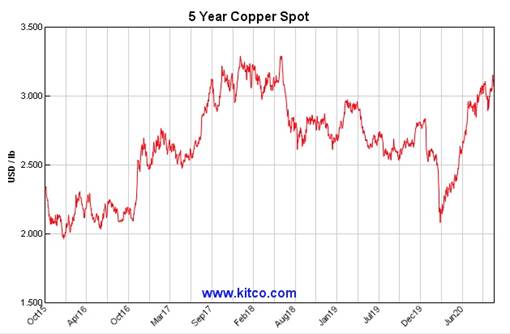
From a four-year low in March, when the coronavirus slammed into Europe and North America, the red metal used widely in construction, communications, transportation and energy transmission, has mounted a serious comeback.

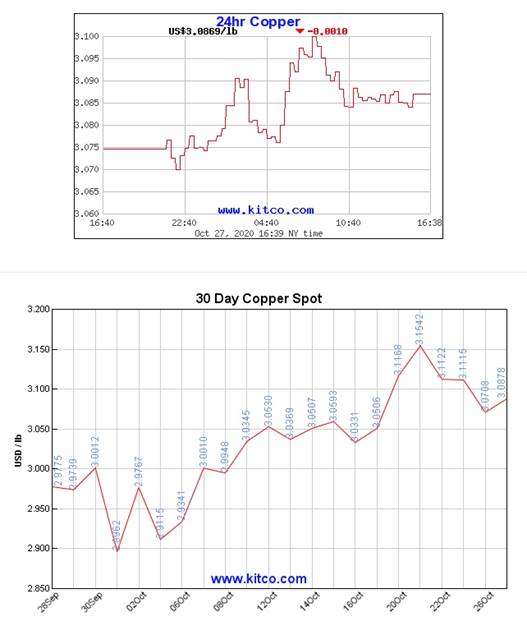
As of this writing spot copper is trading at $3.08 per pound, compared to around $2.10/lb in mid-March – a gain of 46%. The spot price has stayed above $3.00 since Oct. 8 – which is remarkable considering the reports of impending economic doom, amid a second wave of covid-19 infections in Europe and North America.

The following analysis by AOTH has copper showing no signs of slowing down; in fact, while the copper market was tight before the pandemic began, we expect it to tighten even further, due to a constellation of factors, starting with China.

The Chinese economy became the first major world economy to return to its pre-virus growth trajectory, when it posted positive numbers in the second quarter. Recent figures from China’s National Bureau of Statistics indicate that third-quarter GDP growth is up 4.9% from a year ago. Between April and June, Q2, the bureau reported a 3.2% rise. The Chinese are well ahead of their trading rivals as they strive to put the pandemic for which they were responsible, behind them.

According to the World Bank and the OECD, the Chinese economy in 2020 will grow 2% – the only G20 country to mark positive economic output this year. Beijing has managed to largely contain the virus in recent months after the pandemic shut down its economy. Commerce and travel have been allowed to resume, which is driving economic growth and fueling demand for copper and other industrial metals, like aluminum and nickel, whose prices are also climbing.

Other reasons for a rising copper price include covid-related restrictions imposed on the copper mining industry, along with speculative interest in the metal due to a weaker US dollar.

Copper output from the world’s top 10 producers declined 3.7% during the second quarter, due to nation-wide lockdowns in Chile, Peru and Mexico.

China’s copper dominance

Chinese growth statistics have always figured prominently in copper price forecasts – no surprise considering that China is responsible for just under half of the world’s production of copper and copper alloys semis, the industry term for first-stage products made from refined copper.

The Asian superpower is also the largest importer of unwrought copper, along with copper ores and concentrates.

Its manufacturing sector back on track, China’s copper imports rose sharply over the past four months; in September, the country imported 62% more copper than the same month in 2019. Unwrought copper imports of 4.9 million tonnes during the first nine months of the year, were up 41% from the same period last year.

According to Reuters columnist Clyde Russell, China has been vacuuming up copper, boosting the price at a time when demand elsewhere in the world was looking sickly as the virus spread.

Why is China importing so much copper? Russell claims the buying spree is being driven by Beijing’s stimulus spending following the national lockdown during the first four months of the year. But he also says it is likely that substantial volumes of copper are flowing into stockpiles, either strategic or commercial.

We agree, and have been writing quite a bit about this lately.

Obviously we can’t say for sure, given China’s opaque statistics, but we suggest a good chunk of the raw materials are going into bulking up the Chinese Military, in particular its navy patrolling the South China Sea. In other words, China is preparing for war.

The mining industry’s experience of China locking up the world’s mineral resources testifies to how far the Chinese will go to ensure their ever-growing demand for mined commodities is met.

Locking up supply

While iron ore ad copper were the hot targets of overseas acquisitions by Chinese firms as they sought to feed an economy that up until 2015 was growing at double digits, the Chinese have also gone after gold, nickel, tin and coking coal. More recently the most desired metals are those that feed into the global shift from fossil fuels to the electrification of vehicles. This has meant a hunt for lithium, cobalt, graphite, copper and rare earths – metals that are used in electric vehicles, of which China has become the world’s leading manufacturer. EVs use a lot of copper, four times as much as a regular vehicle, and China hasn’t been shy about boosting its copper reserves to meet expected demand.

Two large Peruvian copper mines are owned by Chinese companies. Chinese state-run Chinalco owns the Toromocho copper mine, while the La Bambas mine is a joint venture between operator MMG (62.5%), a subsidiary of Guoxin International Investment Co. Ltd (22.5%) and CITIC Metal Co. Ltd (15%). The Chinese-backed Mirador mine in Ecuador opened in 2019.

Most of the metal produced under these off-take agreements will NEVER come to the market anyplace other than in China. Those metals that do, can have their supply shut down any time the Chinese want.

In Brazil, Chinese banks and investment groups have committed $15 billion of a $20b China-Brazil Fund, launched in 2016 to finance infrastructure projects.

The Made in China 2025 initiative, which aims to make China’s copper industry more efficient, is expected to grow Chinese copper demand by an additional 232,000 tonnes by 2025. This isn’t counting the need for more copper for railways, electric vehicles, car motors and power transformers.

SOURCE: http://www.marketoracle.co.uk/Article67933.html

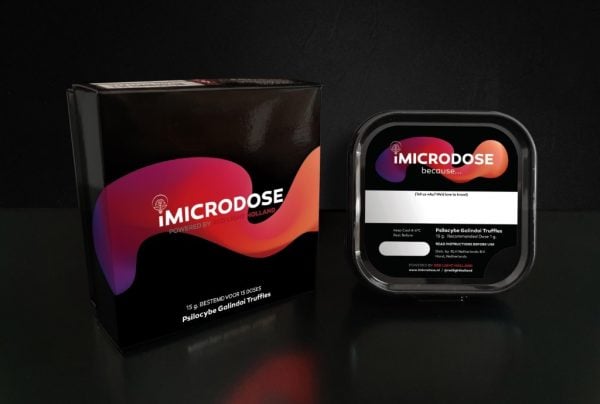
CLIENT FEATURE: Red Light Holland $TRIP.ca iMicrodose Magic Truffle Distribution Agreement Catalyst for Growth $SHRM.ca $RVV.ca $CMPS $MMED $PLNT.ca

Posted by AGORACOM at 1:28 PM on Thursday, October 29th, 2020

(CSE: TRIP)

Red Light Holland’s iMicrodose packs are Available on Shelves in the Netherlands (18+) and online plus their Science and Innovation Division, Scarlette Lillie, is taking notice in the Longevity field, via their Jinfiniti arrangement.

It appears as if, Scarlette Lillie Science and Innovation’s goal is to support science and medical research without needing to raise 100’s millions of dollars while focusing on the digital experience and potential opt-in user data collection.  

  • Red Light Holland and Scarlette Lillie is focused on education and information plus adult-responsible use of their iMicrodose packs.
  • Joined the Medical Psychedelics Working Group 
    • a consortium of drug science experts, leading academics and researchers, policy specialists and industry partners 

Scarlette Lillie and Jinfiniti Precision Medicine 

  • This relationship with Jinfiniti may allow Scarlette Lillie to add a novel component to expected clinical studies for psilocybin and truffles.
  • The knowledge that comes from this has the potential to not only influence the outcome of clinical studies but can also potentially lead to novel treatments for several disorders.  

Virtual Reality Shopping Experience

Red Light Holland is creating a virtual reality shopping experience module, intended to explain the effects of microdosing of magic truffles on the human brain, as well as a virtual reality avatar that is centered around Red Light Holland’s brand.   

  • The VR Module is expected to be completed in Q4 2020,  
  • Educating and enabling individuals to make reasoned, informed decisions with respect to magic truffles and other psychedelic substances,   
  • Enabling Red Light Holland to gather valuable data on user experience of synesthesia, loss of autonomy and suggestibility to inform further study and research in the psychedelic space.   

The VR Avatar, which is expected to be completed in Q3 2020, is expected to assist Red Light Holland’s larger efforts towards reducing the stigma associated with, among other things, magic truffles and other psychedelic substances.  

Red Light Holland’s Growth Potential 

TRIP is established to grow, distribute and market a magic truffles to the legal, recreational market within the Netherlands   

  • Red Light Holland has reached a Distribution Arrangement for iMicrodose Packs with a total of 8 Smart Shops Netherlands and expects that number to grow rapidly.
  • Red Light Holland iMicrodose Packs are currently available in 3 Smartshops and the rest are expected to be in Smartshops by the end of October, 2020 
  • Red Light Holland iMicrodose Packs are available to the Netherlands, Adult market online at www.iMicrodose.nl and are offering a unique subscription model.
  • The sales and growth evolution of Red Light is just beginning 

“This is just another example on how aggressive we are by immediately increasing the ability for consumers, all over the Netherlands, to purchase our iMicrodose packs powered by Red Light Holland. ” Todd Shapiro, CEO and Director of Red Light Holland.  

Red Light (to the best of our research) is the first public company selling psychedelic products on the market

Responsibility Toward Consumption 

  • Responsible use requires users who are at a minimum 18 years old.  
  • Red light is a self-regulated company and in accordance with the highest standards and compliance with all applicable laws.  
  • Red Light Holland’s team includes Bruce Linton as their Chair of the Advisory Board, Tony Clement (former Canadian Health Minister) and World Famous Entertainer Russell Peters.
  • Red Light Holland has been featured in vice.com – www.Hightimes.com – the New York Observer – and mentioned on The Joe Rogan Experience. 
  • Former Top Rated Host, CEO Todd Shapiro is clearly using his deep rooted celebrity connections to get incredible exposure on the Company.
  • This earned media to such a large audience is impressive for any small cap Company 

Red Light Holland’s current market cap is approximately 20 million and appears to be low when comparing them to their peers, considering they currently have a product on shelves, while supporting science and innovation intelligently. 

Peer Market cap Comparisons:

1. NUMI NUMINUS WELLNESS INC:  $37,703,000

2. MYCO Mydecine Innovations Group Inc.: $48,829,000

3. MMED MIND MEDICINE (MINDMED) INC.: $391,733,000

FULL DISCLOSURE: Red Light Holland is an advertising client of AGORA Internet Relations Corp.

Candente Golds $CDG.ca Samples High Grade Gold and Silver on the Cocula Gold Project, Mexico $FMG.ca $MEX.ca $AGI.ca $DSV.ca

Posted by AGORACOM at 8:54 AM on Thursday, October 29th, 2020
https://s3.amazonaws.com/s3.agoracom.com/public/companies/logos/563973/hub/Candente_Gold_Hub_Logo.gif

VANCOUVER, British Columbia, Oct. 29, 2020 (GLOBE NEWSWIRE) — Candente Gold Corp. (TSXV:CDG) (“Candente Gold” and/or the “Company”) is pleased to announce that high grade gold and silver has been sampled on the Cocula project.

As reported in News Release dated, October 22nd, 2020, samples collected to check historical reporting confirmed grades of 5.663 grams per tonne (“g/t”) gold over 6 metres and 4.322 g/t gold over 8 metres in quartz breccia bodies which we understand are typical throughout the deposit.

In addition, higher grades of 59.0 g/t gold and 729 g/t silver have been found in a selected sample over 10 centimetres (“cm”) in the hanging wall of a quartz vein-breccia structure near the portal of a collapsed adit. We understand mineralization was previously exploited from this adit on a small scale using a flotation recovery process but the Company has not found any formal production records. The mineralization in the high grade sample is described as dark grey to milky white banded quartz in vein and breccia with galena, pyrite and quartz crystals filling open spaces. A channel sample collected over 0.75 m adjacent to the selected sample and including part of the hanging wall, only returned 0.182 g/t gold and 18.9 g/t silver.   The channel sample comprised milky white and gray to dark gray quartz breccia vein with fine grained pyrite, +1% galena and trace malachite.   The Company understands that the high grades are coming from a bonanza zone for which we have no idea of the size or extent yet. Due to the nature of the high grades, the bonanza zone samples were check assayed in a second laboratory. The two laboratories used are the Alti Plano Gold Silver laboratory in Matehualas, San Luis Potosi, Mexico owned by Reyna Mining and Inspectorate Laboratory owned by Bureau Veritas who prepare their samples in Durango, Mexico and conduct sample analyses in Vancouver, Canada.

Base metal assays and multi-element ICP analyses are still pending for the rock check samples as are results from preliminary metallurgical testing.

The due diligence work is being conducted by Ing. Humberto Hernandez, Geological Engineer, member of Asociación de Ingenieros Mineros, Metalúrgistas y Geólogos de México and Ing. Gerardo Moreno, Geological Engineer and Miner, of Grupo Constructor Germo based in Durango, Mexico.

The Cocula Project area is located within the Ameca Mining District of Jalisco State which is home to Agnico Eagle’s El Barqueño Project and Endeavor Silver’s Terronera Project.

Please see News Releases No. 084 and 086 dated September 10th, and October 22nd, 2020 and http://www.candentegold.com/s/cocula.asp for further details on the Cocula Project.

About Candente Gold

Candente Gold has launched a comprehensive growth strategy to build a cash flowing business platform and gain access to properties with near surface exploration potential while maintaining El Oro as its flagship asset and an integral part of the overall growth strategy. The acquisition of the SDA Plant, the El Dorado historic mines and the Cocula Project signifies an important first step.

The financial benefits from Western Mexico operations and the addition of specialized personnel will translate across platforms to strengthen our efforts to explore and potentially mine. The Company is currently evaluating other properties that are complimentary to the SDA plant, El Dorado and the Cocula Project.

El Oro is a district scale gold project encompassing a well-known prolific high-grade gold dominant gold-silver epithermal vein system in Mexico.   The project covers 20 veins with past production and more than 57 veins in total, from which approximately 6.4 million ounces of gold and 74 million ounces of silver were reported to have been produced from just two of these veins (Ref. Mexico Geological Service Bulletin No. 37, Mining of the El Oro and Tlapujahua Districts. 1920, T. Flores*)

Modern understanding of epithermal vein systems indicates that several of the El Oro district’s veins hold excellent discovery potential, particularly below and adjacent to the historic workings of the San Rafael Vein, which was mined to an average depth of only 200 metres.

Joanne C. Freeze, P.Geo., President, CEO and Director and Matthew Melnyk, CPG., Director Operations and Director are Qualified Persons as defined by National Instrument 43-101 for the projects discussed above, however they have not been able to visit the Cocula Project recently due to COVID virus travel restrictions. The work discussed in the News Release is either historical and documented by public records or conducted by Mexican professionals with qualifications similar to those of QP’s registered in Canada. Ms. Freeze and Mr. Melnyk have reviewed and approved the contents of this release.

Neither TSX Venture Exchange nor its Regulation Services Provider accepts responsibility for the adequacy or accuracy of this release.

Forward-looking Information

This news release may contain forward-looking information (as such term is defined under Canadian securities laws) including but not limited to information regarding the potential for and other statements that are not historical facts. While such forward-looking information is expressed by Candente Gold in good faith and believed by Candente Gold to have a reasonable basis, they address future events and conditions and are therefore subject to inherent risks and uncertainties including those set out in Candente Gold’s MD&A. Factors that cause the actual results to differmaterially from those in forward-looking information include, without limitation, gold prices, results of exploration and development activities, regulatory changes, defects in title, availability of materials and equipment, timeliness of government approvals, potential environmental issues, availability of capital and financing and general economic, market or business conditions. Candente Gold expressly disclaims any intention orobligation to update or revise any forward-looking information, whether as a result of new information, future events or otherwise, except in accordance with applicable securities laws.

On behalf of the Board of Candente Gold Corp.
“Joanne Freeze” P.Geo.
President, CEO and Director

For further information please contact:
Joanne Freeze                                                
President & CEO                                                                                 
Tel: + 1 (604) 689-1957       

Gratomic $GRAT.ca Begins Its Ascent into the EV Battery Market Supply Chain $SRG.ca $NGC.ca $LLG.ca $GPH.ca $NOU.ca #TODAQ $NMI.ca

Posted by AGORACOM at 12:23 PM on Wednesday, October 28th, 2020

TORONTO, ON / ACCESSWIRE / October 28, 2020 / Gratomic Inc. (“GRAT” or the “Company”) (TSXV:GRAT) (OTC Pink:CBULF) (FRANKFURT:CB81) (WKN:A143MR) announces that it is in the process of submitting 243 Kg of high purity graphite concentrate obtained from its pilot testing program for characterization for use as anode material in Lithium Ion battery cells. The graphite will initially be put through an Air Classification process in Toronto, Ontario and from there will be sent to Dorfner Anzaplan in Germany to undergo spherical micronization and classification. This verification process should establish Gratomic as a leader among its peers in proving that its graphite will be suitable for the anode material supply chain for North American battery manufacturers like Tesla, Panasonic, and others.

High grade Aukam graphite is taken to 99.9% purity through a non-invasive and carbon neutral process. Upon verification of quality and purity, the graphite will then be put through the spherical micronization process where it is ‘polished’ and ‘rounded,’ taking it from a flake to potato shape. Next the graphite will be put through a coating process, which strengthens the mineral improving surface area and increasing cycle times of the particles leading to improved conductivity. From there, it will be acceptable for use in Lithium Ion battery applications.

Being only a few short weeks away from completion of its processing plant (see Press Release dated October 15, 2020), Gratomic is providing a leg up on the competition in this rapidly expanding sector with its Eco-friendly and clean graphite options. Follow the link provided to view progress on final construction of the Aukam Graphite processing facility, which will include an on-site Air Classification unit in the near future https://gratomic.ca/aukam-2020/?et_fb=1&PageSpeed=off

President and CEO, Arno Brand, along with COO and Head of Graphite Marketing and Sales, Armando Farhate, have collaborated on next steps for Gratomic Inc. and its clean Aukam graphite. The pair have conducted extensive research into battery manufacturing requirements for graphite and are laying the groundwork for the Company’s transition into this sought-after market. The pair will continue with Gratomic’s current outreach program to North American EV battery manufacturers.

Experts agree that graphite anodes will remain in use for the foreseeable future, as breakthrough alternative versions of battery anodes are still years away from commercial production. In the meantime, Gratomic intends to provide the EV Market and Renewable Energy Sectors with clean, Eco-friendly graphite with a near neutral carbon footprint.

The Graphite concentrate is scheduled to leave Namibia for Toronto on October 30th after a slight delay related to COVID – 19 restrictions implemented by the Government of Namibia.

Steve Gray, P. Geo. and a Director of the Company has reviewed and approved the scientific and technical information in this press release and is the Company’s “Qualified Person” as defined by National Instrument 43-101 – Standards of Disclosure for Mineral Projects.

About Dorfner Anzaplan

The Company is currently preparing to initiate a development process in partnership with German specialist Dorfner Anzaplan, in order to identify the ideal process route for micronization and spheronization of its high purity graphite sourced from its Aukam Graphite Project in Namibia. Gratomic aims to meet stringent specifications from potential battery manufacturing strategic partners and clientele.

“ANZAPLAN offers advanced graphite evaluation services for high value applications including strongly growing markets such as anode materials in lithium ion batteries and expandable graphite. Starting with the initial characterization of the graphite ore through development of a beneficiation process to obtain a high-quality flake graphite concentrate, shaping and purification into battery grade spherical graphite, characterization of electrochemical performance and testing of Li ion cells”(Anzaplan. “Graphite.” ANZAPLAN, ANZAPLAN, 2020, www.anzaplan.com/minerals/graphite).

“ANZAPLAN’s facilities offer process design and engineering for flake graphite for a wide range of downstream products including purified spherical graphite with a cost and time efficient spheroidization equipment developed in cooperation with a renown German equipment manufacturer NETZSCH” (Anzaplan. “Graphite.” ANZAPLAN, ANZAPLAN, 2020, www.anzaplan.com/minerals/graphite/).

Established in 1985, ANZAPLAN is the leading company for engineering and consulting services for metals and mineral projects. They provide various services utilized by mining companies to de-risk projects, provide insights, aid in product development, and assist with planning requirements. The Company even presented at the 2020 Lithium-Ion Battery Materials & Rare-Earth Elements Supply Chain Seminar this past February.

About Gratomic Inc.

Established in 2014, Gratomic is an advanced materials company focused on low-cost mine to market commercialization of carbon-neutral, Eco-friendly, high purity vein graphite and is set to become a key player in EV and Renewable Resource supply chains. Gratomic Inc. is a leader among peers, anticipating full operational capabilities in late 2020 and aiming to transition to an open pit mine as early as 2021.

The Company promises to deliver mine-to-market traceability and guaranteed quality control. This will be accomplished by providing documented tracking on all graphite generated at its flagship Aukam Graphite Project. The tracking will begin at Aukam and will be verified at every stage during transport.

Two off-take purchase agreements are currently held for lump-vein graphite sourced from Gratomic’s Aukam Graphite Project in Namibia, Africa. Fulfillment of the contracts is slated to begin in late 2020. The agreements exist with TODAQ and Phu Sumika.

TODAQ is an innovative tech company and will partner with Gratomic on its mine-to-market commodity tracking.

Phu Sumika is a large global graphite supplier to battery and lubrication companies.

Gratomic Inc. is listed on the TSX Venture Exchange under the symbol GRAT.

For more information: visit the website at www.gratomic.ca or contact:

Arno Brand at [email protected] or 416 561-4095

Tartisan Nickel Corp. $TN.ca Acquires Additional Nickel-Copper Claims in Northwest Ontario $RNX.ca $TSLA $NOB.ca $SHL.ca $CNC.ca $FPC.ca $NICO.ca

Posted by AGORACOM at 9:37 AM on Tuesday, October 27th, 2020
Tc logo in black
  • Hole ND-10-03 intersected 4.53% Ni, within a larger interval averaging 1.02% Ni, 0.38% Cu over 4 metres.
  • The mineralization remains open along strike and to depth.
  • Claims previously owned by Canadian Arrow Mines Limited in 2010

TORONTO, ON / ACCESSWIRE / October 27, 2020 / Tartisan Nickel Corp. (CSE:TN)(OTC PINK:TTSRF)(FSE:A2D) (“Tartisan”, or the “Company”) is pleased to announce that the Company has acquired the Night Danger, Glatz nickel-copper claims located in the Turtle Pond Project area near Dryden, Ontario.

The Company has acquired a 100% interest in the Glatz, Night Danger Nickel-Copper Claims located approximately 70 kms from the Company’s flagship Kenbridge Nickel Deposit. The property is situated in an area of excellent infrastructure and consists of 16 claim units. The 16 claim unit property hosts the historical Glatz and Night Danger nickel-copper showings. Previous exploration efforts identified nickel-copper sulphide mineralization in twelve trenches along a 700 metre trend at the Glatz nickel copper showing. The zone, discovered in 1965 by local prospector A. Glatz, is up to 40 metres wide and is open along strike and at depth. Historical grab samples were reported to contain up to 1.95% Ni. In 2007, Canadian Arrow Mines Limited conducted a surface grab sampling program which produced the following results: 1.28% Ni, 0.26% Cu re Glatz Trench 3; 0.99% Ni, 0.18% Cu re Glatz Trench 3; 0.39% Ni, 4.06% Cu re Trench 4. The mineralization varies from disseminated sulphides to narrow semi-massive sulphide bands. Six short drill holes were completed at that time with hole GZ-09-02 encountering 0.34% Ni, 0.16% Cu and 0.02% Co over 5.9 m from 45.0-50.9 m.

Exploration diamond drilling work completed in 2009 and 2010 on the Night Danger nickel-copper showing reported a nine metre wide section of stringers and blebs of sulphide which assayed 0.57% Ni and 0.45% Cu at a drill depth of 79m in hole ND-09-1. Two sections within this interval assayed greater than 1% nickel. Drill hole ND-10-1 intersected 4.53% Ni over 0.7m at a drill depth of 57.5m (Source; MNDM assessment files and Canadian Arrow Mines Limited news release dated June 1, 2010).

Mark Appleby, President and CEO of Tartisan stated, “The Glatz and Night Danger nickel-copper showings display similar nickel and copper tenors as what we find near surface at our Kenbridge Nickel Deposit. Acquisition of these showings complements the company’s larger objective of developing the Kenbridge Nickel Deposit into an operating mine with a central milling facility.”

About Tartisan Nickel Corp.

Tartisan Nickel Corp. is a Canadian based mineral exploration and development company which owns; the Kenbridge Nickel Project in northwestern Ontario; the Sill Lake Silver property in Sault Ste. Marie, Ontario as well as the Don Pancho Manganese-Zinc-Lead-Silver Project in Peru. The Company has an equity stake in; Eloro Resources Limited, Class 1 Nickel and Technologies Limited and Peruvian Metals Corp.

Tartisan Nickel Corp. common shares are listed on the Canadian Securities Exchange (CSE:TN; US-OTC:TTSRF; FSE:A2D). Currently, there are 101,603,550 shares outstanding (107,203,550 fully diluted).

For further information, please contact Mr. D. Mark Appleby, President & CEO and a Director of the Company, at 416-804-0280 ([email protected]). Additional information about Tartisan can be found at the Company’s website at www.tartisannickel.com or on SEDAR at www.sedar.com.

St-Georges $SX.ca Has Secured the Ownership of All Mineral Licenses in the Republic of Iceland $NNX.ca $OM.ca $ICM.ca

Posted by AGORACOM at 10:10 AM on Monday, October 26th, 2020
  • Completed the acquisition of Melmi EHF, the Icelandic corporation that owned the majority interest in the Thor Gold Project
  • Acquisition allows St-Georges to control its destiny and plan its exploration campaigns with no interference

Reykjavik – TheNewswire – October 26, 2020 St-Georges Eco-Mining Corp. (CSE:SX) (CNSX:SX.CN)(OTC:SXOOF) (FSE:85G1) is pleased to report that it has completed the acquisition of Melmi EHF, the Icelandic corporation that owned the majority interest in the Thor Gold Project and the remainder or the Icelandic mineral licenses not already controlled by St-Georges.

This transformative acquisition gives total control over the mineral licenses of the Republic of Iceland to St-Georges, making it the only junior exploration company to own all the mineral rights of a western country. This acquisition allows St-Georges to control its destiny and plan its exploration campaigns with no interference. It also gives the Company’s geological team access to extensive libraries of geological data, a large number of historical mineral samples and a well-maintained and secured national core shack that will be useable for future development. Furthermore, all the diamond drill cores from the Thor Gold project are now in the Company’s ownership and possession. The Company expects to be able to resample these cores in the process of elaborating its maiden NI 43-101 Gold-Silver and Copper resource estimate on the Thor Gold Project.

The Melmi EHF Acquisition

As previously disclosed in a press release on July 2, the Corporation will pay up to CA$775,000 in consideration of all the Melmi EHF shares as follows:

  1. (i)pay $65,000 upon the execution of the definitive share purchase agreement (the “Definitive Agreement”)
  2. (ii)pay an additional $60,000 on the earlier of: (a) 90 days of execution of the Definitive Agreement; and (b) the start of drilling on the Thor Gold Project;
  3. (iii)issue $400,000 of non-transferable debentures of the Corporation bearing a 6% annual interest, maturing 3 years from issuance (the “Maturity Date”), of $100,000 will be convertible into common shares in the capital of SX (the “SX Shares”) at a deemed price of $0.10 per SX Shares, $150,000 at a deemed price of $0.15 per SX Shares, and $150,000 at a deemed price of $0.20 per SX Shares; and
  4. (iv) as additional consideration, subject to and upon all the Licences Application having been granted, issue $250,000 non-transferable debentures of SX bearing a 6% annual interest, maturing 3 years from issuance, and convertible into SX Shares at a deemed price of $0.20 per SX Shares.

Iceland Operational Update

In September, the Corporation drilled a reversed circulation (RC) drill hole for a total length of 124 meters.

In October, reconnaissance and follow-up fieldwork was conducted in Vopnafjordur (Vopna) and Trollaskagi (Trolla) projects. Mineralization bearing outcrops were identified and sampled and brought to St-Georges’ secure facilities in Reykjavik for petrographic analysis. Some of the

se samples were prepared to be sent for assays to ALS Laboratories in Dublin, Ireland. Management expects that the results of these essays will become available later this year, and the Company expects to report on it as soon as the information becomes available.

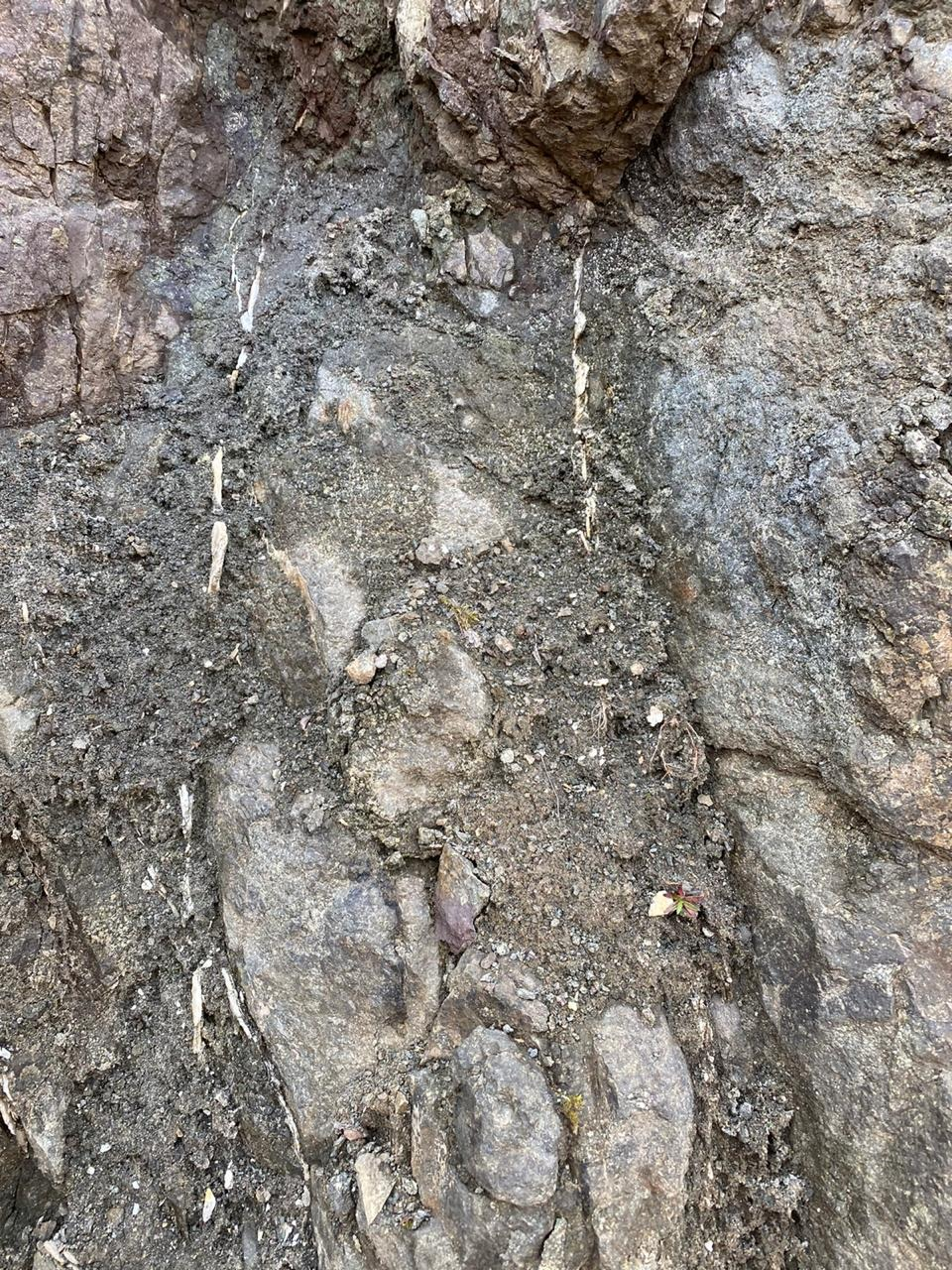
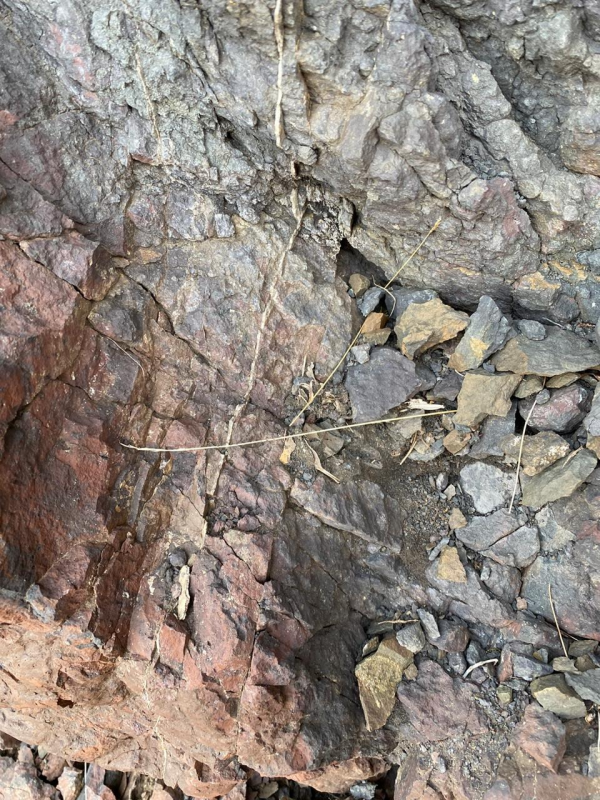
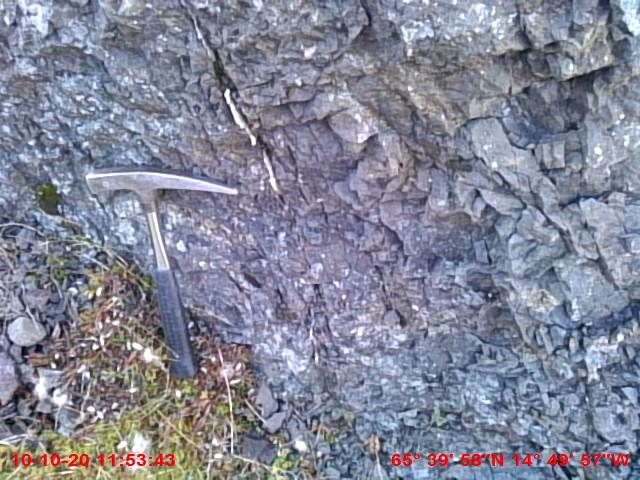
Picture 1, Outcrop on Trolla Gold Project

Picture 2. Outcrop on Trolla Gold Project

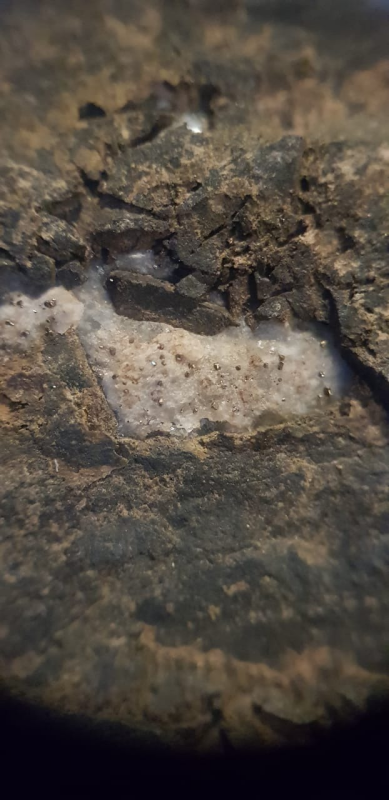
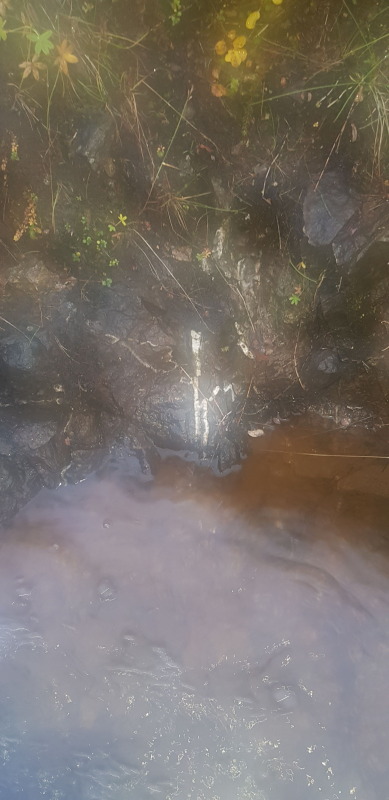
Picture 3. Close up of a Quartz Vein from an Outcrop on Trolla

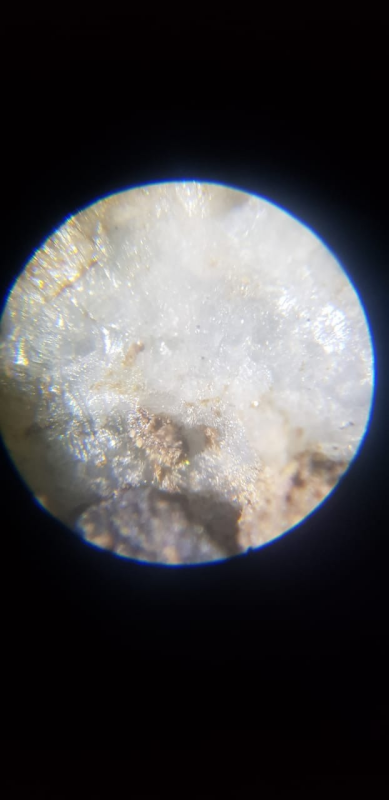
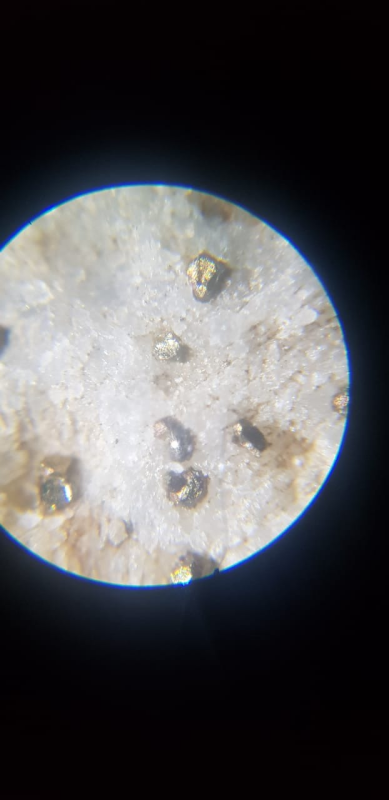
Picture 4 & 5: Quartz Vein from Trolla Outcrop (Picture 3) Under Magnifying glass (10X)

Picture 5. Magnified Quartz vein from Trolla Outcrop gold is associated with pyrite in Iceland

Picture 6. Outcrop at Trolla Gold Project

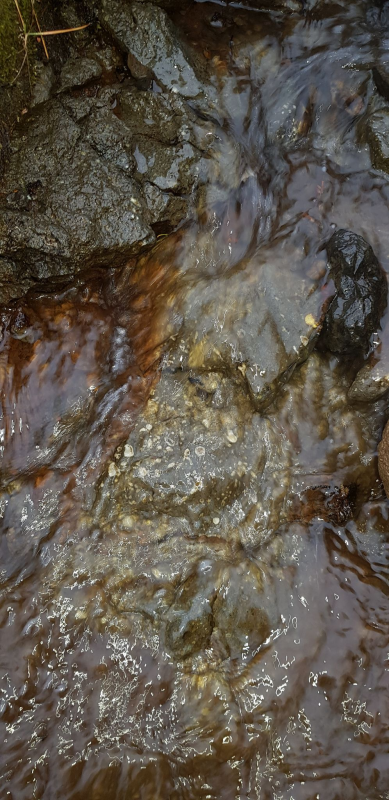
Picture 7. Water Stream over Outcrop at Vopna Gold.

About Iceland

Iceland climate, location, access and infrastructure (Histed,R,2010)

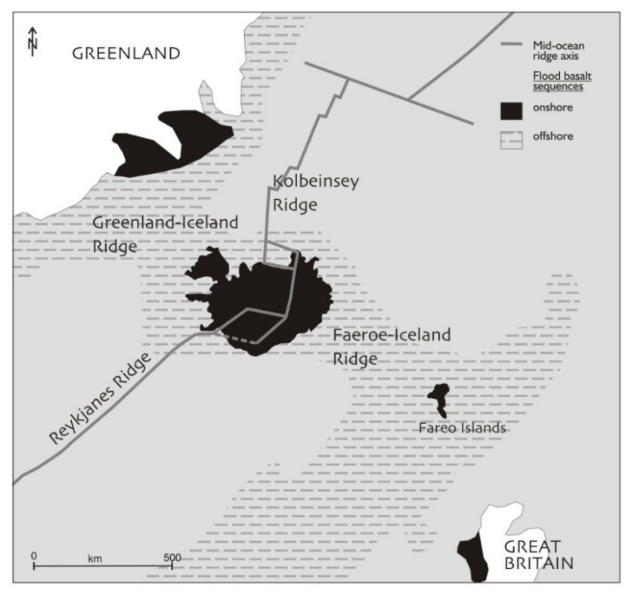
Located in the North Atlantic, approximately midway between Greenland and Great Britain, the warm North Atlantic Current ensures that the climate in Iceland, described as subpolar, oceanic, has generally higher temperatures than locations of similar latitude throughout the world. Regions or places that have similar climate are Tierra del Fuego, the Aleutian Islands and Alaskan Peninsula. Although Iceland lies close to the Arctic, its coasts remain ice-free year-round.

As can be expected, the southern coast is generally warmer, wetter and windier than the northern coast. The lower-lying, inland areas in the north are the most arid, although snowfall in the north during the winter months is greater than in the south.

Historically, recorded temperature extremes for the country are 30.5 C and -38.0C. The high in Reykjavik was 26.2C in 2008, and the low there was -24.5C in 1918. Although the Icelandic climate can be harsh, the GI-Melmi JV completed a drilling program at Thormodsdalur (Thor Gold Project) from November 2005 through May 2006 without undue difficulty. In the north, the increased snowfall would make an effort such as this more difficult. Reconnaissance is to be limited to the summer months.

Iceland’s infrastructure is well developed and modern. Road construction was begun around the start of the 20th century and peaked during the 1980’s. The roads are well constructed and maintained asphalt, although some gravel roads are still found. The current road system connects most of the larger towns and villages and is mostly confined to the coastal areas. Currently, there are a total of 12,691 kilometers of roads in Iceland that includes 3,262 kilometers of paved surface. Inland road access diminishes to dirt roads to no roads making access to some areas difficult, requiring foot travel or helicopter support. There are no railroads in Iceland.

Geological Setting

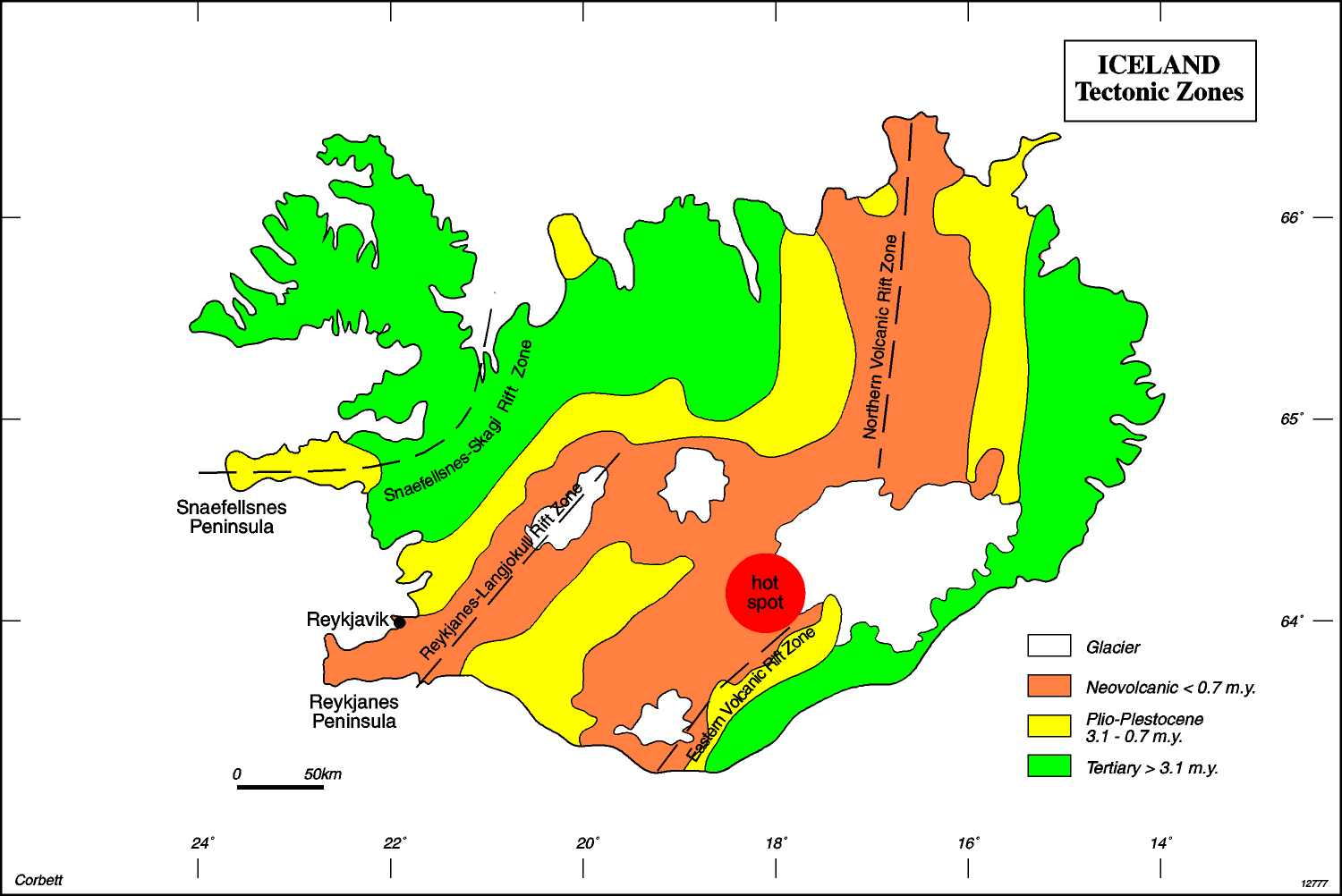
Iceland occurs at the junction of two large physical structures; the Mid Atlantic Ridge and the Greenland-Iceland-Faeroes Ridge (Figure 9). At this intersection, the mantle is hotter and less dense than the surrounding mantle. The mantle material rises as a result of heat and chemical-related density differences resulting in a dome in the crust above. This hotspot is causing a higher rate of extrusive volcanism at this point on the Mid Atlantic Ridge, which has, in turn, caused the region to be built up to a level more than 3 kilometers above the surrounding seafloor and covers an area of more than 350,000 km2. This is known as the Iceland Basalt Plateau. The portion of the plateau above sea level is now the country of Iceland (Martin, et al., 2007).

Tectonic Setting

In the Mid Atlantic Rift environment, the central portions of Iceland have moved outwards, away from the zones of active rifting and crustal development such that oldest rocks occur towards the margins and youngest in the center. Due to the migration of the hotspot to the south-east with time, an asymmetry has been imparted to the shape of the island. Currently, the hotspot lies under the south-eastern quadrant of the island (Corbett, 2004). This area now denotes the zone of active rifting and volcanism. Figure 10 shows the geology of Iceland defined by tectonic zones that coincide with the ages of the rocks.

Principal Tectonic Zones

The significant rift systems that have focused volcanism through time are noted below.

  • – The Snaefellsnes-Skagi Rift Zone in western Iceland was active in the 16-6.5 m.y. period. – The Reykjanes-Langjokull Rift Zone in central western Iceland resulted in the development of the Reykjanes Peninsula from about 6 my. – The North Volcanic Rift Zone became active from 3-4 my and extends to the present time. – An Eastern Volcanic Rift Zone is developing at this time.

Significant quantities of felsic intrusive and extrusive rocks occur in the dominantly basaltic sequence, and the felsic rocks locally display gold-anomalous hydrothermal alteration (Corbett, 2004).

Structurally, NE fractures reflect the spreading centre direction and are, therefore, some of the most numerous and laterally extensive fracture patterns, commonly evident as normal faults that may be exploited by dykes. NS and ENE fractures are developed as conjugate fractures during the NW-SE extension.