Posted by AGORACOM
at 11:30 AM on Friday, May 8th, 2020
PONSOR: Mota is seeking to become a vertically integrated global CBD brand. Mota is creating sales channels and a distribution network internationally through the acquisition of the Sativida and First Class CBD brands. Low cost production, coupled with international, direct to customer sales channels will provide the foundation for the success of Mota. Combined total sales of almost $29,000,000 with a EBITDA of approximately 12.5% (2019) Click Here for More Info
With time ticking down for CBD manufacturers to meet the UK’s deadline for having a validated EU novel food application in hand, two European hemp associations are pooling resources to meet the application’s requirements.
The assistance on offer from the European Industrial Hemp Association in Germany and the Association for the Cannabinoid Industry in the UK highlights the urgency with which suppliers and processors need to move if they hope to be selling cannabidiol supplements and foodstuffs on the British market early next year.
That’s because the UK’s Food Standards Agency (FSA) set a deadline of March 31, 2021, for industry players to gather data on their CBD products and have their novel food applications validated by EU authorities.
The legality of CBD products in the European Union became murky in January 2019, when EU authorities classified all hemp extracts and hemp-derived products containing CBD and other cannabinoids as “novel foods.â€
The designation means that manufacturers need to have their CBD supplements and edible products evaluated and seek permission from EU authorities to place them on the market.
EIHA
European Industrial Hemp Association members agreed last year to submit a joint novel foods application with “a range of CBD extracts†to UK and EU authorities. The group said in February it was receiving membership applications “on almost a daily basis†from interested parties.
This week, the EIHA confirmed a report that revealed the scope and costs associated with its joint novel foods application. The association told Hemp Industry Daily:
An EIHA task force is in the process of choosing four formulations of CBD to be consolidated into one novel food application. The formulations will be finalized at the EIHA general meeting in June.
The joint application project, organized as a limited liability company, will cost at least €2 million ($2.16 million). The EIHA estimates that the required lab analysis of CBD and THC toxicology studies alone will cost €1.8 million ($1.94 million).
The group plans to launch the toxicology studies in June.
The cost of joining the consortium is estimated at €10,000 to €50,000 ($10,800 to $54,000), depending on the size of the company and when it joins. Regular EIHA members will be asked to pay the consortium cost in two installments, with the first next month.
This one-time cost comes in addition to the cost of a regular EIHA membership, which ranges from €2,500 to €10,000 ($2,700 to $10,800), depending on company revenue.
All companies that join the EIHA are obliged to join the novel foods consortium.
The association declined to say how much of the necessary funding for lab tests and toxicology evaluations has been raised so far.
Lorenza Romanese, managing director at the EIHA, said companies outside the European Union can join its novel foods consortium and would be eligible to sell products on the EU market if the joint application achieves authorization.
ACI
The UK’s Association for the Cannabinoid Industry announced this week a free hotline for CBD manufacturers with questions about the novel food application process.
The group also offers paid consulting services for individual applications.
The ACI’s approach pools resources for the data-generation phase while taking an individualized approach for each company’s application. The effort aims to help companies get the research they need, said Shomi Malik, ACI’s development director.
“The most expensive part of this isn’t writing the dossier, it’s generating the data,†Malik said.
“The best of both worlds is to share the costs of the real heavy lifting but still give companies the freedom to do their own individual applications. That’s what we’re trying to do here.â€
The ACI estimates that the cost for the toxicology study alone – the portion it’s looking to syndicate – will cost around £250,000 ($309,000). A full toxicology assessment takes seven to eight months to complete, ACI said, followed by an extra month to generate the data report.
The group said its application consulting services could cost anywhere from €50,000 to €500,000 ($54,000 to $540,000), depending on the size of the company and the number of finished products requiring novel foods authorization.
Malik applauded the EIHA for its collective application option, which he said might appeal to CBD players who haven’t budgeted the financial resources required for an individual application.
“Now that ‘novel foods’ is a binary proposition – you’re either in or you’re out – companies have had to find budgets from somewhere,†he said. “Their objective is to do this the quickest and cheapest way possible.â€
On the other hand, in the event that a collective novel foods application is authorized, parties to the application run the risk of finding themselves in a “regulatory straitjacket†not to deviate from those formulations. This could hinder industry innovation, Malik said.
“You’re in a much better position if you’ve got your own novel food authorization, than if you have to share and compromise with some aspects on the data sharing,†Malik said.
Clock is ticking
Whichever path companies choose, it’s time to start the process for any products they want to keep on the shelves next year, said Garrett Graff, an attorney at Hoban Law Group who advises companies doing business in Europe and the UK.
“It’s important that folks get started now,†Graff told Hemp Industry Daily.
“This is not a commonplace application that takes a couple hours. This will take considerable amounts of planning, coordination, time and financial resources to complete, and engaging as quickly as possible given the forthcoming deadline is important.â€
Posted by AGORACOM
at 10:27 AM on Friday, May 8th, 2020
Sponsor: Loncor, a Canadian gold explorer controlling over 3.6 million high grade ounces outside of a Barrick JV. The Ngayu JV property is 200km southwest of the Kibali gold mine, operated by Barrick, which produced 814,000 ounces of gold in 2019. Barrick manages and funds exploration at the Ngayu project until the completion of a pre-feasibility study on any gold discovery meeting their Tier One investment criteria. Newmont $NGT$NEM owns 7.8%, Resolute $RSG owns 27% Management owns 29% Click Here for More Info
Concerns about the health of the global economy due to the coronavirus pandemic have boosted ‘safe-haven’ gold by 12%
Barrick Gold Corp posted a nearly 55 per cent rise in quarterly profit on Wednesday as gold prices surged, bolstering its ability to snap up mines including in copper, its chief executive said.
Concerns about the health of the global economy due to the coronavirus pandemic have boosted “safe-haven†gold by 12 per cent so far this year, while copper, seen as a bellwether for economic health, is down about 15 per cent.
Barrick CEO Mark Bristow has previously said the world’s No. 2 gold miner could raise its exposure in copper because of its expected higher use in electrification.
He added on Wednesday the relative price performance between copper and gold made deals more attractive.
“(A stronger balance sheet) improves our capacity to take up opportunities that might arise in the short to medium term given the dynamic nature of the global economy,†Bristow told Reuters.
He did not elaborate, but has expressed an interest in acquiring Freeport-McMoran Inc’s flagship Grasberg mine.
Barrick, which maintained its quarterly dividend of 7 cents per share, trimmed its annual production forecast for gold after shutting its mine in Papua New Guinea.
The Canadian miner now expects attributable gold production of 4.6-5.0 million ounces versus 4.8-5.2 million previously.
The government of Papua New Guinea announced in April it would not renew a 20-year special mining lease for the Porgera gold mine, which is jointly owned by Barrick and China’s Zijin Mining, due to environmental damage and social unrest.
Barrick (Niugini) Limited, the local venture in which both miners have a 47.5 per cent stake, had produced about 597,000 ounces of gold in 2019 from the Porgera mine.
Barrick has said it will contest the move, which it regards as “tantamount to nationalization without due process,†and in the meantime has placed Porgera on temporary care and maintenance, while suspending 2020 guidance for the mine.
Bristow said a mediator would be appointed to help negotiations if initial talks between the government and Barrick failed.
The company, with operations in North and South America and Africa, has not closed any of its mines due to coronavirus restrictions which have hit competitors.
Larger rival Newmont, which was forced to shutter some mines in Canada and South America, warned on Tuesday of a financial hit in the second quarter.
Barrick’s first quarter production fell 9 per cent to 1.25 million ounces. Excluding one-off items, Barrick reported a profit of 16 cents per share, in line with analyst estimates.
Posted by AGORACOM
at 10:02 AM on Friday, May 8th, 2020
SPONSOR: Labrador Gold – Two successful gold explorers lead the way in the Labrador gold rush targeting the under-explored gold potential of the province. Exploration has already outlined district scale gold on two projects, including a 40km strike length of the Florence Lake greenstone belt, one of two greenstone belts covered by the Hopedale Project. Recently acquired 14km of the potential extension of the new discovery by New Found Gold’s Queensway project to the south.Click Here for More Info
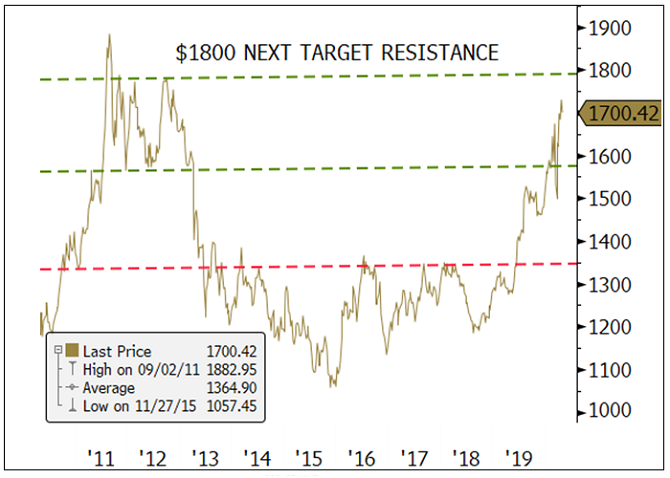
Gold Bullion Surges above March Lows
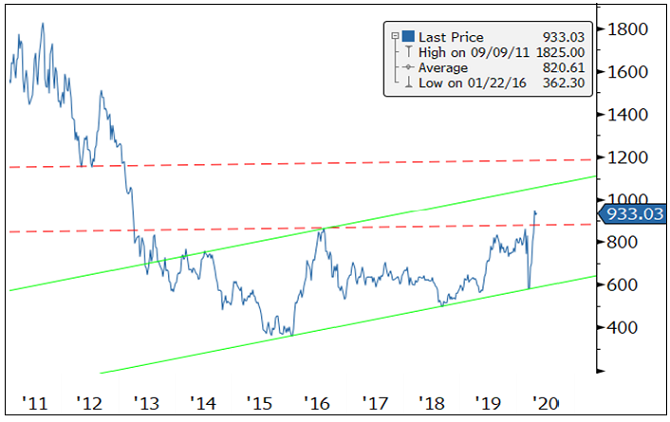
Gold Mining Equities Track Gold Higher
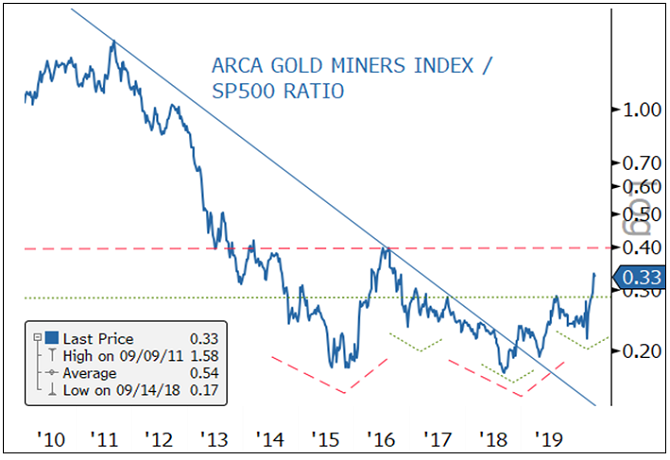
Gold Mining Equities vs. S&P 500 Show Convincing Breakout
Markets Recalibrate
Capital markets and society continue to recalibrate from the enormity of the fallout of the COVID-19 pandemic. As difficult as the current situation is, gold fundamentals continue to improve. Gold, as an investment, offers a hedge against the current financial turmoil and has significant capital appreciation potential in the years ahead.
The magnitude of central banks and government actions over the past several weeks will resonate for the rest of this decade. In our March commentary (March Roars in Like a Lion), we mentioned that we are now in the “end game” where debt explodes in the face of a financial calamity (although no one predicted that it would be a pandemic). We will discuss what near-term options the U.S. Federal Reserve (“Fed”) will likely implement, and how gold is likely to respond. We will also look at the recent move higher for gold mining equities.
Gold Bullion: Increased Demand for Physical Gold
Gold bullion ended April at $1,687, adding $109/oz, or +6.9% for the month. Gold began its surge in early April as physical delivery shortages resulted in gold futures (COMEX, New York) trading wildly higher than spot gold (London). COVID-19 has caused refining capacity for gold to decline and greatly restricted the transport of physical gold from London to New York. Typically, gold futures trade fairly tight with spot gold due to arbitrage, but in early April, the spreads spiked as high as $70/oz. The unprecedented fiscal and monetary policy response to the worst economic shock since the Great Depression has put gold squarely into investors’ minds.
Gold is almost always in contango (longer-dated contracts are more expensive than the near month). In April, parts of the gold futures curve traded in a rare backwardation (the near month contract is more expensive), usually indicative of a supply shortage. With the usual gold channels disrupted, futures are pulling spot prices higher as short positions are closed by going long futures. Compounding the disruption was the growing demand for gold in physical form, fueled by soaring investor buying interest. The unprecedented fiscal and monetary policy response to the worst economic shock since the Great Depression has put gold squarely into investors’ minds.
Figure 1. Gold Bullion Surges above March Lows Our short-term target is $1,800, and we expect to reach new all-time highs.
Source: Bloomberg. Data as of 4/30/2020.
Gold Mining Equities: Convincing Breakout in April
Gold equities broke out of a multi-year resistance level on massive buying flows. Using the NYSE Arca Gold Miners Index (GDM)5 as a reference, the 860 index resistance level was taken out convincingly. As shown in Figure 2, there is very little meaningful resistance until 1,200 (+25%). In March, gold equities, like bullion, experienced a forced liquidation event. Selling in GDX forced the ETF to trade at a significant discount to its underlying net asset value (NAV). Like many other ETFs, the selling volumes in GDX outpaced the liquidity in the underlying securities. Off the lows, the price action as measured by volume, breadth and money flow far exceeds the bullish thrust of the 2019 summer rally. This breakout, without question, is impressive on the technical measures.
Figure 2. Gold Mining Equities Track Gold Higher The NYSE Arca Gold Miners Index (GDM) has broken out of a broad base pattern; our short-term target is 1,200.
Source: Bloomberg. Data as of 4/30/2020.
The absolute price action is impressive, but when measured relative to the S&P 500 Index6 (Figure 3), the chart pattern looks even more impressive. Typically, new market leadership is more evident when measured against the broad market index. As shown in Figure 3, the NYSE Arca Gold Miners Index (GDM) relative to the S&P 500 Index has put in a very bullish bottom base pattern. There is a double bottom pattern set up with the right bottom shaping a head and shoulder breakout pattern. This bullish pattern within a bullish pattern is a very positive sign.
Figure 3. Gold Mining Equities vs. S&P 500 Show Convincing Breakout GDM is putting a remarkable long-term basing chart pattern and breaking out in the medium term.
Source: Bloomberg. Data as of 4/30/2020.
Increasing Revenue with Deflationary Input Costs
The gold mining industry, like many other industries, is experiencing disruptions due to pandemic shutdowns. But unlike other industries, gold producers are experiencing a steep increase in the selling price of its product. Gold bullion is up +11% year to date and up over +31% year-over-year (through April 30, 2020). From a cost perspective, energy and labor are typically the two highest cost components for miners. The dramatic fall in crude oil is a rare function of both a supply shock (the Organization of the Petroleum Exporting Countries [OPEC] price war) and a demand shock (pandemic shutdowns) co-occurring. The enormity of both events will have lasting price consequences well beyond a few quarters. Labor, the other component, has been devastated by the pandemic. A tremendous labor crisis is occurring globally. In the U.S. alone, jobless claims have now exceeded 30 million, a crushing toll. Both of these conditions are deflationary shockwaves that will ripple out to all corners of the economy. There is virtually no major cost component (reagents, consumables, equipment) that will not see lower costs. Though near-term gold company earnings may be volatile due to COVID-19 disruptions, the potential increase in long-term profit margins may be unlike anything seen in recent history, and most comparable to the 1930s when gold company revenues soared and costs plummeted.
As QE (quantitative easing) Infinity continues to expand and ZIRP (zero interest rate policy) takes hold in a likely recession (or depression), growth equities will become highly sought after. Gold mining equities will have one of, if not the highest growth in earnings of any industry. Because of the nature of its revenue product (gold bullion), and its input costs (deflation), gold equities will likely develop into a convexity trade. Relative to the broad market, gold mining equities have a more direct path to higher prices. In the absence of earnings and post liquidity lift, general market equities require QE to increase stock prices by suppressing the risk-free rate and credit spreads, thereby reducing the discount rate used to calculate the present value of cash flows. Currently, cash flows are near impossible to forecast. The broad market equity risk is if earnings do not recover for more than a year due to COVID-19 and/or if a risk event pushes up credit spreads (i.e., credit defaults). Both risks are quite high compared to the risk for gold mining equities.
The Likely Market Impact of the Fed Stimulus and Fiscal Policy Response
At the end of April, the Fed Balance Sheet had expanded to $6.66 trillion (previous high was $4.5 trillion) and will climb higher. The final number is unknown due to moving variables and the lack of visibility, but $10 trillion by summer is in the ballpark. The deficit for 2020 is estimated to be $3.7 trillion (18% to 20% of gross domestic product [GDP]), an all-time high with risk to the upside. The debt-to-GDP current expected range of 110% to 120% will probably prove to be too low despite being the highest ever. More billions of dollars, week by week, are being added to a dizzying array of Federal programs, credit facilities and swap lines to mitigate the damage of the pandemic.
The amount of debt is genuinely numbing in its size and scale and will keep growing. Long term, there is very little hope that the economy can grow out of this debt load. To manage this debt, we believe the Fed will need to implement three broad conditions: 1) negative real yields, longer and lower than previously expected; 2) yield curve control to maintain a flat and low rate structure, and 3) a weaker or capped U.S. dollar.
1) Negative Real Interest Rates
We have discussed numerous times the importance of negative real interest rates in reducing (debasing) the debt. The huge increase in debt levels and the likely lingering effects of COVID-19 on the global economy will assure that negative real interest rates will be here for years. There will be a persistent and growing erosion of wealth via negative real yields.
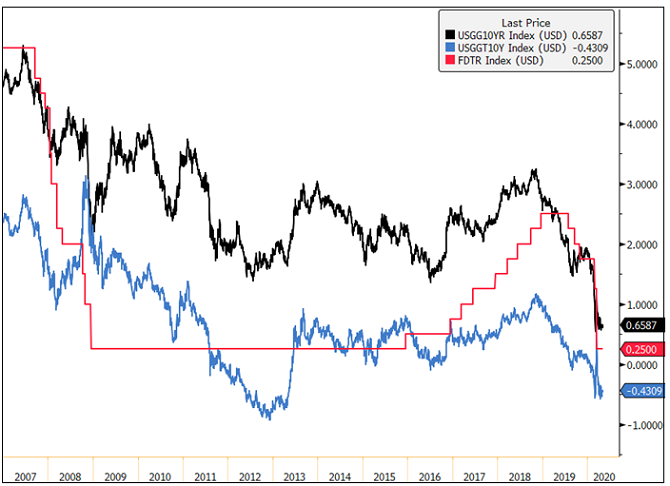
Figure 4. U.S. Real Yields Near Zero The Fed Funds target rate is 0.00-0.25%, and real yields are approximately -0.43%. Gold tends to thrive in low-interest rate environments. Source: Bloomberg. Data as of 5/5/2020. Nominal yields are measured by the USGG10YR Index, representing U.S. generic 10-year bond yields. Real yields are measured by USGGT10Y Index, representing U.S. 10-year TIPs (Treasury Inflation Protected) yields. The FDTR Index represents the Federal Funds Target Rate, which is set by the central bank in its efforts to influence short-term interest rates as part of its monetary policy strategy.
2) Yield Curve Control
Yield curve control was last used during World War II to finance the war. As the term implies, the U.S. government exerted control on both ends of the curve. Yields were capped with the short end lower than the long end. The long end was capped at around 2% irrespective of the economic condition. Controlled low yields provided a stable and manageable interest expense. By issuing more Treasuries in the short end, the government encouraged investors to borrow at the short end and to lend in the long end. Also, by issuing more at the short end of the curve, it ensured there was constant ample liquidity searching for yield. Today’s world is vastly different, but we expect to see a similar effort to control the yield curve. The Fed will continue to use QE Infinity to monetize the majority of bond issuances with an effort to keep rates as low as possible and the curve as flat as possible. For example, the $2.2 trillion of fiscal stimulus announced in March has already been monetized; 10-year Treasury yields are around 0.60% and the Fed Fund Rate is at zero.
3) Lower or Capped U.S. Dollar
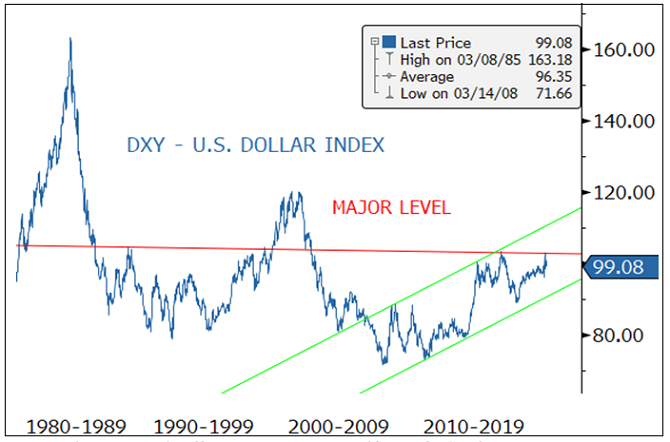
We have also discussed the importance of a weaker U.S. dollar in previous commentaries. The impact of the global pandemic and the total collapse of crude oil pricing has elevated the importance of the U.S. dollar significantly. The sudden deceleration in global economic activity has dramatically reduced the flow of U.S. dollars. The U.S. dollar is the world’s reserve currency; about 60% to 70% of the world’s economic activity is transacted in U.S. dollars. Crude oil is one of the most critical sources of U.S. dollar liquidity. At year-end, an oil market of 100 Mb/d (million barrels a day) at $50 per barrel equated to $1.8 trillion of yearly U.S. dollar flows. Today, at 75 MB/d at $20 per barrel, crude oil-based U.S. dollar flows are now at $0.55 trillion. Now apply that to every industry that transacts globally, and the magnitude of U.S. dollar funding shortage becomes apparent.
There is an estimated $12 to $13 trillion of U.S. dollar-denominated debt held by foreign holders. The U.S. dollar is now the biggest financial short and there is a massive ongoing short squeeze as the global shutdown makes funding and servicing of this debt difficult. That the U.S. has launched trillions in fiscal and monetary stimulus, and the U.S. dollar has barely budged is an alarming sight. A runaway U.S. dollar in a financial and economic crisis coupled with a deflationary shockwave would be nothing short of a disaster scenario. In March, we had a small taste of what a U.S. dollar funding shortage and dollar hoarding had on global liquidity.
If the Fed has any chance of making this version of MMT (modern monetary theory) work, it will do everything in its power to keep the U.S. dollar in check and control a flat yield curve. Fighting the Fed’s efforts is this significant mismatch between U.S. dollar assets and liabilities. Historically, this has been the justification to devalue the dollar (or the prevailing reserve currency at the time) to bail out the world. Price regime changes typically occur with currency debasements. If we reach the point where the U.S. dollar stages a significant uncontrolled breakout higher, gold will spike as the market begins to price in the possibility of a reset of asset prices. At that point, gold would become the ultimate convexity trade for U.S. dollar debasement. Dollar debasement is a key tail risk in the end game.
Figure 5. The U.S. Dollar (DXY): Highs of March 2020 will be a Crucial Level
Source: Bloomberg. Data as of 4/30/2020.
A Realignment of Asset Classes
In just a few months, a global pandemic has caused a shutdown of the economy to an estimated tune of -25% annualized GDP for Q2, over 30 million U.S. workers filing jobless claims and trillions of dollars (and growing) added to the debt. Whether the news of the virus gets better or worse in the next few quarters, we will be in a ZIRP environment for years due to the debt level. With the Fed capping rates, yields will remain low and the curve flat whether the economic recovery is V-shaped, U, L, or any other alphabet shape (yield curve control). The economy will no longer determine the level of interest rates and the yield curve. The Fed will keep real interest rates negative; the only question is how negative? Investing in Treasuries has moved from a “return on capital” to a “return OF capital” proposition. Investing in Treasuries today is an erosion of wealth in real dollar terms.
The broader U.S. stock market has now recovered a significant part of its decline entirely due to the sheer amount of stimulus thrown by the Fed. To value the equity market today would require a look past a deep valley of uncertain duration, to the other side that may be changed entirely. As companies pull guidance due to the lack of visibility, equities can only rise mainly by never-ending liquidity. Equity valuations are already back to their all-time highs. Equity markets, like the bond market, will continue to decouple from the economy further.
Gold Makes Sense as Equity Volatility Increases
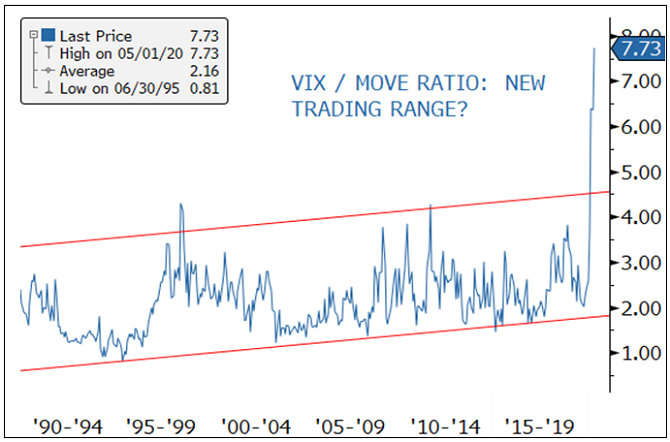
Moreover, if we are correct that the Fed’s main risk focus is containing the U.S. dollar and controlling the yield curve, equity risk (volatility) will trade higher vis-a-vis the U.S. dollar and bond prices than historical parameters (Figure 5). If this becomes the new reality, this repricing of volatility will have a dramatic effect on all asset classes. It will mean more effective equity hedges will be needed, such as gold. The one risk that the Fed cannot remove entirely is a tail risk event in which this current environment is a breeding ground.
Figure 6. Equity Risk Volatility is Trading Higher than Bond Volatility The VIX7 (CBOE Volatility Index for equities) has likely entered into a new trading range relative to the MOVE Index8 (Implied volatility of Treasuries across the yield curve) with far-reaching consequences.
Posted by AGORACOM-JC
at 6:12 PM on Thursday, May 7th, 2020
SPONSOR: Else Nutrition Holdings Inc. (TSX-V: BABY)The award winning, plant-based nutrition company for small cap investors. The company has a $10,000,000 cash balance for US product launch In Q2 2020 with International agreements in Q3. Learn More
My Search for the Healthiest Baby Formula
by Robin Barrie Kaiden, MS, RD, CDN
Robin Barrie Kaiden, MS, RD, CDN is renowned for helping people of all ages embrace a healthier lifestyle through nutrition and fitness counseling. As a Licensed Registered Dietitian and Personal Trainer, her smart and sensible approach to pediatrics, weight loss, sports nutrition, allergies, cardiovascular health, pre/post natal, and other areas of clinical and lifestyle nutrition has resonated with hundreds of people across the United States. Robin received her B.S. and M.S. degrees in Nutrition and Exercise Science from Cornell and Columbia Universities.
A Personal Note from this Pediatric Registered Dietitian and Mom
When I began working as a Registered Dietitian in Pediatric Nutrition over 15 years ago, we, of course, were taught, and shared with patients, that breast milk was the best, healthiest option for feeding babies. When that wasn’t possible, sufficient, or babies were being weaned, I knew that there were a variety of infant and toddler formulas available. We could recommend:
Pre-term infant formula: higher calories and minerals for infants born early
Standard term infant formula: intact milk protein
Gentle/sensitive formulas: whey protein in milk partially broken down
Soy-based formulas: for those with milk intolerance, noting that over 50% of infants who don’t tolerate dairy, also do not tolerate soy protein
Hydrolyzed formulas: proteins are mostly, but not completely broken down
Elemental formulas: proteins completely broken down for severe milk allergies
At this point in my career, I did not study the ingredients of each, but rather selected the best option available to best aid in tolerance, intake and growth for the child. There always seemed to be one that worked well…..at least well enough. The biggest problem with the hydrolyzed and elemental formulas was that they smelled and tasted terrible, and babies often refused to drink them.
Over 8 years ago, when I was pregnant with my first baby, I began to examine the healthiest baby formula options more in depth. I discovered that not much had changed in this industry, except that there were a couple of organic options. After discussing with a colleague, I decided on a formula. When my son was less than a week old, this product was recalled due to high arsenic levels. Plus, it seemed to upset his stomach. When my baby nurse suggested a non-organic, but “gentle†formula, I (reluctantly) agreed. I disliked that it had corn syrup (processed inflammatory sugar) as one of the main ingredients, but I was a new mom, overwhelmed, and figured she had so much experience and knew what she was talking about. Plus, my pediatrician agreed as well. A few weeks later, I just went back to the only other organic option on the market, and my son seemed to tolerate it well enough. It was the best I could find at that time.
When it came time to find the healthiest baby formula for my second child, almost 2.5 years later, I become aware that there were some European products that had better ingredients. However, it was pretty difficult and expensive to get these in the U.S. back then. I took comfort in the fact that my baby would be able to get great nutrition in the form of real food within about 4-5 months, and wean off formula totally at 1 year. But all I could think was that I would love to create a new healthy baby formula myself. Why hadn’t someone come up with a better alternative yet? Aren’t the infant and toddler stages the most important as they are developing and growing so rapidly? Why wouldn’t everyone want offer the best possible nutrients to this group, if/when/after breast milk was not an option.
My children are now in elementary school and the infant/toddler formula industry is still, in my opinion extremely limited. I was thrilled to hear about Else Nutrition, and flattered to consult on their timely products. Formulation of plant-based products is way overdue. In the wake of a huge movement towards plant-based and plant-forward diets, due to increased research and interest, Else is a wonderful product to support infant and toddler Nutrition. Read on to learn about all of its positive attributes.
Benefits of Else Plant-Based Formula Alternative
Choose Else Nutrition because it is:
Organic: This means that the USDA (United States Department of Agriculture) has determined that the ingredients in this healthy baby formula are free of genetically modified organisms (GMOs), fungicides, herbicides, and pesticides. Organic practices result in enhanced soil and water quality and, in general, more overall sustainable farming (1). Translation: Organic foods are beneficial for our environment. Research has shown that organic produce is more nutritious: It has higher levels of antioxidants and lower levels of toxic metals (such as Cadmium). Increased exposure to pesticides has been shown to increase risk for ADHD, Parkinson’s disease, diabetes, and some cancers (2). The effects of chemicals used in conventional farming may be more detrimental to the small developing brains and bodies of babies/children than to those of adults.
Glyphosate-free: Yes, the USDA Organic Label is important, however, it may not be enough today. It ensures that crops are GMO-free, but this doesn’t mean a product is 100% free of pesticides. Glyphosate is an herbicide (pesticide) that is carcinogenic (can cause cancer). Final organic food products are often NOT tested. The USDA does not check for glyphosate residue. The buckwheat and almond sources in Else formulas are glyphosate-free.
Made from clean ingredients: Else formulas are simple and pure. Almonds, buckwheat, and tapioca make up about 92% of the product. The ingredient list is short and easy to understand. There are no added unhealthy oils, inflammatory sugar/corn syrups, artificial sweeteners, or gums/stabilizers/fillers than can upset small bellies. For moms looking to supplement breast milk or wean their children after 1 year of age, it may seem that there are many dairy-free milk substitutes and products on the market today; however, none are quite right for little developing brains and bodies. They are not nearly as nutritionally dense as breast milk (or full-fat dairy milk). They may be low-fat, low in protein, and other nutrients, and often contain added sugars and fillers as mentioned above. They are simply NOT appropriate, and in fact, unhealthy as a foundation for a toddler’s diet. This is especially true for vegans and/or those who truly cannot tolerate dairy protein.
Pleasantly mild in flavor: When babies are weaned off breast milk and/or need a supplement or substitute for human or cow’s milk, they are more likely to accept a drink/formula that tastes great (they are indeed little humans). Other formulas may not be as mild. In fact, the hydrolyzed/elemental formulas have a reputation of smelling bad and tasting worse. Such formulas may be indicated for little ones with dairy allergies and intolerances, and digested well; however, if the child will not drink due to the smell/taste, this can be an issue.
Vegan/Plant-based: In case you haven’t noticed, there has been a huge buzz surrounding “plant-based†and “plant-forward†nutrition. This is not new news to us health professionals. We have always known that a variety of fruits, vegetables, whole grains, legumes, fiber, and healthy fats were integral for good health. The research is finally catching up. We now know that our microbiome (the collection of microorganisms-bacteria, fungi, viruses-that live in/on the human body) can benefit our health, especially immunity, aging, digestion, metabolism, mood and mental health. We can best benefit our microbiome by consuming a diet rich in a variety of plant-based foods. Why not start our little ones on such a diet with a plant-based formula?! Research shows that children on a predominantly plant-based diet have increased microbial biodiversity and richness (3).
Dairy-Free and Soy-free: Infants and toddlers with food allergies, intolerances, and/or sensitivities simply cannot tolerate many formulas on the market today. The incidence of food allergies is on the rise in children and adults. According to the Mayo Clinic: “Food allergy is an immune system reaction that occurs soon after eating a certain food. Even a tiny amount of the allergy-causing food can trigger signs and symptoms such as digestive problems, hives or swollen airways. In some people, a food allergy can cause severe symptoms or even a life-threatening reaction known as anaphylaxis.â€(4) Cow’s milk is the most allergenic food for in children in the U.S. (followed by peanuts, eggs and soy). Most of the formulas on the market are based on cow’s milk.
Else’s products can be tolerated by children with dairy and soy allergies and sensitivities. Anaphylaxis due to almond or buckwheat allergy is very rare (<1% and 1% of anaphylaxis cases in children respectively) with numbers well below egg, wheat, fish, goat/sheep’s milk, lentils, cashew, and peanut.
Also, just as an update and reminder about almonds: recent research demonstrates that delaying introduction of potential allergenic foods (wheat, dairy, eggs, fish and nuts) may actually increase the risk of food allergies and/ or eczema. The American Academy of Asthma, Allergy and Immunology (AAAAI) now recommends they be introduced without delay, and not wait up to 1-3 years of age, as advised in the past (5).
Nutrient composition matches breast milk: We all know that breast milk is the gold standard for feeding infants. However, if and when it is not possible, and/or a child requires supplementation or is being weaned, Else Nutrition provides a formula with nutrients that match that of breast milk. The macronutrients (carbohydrates, fat, and protein) and micronutrients (vitamins and minerals) are the same in Else formula-even though Else is a vegan product. Moms and caregivers can be confident that their babies are being nourished while they slowly learn how to eat solids.
Created and supported by the best team: These formulas were created by leaders in the infant and toddler nutrition industry. Their formulation and ingredients have been tested, approved, and supported by pediatricians, gastroenterologists, registered dietitians, and MOMS and DADS!
Posted by AGORACOM-JC
at 10:39 AM on Thursday, May 7th, 2020
SPONSOR: BetterU Education Corp. aims to provide access to quality education from around the world. The company plans to bridge the prevailing gap in the education and job industry and enhance the lives of its prospective learners by developing an integrated ecosystem. betterU / Ottolearn launch FREE COVID-19 mobile resource toolkit to fight the global crisis – Click here for more information.
Online education now a new normal for govt, edtech platforms
As millions of kids take online school classes from home globally including in India, government along with private education sector have a great responsibility to offer online e-Learning to more than 60 million college students and 1.5 billion school students worldwide, experts said on Thursday
Private colleges in India which were already offering online education for last two decades now have a massive surge in e-Learning demand to meet.
“e-Learning or online education is the new normal. In future, we will see the proliferation of information technology tools and gadgets, post-COVID-19. But internet and broadband will remain an issue,” said Professor NK Goyal, Vice Chairman, ITU APT India and former adviser of Gujarat Technological University.
If e-Learning apps like BYJU’s and Khan academy are targeting schools, others like Adda24x7 are offering specialised coaching for entrance exams like IIT and JEE.
Robust connectivity is undoubtedly critical for the success of e-Learning.
According to Rajan S Mathews, DG, the Cellular Operators Association of India (COAI), post COVID-19, there will be a surge in online education by schools and colleges in the country.
“The telecom industry is fully prepared with 99.9 per cent network capacity. The telecom companies have taken appropriate measures to meet the surge in traffic due to online education and other online activities using telecom infrastructure,” said Mathews.
Union Human Resources and Development (HRD) Minister Ramesh Pokhriyal Nishank recently said that the government is offering a slew of educational applications and platforms for both school and higher education institutes.
In addition to teachers, Nishank urged parents and students to make maximum use of online education to ensure their academic continuity is maintained.
The World University of Design (WUD) claims that it has collected materials for online learning across its courses during the last one year.
“WUD is using technology-enabled AI, supervision technologies and video conferencing and other tools to enable virtual learning. This includes a mix of online platforms for sharing files, conducting meetings and lectures in association with online services iamp; resource providers like Coursera, Bloomsbury, EBSCO etc. as partners in its strategy,” said Dr Sanjay Gupta, Vice Chancellor, World University of Design (WUD).
Posted by AGORACOM
at 9:54 AM on Wednesday, May 6th, 2020
Securing the mining licence is a critical step towards moving the Aukam Mine into commercial production
Gratomic can now produce a concentrate of up to 98% Cg
A PEA on the Aukam Processing plant to be undertaken
Diamond drilling will resume at Aukam Graphite mine
TORONTO, ON / ACCESSWIRE / May 6, 2020 / Gratomic Inc. (“GRAT” or the “Company”) (TSXV:GRAT)(FRANKFURT:CB81)(WKN:A143MR) is pleased to announce, further to its Press Release dated March 26, 2020, that it has received confirmation from the Ministry of Mines and Energy of Namibia that the Minister has issued Mining Licence 215 (ML215) for the Company’s Aukam Graphite Property in Namibia. The Licence covers Base and Rare Metals, Industrial Minerals and Precious Metals. The Licence area falls within the proximity of the Aukam Processing Plant and the Graphite bearing shear zone for a total of 5002 hectares (5002 ha). Securing the mining licence is a critical step towards moving the Aukam Mine into commercial production.
The Company has completed 8 months of pilot testing on historically mined product and conducted an internal study on the efficiency of the pilot processing facility on this material. Through rigorous testing and adjustments to the plant, Gratomic can now produce a concentrate of up to 98% Cg. Management has subsequently decided to build a 20 000 tonne per annum processing plant. To date, 90% of construction is complete. Upon completion of the remaining 10%, the Company will initially start processing material from historical workings left at the surface when the mine last operated in 1974.
The Company has recently appointed Dr. Ian Flint to complete a preliminary economic assessment on the Aukam Processing plant. The study, its recommendations, and their subsequent implementation, will ensure the scale up of the existing pilot plant to a commercial scale processing facility that will provide the desired concentrate grades and production rates.
With respect to site exploration, in the coming months diamond drilling will resume at Aukam Graphite. The drilling will be conducted utilizing Company owned drilling equipment, focusing on areas proximal to graphite mineralization, depicted by previous diamond drilling, underground excavation and surface outcrop sampling. The drill targeting will be systematic with the expectation of producing an NI 43-101 resource estimate.
Arno Brand, President and CEO of the Company stated that “we are thrilled to receive the official mining licence for the Aukam Graphite Mine in Namibia. This is a monumental milestone for Gratomic, which took an extensive amount of effort to accomplish. Once the funding is secured, Gratomic will be able to move into the commercialization phase of development.”
Risk Factors
No mineral resources, let alone mineral reserves demonstrating economic viability and technical feasibility, have been delineated on the Aukam Property. The Company is not in a position to demonstrate or disclose any capital and/or operating costs that may be associated with the processing plant.
The Company advises that it has not based its production decision on even the existence of mineral resources let alone on a feasibility study of mineral reserves, demonstrating economic and technical viability, and, as a result, there may be an increased uncertainty of achieving any particular level of recovery of minerals or the cost of such recovery, including increased risks associated with developing a commercially mineable deposit.
Historically, such projects have a much higher risk of economic and technical failure. There is no guarantee that production will begin as anticipated or at all or that anticipated production costs will be achieved.
Failure to commence production would have a material adverse impact on the Company’s ability to generate revenue and cash flow to fund operations. Failure to achieve the anticipated production costs would have a material adverse impact on the Company’s cash flow and future profitability.
Steve Gray, P. Geo. has reviewed and approved the scientific and technical information in this press release and is the Company’s “Qualified Person” as defined by National Instrument 43-101 – Standards of Disclosure for Mineral Projects.
About Gratomic Inc.
Gratomic is an advanced materials company focused on mine to market commercialization of graphite products most notably high value graphene-based components for a range of mass market products. We have a Joint Venture collaboration with Perpetuus Carbon Technology, a leading European manufacturer of graphenes, to use Aukam graphite to manufacture graphene products for commercialization on an industrial scale. The Company is listed on the TSX Venture Exchange under the symbol GRAT.
For more information: visit the website at www.gratomic.ca or contact:
Posted by AGORACOM
at 11:05 AM on Tuesday, May 5th, 2020
VANCOUVER, BC / ACCESSWIRE / May 5, 2020 / Mota Ventures Corp. (CSE:MOTA)(FSE:1WZ1)(OTC PINK:PEMTF) (the “Company“) is excited to announce for the month of April, it acquired 17,996 new customers. This represents an increase of 48% compared to April 2019. In April, the Company also experienced strong demand from customers enrolling in a subscription, totaling of 14,091 new subscribers during the month. This represents a new subscriber increase of 78% compared to April 2019.
The Company’s Natures Exclusive brand offers a CBD hemp-oil formulation intended to provide users with the therapeutic benefits that hemp may offer. The hemp oil used in the products is derived from hemp grown and cultivated in the United States. The extraction process is designed to maintain all the beneficial qualities that hemp may offer. Natures Exclusive offers a range of products, which include CBD oil drops, CBD gummies, CBD pain relief cream, CDB skin serum and CBD coffee.
“We continue to see strong consumer demand for our entire range due to our concentrated customer acquisition efforts and by providing compelling products our customers are asking for. Our April new customer acquisition and subscription numbers are continued evidence of the strength of the business. Additionally, I am excited about our recent launch of a CBD hand sanitizer product and anticipate we will see very strong sales through this current quarter,” stated Ryan Hoggan, CEO of the Company.
The Company also announces that it has granted 7,995,000 incentive stock options to certain directors, officers and consultants of the Company. The options vest immediately, and are exercisable at a price of $0.30 for a period of 60 months. The options are governed by the terms of the Company’s incentive stock option plan, and the policies of the Canadian Securities Exchange.
About Mota Ventures Corp.
Mota Ventures is an established eCommerce, direct to consumer provider of a wide range of CBD products in the United States and Europe. In the United States, the Company sells a CBD hemp-oil formulation derived from hemp grown and formulated in the US through its Nature’s Exclusive brand. Within Europe, its Sativida brand of award winning 100% organic CBD oils and cosmetics are sold throughout Spain, Portugal, Austria, Germany, France, and the United Kingdom. Mota Ventures is also seeking to acquire additional revenue producing CBD brands and operations in both Europe and North America, with the goal of establishing an international distribution network for CBD products. Low cost production, coupled with international, direct to customer, sales channels will provide the foundation for the success of Mota Ventures.
ON BEHALF OF THE BOARD OF DIRECTORS
MOTA VENTURES CORP.
Ryan Hoggan
Chief Executive Officer
For further information, readers are encouraged to contact Joel Shacker, President at +604.423.4733 or by email at [email protected] or www.motaventuresco.com
Posted by AGORACOM
at 9:07 AM on Tuesday, May 5th, 2020
SPONSOR: Lomiko Metals is focused on the exploration and development of minerals for the new green economy such as lithium and graphite. Lomiko owns 80% of the high-grade La Loutre graphite Property, Lac Des Iles Graphite Property and the 100% owned Quatre Milles Graphite Property. Lomiko is uniquely poised to supply the growing EV battery market. Click Here For More Information
The study commissioned by DeepGreen examines how we can source the massive amount of mineral resources required for a wholesale move away from fossil fuels with the least amount of damage to the planet.
As calls for a transition to renewable energy and electric transport grow louder in the face of increasing global climate chaos, demand for certain EV battery metals is projected to increase by 11 times the current level by 2050, according to the World Bank, with shortages in nickel, cobalt and copper predicted to emerge as soon as 2025.
The first-of-its-kind LCSA study provides an in-depth comparison of the cradle-to-gate impacts of producing metals from land ores and polymetallic nodules, both sources of the nickel, cobalt, copper and manganese required to build one billion EV batteries. The researchers examine the relative impacts of the extraction, processing and refining of these key base metals on several impact categories, including: greenhouse gas emissions and carbon sequestration, ecosystem services, non-living resources and habitats, biodiversity, human health and economics.
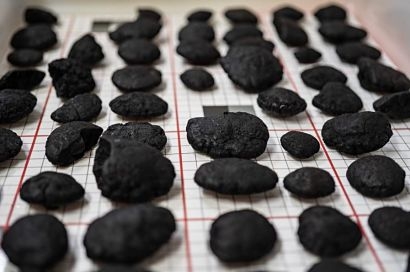
“The purpose of this in-depth research effort is to provide a substantive look into the impacts of different sources of the critical battery metals that make up the bedrock of the clean energy economy†said DeepGreen Chairman and CEO Gerard Barron. “The scale of the green transition is monumental, and the timeline is daunting. For Earth Day’s 50th anniversary let’s go deeper than mere calls for renewable energy and electric transport and have an honest conversation about the resources required to get us there. We believe that polymetallic nodules are an important part of the solution. They contain high concentrations of nickel, cobalt and manganese – they’re effectively an EV battery in a rock.â€
Gerard Barron, DeepGreen Chairman and CEO, added that ocean nodules are a unique resource to consider at a time when society urgently needs a good solution for supplying new virgin metals for the green transition and that extraction of virgin metals – from any source – is by definition not sustainable and generates environmental damage. This means there is a responsibility to understand the benefits – as well as the damages associated with sourcing base metals from nodules.
Polymetallic nodules are made of almost 100 percent usable minerals and contain no toxic levels of deleterious elements, compared to ores mined from the land which have increasingly low yields (often below 1 percent) and often do contain toxic levels of deleterious elements. This means that producing metals from nodules has the potential to generate almost zero solid waste and no toxic tailings, as opposed to terrestrial mining processes which produce billions of tonnes of waste and can leak deadly toxins into soil and water resources.
Based on a relative impact assessment of land ores and ocean nodules, the researchers find that nodule collection and processing can deliver a 70 percent reduction in carbon dioxide equivalent (C02e) emissions, 94 percent reduction in stored carbon at risk, 90 percent reduction in SOx and NOx emissions, 100 percent less solid waste, 94 percent less land use, 92 percent less forest use and zero child labour, among other benefits.
“Over the last 5 years there has been heightened awareness of the environmental, social and economic impacts of producing metals from land ores†said one of the whitepaper’s lead researchers, marine biologist and ecologist Dr. Steven Katona. “We essentially built on existing lifecycle assessment indicators work for land-based mining and created an apples-to-apples comparison for battery material production from ocean nodules. This unique comparative LCSA enables auto manufacturers, technology companies and policy makers to understand how these different sources of key base metals measure up against each other with regards to their impacts.â€
While the deep seabed is a food-poor environment with limited biomass, uncertainties remain over the nature as well as temporal and spatial scales of impacts from nodule collection on deep-sea wildlife. The study provides the broader context for a deeper, multi-year environmental and social impact assessment (ESIA) being conducted by DeepGreen, in what the company says will be the largest integrated seabed-to-surface deep-ocean science programme ever conducted, with over 100 separate studies being undertaken. DeepGreen has partnered with three pacific island states for deep-sea environmental studies, mineral exploration and project development. Through these relationships with the Republic of Nauru, the Republic of Kiribati and the Kingdom of Tonga, DeepGreen has exclusive rights under the International Seabed Authority to explore for polymetallic nodules in regions of the Clarion Clipperton Zone of the Pacific Ocean.
In recent months DeepGreen has continued its push to disrupt the minerals industry and re-shape how critical battery metals are sourced, processed and ultimately recycled, through several key milestones. In October DeepGreen derived its first metal from polymetallic nodules in a processing lab, and in March, the company’s partner Allseas acquired a former drill ship to convert to a polymetallic nodule collecting vessel.
Earlier this month the company announced the acquisition of Tonga Offshore Mining Limited (TOML), giving DeepGreen access to a third seabed contract area in which to explore for battery metals with significantly lower environmental and social impact. As part of its commitment to develop these resources, which are defined as the ‘Common Heritage’ of Humankind, DeepGreen is committed to full transparency, has pledged to share all knowledge generated and is currently involved in a global stakeholder engagement process.
Posted by AGORACOM-JC
at 5:02 PM on Monday, May 4th, 2020
SPONSOR: Imagine AR Inc. (IP:CSE) (IPNFF:OTCQB) is an Augmented Reality platform that allows businesses to easily launch AR campaigns. Clients Include: NBA Sacramento Kings, Mall of America, AT&T Shape and The Basketball Hall of Fame. Learn More.
Elon Musk talks Tesla cars playing augmented reality games while driving
In a new Twitter comment, Elon Musk talks about possibly developing a game for Tesla cars using augmented reality game while driving… or Minecraft.
For the last two years, Tesla has been devoting some resources to integrate video games into its user experience.
It plans to do more of that in the future, as Musk says that Tesla’s goal is to increase owners’ happiness and make the ownership experience more fun
They started with a few games, like Asteroids and Pole Position, but Musk said that it was only the beginning of the automaker’s venture into games inside its vehicles.
They want to add more Atari games to the emulator, but Musk has also made it clear they plan to add other games from other companies as well.
It sounds like Musk would like game developers to find ways to run an online multiplayer version of the popular world builder game Minecraft on Tesla’s onboard computer.
The CEO secured a few responses from software engineers regarding that.
Posted by AGORACOM-JC
at 3:28 PM on Monday, May 4th, 2020
SPONSOR: BetterU Education Corp. aims to provide access to quality education from around the world. The company plans to bridge the prevailing gap in the education and job industry and enhance the lives of its prospective learners by developing an integrated ecosystem. betterU / Ottolearn launch FREE COVID-19 mobile resource toolkit to fight the global crisis – Click here for more information.
EdTech firm Byju’s could become India’s second most valued startup
Byju’s the Bengaluru-based ed-tech startup  has been through numerous rounds of valuations and this time around it is expected to raise upwards of $400 million in fresh capital at a $10 billion, reports suggest.Â
What started off as a penchant for simple, yet effective teaching methods by Byju Raveendran, Founder of Byju’s, could now become India’s second most valued startup, if it manages to raise fresh capital.
The startup has witnessed a marked increase in the app downloads and learners due to the ongoing nationwide Covid-19 lockdown. It had earlier received an investment from Tiger Global and General Atlantic that stood around $300 million to $350 million and was valued at $8 billion.
Back in July 2019, Byju’s was valued at $5.75 billion when it raised $150 million from Qatar Investment Authority and Owl Ventures.
If this fresh round of funding goes through, Byju’s would become the second most valued startup in India along with budget lodging startup Oyo which is also valued at $10 billion. Paytm, the financial services firm had raised $1 billion at a $16 billion valuation late last year and currently holds the number one spot.
Industry watchers are suggesting that discussions are afoot though nothing has yet been finalised around the terms. Both Byju’s and Prosus Ventures have been silent about the reports that appeared in sections of the Indian media.
There were reports that last month Byju’s witnessed 150% increase in traffic on its app and website while adding six million students to its platform during the same period.
Byju’s helps school-going kids understand difficult subjects by illustrating them using familiar objects like pizza and cake. Those pursuing undergraduate and graduate-level courses also learn on the platform.
At the moment, the edtech has over 35 million registered learners of which around 2.4 million are paid users.