Posted by AGORACOM-JC
at 3:02 PM on Thursday, July 18th, 2019
SPONSOR: Esports Entertainment
$GMBL Esports audience is 350M, growing to 590M, Esports wagering is
projected at $23 BILLION by 2020. The company has launched VIE.gg
esports betting platform and has accelerated affiliate marketing
agreements with 190 Esports teams. Click here for more information
GMBL: OTCQB
———————–
Esports industry to reach $3 billion by 2025 says market reseracher
Marta J.
The esports business seems to be booming
Eports is expected to grow with a 20% compound annual growth rate between 2019 and 2025.
That should see the market grow to more than $3 billion by the end of 2025.
According to ResearchandMarkets.com, esports is expected to grow with
a 20% compound annual growth rate between 2019 and 2025. That should
see the market grow to more than $3 billion by the end of 2025. This
doesn’t come as a surprise, since esports’ popularity and support have
been steadily growing worldwide.
The global esports market is likely to exceed a total revenue of over
$1 billion for the first time this year, as it’s experiencing
year-on-year growth of over 25%. According to Statista, the market
generated $865 million in 2018.
Broadcasting rights have become a key source of revenue in esports
with television networks like ESPN and ABC airing esports events
alongside social media platforms like Twitch and YouTube.
That growth has extended to sponsorships even moreso. The field is by
far esports’ strongest revenue stream, as it contributes to almost half
of the total market revenue. This has been helped along by the
increased attention from non-endemic brands like Nike and Puma who have
begun sponsoring esports organizations Furia Esports and Cloud9, respectively.
It’s forecasted that the audience and the number of tournaments will
continue increasing over the next five years, opening up opportunities
for many potential vendors.
A major share of revenue to the global esports market is generated by
North America, specifically the United States. Asia Pacific is one of
the fastest-growing markets, with esports flourishing in China, Japan,
South Korea, and Australia.
The vast majority of esports’ audience is male viewers aged 20-35.
That said, ResearchandMarkets.com states that esports’ growth “is
mainly driven by cloud gaming and mobile gaming.†This makes matters a
bit cloudy in regards to how much of that $3 billion is actually being
funneled towards esports organizations, players, and tournament
organizers.
The topic of inflated valuations in esports has become a hot one in recent months as multiple firms have had their methods questioned for their liberal definition for what counts as “esports.â€
Posted by AGORACOM
at 11:36 AM on Thursday, July 18th, 2019
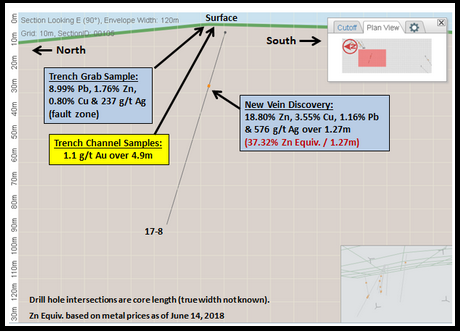
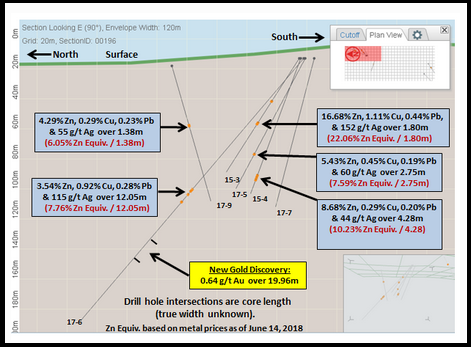
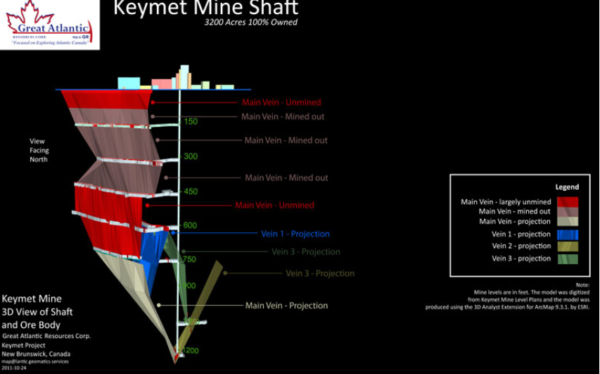
Keymet: A high priority precious metal – base metal property, located in northeast New Brunswick near Bathurst. The property covers an area of approximately 3400 hectares. Polymetallic veins (copper, lead, zinc, and silver) were mined during the 1950s in the northern region at the historic Keymet Mine.
Drilling Highlights:
Ky-18-14: 7.89% zinc equivalent over 34.3 meters (From 46.20 m to 80.50 m)
Ky-18-10: 10.91% zinc equivalent over 3.27 meters (From 85.03m to 88.30 m)
Elmtree 12 vein: System traced to approximately 145 meters depth, open at depth
Elmtree 12 vein: Strike length of approximately 110 meters and open along strike
Posted by AGORACOM-JC
at 11:28 AM on Thursday, July 18th, 2019
SPONSOR: North Bud Farms Inc. (NBUD:CSE) Sustainable low cost, high
quality cannabinoid production and procurement focusing on both
bio-pharmaceutical development and Cannabinoid Infused Products. Learn More.
NBUD: CSE
—————
Booming Demand for CBD Is Making Hemp the Cannabis Cash Crop
Players in the $340 billion global cannabis market are turning their attention to weed’s less-regulated cousin, hemp.
Hemp is a strain of cannabis whose fibers have traditionally been used in textiles and rope, and farmers can grow it even in countries with strict drug laws because it has different properties from marijuana.
By Craig Giammona and Bruce Einhorn
Mention legal cannabis, and many people think of the weed stores that have sprung up in Boston, Denver, Seattle, and other major U.S. cities.
Inside, infused brownies and vape pens are sold next to branded joints
and neatly packaged bags of marijuana presented in a way that wouldn’t
be out of place in any American mall. In Canada you can even order pot
through the mail, and some of the world’s alcohol giants have set up
shop there to develop weed beer.
But the business of getting people high is only part of the cannabis
craze. Marijuana is still banned for recreational use across much of the
world, and even medical access, while expanding, is restricted in most
countries. So players in the $340 billion global cannabis market are
turning their attention to weed’s less-regulated cousin, hemp.
Marijuana 101
• THC: Tetrahydrocannabinol is the chemical in marijuana that produces a high. • CBD: Cannabidiol, a nonintoxicating compound, can be derived from hemp and marijuana. •
Cannabis: Hemp and marijuana are both types of cannabis. Hemp faces
fewer restrictions because it’s generally cultivated with lower levels
of THC.
Hemp is a strain of cannabis whose fibers have traditionally been
used in textiles and rope, and farmers can grow it even in countries
with strict drug laws because it has different properties from
marijuana. Most important to law enforcement officials, it’s low in THC,
the compound that gets you stoned. But businesses are buzzed about its
other defining characteristic: a higher concentration of cannibidiol, or
CBD, a nonpsychoactive chemical at the center of a wellness trend sweeping the U.S. and expanding worldwide.
Global Market Share and Sales by Hemp Product Category in 2018
Data: Hemp Business Journal
CBD is being pitched as an all-natural way to alleviate ailments
including pain, inflammation, anxiety, and insomnia. Despite a paucity
of science to back up such claims, CBD has become a coveted ingredient
in a host of consumer products, from skin lotions to sparkling water to
tinctures to dog biscuits.
The surge in demand is fueling a global Green Rush, even in countries
where a legal market for cannabis products was unthinkable just a few
years ago. “We are getting phone calls from big pharma groups in Asia,
all parts of the world: ‘Can you get product? Can you supply to us?’ â€
says Glenn Davies, chief executive officer of industrial hemp grower
CannAcubed Pte. The Singapore-based startup planted its first commercial
hemp crop in May in China’s Yunnan province. “It’s all about hemp.â€
One of the first plants ever domesticated, cannabis was used for
thousands of years for fiber, food, and medicine. Yet for the better
part of the last century it’s largely been traded on the black market,
banned in many countries alongside cocaine, heroin, and other controlled
substances. Much of that bad-boy reputation faded last year when Congress legalized CBD in the U.S.
Researchers estimate the market for CBD in the U.S. alone could be
worth almost $24 billion by 2023. In Canada sales of legal cannabis may
reach $4.7 billion by that time, up from about $570 million last year,
according to BDS Analytics. Annual sales of CBD could potentially be
larger than those of marijuana, analysts say, because of the large
number of products in which it can be used.
U.S. Hemp Imports by Source Region, 2017
Data: Hemp Business Journal
Investors are pouring money into massive CBD extraction facilities
and processing plants in the U.S., hoping to be ready when Coca-Cola
Co., Procter & Gamble Co., and other consumer giants finally embrace
cannabis. Colorado CBD company Mile High Labs
has developed technology to remove unrefined hemp extract from the
plant, and it recently paid $18.8 million for a 400,000-square-foot
former Novartis factory where it will make products such as lotions and
tinctures.
American farmers are plowing into the hemp industry in Colorado,
Kentucky, Montana, Oregon, and other states. This year, more than
200,000 acres of hemp are licensed to be planted in the U.S., up from
roughly 25,000 two years ago. Asia, which has a long history with
natural medicines, is also seeing growing interest in cannabis. In 2017,
China planted at least 113,000 acres of hemp, according to New
Frontier, an industry researcher. Cultivation is also on the rise in
Colombia, Greece, Jamaica, and even the southern African nation of
Lesotho. “You get the domino effect: The farmer in Bulgaria looking
across at peers in Greece and asking questions, putting pressure on the
government to make similar steps,†says Shane MacGuill, an analyst at
Euromonitor International. “The more it happens, the more quickly we get
the spread of cultivation.â€
Hemp producers in Asia and other lower-cost regions could
ultimately undercut U.S. farmers, especially as the quality of their
crop improves and a global market takes shape, with hemp moving freely
across borders like any other agricultural commodity. In June,
CannAcubed leased two factories in Yunnan, one of only three Chinese
provinces that allows the production of hemp; it plans to expand them
into CBD research and extraction facilities.
Not everyone is so sanguine. Mark Mees, CEO of Setek Therapeutics in
New Zealand, sees cannabis becoming another agricultural commodity, with
prices racing downward. And Mees, whose company has a license to grow
medical marijuana in the country, says the CBD business has been
overhyped. “You get a few hippies and that’s great. One thing that’s
missing is old-fashioned business sense,†he says. “We will see a train
wreck of small companies that completely underestimated the costs and
the complexity of what they’re trying to do.â€
Global Hemp Sales
Data: Hemp Business Journal
Restrictions on medical pot are loosening globally. More than 50
countries, including Australia, Brazil, and Germany, have legalized
access to medicinal cannabis, according to Bloomberg Intelligence,
making it easier for farmers to plant hemp or marijuana. But dealing
with pot can still be tricky. In New Zealand, companies can grow medical
weed only for research, though the government is working on a
commercialization plan. Cannasouth Ltd. has struggled as New Zealand’s sole publicly traded cannabis company, with its shares falling 24% since its IPO on June 19.
As countries remove restrictions, cannabis prices could fall. That
would hurt farmers, but potentially boost the profit margins of
companies using cannabis as an ingredient. Worries about an industry
bubble surfaced earlier this year in China after investors flocked to
companies linked to cannabis. Regulators sought to rein in the
enthusiasm, with the Shenzhen Stock Exchange telling companies to warn
investors about uncertainties facing their industrial cannabis projects.
Canadian farmers have seen a hemp boom-and-bust cycle before. The
crop was legalized for production in 1998, and farmers benefited when
hemp seed took off as a health-food product. Business peaked in 2015 as
South Korean demand drove the market. But China, becoming a cheaper
supplier for Korean buyers, sucked profit away from Canada’s hemp-seed
farmers. Still, that hasn’t deterred Canadians from trying to cash in on
CBD. This year, hemp acreage in the country is expected to more than
double, to about 82,000 acres.
In Asia, CannAcubed’s Davies is also unfazed by the risks. “Everybody is trying to have the same outcome and objective: Get this industry moving,†he says. —With Ashley Robinson BOTTOM LINE – Fueled by growing demand for CBD as a health-enhancing ingredient in foods and beauty products, sales of the cannabis derivative could hit $24 billion in the U.S. by 2023.
Tags: Cannabis, CBD, CSE, Hemp, Marijuana, otc, stocks, tsx, tsx-v, weed Posted in North Bud Farms Inc | Comments Off on North Bud Farms Inc. $NBUD.ca – Booming Demand for #CBD Is Making Hemp the #Cannabis Cash Crop $WEED.ca $CGC $ACB $APH $CRON.ca $HEXO.ca $TRST.ca $OGI.ca
Indian Graduates and Employees are on High Alert! Reskilling is Must to Stay Employed!
If we go by NASSCOM report, about 40 per cent of India’s total workforce must be reskilled over the next five years to cope with emerging trends such as AI, IoT, machine learning and blockchain
As per a new World Economic Forum (WEF) report titled ‘The Future of Jobs 2018’, the Fourth Industrial Revolution will make 75 million jobs obsolete by the year 2022 but will also create 133 million new jobs — a net gain of 58 million.Â
Ayush Bansal
Co-Founder of Foxmula
You’re reading Entrepreneur India, an international franchise of Entrepreneur Media.
The rapid emergence of new technologies like Artificial Intelligence,
Robotics and Automation are generating the need for new skills which in
turn disrupting the existing job market by creating a huge digital and
technical skill gaps in employees. These emerging technologies are
dominating and would continue to dominate the future industry, creating a
constant need of up-gradation of technical skills of employees to
sustain not only in the current job market but for the future market as
well.
The pace at which there are new technologies and innovations
happening in the industry outstrips knowledge and skill very quickly,
therefore it is important for employees to keep up with the speed of
innovation.
If we go by NASSCOM report, about 40 per cent of India’s total
workforce must be reskilled over the next five years to cope with
emerging trends such as AI, IoT, machine learning and blockchain.
With technology changing exponentially over the last decade, the
shelf life of skills has shortened. Skills that were relevant at the
beginning of the career has now become almost obsolete.
As per a new World Economic Forum (WEF) report titled ‘The Future of
Jobs 2018’, the Fourth Industrial Revolution will make 75 million jobs
obsolete by the year 2022 but will also create 133 million new jobs — a
net gain of 58 million. Thus, in order to sustain in the industry, it
is crucial for employees to reskill or upskill to stay
industry-relevant.
The primary problem is our Indian education system both at school and
university level is not in sync with the modern industry requirement.
Most of our Indian graduates lack the skills and aptitude required to
learn new and advanced technologies that are needed to survive in the
future job market. To put it bluntly, the question is: Is India
producing the right kind of Employees for the jobs of tomorrow?
The Answer is ‘not yet’ Except a Few Prestigious Institutions
For this, educational institutes should assess learner performance
continuously over each semester of their graduation or post-graduation.
The examination system should be designed in such a manner that could
assess a learner’s progress systematically. We should remember the world
of work we are preparing students for is constantly changing, and many
jobs are becoming obsolete. Therefore, colleges or universities need to
prepare their students not just to earn a degree, but also to make them
job-ready. This is a high time for Universities to adopt technology in
the learning process to be able to provide on-demand learning.
Internships, while learning on the job, should also be encouraged along
with on-site/online learning, leading them towards certifications.
Work-based learning always ensures a higher productive employee, thereby
reducing attrition and the cost of hiring for employers.
The reskilling market in India is driven by the needs of a large
working population looking for industry-relevant skills. Therefore, it
is important for both the industry and the government to provide
upskilling on existing skillsets and provide reskilling for newer job
roles.
Many corporates have proactively incorporated skill upgrading modules
into their working schedules. Employees are being given an opportunity
to upskill or reskill to meet the job requirements at the cost of the
company. This employee up-gradation module helps both employee and
employers to work with each other for the long term while meeting the
pace of technology and future demands.
The need for upskilling and reskilling to minimize the skill gap of
employees has given rise to many EdTech companies to cater to the huge
requirements for continuous learning and upgrading skills of emerging
technologies that have spawned a booming job market.
In order to reduce the unemployment rate of India, we need to find an
effective way to skill, upskill and reskill our youth before they enter
the industry, and provide them with a lifelong learning path. This is
not only beneficial for the employees but will also be rewarding for the
industry. Instead of making the academic process aimed at just
examinations and maintaining the current format of ‘one size fits all’, a
combined effort will lead to the affluence of job opportunities,
finding upskilled talent to come on-board, and in driving economic
growth of the nation.
Machine Learning
New-age technologies like Machine Learning, Data Science, Deep
Learning, Robotics, AI, etc. are game-changer within the corporate and
education sector. Just for AI solutions, many industries are
aggressively investing with global investments forecasted to achieve a
compound annual growth rate (CAGR) of 50.1 per cent to reach USD 57.6
billion in 2021.
Considering the emerging job trends globally, the government has
taken its first step by announcing the initiative to skill and re-skill
Indian youth to cater to new-age technologies and job roles on Budget
2019 where Finance Minister Nirmala Sitharaman said government will now
focus on new-age skills like artificial intelligence and internet of
things to help our youth get jobs overseas for which a dedicated
curriculum will be developed across identified sectors. The idea behind
it is to ensure that employees have access to global economic
opportunities by remaining relevant in the new competitive world of work
and that businesses have access to the upskilled talent for the jobs of
the future. Now with Government’s support and initiatives, India being
one of the fastest developing nations, can be one in Technology
advancements too.
‘Skill India’ can be made even efficient if EdTech is involved.
E-learning, Online Networking, assessments, exams, exposure and fun can
attract students not only from different countries but the in-house
talents as well.
Tags: CSE, edtech, india, online education, stocks, tsx, tsx-v Posted in betterU Education Corp | Comments Off on BetterU Education Corp. $BTRU.ca – #Indian Graduates and Employees are on High Alert! #Reskilling is Must to Stay Employed! #edtech $ARCL $CPLA $BPI $FC.ca
Posted by AGORACOM
at 9:52 AM on Thursday, July 18th, 2019
SPONSOR: Labrador Gold – Two successful gold explorers lead the way in the Labrador gold rush targeting the under-explored gold potential of the province. Exploration has already outlined district scale gold on two projects, including over a 40km strike length of the Florence Lake greenstone belt, one of two greenstone belts covered by the Hopedale Project.
Posted by AGORACOM-JC
at 8:39 AM on Thursday, July 18th, 2019
Announced that it signed its first hemp agreement for the supply of full spectrum products to support Spyder’s debut of a hemp infused product line to be sold across the U.S. under its SPDR(R) brand
Spyder is expanding its chain of hemp-infused medical and lifestyle product shops with their new brand
Initial launch will feature four distinct hemp-derived products; Balms at 125mg and 500mg strength, tinctures at 300mg, 500mg and 1,000mg strength, soft gel capsules at 15mg strength and a pet line starting with tinctures at 300 mg strength
Vaughan, Ontario–(July 18, 2019) – Spyder Cannabis Inc. (TSXV: SPDR) (“Spyder“), an established cannabis and vape retail operator intending to become one of North America’s leading hemp-infused medical and lifestyle company, today announced that it signed its first hemp agreement for the supply of full spectrum products to support Spyder’s debut of a hemp infused product line to be sold across the U.S. under its SPDR(R) brand.
Spyder is expanding its chain of hemp-infused medical and lifestyle product shops with their new brand called SPDR (R). These boutique shops will stock Spyder’s SPDR (R) branded hemp infused products developed for an aging, health and wellness demographic. Spyder will offer a wide array of hemp-infused product offerings including; muscle balm, face oil, body lotion and bath salts, as well as hemp-infused tinctures, capsules and sprays. In addition, hemp is a natural source of CBD, the non-intoxicating component of cannabis that can be used for health and wellness purposes in jurisdictions where legally permitted.
The hemp industry is booming and has the potential to become a $22
billion business by 2022, according to cannabis-focused research firm
Brightfield Group. “Spyder plans on executing an aggressive expansion
plan to create a significant retail brand in the U.S. hemp market,”
stated Daniel Pelchovitz, CEO and President of Spyder. “We are very
pleased to partner with this producer which will provide the product
formulation and packaging to help create a premium product line for
consumers across the U.S.”
The initial launch will feature four distinct hemp-derived products;
Balms at 125mg and 500mg strength, tinctures at 300mg, 500mg and 1,000mg
strength, soft gel capsules at 15mg strength and a pet line starting
with tinctures at 300 mg strength.
About Spyder Cannabis
Founded in 2014 Spyder is an established chain of three high-end vape
stores, and two cannabis accessory stores, in Ontario, with locations
in Woodbridge, Scarborough, Burlington, Pickering and Niagara Falls. The
Spyder brand is defined by its high-quality proprietary line of
e-juice, liquids and exclusive retail deals, dispensed in uniquely
designed stores creating the optimal customer experience. Spyder is
building off this leading retail, distribution and branding eCig and
vapes company and is pursuing expansion into the legal cannabis and hemp
derived market. Spyder has developed a scalable retail model with plans
to create a significant footprint with targeted and disciplined retail
distribution strategy focusing on Canadian retail and U.S. boutique
retail and kiosks in high traffic peripheral areas.
FOR ADDITIONAL INFORMATION, PLEASE CONTACT:
For more information, please contact:
Spyder Cannabis Inc. Dan Pelchovitz President & Chief Executive Officer Telephone: (905) 265-8273 Email: [email protected]
Neither the TSX Venture Exchange nor its Regulation Services Provider
(as that term is defined in the policies of the TSX Venture Exchange)
accepts responsibility for the adequacy or accuracy of this release.
This news release includes statements containing certain
“forward-looking information” within the meaning of applicable
securities laws (“forward-looking statements”). Forward-looking
statements are frequently characterized by words such as “plan”,
“continue”, “expect”, “project”, “intend”, “believe”, “anticipate”,
“estimate”, “may”, “will”, “potential”, “proposed” and other similar
words, or statements that certain events or conditions “may” or “will”
occur..
These statements are only predictions. Various assumptions were used
in drawing the conclusions or making the projections contained in the
forward-looking statements throughout this news release. Forward-looking
statements are based on the opinions and estimates of management at the
date the statements are made. Any number of risks and uncertainties and
other factors that could cause actual events or results to differ
materially from those projected in the forward-looking statements.
Posted by AGORACOM-JC
at 8:31 AM on Thursday, July 18th, 2019
Company is expanding its product line in response to higher global market demand
Announced that the Company’s hempSMART™ brand has launched its new product called hempSMART Body Cream™.
Each bottle of hempSMART Body Cream is formulated with 300mg of organically grown, full spectrum, non-psychoactive cannabinoid (CBD), derived from industrial hemp.
ESCONDIDO, Calif., July 18, 2019  MARIJUANA COMPANY OF AMERICA INC.(“MCOA†or the “Companyâ€) (OTCQB: MCOA), an innovative hemp and cannabis corporation, today announced that the Company’s hempSMART™ brand has launched its new product called hempSMART Body Cream™.
Each bottle of hempSMART Body Cream is formulated with 300mg of organically grown, full spectrum, non-psychoactive cannabinoid (CBD), derived from industrial hemp. This revolutionary nourishing topical formula combines premium CBD oil with a unique blend of synergistic Ayurvedic herbs and botanicals.
“The
new hempSMART Body Cream is a major advancement in the wellness arena,â€
said Paula Vetter, holistic nurse practitioner, certified herbalist,
and Chair of the hempSMART Medical Advisory Board. “The cream is
completely free of toxins that are commonly found in many skin care
products and absorbed through the skin and into the blood stream.
Instead, hempSMART’s Body Cream is a topical wellness solution that sets
a new standard in the industry by improving the overall health of skin
with each use.â€
hempSMART Body Cream takes a quantum leap
beyond hydration to replenish, restore and rejuvenate skin cells for
improved elasticity, supple texture and healthy radiance. This
innovative formula is rich in omega 3, 6, 7 and 9, along with naturally
occurring plant ceramides to build a strong and vibrant cellular matrix
deep within skin layers. Premium botanicals include organic aloe, sacha
inchi oil, argan kernel oil, macadamia nut oil, rose hip seed oil,
frankincense, tulsi, pomegranate seed oil, ashwagandha, turmeric oil,
coconut oil and sea buckthorn oil.
“Our Company continues to
dedicate itself to providing our customers with all-natural products
infused with the highest quality CBD oil found on the market,†said
MCOA’s CEO, Don Steinberg. “We are excited by this launch and anticipate
great customer feedback.â€
The hempSMART product line
distinguishes itself from competitors through its premier quality
extracts from industrial hemp plants grown specifically to provide the
highest concentration of CBD. The exclusive hempSMART line currently
includes six popular products: hempSMART Brain™, hempSMART Drops™,
hempSMART Face™, hempSMART Pain™, hempSMART Pain Cream™, and hempSMART
Pet Drops™. These products have all been carefully formulated to provide
the desired “Entourage Effect,” which is the most natural interaction
the human body can have with CBD.
About Marijuana Company of America, Inc. MCOA
is a corporation that participates in: (1) product research and
development of legal hemp-based consumer products under the brand name
“hempSMART™â€, that targets general health and well-being; (2) an
affiliate marketing program to promote and sell its legal hemp-based
consumer products containing CBD; (3) leasing of real property to
separate business entities engaged in the growth and sale of cannabis in
those states and jurisdictions where cannabis has been legalized and
properly regulated for medicinal and recreational use; and, (4) the
expansion of its business into ancillary areas of the legalized cannabis
and hemp industry, as the legalized markets and opportunities in this
segment mature and develop.
About Our hempSMART Products Containing CBD
The United States Food and Drug Administration (FDA) has not recognized
CBD as a safe and effective drug for any indication. Our products
containing CBD derived from industrial hemp are not marketed or sold
based upon claims that their use is safe and effective treatment for any
medical condition as drugs or dietary supplements subject to the FDA’s
jurisdiction.
Legal Status of Cannabis
While legalized in California for recreational and medicinal use,
cannabis remains a Schedule 1 drug under the Controlled Substances Act
(21 U.S.C. § 811) and illegal under the federal law.
Forward Looking Statements This
news release contains “forward-looking statements” which are not purely
historical and may include any statements regarding beliefs, plans,
expectations or intentions regarding the future. Such forward-looking
statements include, among other things, the development, costs and
results of new business opportunities and words such as “anticipate”,
“seek”, intend”, “believe”, “estimate”, “expect”, “project”, “plan”, or
similar phrases may be deemed “forward-looking statements” within the
meaning of the Private Securities Litigation Reform Act of 1995. Actual
results could differ from those projected in any forward-looking
statements due to numerous factors. Such factors include, among others,
the inherent uncertainties associated with new projects, the future U.S.
and global economies, the impact of competition, and the Company’s
reliance on existing regulations regarding the use and development of
cannabis-based products. These forward-looking statements are made as of
the date of this news release, and we assume no obligation to update
the forward-looking statements, or to update the reasons why actual
results could differ from those projected in the forward-looking
statements. Although we believe that any beliefs, plans, expectations
and intentions contained in this press release are reasonable, there can
be no assurance that any such beliefs, plans, expectations or
intentions will prove to be accurate. Investors should consult all of
the information set forth herein and should also refer to the risk
factors disclosure outlined in our annual report on Form 10k, our
quarterly reports on Form 10-Q and other periodic reports filed from
time-to-time with the Securities and Exchange Commission. For more
information, please visit www.sec.gov.
Posted by AGORACOM
at 2:10 PM on Wednesday, July 17th, 2019
SPONSOR: Applied Biosciences Corp. is a vertically integrated company focused on the development of science-driven cannabinoid therapeutics and biopharmaceuticals, as well as state-of-the-art testing and analytics capabilities to our customers. Â As a leading company in the CBD, Pet and Health and Wellness space, the company is currently shipping to the majority of US states as well as to 5 International countries. Click Here for More Info
APPB : OTC
Cannabis-based concentrates, extracts, and edibles are becoming highly popular among consumers
Specifically,
the edible and beverage marketplace is quickly gaining popularity due
to the ease at which customers can use the products
NEW YORK, July 16, 2019 — Each year, more and more countries are
moving towards approving cannabis use. In particular, medicinal cannabis
is witnessing immense support as most of the countries looking to
enter into the market space are more keen on the medical sector due to
the therapeutic benefits associated with cannabis. However, several
regions around the world have also either decriminalized or legalized
the use of recreational cannabis in moderate amounts. For instance,
Canada completely legalized adult-use cannabis in late 2018. On the
other hand, countries such as Colombia and Spain have only
decriminalized recreational use, allowing adults to possess up to a
certain amount.
Moreover, the U.S. has given states the jurisdiction to legalize
cannabis or keep the drug illicit. As a result, more than half the U.S.
legalized cannabis for medical use, while a fifth of the nation,
including the District of Columbia, allows for legal recreational usage.
While the medical marketplace is much more globally prevalent, the
recreational market is expected to overshadow the medical segment as the
North American market continues to mature.
Additionally, as the recreational market continues to expand,
consumers are also experiencing an influx of new products. Aside from
traditional cannabis flower, consumers can now choose from a variety of
products at dispensaries and retail stores. Now, cannabis-based
concentrates, extracts, and edibles are becoming highly popular among
consumers. Specifically, the edible and beverage marketplace is quickly
gaining popularity due to the ease at which customers can use the
products.
Furthermore, a large recreational user base exists for the edible and
beverage market, and the industry is heavily being accelerated by the
increasing demand for wellness products to treat a variety of health
concerns. According to data compiled by Reports and Data, the global
cannabis-based beverage market was valued at USD 1.57 Billion in 2018.
By 2026, the market is expected to reach USD 5.04 Billion while
exhibiting a CAGR of 15.4% during the forecast period.
The cannabis-infused edible and beverage market is expected to
witness a strong increase in demand, particularly for beverages over the
next several years. Canaccord Genuity analyst Bobby Burleson noted last
year that beverages packed with CBD or THC ingredients can account for
nearly 20% of the U.S. edible products markets by 2022, increasing from
6% in 2018. Burleson highlighted that the growing beverage industry is
becoming an attractive investment opportunity for beer and soda makers
and that data has shown that there is a direct correlation between
alcohol and cannabis consumption.
A joint research conducted by the University of Connecticut, Georgia
State University, and Universidad Del Pacifico discovered that counties
located in medical marijuana states witnessed a 15% reduction in monthly
alcohol sales. The conclusion of the study uncovered that cannabis and
alcohol are both substitutes for one another, meaning that they share
the same target audience. The study also indicates that as more
countries move towards cannabis legalization, more users will be
inclined to shift over to the cannabis market. The shift has even
prompted alcohol producers to enter into the cannabis industry to
maximize its consumer base reach.
While alcohol beverage producers may look towards developing THC
beverages, soda producers are looking to leverage CBD for health and
wellness beverages. Soda producers are specifically focusing on CBD
because of the consumer shifts from sugary drinks to more functional
options. Regardless of the market type, Canaccord expects both the THC
and CBD-based beverage markets in the U.S. to experience growth, as by
2022, Canaccord expects the demand for CBD beverages to reach USD 260
Million, while THC beverages are projected to reach USD 34 Million.
“Interest has spiked from the beer industry on mounting evidence of a
substitution relationship between cannabis and alcohol, while large soda
companies increasingly view CBD as a natural fit within their
strategically important wellness offerings,†Burleson wrote.
Posted by AGORACOM
at 12:34 PM on Wednesday, July 17th, 2019
THE ONE GOLD REPORT TO READ Perhaps the most comprehensive Gold Report on the planet, the “IN GOLD WE TRUSTâ€
2019 annual report is now available for download from Incrementum.
For those new to the gold market there is a condensed (<100 pages)
report and for those who want to go deeper, an expanded version (>300
Pages).
We also suggest watching the short introductory video with Ronald-Peter Stoeferle further down the download page.
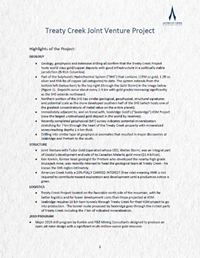
If you have not yet read the 2019 REPORT ON TREATY CREEK (potential world-class deposit in B.C.’s GOLDEN TRIANGE) click on the image for the full report.
HUB on Agoracom FULL DISCLOSURE: American Creek is an advertising client of AGORA Internet Relations Corp.
Posted by AGORACOM-JC
at 12:28 PM on Wednesday, July 17th, 2019
SPONSOR: Enthusiast Gaming Holdings Inc.
(TSX-V: EGLX) Uniting gaming communities with 80 owned and affiliated
websites, currently reaching over 75 million monthly visitors. The
company exceeded 2018 target with $11.0 million in revenue. Learn More
EGLX: TSX-V ———————————-
MTG: $11m investments in gaming & eSports start-ups
Investments in H1 2019 amount to a total of $11 million (€9.8m) including capital commitments and span start-up and growth companies in the US and Germany.
MTG has to date made 20 investments in 16 companies totalling $21 million thus far from its VC fund to complement its majority stake investments in companies such as ESL and DreamHack in esports and Kongregate and InnoGames in gaming.
Modern Times Group (MTG), the Swedish operational investment company focusing on, eSports and gaming entertainment opportunities worldwide, has revealed its latest VC Fund investments ahead of the company’s Q2 2019 financial report.
Investments in H1 2019 amount to a total of $11 million (€9.8m)
including capital commitments and span start-up and growth companies in
the US and Germany.
MTG has to date made 20 investments in 16 companies totalling $21
million thus far from its VC fund to complement its majority stake
investments in companies such as ESL and DreamHack in esports and
Kongregate and InnoGames in gaming.
MTG has its HQ in Stockholm, Sweden, and operates through itself and through its portfolio companies in 30+ countries worldwide.
Among the investments are Redwood City-based Dorian, Austin based
game developer Tonk Tonk Games, gamer rewards platform Playfull from Los
Angeles, German game studio Sviper founded by Ex-InnoGamers and San
Diego-based GoMeta, totalling $11 million in H1 2019.
MTG
owns 100 per cent of Swedish DreamHack and over 82 per cent of German
founded ESL, the two largest brands in esports worldwide. Its largest VC
investments in terms of estimated value are BITKRAFT fund LP positions,
AppOnboard, Phoenix Labs, the Play Ventures fund LP position and
Sviper. It also owns majority positions in San Francisco-based game
studio and publisher Kongregate and German game developer and publisher
InnoGames, famous for its hit game Forge of Empires launched 2012 that
recently surpassed €500 million in lifetime revenue.
“Gaming and esport is the future of entertainment, and we are excited
to invest in what we believe are seven of the most promising early
stage startups with excellent teams, products and ideasâ€, says Jørgen
Madsen Lindemann, President and CEO of MTG.
MTG AB complements its majority stake investments with seed and
series A round investments in early stage start-ups in gaming and
esports through the MTG VC Fund. The ambition is to make eight to 10
deals per year: 60 per cent in gaming, 30 per cent in esports and 10 per
cent in AR/VR through lead or co-invests with other top VCs. Since the
launch of MTG’s VC Fund in November 2017, the fund has made 20
investments in 16 companies.
“We are already seeing attractive valuation upticks based on latest
financing rounds in our investments, such as Phoenix Labs, AppOnboard
and the BITKRAFT seed fund. Deal flow and value creation opportunities
continue to improve now that we have established MTG as a leading games
& esports VC in the Westâ€, says Arnd Benninghoff, EVP esports and
games at MTG.
Phoenix Labs recently released its first game in Epic store,
AppOnboard recently acquired a no code game creation platform and the
BITKRAFT seed fund recently realised an attractive exit of portfolio
company The Esports Observer.
In 2018 there were about 2.4 billion video game players in the world,
but industry analysts expect that number to grow to 2.9 billion as
early as 2022 (Source: Newzoo) – and the global esports audience reached
395 million in 2018 and is expected to grow to 645 million by 2022
(Source: AT Kearney).