Posted by AGORACOM-JC
at 1:54 PM on Monday, October 7th, 2019
SPONSOR:ThreeD Capital Inc. (IDK:CSE)
Led by legendary financier, Sheldon Inwentash, ThreeD is a
Canadian-based venture capital firm that only invests in best of breed
small-cap companies which are both defensible and mass scalable. More
than just lip service, Inwentash has financed many of Canada’s biggest
small-cap exits. Click Here For More Information.
IDK: CSE
John McAfee’s Decentralized Crypto Exchange Launches in Beta
American entrepreneur and vocal crypto advocate John McAfee has launched a decentralized exchange (DEX) running on the Ethereum (ETH) blockchain.
McAfee DEX is set to run in a beta release status as of Oct. 7, according to the new platform’s official website and McAfee’s personal Twitter feed.
On Oct. 5, McAfee’s tweet
unveiled the new platform, stating that “it takes time for enough users
to join to make it real, but if you play, and be patient,†the exchange
can serve as “the door that frees us from Government’s cornerstone of
control: Fiat currencies. It can’t be shut down.â€
In an embedded video, McAfee argues that the cryptocurrency community
faces the question of whether its aspirations are limited to merely
expanding the possibilities for pure speculation — “all about money†—
or are about an ideal, namely freedom.
After denouncing governments’ control over fiat currencies and the
losses this presents to individual liberty, McAfee turned to the crypto
space: “centralized exchanges are our weak point,†he said, pointing to
China’s move to shutter domestic exchanges in September 2017.
McAfee continued:
“A distributed exchange can’t be shut down by anyone. Decentralized
meaning that nobody controls it, distributed meaning that it is
everywhere and therefore impossible to stop. We’ve had privacy coins,
that’s the other part of this equation, because privacy coins with
decentralized, distributed exchanges is the goose that lays the golden
egg for us. We don’t use it though.â€
McAfee DEX beta: the details
According to the details released so far, McAfee DEX reportedly will entail no Know Your Customer checks, block no jurisdictions and charge a single platform fee of 0.25% for takers. It will not charge maker fees and will also reportedly be open sourced.
Any ETH-based token (ERC-20 standard) can be added without a fee to the beta version, with more unspecified tokens to be supported in the future.
“Don’t expect miraclesâ€
In his Oct. 5 video, McAfee pointed to the low number of traders
currently using decentralized exchanges, considering that this makes
them “useless.†For his DEX, McAfee urged users:
“Play with it, don’t expect miracles at first. Play with it until it becomes real.â€
As Cointelegraph previously reported,
non-custodial decentralized crypto exchanges enable users to trade
peer-to-peer, using smart contracts to automate deal matching and asset
liquidation in order to allow users’ funds to remain under their
control.
As of January 2019, a survey
of over 400 international crypto exchanges indicated that decentralized
platforms accounted for just 19% of the global exchange ecosystem, and
their trading volumes amounted to less than 1% of those on centralized
exchanges.
This April, major centralized exchange Binance launched its own DEX on its native mainnet. Other major exchanges eyeing their own DEX include OKEx and Bithumb.
Posted by AGORACOM-JC
at 10:57 AM on Monday, October 7th, 2019
SPONSOR: Enthusiast Gaming Holdings Inc.
(TSX-V: EGLX) Uniting gaming communities with 85 owned and affiliated
websites, currently reaching over 150 million monthly visitors. The
company exceeded 2018 target with $11.0 million in revenue. Learn More
Are eSports: the future of sport?
With permanent eSports team franchises being set up across the GCC; talk of eSports being included in the 2024 Olympic Games; and revenue expected to top US $1.5 billion per year by 2020,
Playing video games has the potential to change the sporting landscape as we know it.
By: Peter Iantorno
The year is 1972. David Bowie is blowing impressionable teenage minds
the world over with his gender-bending alter ego Ziggy Stardust; U.S.
swimmer Mark Spitz is smashing world records in the pool at the Munich
Olympic Games; and, on the evening of October 19, in Stanford
University’s Artificial Intelligence Laboratory, two dozen of the
university’s geekiest students are gathered round the lab’s only PDP-10
computer to take part in the world’s first ever computer gaming
tournament. The tournament pits players against each other in an
arena-style game called Spacewar! where competitors play as
ships with the aim of torpedoing their enemies. The night is long and
booze-fuelled, but eventually the winners are decided, as Slim Tovar and
Robert E. Maas win the team tournament, and Bruce Baumgart comes out on
top in the free-for-all competition, bagging the coveted first prize of
a year’s subscription to Rolling Stone magazine.
Fast-forward 45 years, and the gaming tournaments of today fill
arenas with thousands of spectators and generate millions of
dollars-worth of sponsorship revenue – a world away from the late night
basement-dwelling events of the past. No longer are gamers sneered at
and written off as immature man-children living in their parents’
basement, unable to get a girlfriend and with worse employment prospects
than a criminal in a kindergarten. Nowadays, pro gamers are hot
property, with professional teams (including real-world football clubs
such as Paris Saint-Germain, Manchester City and Glasgow Celtic)
signing-up some of the world’s top players on big-money contracts
offering annual salaries, performance-based bonuses, travel expenses and
even health insurance.
“Back in the day, you couldn’t depend on eSports as a way of making a
living, but nowadays it has improved in the way that some clubs or
sponsors offer you a fixed salary,†says pro gamer Sayed Hashem, better
known by his gaming handle, Tekken Master. “It’s great to have a
salary to fall back on when you don’t win enough money from
tournaments. There are also other ways of making a living out of pro
gaming, and once you have reached a certain level, you can get stream
revenue and get hired to do public appearances. For now, it is enough to
pay the bills.â€
Hailing from Bahrain, 22-year-old Hashem joined local team Nasr
eSports in early 2017, and already he has built up a reputation as one
of the region’s – and the world’s – fiercest online competitors. He has a
list of honours as long as your arm – (a two-time Mortal Kombat X Middle East Champion, twice runner up in the Mortal Kombat X
International Cup, the first Arab to reach the EVO Championship Series
Grand Finals, and currently one of the top eight Injustice 2 players in
the world) – but success doesn’t come easily for him. “I train every day
so I can perform well during tournaments,†he tells Esquire.
“It’s hard for me to find high-level practice partners in the region, so
I get my brothers to learn specific tactics and mimic my upcoming
opponents, so I can develop new strategies.â€
Fellow Nasr eSports team member Adel ‘Big Bird’ Annouche is also
making a splash on the international scene. A two-time Middle East
Street Fighter Champion, he is currently third on the European
leaderboard in this year’s Capcom Pro Tour and ranks in the top 32 Street Fighter players
in the world. This December he takes part in the Capcom Pro Tour Finals
in California, which has a first prize of US $120,000 (AED440,000) and a
total prize pool of US $250,000 (AED918,000). “I’m going to train hard
for this event,†Annouche says of his most important competition to
date. “Hopefully, I end up doing well, because winning there could open
up lots of opportunities not only for my eSports career, but for the
club as well.â€
The business of eSports
With prizes topping AED360,000 for a single tournament, it’s easy to
see how a career in eSports could be a lucrative one. But it’s not just
the players getting rich off eSports: according to leading market
researcher Newzoo, the industry generated a whopping AED1.8 billion in
2016 – a 51 per cent increase on 2015’s AED1.2 billion, which itself was
a 67 per cent increase on the previous year. The research predicted
that by the end of 2017 the industry will have an annual revenue just
shy of AED2.5 billion, and by 2020 yearly revenues will jump to around
AED5.5 billion, with eSports reaching a total audience of 589 million –
almost double the population of the U.S.
But where is all the money coming from? Sponsorship and advertising
certainly plays a major role. The biggest backers so far have been
technology companies including Microsoft, Samsung
and Intel, however increasingly consumer brands are investing in
eSports, with the likes of McDonald’s, Coca-Cola and Nike all
contributing to an estimated advertising and sponsorship revenue of
AED1.5 billion in 2017 alone. The rest of the income is derived from
investment from game publishers (AED426 million this year), media rights
(AED350 million) and ticket and merchandise sales (AED235 million),
respectively.
“We have worked with Coca-Cola, Red Bull, Nestle, Unilever and
P&G brands, among many others that are clear examples of mass brands
looking to connect with new audiences through relevant messaging,†says
John Paul Lacey, managing director of Power League Gaming, which
organises eSports leagues and tournaments throughout the Middle East
with prizes often topping AED100,000. “It’s not just tech brands and
manufacturers of accessories that support eSports… Those that understand
gaming better and see the opportunities eSports audiences can offer
quickly realise the demographics are not just teenagers, they are
broader and diversifying more.â€
And while this level of financial growth is impressive by anyone’s
standards, it’s only the start for a sport that, according to Newzoo CEO
Peter Warman, could potentially become “one of the top five sports in
the world†within the next five years. “In terms of revenue it is still
dwarfed by other sports,†Warman told the BBC earlier this
year. “But considering an audience of around 160 million is watching
eSports frequently, and another 160 million watch big championship
games, it already compares to medium-tier sports.â€
In a move that is likely to speed up that growth significantly, one
of the industry’s biggest players, Riot Games – owner of the incredibly
popular League of Legends game and leagues – announced in June
this year that, starting in 2018, it will operate a new franchise model
for its North American League Championship Series, which will see a
permanent lineup of teams who each pay an annual AED36 million fee for
guaranteed entrance to the league.
It’s a move that has the potential to revolutionise the way eSports
is run, and opens the door for sponsors to make much more lucrative
long-term investments, safe in the knowledge that the team they back
won’t be relegated from the league after a season of performing badly.
“It’s harder to make long-term investments as a brand if you don’t know
if the team is going to exist,†said Jarred Kennedy, who co-heads Riot
eSports, at the time of the announcement. “The changes are going to make
it much more palatable and approachable for brands to come in and
invest.†As part of the franchise system, Riot also announced a minimum
annual salary of AED275,000 for individual players in the league.
Game over?
While it may seem to be a step forward for eSports, Riot’s franchise
model hasn’t been met with universal praise. Power League Gaming’s John
Paul Lacey is not convinced. “I don’t like the franchising model,†he
tells Esquire. “If the leagues are setting buyin requirements
at prohibitive rates then perhaps in future only the super elite teams
will be able to afford those rates anywhere… This will reduce the level
of competition between upcoming teams and you run the risk of turning
eSports into a further extension of the publishers marketing inventory,
instead of a genuine sport from the grassroots upwards. Teams would no
longer gain entry to competitions based on player ability, but based on
their Instagram following and the number of videos they can put out per
day.â€
And Lacey isn’t alone in his doubts. Following Riot’s franchise
announcement and subsequent minimum salary requirement for players,
Paris Saint-Germain eSports pulled its team out of the popular League of Legends
tournaments, stating that they had “numerous uncertainties†about the
future economic model, “partly because of the strong inflation of
pro-gamers salariesâ€.
While nobody can argue with the impressive growth eSports has
achieved over the past few years, that fact that there is suddenly so
much money at stake means insider squabbles are inevitable – and for an
industry still in its infancy and still struggling against the long-held
negative public opinion of gamers, this could be extremely damaging.
“Unfortunately some gaming communities are more toxic than others,â€
says Anas AlHaki, cofounder and brand manager of UAE-based team Yalla
eSports. “The way to grow eSports is to work together. Teams should only
be enemies on the battlefield or in the arena during an official match.
We have to support each other to help build the scene together. The
scene only grows if we all grow,†he adds. Along with cofounder Klaus
Kajetski, AlHaki built Yalla to be one of the most inclusive eSports
teams in the Middle East, with more than 20 players representing 12
different nationalities playing for them.
And it’s not just financial infighting that threatens to bring
eSports to its knees. Just as allegations of doping are rife in
traditional sports from athletics to football, eSports has its own
struggles with players taking performance-enhancing drugs such as
Adderall – a prescription medicine containing amphetamine and
dextroamphetamine. Used to treat attention deficit hyperactivity
disorder (ADHD), Adderall helps shorten reaction times and enhance focus
– two rather useful traits in the world of eSports. “There will always
be people willing to cheat to try and gain advantage,†says Rory
MacFadyen, who previously worked at EA and Nintendo in the UK and is now
sports planning director for Middle East Gaming, which ran a FIFA and Overwatch tournament
in Dubai earlier this year with AED35,000-worth of prizes. “It’s
something tournament organisers, game developers and other teams need to
be aware of and govern.†Yalla eSports’ AlHaki adds: “This is still
very new. Luckily it has already been recognised and methods to fight
this [such as drug testing, which has now been implemented at many major
events] have been found.â€
Going for gold
In all likelihood, financial wrangling and a tiny minority of cheats
will prove irrelevant to the long-term success of eSports. The real
deciding factor could end up being the level of recognition from outside
of the industry. Will eSports ever be considered as a ‘proper’ sport,
rather than a lucrative pastime for teenage boys? To that end, this year
the industry received its biggest boost yet, as it was announced that
eSports will be an official medal sport at the 2022 Asian Games in
China, which is the world’s second largest multi-sport event after the
Olympics, with more than 10,000 athletes from 45 national delegations
taking part in the most recent games three years ago in South Korea.
And breakthrough could be a sign of things to come. In August,
co-president of the Paris Olympic bid committee Tony Estanguet confirmed
that talks between the International Olympics Committee and eSports
representatives are ongoing with a view to including eSports as an
official medal sport when the Olympics comes to France in 2024. Soon
eSports could be valued just as highly as any other sport, and with
Olympic medals on offer, the prospect of governmentfunded eSports
players becomes all the more real.
Posted by AGORACOM-JC
at 10:01 AM on Monday, October 7th, 2019
SPONSOR: NORTHBUD (NBUD:CSE)
Sustainable low cost, high quality cannabinoid production and
procurement focusing on both bio-pharmaceutical development and
Cannabinoid Infused Products. Learn More.
NBUD: CSE —————————–
Another First for the Pot Industry: A Licensed Cannabis Restaurant
Cannabis edibles are a growing segment of the market and are
expected to reach $4.1 billion in 2022, combining Canadian and U.S.
sales.
In 2017, that figure was just $1 billion among the two
countries. The segment is going to be key to the industry’s long-term
growth.
By: David Jagielski
Cannabis edibles are a growing segment of the market and are expected
to reach $4.1 billion in 2022, combining Canadian and U.S. sales. In
2017, that figure was just $1 billion among the two countries. The
segment is going to be key to the industry’s long-term growth.
Restaurants haven’t been able to take advantage of that growth since
the U.S. Food and Drug Administration has still not permitted
cannabidiol (CBD) to be infused into food. While the FDA has held hearings on CBD, there’s no indication that changes are coming anytime soon.
One restaurant, however, has been able to get around that problem. Lowell Farms
opened its doors earlier this month in West Hollywood, Calf., and it’s
the first restaurant with a lounge licensed for cannabis use. Customers
will be able to eat food and consume pot at the same establishment. That
doesn’t mean the restaurant will be able to make and serve cannabis
food. Instead, cannabis edibles will be permitted only if they are
“produced by an outside source.”
One of the other restrictions the restaurant will face is not being
able to sell alcohol to diners. It’s a small price to pay to let them
consume cannabis, since pot lounges remain a rarity in the industry. Las
Vegas is among the cities looking at permitting such lounges, but that
could be years away because there’s still a lot of opposition to it.
Will a bar someday be a place to enjoy pot with friends? Image source: Getty Images.
Why lounges could be big for the industry
While marijuana has been legalized in many parts of the U.S., that
doesn’t mean it’s possible to consume it at bars or sporting events,
unlike alcohol where there are many places that users can drink in a
social setting. Allowing that could unlock another avenue of growth for
the industry.
Cannabis beverages are on the rise and expected to grow globally at a
rate of more than 15% per year from now until 2025, reaching $4.5
billion in market size by then. So there’s going to be a growing need
for places to enjoy such drinks with friends without always having to do
so at home. And that doesn’t even factor in the growth of edibles that
could be consumed at lounges, such as candy, cookies, and chocolate.
In Canada, there’s potential for Canopy Growth to test its products in one lounge
that was made legal earlier this year. In many ways, the emerging
Canadian cannabis edibles market, which is going to be legalized later
this month and where the first products will be available in December ,
could prove to be a good indicator of how successful some of these
concepts will be in the U.S. And for Canopy Growth, it could be an
important way to get closer to breakeven.
For now, Canopy Growth can be a good opportunity for investors to
take advantage of the new edibles market in Canada. Not only is the
company well-positioned for success in the beverages segment, but in a
recent interview with BNN Bloomberg, CEO Mark Zekulin said the company
was working on more than 50 different products for the edibles
market. That could lead to significant growth for Canopy Growth and get
investors excited about the stock once again.
Here’s The Marijuana Stock You’ve Been Waiting For
A little-known Canadian company just unlocked what some experts think
could be the key to profiting off the coming marijuana boom.
And make no mistake – it is coming.
Cannabis legalization is sweeping over North America – 10 states plus
Washington, D.C., have all legalized recreational marijuana over the
last few years, and full legalization came to Canada in October 2018.
And one under-the-radar Canadian company is poised to explode from this coming marijuana revolution.
Because a game-changing deal just went down between the Ontario
government and this powerhouse company…and you need to hear this story
today if you have even considered investing in pot stocks.
Posted by AGORACOM-JC
at 8:58 AM on Monday, October 7th, 2019
Adds 20 Mobile Gaming Websites and 25 Live Mobile Events to Enthusiast Network
Announced that it has closed the acquisition of Steel Media Limited, a leading mobile gaming and live events company
Enthusiast Gaming is the largest gaming network in the U.S., and the acquisition of Steel Media adds 20 mobile gaming websites and 25 live mobile events worldwide to its media and events business
TORONTO, Oct. 07, 2019 — Enthusiast Gaming Holdings Inc. (TSXV: EGLX)(FSE: 2AV), (“Enthusiast Gaming†or the “Companyâ€), is pleased to announce that it has closed the acquisition (the “Transactionâ€) of Steel Media Limited (“Steel Mediaâ€), a leading mobile gaming and live events company (previously announced in a press release dated September 18, 2019).
Enthusiast Gaming is the largest gaming network in the U.S., and the
acquisition of Steel Media adds 20 mobile gaming websites and 25 live
mobile events worldwide to its media and events business. Enthusiast
Gaming’s network now includes over 100 gaming related websites, 900
YouTube channels, 7 professional esports teams, over 50 social
influences and almost 30 live events worldwide. The network reaches over
200 million gamers on a monthly basis.
Upon closing of the Transaction, the Company made a cash payment of
US$1,968,536 (US$1,000,000 net of cash on hand) and issued 304,147
common shares in the capital of the Company (the “CommonSharesâ€)
for an aggregate value of US$500,000. At the option of the Company,
US$1,000,000 of the up to US$1,500,000 balance of the purchase price
(inclusive of the maximum earn-out payment) may be settled by way of
issuing Common Shares at a deemed price per share equal to the 5 day
VWAP. All Common Shares issued in connection with the Transaction are
subject to a 12 month hold period from the date of issuance and approval
of the TSX Venture Exchange.
Enthusiast Gaming (TSX.V: EGLX)(FSE: 2AV) is one of the largest, vertically integrated, video game and esports company in the world. The Company’s business comprises three main pillars: Media, Events, Esports. Enthusiast Gaming’s digital media platform includes +100 gaming related websites and 900 YouTube channels which collectively reach 150 million visitors monthly. Enthusiast’s esports division, Luminosity Gaming, a leading global esports franchise consists of 7 professional esports teams under ownership and management, including the #1 ranked Overwatch team, the Vancouver Titans and over 50 gaming influencers with a total audience of 60 million followers. Collectively, the integrated ecosystem reaches over 200 million gaming enthusiasts on a monthly basis. Enthusiast Gaming’s event business, owns and operates Canada’s largest gaming expo, Enthusiast Gaming Live Expo, EGLX, (eglx.com) with approximately 55,000 people attending in 2018. For more information on the Company, visit www.enthusiastgaming.com. For more information on Luminosity Gaming, please visit luminosity.gg
CONTACT INFORMATION
Investor Relations: Julia Becker Head of Investor Relations & Marketing Telephone: 604-785-0850 Email: [email protected]
Forward-Looking Information
Certain statements in this release are forward-looking
statements. Forward looking statements consist of statements that are
not purely historical, including any statements regarding beliefs,
plans, expectations or intentions regarding the future. Such statements
are subject to risks and uncertainties that may cause actual results,
performance or developments to differ materially from those contained in
the statements, including risks related to factors beyond the control
of Enthusiast Gaming. The risks include risks that are customary to
transactions of this nature and customary to companies which have their
stock traded on the TSXV. No assurance can be given that any of the
events anticipated by the forward-looking statements will occur or, if
they do occur, what benefits Enthusiast Gaming will obtain from them.
For instance, there can be no assurance that the acquisition will
position the Company as a leader in the mobile gaming sector and that
the acquisition will result in growth of the Company’s online and
offline gaming community.
This press release does not constitute an offer to sell or
solicitation of an offer to buy any of the securities in the United
States. The securities have not been and will not be registered under
the United States Securities Act of 1933, as amended (the “U.S.
Securities Actâ€) or any state securities laws and may not be offered or
sold within the United States or to a U.S. Person unless registered
under the U.S. Securities Act and applicable state securities laws or an
exemption from such registration is available.
Neither TSX Venture Exchange nor its Regulation Services
Provider (as that term is defined in the policies of the TSX Venture
Exchange) accepts responsibility for the adequacy or accuracy of this
release.
Posted by AGORACOM
at 2:07 PM on Thursday, October 3rd, 2019
SPONSOR: Lomiko Metals LMR:TSX-V – A Canadian exploration-stage company discovered high-grade graphite at its La Loutre Property in Quebec and is working toward a Pre-Economic Assessment (PEA) that will increase its current indicated resource of 4.1 Mt of 6.5% Cg to over 10 Mt of 10%+ Cg through a 21 hole program at the Refractory Zone. Click Here For More Information
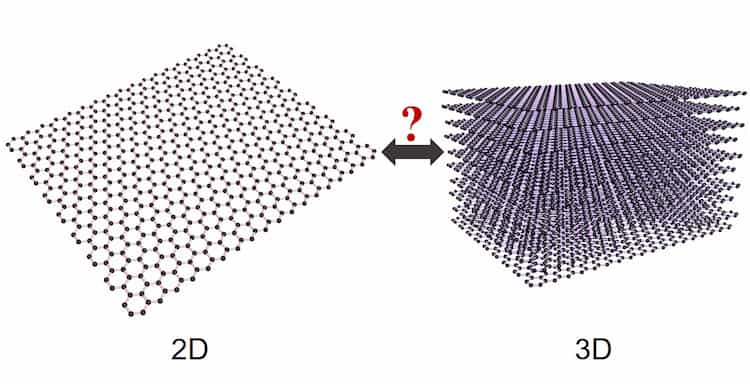
Contrary to what is believed, monolayer graphene (a sheet of carbon
just one atomic layer thick) has 3D mechanical properties and they can
now be properly measured and meaningfully described thanks to
high-pressure Raman spectra measurements on the material. This result,
from researchers at Queen Mary University of London, might have
implications for when graphene – and indeed other 2D materials – are
employed in applications such as mechanical sensors. It also highlights
the fact that Raman spectroscopy can be used as diagnostic tool to
measure the mechanical properties of graphene when it is employed as a
reinforcement for other materials.
“Graphene is called a 2D material because its carbon atoms lie in a two-dimensional plane,†explains team member Yiwei Sun.
“However, monolayer graphene has electrons in π-orbitals above and
below this plane. If we compress a sheet of graphene in a direction
normal to the sheet, graphene is strained because the π-electrons become
compressed and strained. If the sheet is compressed in all three
directions, it undergoes 3D strain, however. This means that 3D elastic
parameters can and must be defined for this material.
“So, graphene should really be thought of as a 3D material, not 2D, as far as certain mechanical properties are concerned.â€
Complementing previous experiments
Sun and colleagues also found that the stiffness of monolayer
graphene is the same as that of graphite (which is a stack of graphene
layers).
These results complement those from previous experiments in which
researchers studied the effect of pressure in graphene supported on a
substrate such as copper. The substrate strongly affects the contraction
of graphene and thus skews the result, says Sun.
Such experiments are performed in a diamond anvil cell (DAC). Here,
the samples are loaded into a pressure-transmitting medium, such as
water, in a hole of a 50-micron-thick metal gasket sandwiched between
two diamond culets 150 microns in size. Pressures of several gigapascals
are then applied to the cell.
“What is new in our work is that we studied unsupported monolayer graphene in solutionâ€, explains Sun.
The researchers started out in the usual way – with a monolayer of
graphene on a copper substrate. They then got rid of the substrate by
etching it away in a solvent after protecting the graphene by a polymer
film (PMMA) so that it floated on the etchant and could be located. They
took the graphene with the polymer out of the etchant, placed it on a
glass slide and rinsed it with de-ionized water. Next, they loaded the
graphene with the PMMA in DMF, which dissolved the PMMA leaving the
monolayer graphene free-standing in it. “We loaded the monolayer
graphene several times so that it was concentrated enough for a decent
Raman signal,†says Sun.
The DMF prevents the graphene from crumpling and/or bonding together
to form graphite for long enough to perform the high-pressure
experiments. These involved compressing the graphene-containing liquid
in a diamond anvil cell to pressures of 12 GPa and measuring its
in-plane and out-of-plane (normal to the plane) stiffness using optical
Raman spectroscopy.
In-plane and out-of-plane stiffnesses are the same for both graphene and graphite
The researchers compared their findings to those obtained on 3D
graphite and found that both the in-plane and out-of-plane stiffnesses
are the same for both materials, within the experimental errors of their
experiment.
“Stiffness is usually defined in terms of the stress and strain (the
change of thickness) a material can endure,†explains Sun. “We find that
under pressure the thickness of graphene decreases at the same rate as
that of graphite. Hence our claim that ‘graphene is graphite’ as regards
some key mechanical properties.â€
The team, led by Colin Humphreys and David Dunstan,
also reports on a shift to higher energy frequencies of in-plane
vibrations (phonons) of the unsupported monolayer graphene to
5.4/cm/GPa, which is very close to that of graphite (4.7/cm/GPa).
The in-plane force on graphene under pressure is significantly
reduced since graphene, like graphite, is very soft out-of-plane (this
is why we can write with the “lead†in pencils, which is graphite),†Sun
tells Physics World. “This reduction is what causes the
sublinear shift of its in-plane phonon frequency with pressure. This
physically meaningful experimental observable allows us to define the
thickness and strain of graphene in terms of the thickness of its
Ï€-orbitals.â€
The technique employed in this study, which is reported in Physical Review Letters, might be used on other unsupported 2D materials in solution, he adds.
“Fiddly handiworkâ€
“High-pressure experiments like these are easy to describe, but they are notoriously difficult to perform,†writes John Procter of the University of Salford in a related Viewpointarticle. Procter’s group was the first to study the effect of strain using Raman measurements of graphene in Si/SiO2 substrates
under high pressure. “Fiddly handiwork is required to align the DAC and
sample with micrometre-precision. Because of these demands, such
experiments also have a high failure rate. Sun and colleagues’ ability
to study graphene under a known high stress – a first – is therefore a
major achievement.â€
He adds that the research could help in the development of strain
sensors based on graphene. “It may also affect how Raman spectroscopy is
used as a diagnostic tool for new types of graphene composites that
serve to reinforce other materials. Here, the spectroscopy helps
determine the extent to which stress or strain is transferred from the
host material to the graphene reinforcement. Knowing graphene’s 3D
characteristics will help researchers optimize this reinforcing
behaviour.â€
Sun and co-workers say they are now looking at how the atmosphere affects the mechanical properties of graphene and graphite. Such studies will be important for when it comes to real-world applications of these materials. “For example, a graphene-based device may perform very differently in a humid Manchester in the UK to a dry Arizona in the US,†says Sun.
Posted by AGORACOM
at 1:52 PM on Thursday, October 3rd, 2019
SPONSOR: Advance Gold AAX.v – Advance Gold controls 100% interest in the Tabasquena Silver Mine in Zacatecas, Mexico. A cluster of 30 Epithermal veins have been discovered, with recent emphasis on exploring a large anomaly to drill. Advance also owns 15% of the Kakamega JV attached to Barrick Takeover Offer for Acacia Mining. Click Here For More Info
Recession fears are once again gripping financial markets and
pushing gold prices higher as sentiment within the U.S. service sector
fell more than expected, according to the latest data from the
Institute for Supply Management (ISM).
Thursday, the ISM said its nonmanufacturing index showed a reading
of 52.6% for September, down from August’s reading of 56.4%. The data
was much weaker than expected as consensus forecasts were calling for a
reading of 55.1%.
According to reports this is the lowest reading in three years.
Readings above 50% in such diffusion indexes are seen as a sign of
economic growth, and vice-versa. The farther an indicator is above or
below 50%, the greater or smaller the rate of change.
Ahead of the report, the gold market was holding its own above
$1,500 an ounce, recovering from a 2% selloff at the start of the week.
The latest economic data has added to gold’s gains. December gold
futures last traded at $1,518.80 an ounce, up 0.72% on the day.
Economists and analysts warned that disappointing service sector
data could boost recession fears as this is the largest component of
the U.S. economy.
The nonmanufacturing data comes just two days after the ISM said
that its manufacturing index fell even further into contraction
territory, also missing economist expectations.
“The non-manufacturing sector pulled back after reflecting strong
growth in August. The respondents are mostly concerned about tariffs,
labor resources and the direction of the economy,†said Anthony Nieves,
chair of the ISM Non-Manufacturing Business Survey Committee.
Looking at the components of the report, the Business Activity Index
dropped to a reading of 55.2%, down from August’s level of 61.5%.
The labor market also lost some momentum in September, with the
Employment Index falling to 50.4%, down from August’s level of 53.1%.
This indicator is closely watched by economists as it is used as a
predictor for Friday’s nonfarm employment report.
Some economists have noted that the miss in the ISM employment data points to downside risk to Friday’s employment report.
Posted by AGORACOM
at 12:36 PM on Thursday, October 3rd, 2019
VANCOUVER, BC / ACCESSWIRE / October 3, 2019 /VERTICAL
EXPLORATION INC. (TSXV:VERT) (“Vertical” or “the Company”) and
Venturevest Realty Partners LLC (“Venturevest”) are pleased to announce
that the two companies have signed a non- binding Letter of Intent (LOI)
to enter into discussions regarding the provision by Venturevest of a
secured Note Facility up to a maximum amount of $20 million CAD to
support the multi-phased development of the St-Onge Wollastonite
Deposit.
The Note Facility would be a staged credit facility that
would provide the required financing to allow Vertical to move forward
with four distinct phases of St-Onge development, from the initial
quarry style permitting and production phase through to the mining and
final processing plant stage. Vertical views this potential Note
Facility financing as a significant development that would enable the
Company to rapidly develop and expand its St-Onge Wollastonite Deposit.
Further
details regarding the Note Facility Agreement will be provided as soon
as all terms have been negotiated between Vertical and Venturevest. The
Agreement is subject to a due diligence period that is anticipated to be
completed within the next 60 days. This transaction is subject to the
approval of the TSX Venture Exchange.
ABOUT VENTUREVEST REALTY PARTNERS LLC.
Venturevest Realty Partners LLC (“Venturevest”) is a New York corporation.
ABOUT VERTICAL EXPLORATION
Vertical
Exploration’s mission is to identify, acquire, and advance high
potential mining prospects located in North America for the benefit of
its stakeholders. The Company’s flagship St-Onge Wollastonite property
is located in the Lac-Saint-Jean area in the Province of Quebec.
Posted by AGORACOM-JC
at 12:07 PM on Thursday, October 3rd, 2019
SPONSOR: NORTHBUD (NBUD:CSE)
Sustainable low cost, high quality cannabinoid production and
procurement focusing on both bio-pharmaceutical development and
Cannabinoid Infused Products. Learn More.
NBUD: CSE —————————–
Canada’s legalization of pot edibles later this year is facing an even more shambolic start than the dried flower market, which is still struggling to meet demand, according to industry players.
Kristine Owram, Bloomberg News
Canada’s legalization of pot edibles later this year is facing an
even more shambolic start than the dried flower market, which is still
struggling to meet demand, according to industry players.
“At least that time we knew what the permissible product types were
going to be and were already making them in the medical context,†said
cannabis lawyer Trina Fraser, a partner at Brazeau Seller Law in Ottawa.
Canada will add edibles, extracts and topicals to the list of legal
cannabis products no later than Oct. 17. Many analysts agree these
products will generate better demand and margins than dried flower. But
the federal government has not yet issued regulations for the new
formats, making it difficult for producers to prepare lest they
unknowingly violate some rule.
A spokeswoman for Health Canada declined to comment on when the regulations will be released.
In addition, a huge licensing backlog has built up at Health Canada,
the government agency that oversees cannabis regulations. About 614
applications were waiting in the queue as of March 31.
“A full rollout amongst a nice wide array of producers and a wide
array of these new product types is going to take time, literally years,
because we have such a licensing backlog,†Fraser said.
Company Stockpiling
Canada’s market for edibles and other alternative pot produces will
eventually be worth C$2.7 billion ($2 billion) annually, but consumers
should expect “missteps, delays and frustration†in the early days,
Deloitte said in a report published Monday. Jennifer Lee, Deloitte
Canada’s cannabis national leader, estimated it will be a minimum of 24
months before the industry normalizes.
In the meantime, many pot companies are stockpiling, choosing to
forgo revenue today to ensure they have enough supply for the new
high-value products. This is exacerbating the shortage of dried flower,
but executives say it’s worth it.
“We’ve made a very conscious effort to delay revenue,†said Chuck
Rifici, chief executive officer of Auxly Cannabis Group Inc. Selling
into the market today doesn’t build brand recognition because shelves
are empty and consumers are buying whatever’s available, he added. “I
would much rather save that product, get a multiple of margin on that
brand and make sure that I have enough inventory.â€
Lab Delays
This is proving to be a boon for extraction companies like Valens
GroWorks Corp. Valens has contracts with many of the biggest pot
companies, including Canopy Growth Corp., Hexo Corp. and Tilray Inc., to
extract cannabis oil from their plants, which is then used for products
like edibles and vape cartridges. It’s also investing heavily in its
testing labs in the belief that Health Canada will have stringent
regulations to ensure pesticides and other contaminants don’t make it
into the new consumer products.
“Even in labs today there’s delays where people are waiting three
weeks to a month to get lab results back and I think that will only get
worse,†said Everett Knight, Valens’ executive vice president of
strategy and investments.
Companies are also making big bets on what products will be in
demand, with Canopy and Hexo leaning toward cannabis beverages and
others toward vaping.
Be Prepared
“Why do I want an edible or a drink when I can have a vape?†Irwin
Simon, interim CEO of Aphria Inc., said in an interview on the sidelines
of a cannabis conference last month. “I see the margins and the
opportunities there.â€
Rifici at Auxly also believes vape pens will be “the most important
category by far.†But there are many unanswered questions. For example,
will the government require companies to engrave its mandatory THC
warning symbol into the pen itself, or will a sticker suffice?
This is why Valens is offering its customers 196 different options
for its white-label vape pens. “You’ve got to make sure you cover your
bases and prepare for all the possibilities,†Knight said.
Despite the uncertainty, it’s better to be prepared even if plans and
production lines have to be tweaked once the regulations come out, said
Bruce Linton, CEO of Canopy, which is building a 197,000 square foot
bottling plant for cannabis beverages in Smiths Falls, Ontario.
“We’re in a situation where it’s better to spend money to be ready than to save money and be late,†he said.
Cannabis Canada is BNN Bloomberg’s in-depth
series exploring the stunning formation of the entirely new – and
controversial – Canadian recreational marijuana industry. Read more from
the special series here and subscribe to our Cannabis Canada newsletter to have the latest marijuana news delivered directly to your inbox every day.
Posted by AGORACOM-JC
at 11:03 AM on Thursday, October 3rd, 2019
SPONSOR: New Age Metals Inc. The company’s Lithium Division has already made significant acquisitions in Canada and the USA. The company also owns one of North America’s largest primary platinum group metals deposit in Sudbury, Canada. Updated NI 43-101 Mineral Resource Estimate 2,867,000 PdEq Measured and Indicated Ounces, with an additional 1,059,000 PdEq Ounces in the Inferred. Learn More.
There’s no end in sight for soaring palladium prices, bodes well for North America’s Largest Undeveloped PGM deposit
With stocks running low, it is difficult to see where further supplies will come from. Â
For nearly 30 years, UK crime-fighting show Police 5 urged members of
the public to stay vigilant with the catchphrase “Keep ’em peeledâ€. It
is advice car owners in London might want to consider, especially if
they own hybrid vehicles such as the Toyota Prius or Lexus 400.
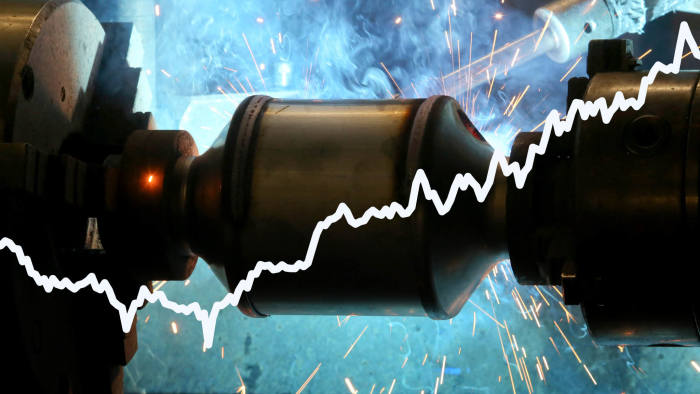
Looking to profit from soaring palladium prices — which hit a record
high above $1,700 an ounce this week — thieves in the UK capital have
stolen nearly 2,900 catalytic converters in the first six months of the
year, up from 1,674 in the whole of 2018, according to data from the
Metropolitan Police.
The market-savvy car thieves typically target hybrids because their
catalysts contain more metal. They then sell the devices to illegal
scrap dealers for cash. In spite of a collapse in global car sales this
year, the metal’s price has risen more than 30 per cent in 2019 to a
level far above its long-term average, catching many analysts and
investors by surprise. The average price for palladium since 1994,
unadjusted for inflation, is just $500 an ounce.
One reason for this apparent paradox is China, where there has been
increased demand for palladium ahead of the introduction of a nationwide
emissions standard in 2020. Another reason is that stocks are running
low. And with few platinum or nickel projects under development, the 7m
ounces-a-year palladium market is set to remain tight unless there is an
unexpected release of supplies. Yet it is difficult to see where these
supplies might come from. Russia’s Norilsk Nickel, the world’s largest
producer, raised doubts last week about its ability to replenish its
Global Palladium Fund.
Established in 2016, the fund helps stabilise the market, buying
metal from various sources, including Russia’s central bank, and selling
it to industrial customers. However, analysts believe that Moscow’s
strategic stockpile of palladium — a key source of supply — is close to
being exhausted, while other holders are reluctant to sell because they
expect higher prices. So is there anything that can bring palladium back
to earth?
A global recession would certainly hit prices as would a switch by
carmakers from palladium to platinum, which is almost $800 an ounce
cheaper. For the moment, that looks unlikely because the car industry is
treading warily with new catalyst technology in the wake of the
Volkswagen emissions scandal. But that could change. One of the oldest
sayings in commodity markets is that the cure for high prices is high
prices and, as BMO Capital Markets notes, it is rare for any commodity
to remain this far above its long-term average for so long.
Tags: clean energy, CSE, palladium, PGM, PGM Demand, stocks, tsx, tsx-v Posted in New Age Metals | Comments Off on There’s no end in sight for soaring #palladium prices, bodes well for North America’s Largest #PGM deposit $NAM.ca $WG.ca $XTM.ca $WM.ca $PDL.ca $GLEN
Posted by AGORACOM-JC
at 9:18 AM on Thursday, October 3rd, 2019
Announced the granting of a new Supplemental Type Certification to Star by Transport Canada.
The STC relates to the use of the STAR-A.D.S. ® Gen 3 system on an Airbus A320 aircraft type.
TORONTO, Oct. 03, 2019 – Star Navigation Systems Group Ltd. (CSE: SNA) (CSE: SNA.CN) (OTCQB: SNAVF) (“Star†or the “Companyâ€) is pleased to announce the granting of a new Supplemental Type Certification (“STCâ€) to Star by Transport Canada. The STC relates to the use of the STAR-A.D.S. ® Gen 3 system on an Airbus A320 aircraft type.
This STC will allow Star to install its STAR-A.D.S. ® Gen 3 System
on-board the next available AlMasria Universal Airlines (“AlMasria”)
aircraft. (See press Release September 10, 2019).
Viraf Kapadia, CEO of Star Navigation Systems said:
“This additional STC adds to our growing list of certifications for
commercial and business aircraft. We already had an STC for the previous
STAR-A.D.S. ® Gen 2 model. Now the Gen 3 is also A 320 certified and we
can offer even more flexibility to an operator, adding GSM
communications and manual retrieval through USB port. We shall rapidly
install our system on-board the first available AlMasria aircraft, while
we complete the STC applications for the other aircraft types of their
fleet. This A320 STC confirms our focus on the major targeted aircraft
platforms such as the B 737, for which STCs had already been granted.â€
About Star Navigation:
Star Navigation Systems Group Ltd. owns the exclusive worldwide
license to its proprietary, patented In-flight Safety Monitoring System,
STAR-ISMS®, the heart of the STAR-A.D.S. ® and of the STAR-ISAMM™
Systems. Its real-time capability of tracking performance trends and
predicting incident-occurrence enhances aviation safety and improves
fleet management while reducing costs for the operator.
Stars’ M.M.I. Division designs and manufactures high performance,
mission critical, flight deck flat panel displays for defence and
commercial aviation industries worldwide. These displays are found on
aircraft and simulators, from C-130 aircraft, to Sikorsky and Agusta
Westland helicopters, as examples.
Stars’ subsidiary, Star-Isoneo Inc. is a specialised software firm,
developing complex solutions in engineering, simulation and development
for Canadian customers. Star-Isoneo works closely with Star in the
development of the Company’s MEDEVAC (STAR-ISAMM™ and STAR- LSAMM™)
applications of the patented STAR-A.D.S. ® technology, and on its
current R&D program with Bombardier.
Certain statements contained in this News Release constitute
forward-looking statements. When used in this document, the words “mayâ€,
“wouldâ€, “couldâ€, “willâ€, “expected†and similar expressions, as they
relate to Star or its management are intended to identify
forward-looking statements. Such statements reflect Star’s current views
with respect to future events and are subject to certain risks,
uncertainties and assumptions. Many factors could cause Star’s actual
performance or achievements to vary from those described herein. Should
one or more of these factors or uncertainties materialize, or should
assumptions underlying forward-looking statements prove incorrect,
actual results may vary materially from those described herein as
intended, planned, anticipated, believed, estimated or expected. Star
does not assume any obligation to update these forward-looking
statements, except as required by law.
Neither the Canadian Securities Exchange nor its Market Regulator
(as that term is defined in the policies of the Canadian Securities
Exchange) accepts responsibility for the adequacy or accuracy of the
content of this release.